
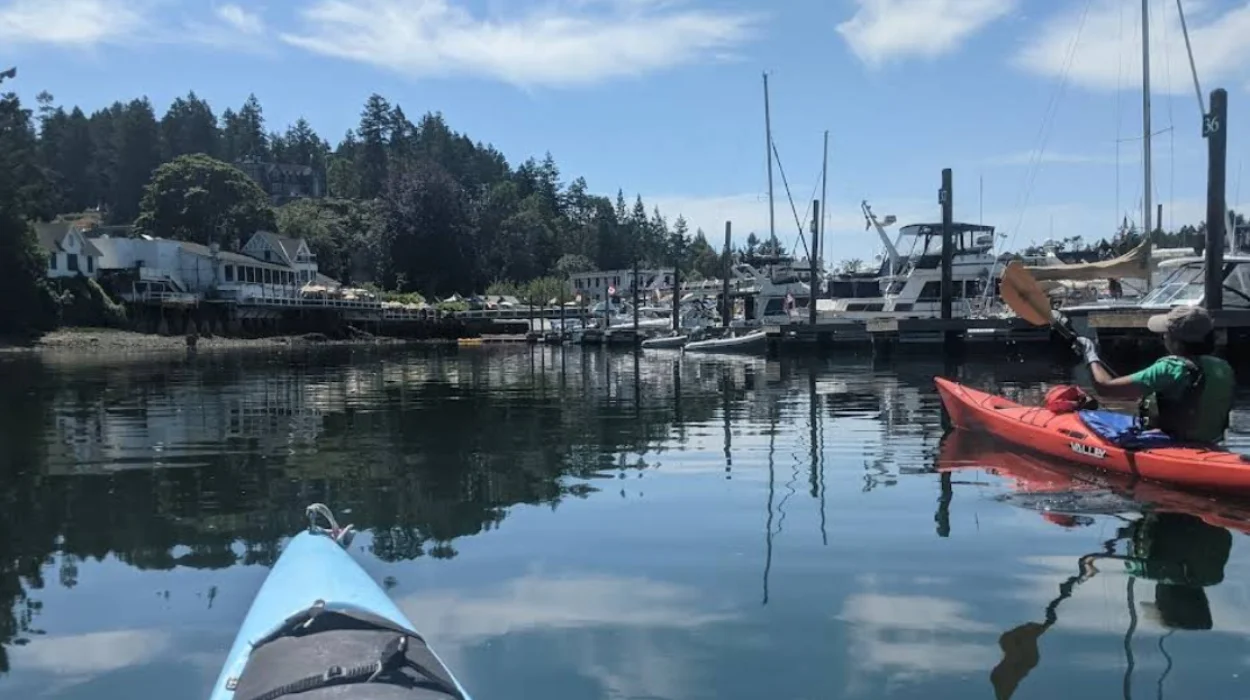
San Juan Islands kayaking for beginners requires guided tours on Lopez Island or protected bays, as the San Juans feature strong tidal currents (1-2 knots) and ocean conditions unsuitable for unguided novice paddlers. Sea kayaks over 16 feet with sealed bulkheads are mandatory, and beginners should book half-day tours from Friday Harbor starting at $129 rather than attempting independent paddles.
- What Are the San Juan Islands and Why Are They Famous for Kayaking?
- Is Kayaking in the San Juan Islands Safe for Complete Beginners?
- Where Are the Best Beginner Kayaking Spots in the San Juan Islands?
- What Type of Kayak Do Beginners Need for San Juan Islands Waters?
- What Gear and Clothing Must Beginners Bring for Sea Kayaking?
- When Is the Best Time of Year for Beginner Kayaking in the San Juan Islands?
- How Much Do Beginner Kayaking Tours Cost in the San Juan Islands?
- How Do You Get to the San Juan Islands for a Kayaking Trip?
- What Wildlife Can Beginner Kayakers Expect to See in the San Juan Islands?
- What Safety Rules and Regulations Must Beginner Kayakers Follow?
- How Do You Prepare for Your First San Juan Islands Kayaking Adventure?
What Are the San Juan Islands and Why Are They Famous for Kayaking?
The San Juan Islands are a 450-square-mile archipelago in Washington’s Salish Sea, located between the Olympic Peninsula and Vancouver Island, Canada. The islands include San Juan Island (population 7,000), Lopez Island (2,200 residents), Orcas Island, and 170+ smaller islands. The region sits in Haro Strait, one of the world’s premier whale-watching locations where Southern Resident orcas hunt migrating Chinook salmon.
The San Juans became a kayaking destination in 1980 when San Juan Kayak Expeditions launched as the oldest sea kayaking outfitter in the region. National Geographic named San Juan Islands kayaking tours one of the “10 Best Trips in the World for 2011.” The islands’ protected coves, beach campsites, mountain views of Mt. Baker and the Olympics, and consistent marine wildlife create ideal conditions for sea kayaking expeditions.
Is Kayaking in the San Juan Islands Safe for Complete Beginners?
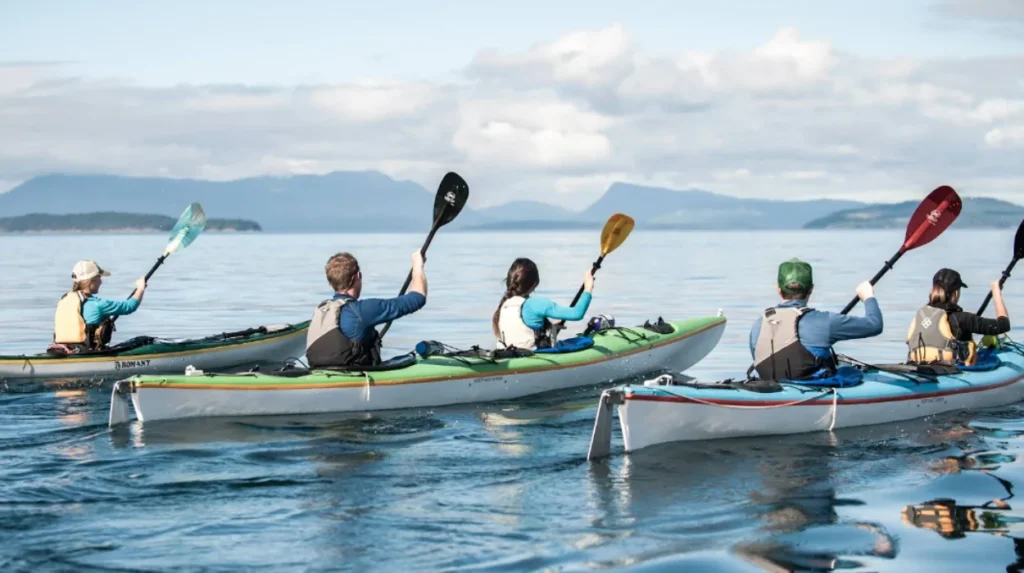
The San Juan Islands are generally not safe for unguided beginner kayakers due to ocean currents reaching 1-2 knots, tidal rips, and eddies that can trap inexperienced paddlers. All kayakers must use sea kayaks over 16 feet with sealed bulkheads and understand tidal current patterns. Emergency calls for missing kayakers occur almost daily even in May according to marine radio reports from local guides.
Guided half-day tours are the only safe option for beginners. Sea Quest Kayak Tours and San Juan Kayak Expeditions monitor conditions continuously and select calm routes away from dangerous currents. Beginners should book a sea kayak course with Body Boat Blade in Anacortes before attempting any unguided paddling. The east side route from Friday Harbor offers the safest conditions for first-time kayakers, featuring shallow waters and a huge seal population that attracts Bigg’s killer whales.
Independent multi-day trips require intermediate-to-experienced paddling skills. Routes like Roche Harbor to Stuart Island involve 3.5 miles of open water with reefs and powerful tidal currents that exceed beginner capabilities.
Where Are the Best Beginner Kayaking Spots in the San Juan Islands?
Lopez Island’s Spencer Spit State Park and Fisherman Bay offer the calmest protected waters for beginner kayakers, with nearshore currents generally safe for novices. These locations feature rental availability, ADA-accessible facilities, restrooms, and parking. Spencer Spit has two Cascadia Marine Trail sites specifically for kayak-access camping.
Lime Kiln State Park on San Juan Island provides another beginner-friendly day trip option with glassy water conditions and views of the Olympic Range. Guided tours from Outdoor Odysseys pick up directly from Friday Harbor, eliminating the need to drive over. The park is the best place to see whales from land and offers accessible kayaking waters.
Bowman Bay on Deception Pass serves as an excellent beginner training area with beautiful scenery and abundant wildlife. The bay’s protected waters allow new paddlers to develop comfort before attempting open-water crossings.
Advanced beginners may attempt Jones Island Marine State Park, reachable via 2-3 hour paddle from launch points. Jones Island features 24 campsites with ocean views, drinking water, and two Cascadia Marine Trail sites reserved for human-power arrival. However, currents between Jones Island and surrounding islands can reach several knots.
Stuart Island requires a full day’s paddle from Roche Harbor and involves crossing Spieden Channel, which experiences tide rips and turbulent eddies requiring slack-tide crossing. This route is not recommended for beginners.
What Type of Kayak Do Beginners Need for San Juan Islands Waters?
Beginners must use sea kayaks greater than 16 feet in length with sealed bulkheads (pockets of air preventing sinking) for San Juan Islands kayaking. Recreational kayaks, sit-on-top kayaks, and inflatable kayaks lack the necessary stability, speed, and safety features for ocean conditions.
Sea kayaks feature enclosed cockpits with spray skirts preventing water entry, sealed front and rear bulkheads providing flotation even when flooded, and rudder or skeg systems improving tracking in wind. Typical sea kayaks measure 16-18 feet long, 22-24 inches wide, and weigh 50-65 pounds.
Guided tours provide all equipment including Werner or Aqua Bound paddles (reducing arm fatigue), USCG-approved PFDs, spray skirts, and safety gear. Rental sea kayaks at Lopez Island cost approximately $60-80 per day for beginners.
Buying a beginner sea kayak costs $1,200-2,500 for entry-level models from brands like Eddyline (Rio model), Ocean Kayak, or Wilderness Systems. Essential accessories add $300-500 including paddle ($150-250), PFD ($60-120), spray skirt ($80-150), and paddle float ($40-60).
What Gear and Clothing Must Beginners Bring for Sea Kayaking?
Beginners must dress for immersion wearing quick-dry layers, wool baselayers, UPF sun hoodies, raincoats, and footwear that can get wet like paddling sandals or water shoes. The Salish Sea water temperature ranges 47-52°F year-round, causing cold-water immersion risks within minutes without proper clothing.
Essential gear includes:
- USCG-approved Personal Flotation Device (PFD) worn at all times
- Whistle for emergency signaling
- Dry bags for spare clothes, water, and food
- Sunscreen, sunglasses with retainer strap, and hat
- Water bottle (1-2 liters) and snacks
- First-aid kit for minor injuries
- VHF marine radio for emergency communication (cell service unreliable)
Clothing layers:
- Wool or synthetic baselayer (never cotton)
- Quick-dry long pants like Kuhl Freeflex or REI Trailmade
- UPF sun hoodie for paddling
- Down puffy jacket packing small for cool nights
- Solid raincoat with hood
- Hiking/paddling sandals like Bedrocks or water shoes
Guided tours provide sea kayaks, paddles, safety equipment, and transportation. Beginners bring suitable beach clothing, water, hat, sunglasses, sunscreen, warm sweater, and rain jacket if windy.
When Is the Best Time of Year for Beginner Kayaking in the San Juan Islands?
The best kayaking season runs from May through October, with July and August offering peak conditions including highest wildlife sighting odds, warmest temperatures, and most stable weather. June and September provide similar conditions with smaller crowds.
Whale watching tours run April through October. Southern Resident orcas return July-August when Chinook salmon runs are strong. Bigg’s orcas appear year-round with peak activity July-August. Humpback whales are reliable June through October. Mink whales pass through spring and summer.
May through June features migrating salmon attracting orcas, with water temperatures warming to 50°F. July and August average 65-75°F air temperature with minimal rain. September offers 55-65°F temperatures, fewer crowds, and steady Bigg’s orca activity through early October.
October sees crowds drop significantly but weather becomes unpredictable with increased wind and rain. Some operators close after mid-October. November through March features cold temperatures (35-45°F), frequent storms, and minimal wildlife activity, making these months unsuitable for beginners.
Peak season requires booking lodging and tours 2-3 months ahead. Half-day tour sightings during peak months (June-September) show orcas on approximately 20% of trips according to Sea Quest Kayak Tours statistics from 2005-2018.
How Much Do Beginner Kayaking Tours Cost in the San Juan Islands?
Half-day 3-hour guided kayak tours from Friday Harbor cost $129 and include all gear, instruction, expert guides, and transportation to launch beach. These tours are perfect for beginners with limited time or those unsure about enjoying sea kayaking.
Full-day 6-hour adventures cost $199-229 and include lunch. Multi-day 2-5 day camping expeditions range $450-850 per person including meals, camping equipment, and guided route planning. Private family or group trips cost $250-400 per hour with flexible itineraries.
San Juan Kayak Expeditions offers 3-hour ($135), 4-hour ($175), and 6-hour ($245) tours with over 42 years of guiding experience. Small groups (3-6 people) provide personal attention and better wildlife access.
Tour prices include sea kayaks, paddles, PFDs, spray skirts, safety equipment, and professional guide instruction. Beginners do not need prior experience. All operators provide 100% money-back guarantees.
Vehicle reservations for Washington State Ferry from Anacortes to Friday Harbor cost $20-30 per vehicle and require booking weeks ahead during summer. Ferry crossing takes 1 hour 15 minutes.
How Do You Get to the San Juan Islands for a Kayaking Trip?
Beginners reach the San Juan Islands via Washington State Ferry from Anacortes to Friday Harbor on San Juan Island, with vehicle reservations required especially during summer months. The ferry costs $20-30 per vehicle plus $7-12 per passenger. Reservations open 30 days ahead and fill quickly for June-August departures.
Friday Harbor serves as the main hub where most tours meet just outside harbor limits. Exact directions and timing are provided ahead of tours. Alternative ferry routes include Friday Harbor to Orcas Island (45 minutes) or Lopez Island (1 hour 15 minutes).
Lopez Island offers car camping combined with kayak access at Spencer Spit State Park, allowing beginners to strap kayaks to vehicle roofs and drive directly to launch points. This eliminates ferry vehicle reservation requirements.
From Seattle, drive 2.5 hours north to Anacortes (135 miles via I-5). From Portland, drive 4.5 hours north (230 miles). Bellingham sits 45 minutes south of Friday Harbor via Highway 11.
Public transportation options include San Juan承包人’s Island Transit bus from Anacortes ferry terminal to Friday Harbor. Lopez Island Taxis arrange rides from ferry to Spencer Spit ($15-25).
What Wildlife Can Beginner Kayakers Expect to See in the San Juan Islands?
Beginners commonly see harbor seals, bald eagles, porpoises, sea stars, and seabirds, with orca sightings occurring on approximately 20% of peak-season half-day tours. Orcas are not guaranteed; visitors should consider whale watching tours on motorized boats if Orcas are the primary goal.
Harbor seals populate the San Juans in huge numbers, particularly around east side routes near Friday Harbor where seal populations provide food for Bigg’s killer whales. Seals are visible daily from kayaks resting on buoys or swimming near shore.
Bald eagles nest throughout the islands with active nests visible on west side routes. Eagles hunt fish and equal opportunity scavengers, often spotted perched in trees or flying low over water.
Southern Resident orcas (endangered, 100+ individuals) hunt Chinook salmon in Haro Strait July-August. Bigg’s orcas (400+ individuals, thriving) hunt marine mammals year-round and travel in small stealthy pods. Humpback whales return reliably June-October. Mink whales pass spring and summer. Dall’s porpoises commonly surface near kayaks.
Marine mammals include Steller sea lions, California sea lions (rare), gray whales (occasional), and elephant seals (rare). Land wildlife includes Sitka deer, mouflon sheep (imported), prong-horned antelope (imported), red-tailed fox, raccoon, and deer.
Bioluminescence occurs in San Juan waters from dinoflagellates (marine plankton) emitting blue-white light when moved by kayaks, fish, or ocean currents. Night tours available through Outdoor Odysseys showcase this phenomenon.
What Safety Rules and Regulations Must Beginner Kayakers Follow?
Kayakers must observe minimum approach distances from marine mammals: 100 yards for whales/orcas, 50 yards for seals/sea lions/dolphins, and never knowingly approach marine mammals. Violations violate federal Marine Mammal Protection Act and incur fines up to $10,000.
Leave No Trace principles apply throughout the San Juans. Campfires occur in designated fire rings only unless posted as allowed in intertidal zones. All solid human waste belongs in pit toilets or must be packed out including toilet paper. Camp in established areas only. Wash dishes with sand or gravel in lowest tidal zone without soap. Pack out all garbage.
The San Juan Islands are ancestral homelands of Coast Salish First Nations and Lummi Indigenous Tribe. Camping occurs on culturally significant areas. Leave plants, animals, artifacts, and rocks as found without digging or disturbing cultural sites.
Cell service is unreliable throughout the islands. Carry VHF marine radio and know emergency communication usage. Most campsites are non-reservable with cash permit fees upon arrival covering maintenance and restoration projects.
Tidal currents require planning trips according to tide charts. Cross narrow passages at slack tide. Study marine maps understanding water movement. Many channels feature currents converging into dangerous waters. Never plan hard-fast return times risking dangerous paddling to meet schedules.
Dress for immersion recognizing 47-52°F water causes cold shock within minutes. Paddle with groups sharing trip plans with contacts back home. Carry proper safety equipment including PFD, whistle, flashlight, first-aid kit, spare clothes in dry bags, and emergency shelter.
How Do You Prepare for Your First San Juan Islands Kayaking Adventure?
Beginners book guided half-day tours from Friday Harbor, arrive 15 minutes early for equipment fitting and safety instruction, wear quick-dry layers with rain protection, and bring water, sunscreen, and snacks. No prior experience is required for half-day tours, though a healthy sense of adventure is essential.
Pre-trip preparation includes checking weather forecasts for wind speed, direction, and wave height. Unfavorable weather quickly turns pleasant trips dangerous. Review tide charts identifying slack-tide windows for safe crossings.
Book tours 2-3 months ahead during peak season (June-August). Contact operators directly for tour selection based on experience level. San Juan Kayak Expeditions staff help choose appropriate tours after 42 years of experience.
Practice basic paddling strokes before dedicated trips: forward stroke for moving ahead, reverse stroke for backward movement, sweep stroke for turning, and draw stroke for sideways movement. Local kayaking clubs or certified instructors through American Canoe Association provide structured learning.
Create float plans documenting route, destination, departure/return times, emergency contacts, and kayak/gear details. Leave plans with reliable contacts alerting authorities if returns are delayed.
Check equipment rentals include sea kayaks over 16 feet with bulkheads, paddles, PFDs, and spray skirts. Verify operators provide safety equipment and professional guides monitoring conditions continuously.
Arrive with layered clothing, wind/rain shell, sun protection, and wet-foot footwear. Bring warm sweater for temperature changes throughout the day. Conditions shift rapidly from sun to wind requiring preparation for both.
Professional guides provide thorough instruction on basic skills ensuring safe experiences maximizing enjoyment. First-time kayakers report remarkable experiences with patient support building confidence on water.
What are the San Juan Islands and why are they famous for kayaking?
The San Juan Islands are a scenic archipelago in Washington’s Salish Sea known for sea kayaking, marine wildlife, island camping, and opportunities to view orcas, seals, and bald eagles. The region offers protected coves, shoreline campsites, and spectacular mountain and ocean views.