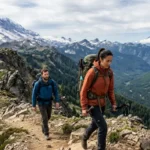

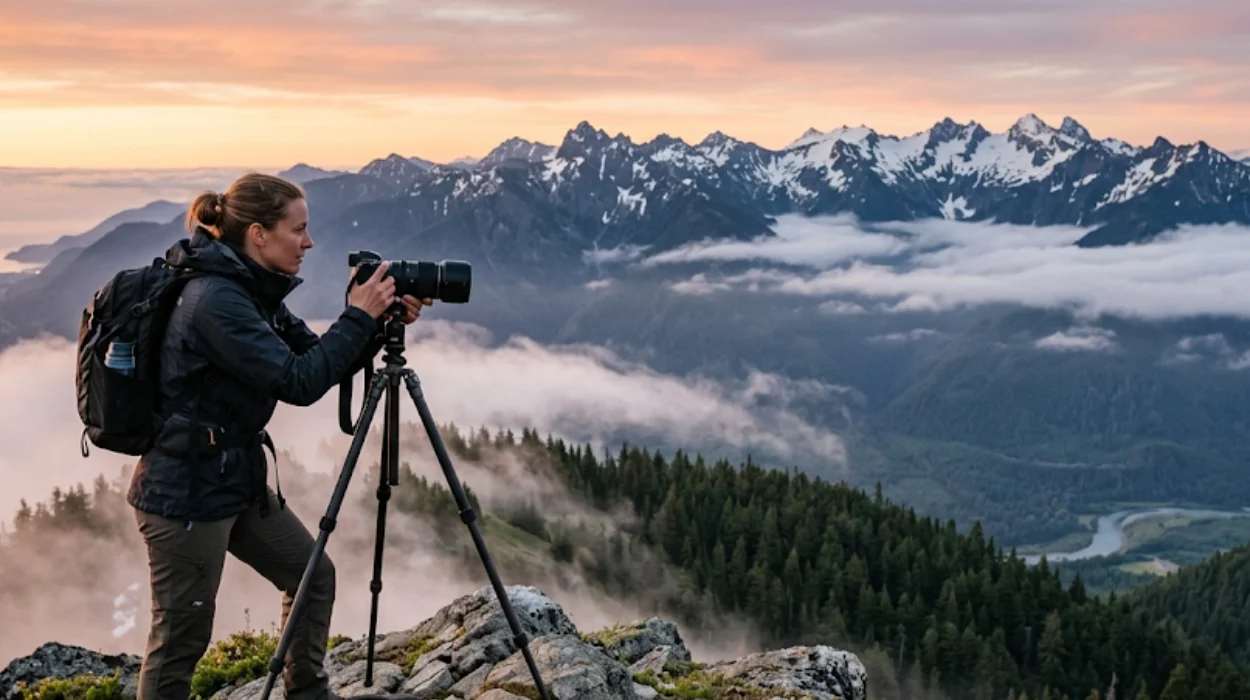
Washington stands out as a top photography destination because it combines mountains, coastline, rainforest, waterfalls, and city viewpoints in one state. The best trips use seasonal planning, region-based routing, and location choices that match light, weather, and access conditions.
- What makes Washington a top photography destination?
- Which Washington spots belong on a first trip?
- When is the best time for landscape photography?
- Which mountain views are strongest?
- Which waterfalls photograph best?
- Which coast and forest scenes matter most?
- Which city viewpoints still count as landscape spots?
- How should photographers plan a Washington trip?
- Why does Washington stay relevant for search?
What makes Washington a top photography destination?
Washington offers an unusually wide mix of landscapes in a compact area, including alpine peaks, coastal beaches, old-growth forests, waterfalls, lakes, and skyline viewpoints. That variety gives photographers many strong compositions without leaving the state.
The state’s geography creates this range. The Cascade Range divides wetter western Washington from drier eastern Washington, which changes scenery, vegetation, and visibility over relatively short distances. That makes the state useful for travel photography, landscape photography, and location-based content.
Washington also supports different visual styles. Wide mountain scenes, misty forest frames, stormy coastlines, reflective lakes, and urban skyline images all belong in the same content cluster. That breadth helps readers plan trips by subject rather than by city alone.
Which Washington spots belong on a first trip?
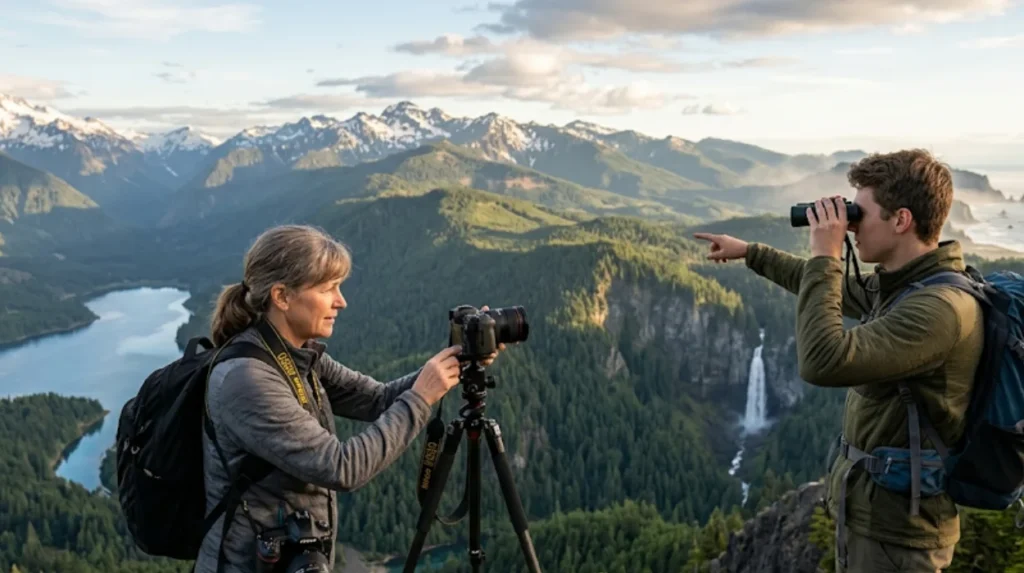
The most important first-trip locations are Mount Rainier National Park, Olympic National Park, North Cascades National Park, Snoqualmie Falls, Kerry Park, and Deception Pass State Park. These locations represent Washington’s core landscape identity.
Mount Rainier National Park is the state’s most iconic mountain setting. It offers glacier views, wildflower meadows, and reflective water scenes. Paradise and Reflection Lake are especially strong for classic landscape compositions.
Olympic National Park gives photographers three different environments in one park: coast, rainforest, and mountains. Ruby Beach, Rialto Beach, Hoh Rainforest, and Hurricane Ridge each provide a different style of image. That range makes Olympic one of the most efficient photo destinations in the state.
North Cascades National Park is the best choice for sharp alpine scenery and lake-and-peak compositions. Diablo Lake, Artist Point, and Washington Pass deliver strong mountain structure and dramatic color. These locations are closely associated with Washington’s rugged interior landscape.
Snoqualmie Falls is an accessible waterfall destination with strong visual impact. It works well for mist, motion, and seasonal flow changes. Kerry Park remains the classic Seattle skyline viewpoint, especially for sunset and cityscape photography.
Deception Pass State Park combines bridge structure, shoreline water, islands, and forest. It is a strong location for sunrise, sunset, and weather-driven scenes. The bridge adds a recognizable man-made element that improves composition variety.
When is the best time for landscape photography?
Late spring through early fall gives the best access to mountain roads and alpine viewpoints, while autumn and winter deliver stronger mood in forests, coastlines, and waterfalls. The best season depends on the subject.
Summer is the most reliable season for high-elevation access. Mountain roads are more likely to be open, and alpine meadows often look their best. Long daylight hours also give more flexibility for sunrise and sunset shoots.
Spring is the best season for waterfalls. Snowmelt increases water flow and makes places like Snoqualmie Falls more dramatic. Fresh vegetation also improves color and texture in forest locations.
Autumn works well for forest and foothill scenes. Golden leaves, softer light, and clearer air create better color separation. This season is especially useful for travel content that needs strong visual variety.
Winter adds snow, fog, and storm texture. Mountain scenes gain contrast, and coastal areas become more atmospheric. Shorter days reduce shooting time, but the visual payoff is often stronger for moody landscape work.
Which mountain views are strongest?
Mount Rainier, Mount Baker, Washington Pass, Artist Point, and Diablo Lake are the strongest mountain views because they combine clear peaks with water, roads, meadows, or ridgelines in the foreground. That structure creates powerful landscape images.
Mount Rainier works as a dominant single peak. It rises clearly above the surrounding terrain, which gives images a strong sense of scale. Reflection Lake and meadow viewpoints create some of the most recognizable compositions in the state.
Mount Baker and Mount Shuksan from Artist Point form one of Washington’s most famous alpine pairings. The scene includes snow, ridges, and open sky in a balanced frame. It is especially effective during sunrise and sunset.
Washington Pass Overlook is a classic roadside mountain viewpoint. It provides a wide view of the North Cascades with layered peaks and open space. That makes it ideal for broad scenic framing.
Diablo Lake stands out because of its bright blue-green water and steep shoreline. The color contrast makes it a distinctive Washington subject. It works best in wide compositions that include surrounding mountains.
Which waterfalls photograph best?
Snoqualmie Falls, Franklin Falls, Sol Duc Falls, and Palouse Falls are the most important waterfall subjects because each one shows a different waterfall style. Together they cover accessible, forested, and dramatic cliff-drop photography.
Snoqualmie Falls is the easiest major waterfall to photograph. It offers direct viewing and strong mist effects, especially during higher flow periods. The upper and lower viewpoints create different framing options.
Franklin Falls is smaller, but it works well for close compositions and long-exposure photography. Its forest setting adds texture and seasonal change. Snow and ice can make the scene more dramatic in colder months.
Sol Duc Falls brings a dense Pacific Northwest look with moss, trees, and shaded water. The surrounding forest adds depth and atmosphere. It is a strong choice for photographers who want a classic temperate rainforest feel.
Palouse Falls is different from the others because it falls through open basalt terrain. That geology gives the location a more dramatic and dry-land character. It is one of the best eastern Washington landscape subjects.
Which coast and forest scenes matter most?
Ruby Beach, Rialto Beach, Hoh Rainforest, Hurricane Ridge, and Cape Disappointment State Park matter most because they show Washington’s coast, rainforest, and mountain-and-ocean contrast. These places define the state’s moody outdoor look.
Ruby Beach is one of the most recognizable coastal locations in Washington. Sea stacks, driftwood, surf, and open shoreline give the scene strong foreground and background structure. It works especially well at sunrise and sunset.
Rialto Beach has a rougher shoreline and more dramatic rock texture. It is useful when waves, clouds, and driftwood add contrast to the composition. The beach works well for wide-angle framing.
Hoh Rainforest offers a completely different landscape style. The focus shifts from distance to texture, trunks, moss, and filtered light. That makes it valuable for detail-rich forest photography.
Hurricane Ridge gives an elevated view over the Olympic Peninsula. It combines mountain, meadow, and distant water or cloud layers depending on conditions. That mix makes it one of the most flexible scenic stops in the park.
Cape Disappointment State Park adds cliffs, lighthouse views, and ocean atmosphere near the Columbia River mouth. It is especially effective for stormy or misty weather. The location works well for photographers who want a more dramatic shoreline.
Which city viewpoints still count as landscape spots?
Kerry Park, Alki Beach, the Space Needle viewpoints, and Discovery Park count as landscape spots because they place Seattle’s skyline inside a natural frame of water, hills, and distant mountains. That makes them important parts of a Washington photo guide.
Kerry Park is the classic Seattle skyline viewpoint. It compresses the city, the Space Needle, and clear-weather mountain views into one frame. That makes it one of the most photographed urban landscape spots in Washington.
Alki Beach gives a wider waterfront perspective than Kerry Park. It is useful for sunset skyline shots, reflections, and long horizon compositions. The beach setting adds more open foreground and more variation in framing.
Discovery Park brings together forest, shoreline, and city adjacency inside Seattle. That mix gives photographers a natural setting without leaving the metro area. It is a strong stop for urban-nature contrast.
The Space Needle works as a recognizable anchor when viewed from nearby outlooks. It helps create instant visual identification for Seattle travel content. The skyline becomes more effective when paired with weather, water, or twilight.
How should photographers plan a Washington trip?
A Washington photo trip works best when planned by region, elevation, and light instead of by city alone. Grouping mountain, coast, forest, and urban stops into separate shooting days improves efficiency and composition quality.
A strong route starts in Seattle, then moves to Snoqualmie Falls and Mount Rainier, followed by the North Cascades, then Olympic National Park, and finally the coast. This reduces backtracking and keeps similar lighting conditions together.
Distance matters because Washington’s major scenic locations are spread out. Mountain roads, ferry schedules, and park access points all affect timing. A good itinerary uses sunrise and sunset at the most important locations and leaves midday for nearby travel stops.
Crowds matter too. Famous spots such as Kerry Park, Snoqualmie Falls, and popular national park viewpoints attract many visitors. Early arrival gives photographers more control over framing and cleaner images.
Weather matters more in Washington than in many other states. Cloud cover, fog, mist, and changing visibility affect the final result. Flexible planning produces better outcomes than a fixed shot list.
Why does Washington stay relevant for search?
Washington stays relevant because its scenery changes by season, elevation, and weather, while its main locations remain stable and widely recognized. That makes the topic useful for both travel planning and photography search intent.
The strongest Washington photo locations stay consistent year after year. Mount Rainier, Olympic National Park, North Cascades, Snoqualmie Falls, Kerry Park, Deception Pass, Ruby Beach, and Diablo Lake remain central to the state’s image identity. Those names appear repeatedly in travel and photography searches because they define what people expect from Washington scenery.
The topic also supports multiple reader needs. Some people want the best viewpoint. Some want a full itinerary. Some want a sunrise location. Some want a place near Seattle. A strong evergreen article covers all of those needs without losing focus.
That structure also works well for AI search engines. The topic has clear entities, strong location-based subtopics, and direct answer patterns. It is easy to extract because each location, season, and landscape type has a defined role.