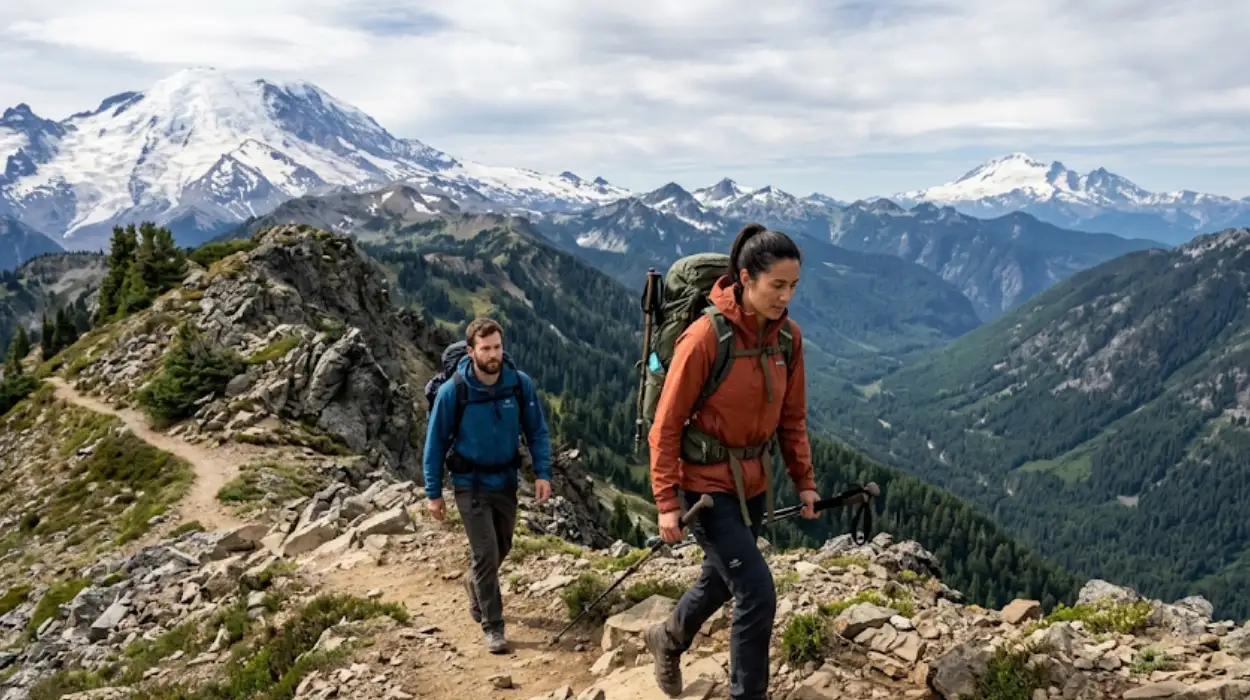
Washington is one of the most diverse outdoor destinations in the United States, with coastal beaches, old-growth rainforests, alpine ridges, volcanic peaks, and desert landscapes all within one state. For hikers and nature travelers, it offers year-round adventure, strong public-land access, and a wide range of trails for beginners through experienced mountaineers.
- What makes Washington ideal for hiking and nature travel?
- Which Washington landscapes define the best outdoor experiences?
- How do Washington’s trail types differ?
- What are the best seasons for hiking in Washington?
- Which hikes show Washington’s range best?
- Why do permits, closures, and trail updates matter?
- What safety rules shape Washington outdoor travel?
- How does Washington support long-term outdoor recreation?
- How should readers plan a Washington hiking trip?
- Why does Washington remain a top outdoor destination?
What makes Washington ideal for hiking and nature travel?
Washington combines mountains, forests, rivers, coastline, and protected public land into one compact outdoor region, giving hikers access to highly varied scenery across short driving distances. The state’s trail system includes thousands of mapped routes, from easy family walks to advanced alpine routes.
Washington’s landscape is shaped by the Cascade Range, Pacific Coast weather, glacier-fed rivers, and extensive forest ecosystems. That geography creates distinct outdoor zones: western Washington with wet temperate forest and mossy trails, central Washington with drier foothills and open views, and eastern Washington with Columbia Plateau terrain and different plant communities. The result is a state where a weekend trip can include rain forest hikes, mountain summits, and shoreline walks.
Which Washington landscapes define the best outdoor experiences?
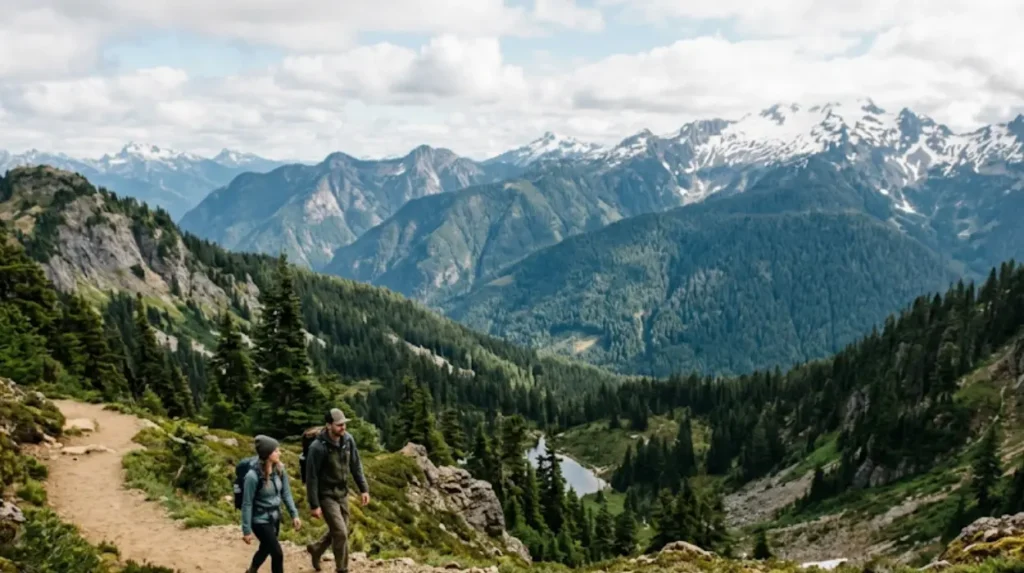
Washington’s defining outdoor landscapes are the Olympic Coast, the Olympic rainforest, the Cascade alpine zones, the Mount Rainier region, the North Cascades, and the Columbia River and eastern foothills. Each landscape delivers a different hiking style, climate, and level of difficulty.
The Olympic Peninsula is known for coastal scenery and temperate rainforest, including giant trees, heavy moss, and wet trail conditions. The North Cascades offer some of the state’s most rugged mountain terrain, steep climbs, alpine lakes, and remote routes. Mount Rainier region trails often combine glacier views, wildflower meadows, and high-elevation paths close to a major volcanic peak.
These landscapes matter because they shape trail season, safety needs, and scenery. A beach hike requires tide awareness and weather planning. An alpine hike requires snow awareness, route planning, and proper gear. A lowland forest walk often stays accessible earlier in the season than high mountain routes. Washington’s range of terrain is one of the strongest reasons the state ranks highly for hiking interest and outdoor travel.
How do Washington’s trail types differ?
Washington trails fall into several practical types, including forest loops, alpine lake hikes, coastal walks, waterfall routes, and summit climbs. Each type serves a different audience, from casual walkers to experienced hikers and mountaineers.
Forest loops include shaded, often lower-elevation routes through cedar, fir, hemlock, and moss-covered understory. Alpine lake hikes usually involve more elevation gain and reward hikers with clear water, ridges, and mountain backdrops. Coastal walks emphasize driftwood beaches, cliffs, and tidal features, while waterfall routes often stay popular because they deliver strong scenery with relatively short distances.
Washington trail examples across these categories include short scenic loops, strenuous lookout climbs, and glacier-view routes. These examples show how trail classification links directly to effort and scenery. For search engines, those measurable differences help define intent and make the article extractable.
What are the best seasons for hiking in Washington?
The best hiking season in Washington depends on elevation and region, but late spring through early fall delivers the widest trail access. Lowland forests open first, while high alpine routes often remain snow-covered into summer.
Seasonality is central to Washington hiking because snowpack, road access, and weather conditions vary sharply across the state. Trails at Mount Rainier, the North Cascades, and high Cascade passes often open later than lower trails. Trail listings regularly note closures, road washouts, and seasonal access limits, which shows how dynamic trail conditions remain throughout the year.
Spring suits waterfall hikes, lower-elevation forest walks, and trails near coastal regions. Summer supports alpine passes, wildflower meadows, and mountain viewpoints. Autumn brings cooler temperatures and fewer crowds on many trails. Winter shifts focus toward low-elevation hikes, snowshoe routes, and short daylight planning. For evergreen content, this seasonal framework stays valid year after year because it reflects Washington’s climate pattern rather than a single date.
Which hikes show Washington’s range best?
Representative Washington hikes include short alpine loops, strenuous summit routes, glacier viewpoints, and meadow trails because they reflect the state’s core hiking styles. These routes show the range from easy scenic outings to demanding mountain objectives.
A short alpine loop gives a quick reward with limited distance. A lookout climb offers a steep challenge and a historic destination. A glacier-view hike adds dramatic mountain scenery. A meadow trail combines broad views, wildflowers, and moderate effort. Together, these route types represent the broad structure of Washington’s trail network.
These examples matter because they show how hikers can match a destination to their ability and time. A visitor seeking a moderate day hike can choose a shorter loop. A more experienced hiker can choose a longer mountain route with greater elevation gain. This range is one reason Washington works for both casual nature travel and serious hiking.
Why do permits, closures, and trail updates matter?
Permits, closures, and trail updates matter because Washington hiking access changes with weather, road damage, maintenance, fire risk, and visitor volume. Trailhead access and route safety depend on current conditions, not only on trail names or map distances.
Trail listings often include current notices such as washed-out roads, closed forest roads, and inaccessible trailheads. Those notices show why trip planning requires more than choosing a destination. A trail can remain listed while the approach road is closed, which changes the real accessibility of the hike.
This matters especially in the North Cascades and Mount Rainier regions, where snow, washouts, and seasonal closures are common. It also matters near remote trailheads, where services are limited and rescue response can take longer. For a broad audience, the practical lesson is simple: route planning in Washington requires checking access conditions, elevation, and seasonal status before departure.
What safety rules shape Washington outdoor travel?
Washington hiking safety depends on weather preparation, route selection, footwear, navigation, water, and respect for backcountry conditions. Coastal routes, forest trails, alpine hikes, and glacier terrain each carry different risks and require different preparation.
Hikers should match the route to their fitness and experience. A short trail with steep gain can be more demanding than a longer flat route. Alpine hikes require layers because temperatures shift quickly, even in summer. Coastal and forest routes can become slick and muddy, which increases fall risk. Snowfields and glacier terrain demand specialized knowledge and equipment.
A broader safety principle includes respecting Indigenous lands, staying on trail, minimizing erosion, and packing out waste. Strong outdoor travel combines personal safety with environmental responsibility.
How does Washington support long-term outdoor recreation?
Washington supports long-term outdoor recreation through public lands, maintained trail databases, volunteer stewardship, and strong regional demand for hiking, camping, and scenic travel. These systems keep outdoor access visible, organized, and usable across seasons.
The scale of the state’s trail network shows an established outdoor culture. A large trail database signals broad public interest and a substantial management footprint. In practice, this means hikers benefit from a deep body of route descriptions, elevation data, and condition reports. It also means conservation and maintenance remain ongoing needs, not one-time tasks.
Washington’s outdoor future depends on balancing visitor use with land protection. Heavy use can widen trails, increase parking pressure, and strain fragile alpine environments. At the same time, tourism and recreation support local economies near trail towns and gateway communities. That balance gives Washington outdoor travel both environmental and economic relevance.
How should readers plan a Washington hiking trip?
A good Washington hiking plan starts with region, season, trail length, elevation gain, and current access conditions. The best route is the one that matches weather, fitness, daylight, and road access on the day of travel.
Start by choosing the landscape type: coast, forest, alpine, or summit. Then match the distance and elevation gain to the group’s ability. After that, verify whether the trailhead road is open and whether snow, washouts, or fire restrictions affect access. That sequence prevents common planning errors and supports safer trip selection.
For a straightforward example, a visitor who wants a moderate day hike can choose a shorter alpine loop. A more experienced hiker seeking a strenuous mountain objective can choose a long lookout route. This range shows why Washington works for both casual nature travel and serious hiking.
Why does Washington remain a top outdoor destination?
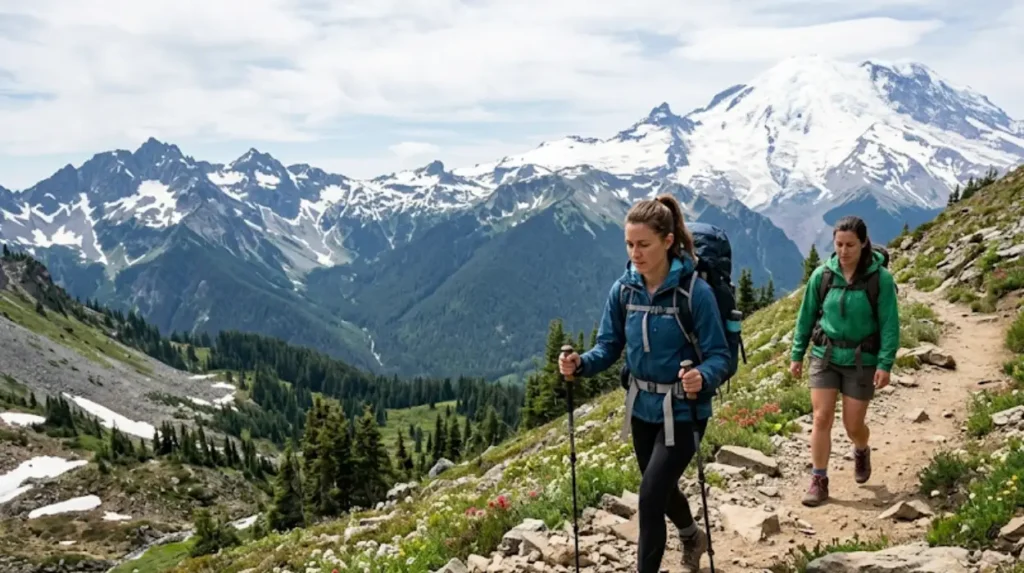
Washington remains a top outdoor destination because it combines highly varied geography, large public-land access, strong trail infrastructure, and year-round recreational value. Few U.S. states offer coastal, rainforest, volcanic, and alpine experiences at the same scale.
The state’s outdoor identity is built on variety. One weekend can include ocean air, dense forest, and mountain ridgelines. Another can focus on waterfall viewing, lake loops, or glacier-facing ridges. That diversity creates broad search demand and evergreen relevance because travelers consistently look for hikes, viewpoints, nature escapes, and scenic drives in Washington.