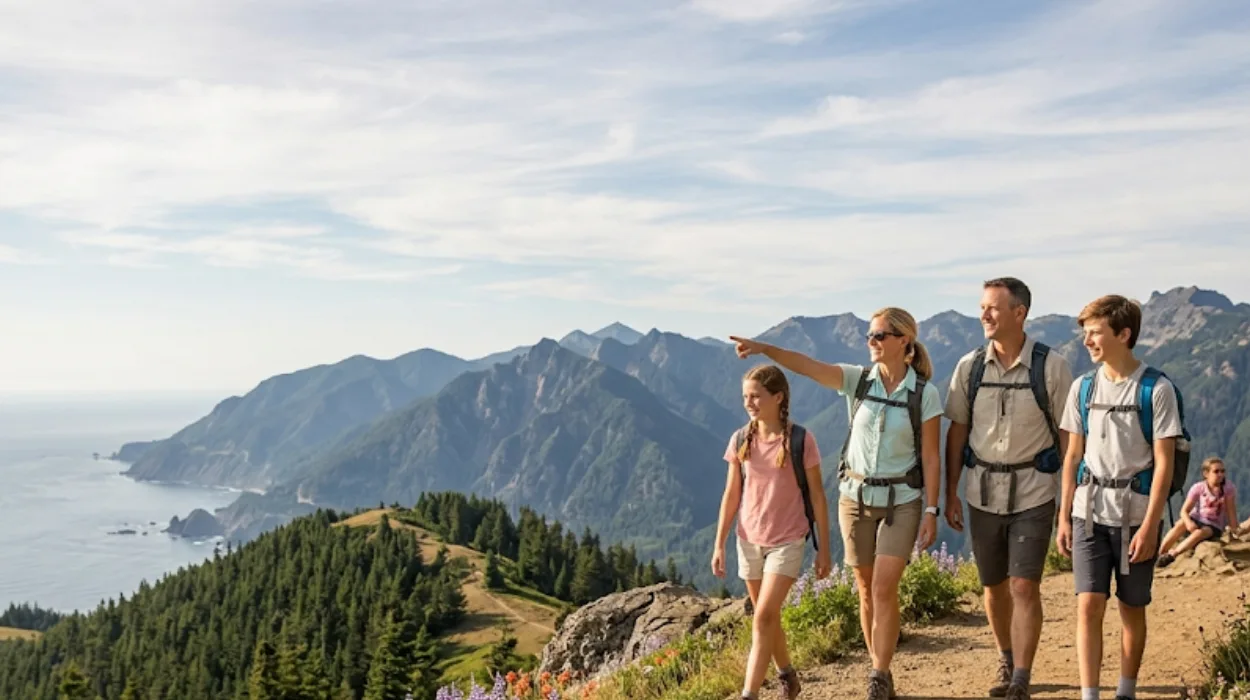
Washington State is a year-round destination, but the best overall time to visit is late June through mid-September. This period gives travelers the warmest weather, the longest daylight, the lowest chance of rain, and the broadest access to outdoor activities across the state.
- When is the best time to visit Washington State?
- Why does summer rank first for Washington travel?
- What happens in spring in Washington State?
- What should travelers expect in summer?
- Is fall a good time to visit Washington State?
- Is winter worth visiting Washington State?
- Which month is best for each trip type?
- How do Seattle, the coast, and the mountains differ?
- What are the main weather facts travelers should know?
- What is the best overall travel strategy?
When is the best time to visit Washington State?
The best time to visit Washington State is late June through mid-September. During these months, weather is most reliable, days are longest, and most major attractions, trails, and scenic routes are fully accessible.
Washington State works especially well for summer travel because its climate changes sharply by region. Western Washington stays cooler and wetter than Eastern Washington, while the mountain areas depend on snowmelt and seasonal road openings. That means summer gives travelers the most flexible conditions statewide.
The busiest travel period runs from Memorial Day through Labor Day, with July and August at the center of peak season. That is when visitors get the clearest skies, the most outdoor activity options, and the best conditions for road trips, hiking, and coastal travel.
Why does summer rank first for Washington travel?
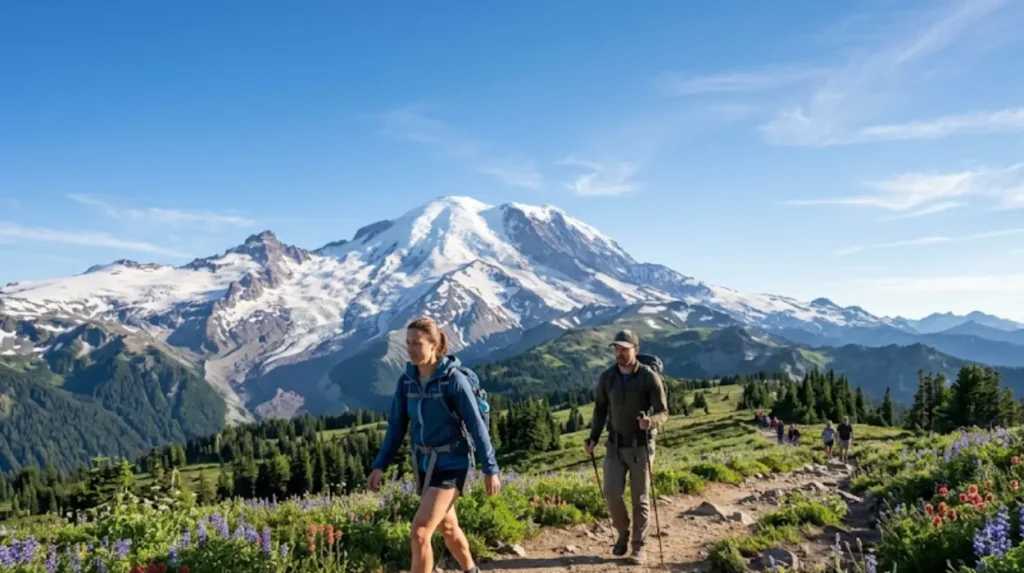
Summer ranks first because it combines stable weather, long daylight hours, and full access to Washington’s major destinations. It is the easiest season for hiking, camping, island travel, and mountain sightseeing.
Washington’s geography makes summer especially valuable. The state includes coastline, forests, lakes, islands, volcanoes, and alpine zones, and those areas do not open or perform the same way all year. Summer reduces weather disruption and gives travelers the widest choice of routes and activities.
The long daylight is another major advantage. Travelers get more usable hours each day for sightseeing, photography, ferry rides, and trail visits. That alone makes summer the most efficient season for first-time visitors.
What happens in spring in Washington State?
Spring in Washington State brings mild weather, blooming landscapes, fewer crowds, and lower travel pressure than summer. It is best for flower travel, scenic drives, and quieter city visits.
Spring usually runs from March through May. It is a transition season, so weather improves gradually rather than all at once. Early spring still brings showers, but by late spring the state begins shifting into more comfortable travel conditions.
This season is especially strong for tulips, blossoms, and lowland scenery. It also gives travelers a better chance to enjoy popular places without summer congestion. For many visitors, spring offers the best balance between cost, comfort, and scenery.
What should travelers expect in summer?
Summer in Washington State brings the warmest temperatures, the driest weather, and the strongest access to outdoor recreation. It is the top season for hiking, camping, beaches, ferries, and mountain trips.
From mid-June onward, travel conditions improve across most of the state. Western Washington stays comfortable, while Eastern Washington often becomes warm or hot. That makes summer a good season for both cooler coastal travel and dry inland road trips.
Summer is also the most popular season, so reservations matter. Lodging, ferries, park entry, and tours often fill quickly. Travelers who want the easiest outdoor experience should book early and plan ahead.
Is fall a good time to visit Washington State?
Fall is one of the best times to visit Washington State for cooler air, lighter crowds, and strong autumn color. September and October are especially good for scenic drives, hiking, and relaxed travel.
Fall works well because the weather remains pleasant after summer ends. Early fall often stays dry and sunny, while late fall becomes wetter and cooler. That makes September and early October especially attractive for travelers who want a quieter trip.
Fall color is also a major draw. Different parts of the state peak at different times, which gives travelers flexibility. Mountain areas, forests, and inland regions all offer strong seasonal scenery.
Is winter worth visiting Washington State?
Winter is worth visiting Washington State for ski season, snow sports, storm watching, and quiet city travel. It is the best season for mountain recreation and the least crowded time in many outdoor areas.
Winter is very different from summer in Washington. The mountains receive snow, which supports skiing, snowboarding, and snowshoeing. Meanwhile, the coast becomes a good place for storm watching, and Seattle remains active for food, museums, and indoor attractions.
Winter travel works best when the trip focuses on a specific region. Short daylight hours and wetter conditions make long road trips less efficient. Still, winter is excellent for travelers who want snow or a low-key city break.
Which month is best for each trip type?
The best month depends on the kind of trip you want. April is strong for flowers, July and August are best for hiking and islands, September works well for fall scenery, and winter is best for snow sports.
- April: Tulips and spring blooms.
- June to August: Hiking, camping, ferries, beaches, and mountain travel.
- September to mid-October: Fall color, scenic drives, and fewer crowds.
- December to March: Skiing, snowboarding, and winter mountain travel.
Washington’s seasonal pattern is clear, so matching the month to the activity gives the best results. Travelers who want outdoor variety should choose summer, while those who want seasonal scenery should choose spring or fall.
How do Seattle, the coast, and the mountains differ?
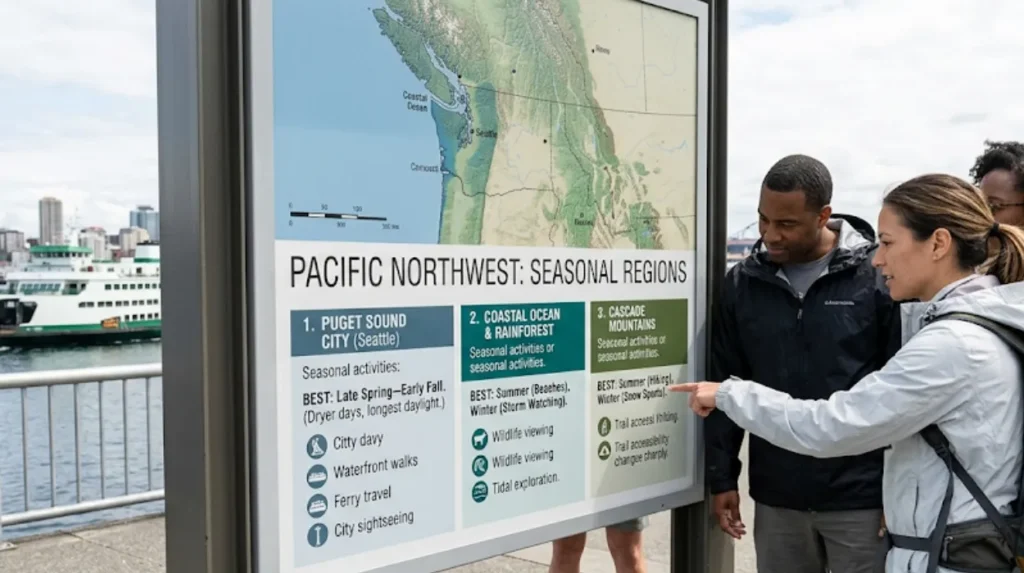
Seattle, the coast, and the mountains follow different seasonal patterns. Seattle is best in summer and early fall, the coast works well for summer beaches and winter storms, and the mountains are best in summer hiking season or winter snow season.
Seattle becomes easier to enjoy when rainfall drops and daylight increases. That makes late spring through early fall the strongest period for city sightseeing, waterfront walks, and ferry travel. Winter remains livable, but it favors indoor activities more than outdoor exploration.
The coast and mountain areas are more seasonal than the city. Coastal zones attract visitors for beach walks, wildlife, and storm watching. The mountains depend heavily on snow and trail access, so their best season changes sharply between summer and winter.
What are the main weather facts travelers should know?
Washington has strong seasonal variation, with warm summers, cool wet winters, and major differences between western and eastern regions. Those weather patterns shape when and where people should travel.
Summer is the most comfortable season for most visitors. Winter brings more rain, cloud cover, and snow at higher elevations. Spring and fall sit between those extremes and offer a useful mix of good weather and lighter crowds.
The state’s climate is not uniform. One region can be ideal while another is less comfortable, which is why trip timing should always match the destination. That is especially true for road trips that combine cities, coasts, and mountains.
What is the best overall travel strategy?
The best strategy is to travel in summer for the broadest access, or in spring and fall for seasonal highlights and lower crowds. Washington is strongest when travelers match the season to the trip goal.
If the goal is hiking, island travel, or mountain scenery, summer is the right choice. If the goal is flowers, spring is better. If the goal is fall color and quiet travel, September and October work well. If the goal is snow sports, winter is the correct season.
Washington rewards flexible planning. The state offers something different in every season, but the most reliable all-around experience comes in late June through mid-September.
When is the best overall time to visit Washington State?
The best time to visit Washington State is from late June through mid-September. This period offers the warmest weather, the longest daylight hours, the lowest chance of rain, and full access to hiking trails, scenic drives, national parks, and outdoor attractions.