
Washington State contains more than 114 incorporated small towns with populations between 1,000 and 10,000 residents, representing 8.2% of the state’s 7.7 million population according to 2020 Census data. These communities preserve distinct architectural heritage, cultural traditions, and natural landscapes that attract millions of visitors annually. Washington welcomed 112.5 million total visitors in 2025, with tourism generating $25.1 billion in expenditures and supporting 232,457 jobs statewide. Small towns function as primary destinations for travelers seeking authentic Pacific Northwest experiences beyond Seattle and major urban centers.
- What defines a small town in Washington State?
- Which small towns feature distinctive architectural themes?
- What outdoor recreation opportunities do Washington small towns provide?
- How do seasonal festivals drive tourism in Washington small towns?
- What historical significance do Washington small towns hold?
- Which small towns offer wine tasting and agritourism experiences?
- What coastal and island destinations rank among Washington’s best small towns?
- How accessible are Washington small towns from major population centers?
- What economic impact does small town tourism generate for Washington State?
What defines a small town in Washington State?
Washington State classifies small towns as incorporated places with populations between 1,000 and 10,000 residents, comprising 114 communities that house 413,000 people or 8.2% of the state’s total population. These municipalities maintain distinct governmental structures, commercial districts, and residential zones separate from larger cities exceeding 10,000 residents or rural unincorporated areas under 1,000 people.
The United States Census Bureau established these population thresholds for statistical Standard of Accuracy and Completeness. Washington’s 76 villages contain populations under 1,000 residents, representing 0.7% of the state population or approximately 34,000 people. Medium-sized cities between 10,000 and 100,000 residents number 81 municipalities housing 2.5 million people or 49.7% of Washington’s population. Ten cities exceed 100,000 residents, containing 2.0 million people or 41.4% of the state total.
Small towns in Washington occupy diverse geographic regions including coastal areas along the Pacific Ocean, Puget Sound shoreline communities, Cascade Mountain valleys, Columbia River Gorge settlements, and eastern Washington agricultural regions. Each geographic zone produces distinct economic bases, architectural styles, and cultural characteristics. Coastal towns emphasize fishing, maritime industries, and tourism centered on ocean access. Mountain communities developed around logging, railroad operations, or ski resort economies. Eastern Washington small towns typically serve agricultural regions producing wheat, apples, hops, and wine grapes.
Which small towns feature distinctive architectural themes?
Leavenworth, Port Townsend, Poulsbo, and Winthrop represent Washington’s most architecturally distinctive small towns, each displaying cohesive design themes reflecting Bavarian Alpine, Victorian seaport, Norwegian Scandinavian, and Old West frontier aesthetics respectively. These municipalities implemented intentional architectural programs during specific historical periods that transformed their commercial districts into themed destinations.
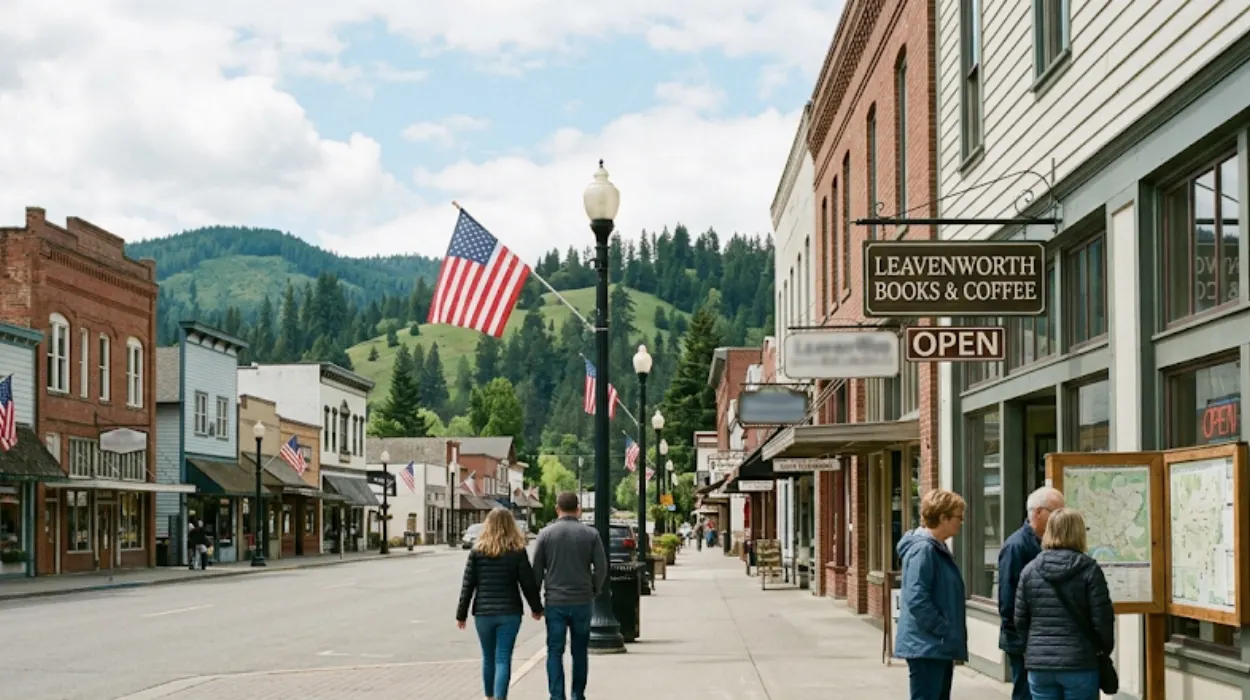
Leavenworth underwent transformation from a declining logging and railroad town into a Bavarian-themed village during the 1960s. Community leaders selected Bavarian architecture over alternative themes including Gay 90s or Western styles as most appropriate for the mountain Cascade location. East German architect Karl Heinz Ulbricht supervised design of many commercial buildings including the McDonald’s restaurant. Municipal zoning laws require all new construction to resemble Bavarian architecture. Local civic organizations promote Bavarian cultural elements including traditional clothing, German cuisine, and festivals such as Oktoberfest and the Christmas Lighting Festival featuring over 500,000 lights. Leavenworth attracts approximately two million visitors annually. The town maintains a population of approximately 2,500 residents.
Port Townsend preserves Victorian-era architecture from the late 19th century when the city anticipated becoming the West Coast’s primary railroad terminus. The commercial and uptown districts contain numerous structures dating to the 1880s and 1890s. The city’s Victorian seaport character earned designation as a National Historic Landmark District. Port Townsend has a population of 10,400 residents. Fort Worden Historical State Park occupies 434 acres adjacent to the city, containing military structures from the early 20th century.
Poulsbo maintains Scandinavian architectural influences reflecting its 1880s establishment by Norwegian settlers. The town embraces its “Little Norway” identity through colorful buildings, Nordic-style facades, and Scandinavian-themed commercial establishments including Sluys Poulsbo Bakery operating since 1910. Poulsbo has a population of 12,000 residents. The town hosts annual Viking Fest celebrations in May featuring parades, live music, and strongman competitions.
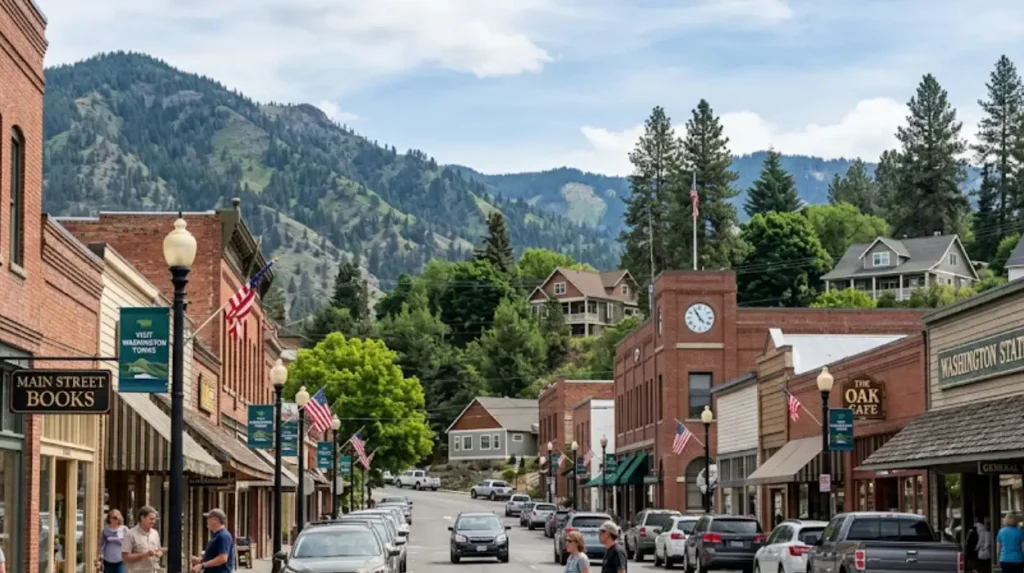
Winthrop displays Old West frontier architecture along its main street with wooden facades, awning-covered porches, and false-front commercial buildings. The town functions as a gateway to North Cascades National Park and the Methow Valley recreational areas. Winthrop has a population of approximately 900 residents, with combined Winthrop-Twisp population totaling 1,600 people. Three Fingered Jack’s Saloon and numerous outdoor gear outfitters occupy the historic downtown structures.
What outdoor recreation opportunities do Washington small towns provide?
Washington small towns provide access to hiking, skiing, kayaking, whale watching, wine tasting, and water sports across diverse ecosystems including alpine forests, coastal shorelines, lake districts, and river valleys. These communities serve as base camps for exploring protected natural areas including national parks, state parks, national forests, and marine sanctuaries.
Sequim occupies the Olympic Peninsula’s northeastern corner, protected by the Olympic Mountains from western Washington’s rainfall. The city receives more sunny days than much of the Olympic Peninsula. Sequim has a population of 8,319 residents. The city hosts the Sequim Lavender Festival each July, attracting approximately 30,000 visitors to 18 participating lavender farms. The festival began in 1997 following formation of the Sequim Lavender Growers Association in 1996. Dungeness National Wildlife Refuge near Sequim provides habitat for harbor seals, river otters, sandpipers, herons, eagles, and other wildlife. The Olympic Discovery Trail spans 100 miles from Port Townsend to La Push along the Pacific Coast, passing through Sequim.
Winthrop and Twisp provide year-round outdoor recreation in the Methow Valley. Summer activities include hiking and mountain biking in North Cascades National Park and Okanogan-Wenatchee National Forest. Winter recreation features cross-country skiing on the Methow Trails, a 200-kilometer groomed trail system. Winthrop hosts a Hot Air Balloon Festival each March.
Chelan and Manson surround Lake Chelan, Washington’s deepest lake at 1,486 feet maximum depth. The lake extends 50.5 miles in length. Summer activities include boating, kayaking, paddleboarding, and swimming. Land-based recreation includes hiking and biking trails through forested areas with panoramic lake viewpoints. Boat access reaches the North Cascades backcountry at the lake’s northern terminus near Stehekin. Chelan has a population of 4,400 residents. The region contains over 40 wineries producing Riesling, Chardonnay, Merlot, and Syrah varietals.
Friday Harbor on San Juan Island serves as the cultural and commercial center of the San Juan Islands archipelago. The town has a population of approximately 2,800 residents, with combined Friday Harbor-Eastsound population totaling 9,000 people. Whale watching tours operate from Friday Harbor to observe orcas, humpback whales, minkes, and gray whales in surrounding waters. The Whale Museum displays exhibits on cetacean biology and regional marine ecosystems. Lime Kiln Point State Park on San Juan Island’s western shore provides shoreline whale watching opportunities. San Juan Island National Historical Park preserves English and American military camp remnants from the 1859 Pig War boundary dispute.
How do seasonal festivals drive tourism in Washington small towns?
Washington small towns host over 100 annual festivals celebrating regional agriculture, cultural heritage, seasonal changes, and historical events that collectively attract millions of visitors and generate significant economic activity for local businesses. These events often represent the primary tourism driver for communities with populations under 15,000 residents.
The Sequim Lavender Festival exemplifies successful festival-driven tourism development. The inaugural event in August 1997 drew visitors to five participating lavender farms. The festival now attracts 30,000 visitors annually to 18 participating farms during the third weekend of July. The event doubled Sequim’s population temporarily during the festival weekend. Festival activities include farm tours, essential oil workshops, beer gardens, street fairs, food courts, and live music performances. The Sequim Irrigation Festival predates the Lavender Festival, originating in 1896 to celebrate D.R. “Crazy” Callen’s irrigation ditch diverting Dungeness River water to farmland. The Irrigation Festival draws 6,000 visitors annually over 10 days in May.
Leavenworth hosts multiple seasonal festivals throughout the calendar year. Oktoberfest attracts visitors during autumn weekends with German music, food, and beer. The Christmas Lighting Festival illuminates the town with over 500,000 lights during winter months, featuring tree lighting ceremonies, holiday markets, and gingerbread competitions. Spring and summer festivals include Maifest celebrating May Day traditions and Bavarian heritage events.
Winthrop’s Hot Air Balloon Festival each March fills the Methow Valley sky with colorful balloons. The event includes balloon launches, tethered rides, evening glow shows, and family activities.
Poulsbo’s Viking Fest in May celebrates Scandinavian heritage with parades, live music, strongman competitions, and Nordic food. The festival draws regional visitors to the Kitsap Peninsula community.
Port Townsend hosts a film festival, wooden boat festival, and Victorian-era themed events leveraging the city’s architectural heritage. The Port Townsend Film Festival screens independent and documentary films each September.
What historical significance do Washington small towns hold?
Washington small towns preserve state history through Victorian seaports, Norwegian settlements, Bavarian transformations, Old West frontier architecture, and Native American cultural sites that document 19th and 20th century development patterns. These communities maintain museums, historic districts, and preserved structures that interpret regional heritage for contemporary visitors.
Port Townsend’s Victorian architecture dates to the 1880s when investors anticipated the city would become the West Coast’s primary railroad terminus. The city’s strategic location on Puget Sound near the Strait of Juan de Fuca suggested potential as a major port. The railroad never reached Port Townsend, but the Victorian commercial district remains intact as a National Historic Landmark District. Fort Worden Historical State Park preserves early 20th century military coastal defense installations.
Poulsbo’s establishment by Norwegian settlers in the 1880s created Washington’s most prominent Scandinavian community. Sluys Poulsbo Bakery has operated continuously since 1910, producing traditional Norwegian breads and pastries. The Kitsap Peninsula Historical Museum documents regional settlement patterns and maritime industries.
Leavenworth’s 1960s transformation from logging town to Bavarian village represents intentional economic redevelopment through themed tourism. The town’s earlier history included Northern Pacific Railroad construction, timber harvesting, and apple orchard agriculture. The Bavarian reconstruction preserved some original brick buildings while adding faux-Bavarian facades to commercial structures.
Friday Harbor and the San Juan Islands document the 1859 Pig War boundary dispute between the United States and Britain. San Juan Island National Historical Park preserves English and American military camp sites from the conflict. The dispute arose from ambiguous treaty language regarding the boundary through the San Juan Islands archipelago. Both nations claimed sovereignty until arbitration by Kaiser Wilhelm I of Germany in 1872 awarded the islands to the United States.
Roslyn maintains historic downtown structures from its coal mining era. The Roslyn Museum interprets the town’s mining history and multicultural workforce including European immigrants and African American miners. The town’s proximity to Suncadia Resort connects historic preservation with contemporary recreation tourism.
Which small towns offer wine tasting and agritourism experiences?
Washington small towns in Walla Walla, Lake Chelan, Woodinville, and Columbia Valley regions contain over 1,000 wineries producing premium Riesling, Chardonnay, Merlot, Cabernet Sauvignon, and Syrah varietals that attract wine tourists seeking tasting room experiences and vineyard tours. These communities developed wine tourism industries leveraging favorable climate, soil conditions, and irrigation from Columbia River tributaries.
Walla Walla contains numerous wineries within walking distance of its historic downtown. The city has a population of 33,500 residents. Walla Walla Valley AVA (American Viticultural Area) designation recognizes the region’s distinctive terroir. The area produces Syrah, Cabernet Sauvignon, Merlot, and Viognier varietals. Walla Walla functions as a romantic getaway destination with vineyard views, wine tasting rooms, and farm-to-table restaurants.
Chelan and Manson surround Lake Chelan with over 40 wineries producing Riesling, Chardonnay, Merlot, and Syrah. The lake’s deep blue water and surrounding mountains create scenic vineyard settings. Tasting rooms concentrate in downtown Chelan and along lakeside roads. The region’s elevation and climate produce crisp white wines and balanced reds. Lake Chelan’s 50.5-mile length provides diverse microclimates for grape cultivation.
Woodinville northeast of Seattle contains numerous tasting rooms representing wineries from across Washington State. The town functions as an urban wine tasting destination accessible from Seattle metropolitan area. Many wineries maintain production facilities in eastern Washington while operating Woodinville tasting rooms for convenient customer access.
Snohomish features antique shops and boutiques in its eclectic downtown combining English, Dutch, and small brick architectural influences. The Centennial Trail extends 30 miles from Snohomish into Skagit Valley, providing cycling and walking routes through agricultural landscapes. Snohomish has a population of 10,150 residents.
What coastal and island destinations rank among Washington’s best small towns?
Washington’s coastal and island small towns including Sequim, Port Townsend, Coupeville, Gig Harbor, Bainbridge Island, and Whidbey Island communities provide maritime access, waterfront dining, ferry connectivity, and protected natural areas attracting visitors seeking ocean and sound experiences. These communities occupy shoreline locations along Puget Sound, the Pacific Ocean, and the San Juan Islands archipelago.
Gig Harbor displays the Puget Sound waterfront with Mount Rainier visible in the distance. The town has a population of 12,500 residents. Gig Harbor lies 12 miles from Tacoma and 45 minutes from Seattle. The waterfront promenade features restaurants, shops, and boat moorage. The Harbor History Museum interprets maritime heritage. Kopachuck State Park near Gig Harbor provides hiking trails through forested shoreline.
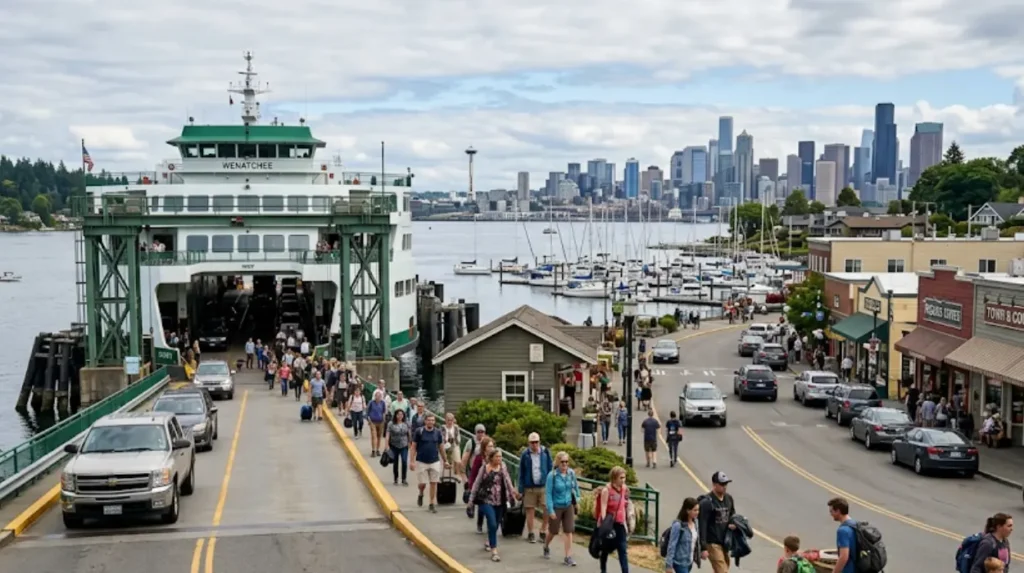
Bainbridge Island has a population of 25,000 residents. The island connects to Seattle via 35-minute Washington State Ferry service. Downtown Winslow contains shops, restaurants, and tasting rooms accessible without automobile from the ferry terminal. The island contains wineries, beaches, and hiking trails reachable by car or bicycle.
Coupeville on Whidbey Island has a population of 2,000 residents. The town occupies central Whidbey Island access from the Port Townsend ferry. Coupeville’s waterfront features a historic red wharf overlooking Penn Cove. Nineteenth-century structures house art galleries, shops, and seafood restaurants specializing in Penn Cove mussels. Fort Casey Historic Site and Fort Ebey State Park provide hiking opportunities and coastal views. Coupeville served as filming location for the 1998 film Practical Magic.
Vashon Island has a population of 11,000 residents. The island connects to West Seattle via 20-minute ferry. The 13-mile-long island contains restaurants, wineries, breweries, cideries, and hiking trails with Puget Sound viewpoints. Downtown Vashon provides walkable access to most commercial establishments.
Edmonds has a population of 42,600 residents. The town lies 25 minutes north of Seattle. Edmonds’ main street extends to the waterfront as a promenade. Washington State Ferry service connects Edmonds to Kingston on the Kitsap Peninsula. The town hosts art festivals and maintains a community theater.
How accessible are Washington small towns from major population centers?
Washington small towns maintain accessibility from Seattle, Portland, and Spokane metropolitan areas via Interstate 5, State Route 2, State Route 20 Cascade Loop, and Washington State Ferry system, with most destinations reachable within 30 minutes to 4.5 hours driving time. Transportation infrastructure enables day trips and weekend getaways from urban population centers.
Snoqualmie and North Bend lie 30 minutes east of Seattle via Interstate 90. The combined population totals 15,000 residents. Snoqualmie Falls drops 268 feet, visible from viewpoints near the fall’s base. The towns gained recognition as filming locations for the television series Twin Peaks. Twede’s Cafe serves pies featured in the show. Mount Si and Little Si provide hiking opportunities near North Bend.
Edmonds lies 25 minutes north of Seattle on Puget Sound. The town’s population of 42,600 supports a lively downtown with restaurants, art galleries, and theaters.
Bainbridge Island requires 35 minutes ferry time from Seattle’s Pier 52. The ferry accepts both vehicles and walk-on passengers. Winslow’s downtown is walkable from the ferry terminal.
Gig Harbor lies 45 minutes southwest of Seattle via State Route 16. The town’s population of 12,500 maintains waterfront restaurants and shops with Mount Rainier views.
Snohomish lies 45 minutes north of Seattle via Interstate 5 and State Route 9. The town’s population of 10,150 supports antique shops and the Centennial Trail.
Leavenworth lies 2 hours 30 minutes east of Seattle via Interstate 90 and State Route 2. The town’s population of 2,500 supports Bavarian-themed restaurants, shops, and festivals.
Port Townsend lies 2 hours northwest of Seattle via State Route 104 and State Route 20. The town’s population of 10,400 maintains Victorian architecture and Fort Worden State Park.
Anacortes lies 1 hour 20 minutes north of Seattle via Interstate 5 and State Route 20. The town’s population of 18,000 supports Commercial Avenue shops, restaurants, and ferry access to San Juan Islands. Deception Pass State Park and Mount Erie provide hiking opportunities.
Chelan and Winthrop lie 4 hours 30 minutes northeast of Seattle via Interstate 90 and State Route 97. The towns provide access to Lake Chelan and North Cascades National Park.
Walla Walla lies 4 hours 30 minutes southeast of Seattle via Interstate 90 and State Route 12. The town’s population of 33,500 supports numerous wineries and restaurants.
What economic impact does small town tourism generate for Washington State?
Washington State tourism generated $25.1 billion in visitor expenditures in 2024, supporting 232,457 jobs and producing $2.6 billion in state and local tax revenue that offsets average resident household tax burden by $1,140 annually. Small towns capture significant portions of this expenditure through lodging, dining, shopping, attractions, and recreational activities.
State of Washington Tourism reported 110.8 million total visits in 2024, exceeding 2019 levels by 101%. Domestic visitation comprised 97.8% of total visits, growing 2.6% over 2023. International visitation grew 9.7%, with Canadian visits increasing 3.5% and other international visits rising 19.1%. Seattle-King County visitor spending increased 6.8%, outpacing the state’s 5.3% overall growth. All other counties collectively grew 4.0%.
Direct state and local tax revenue from tourism increased 4.1% to $2.6 billion in 2024, reaching 111% of 2019 levels. Tourism supported 153,885 direct jobs in 2024, representing 94% of 2019 employment levels. The three leading tourism employment sectors—food and beverage (62,376 jobs), recreation and entertainment (27,483 jobs), and lodging (26,028 jobs)—showed declines from 2023.
Small towns benefit disproportionately from tourism relative to their population size. Communities like Leavenworth with 2,500 residents attract two million annual visitors. Sequim with 8,319 residents draws 30,000 visitors during the three-day Lavender Festival weekend. These visitor volumes generate substantial per-capita economic impact for small town businesses and municipal budgets.
Washington State tourism employment comprised 1 in 21 jobs statewide in 2024. The tourism industry ranks as Washington’s fourth largest economic sector. Small towns contribute to this economic engine by providing authentic experiences, distinctive accommodations, local dining, and access to natural areas that differentiate Washington from other destinations.
Tourism Economics compiled the Economic Impacts of Visitors in Washington State report for State of Washington Tourism using survey data from Longwoods International, Bureau of Economic Analysis, Bureau of Labor Statistics, STR lodging performance data, Washington Department of Revenue tax collections, and Datafy geolocation data. This methodology ensures accurate measurement of tourism’s contribution to small town economies and statewide economic health.