
The San Juan Islands in Washington offer the world’s most reliable year-round resident orca whale sightings, with peak whale watching occurring from May through September when humpbacks, grays, and Bigg’s orcas converge on salmon-rich waters. This guide covers every essential detail for planning your whale watching trip: when to go, which tours to choose, what whales you’ll see, pricing, boat types, and how to travel to Friday Harbor, Orcas Island, and Roche Harbor.
- What Are the San Juan Islands and Why Are They Famous for Whale Watching?
- When Is the Best Time for Whale Watching in the San Juan Islands?
- What Types of Whales Can You See in the San Juan Islands?
- Southern Resident Orcas
- Bigg’s Transient Orcas
- Humpback Whales
- Gray Whales
- Which Whale Watching Tour Companies Operate in the San Juan Islands?
- San Juan Safaris
- San Juan Outfitters
- Western Prince Cruises
- San Juan Excursions
- Maya’s Legacy Charters
- How Much Do Whale Watching Tours Cost and What Should You Expect?
- How Do You Get to the San Juan Islands for Whale Watching?
- To Friday Harbor (San Juan Island)
- To Orcas Island
- To Lopez Island
- Driving from Seattle
- Flying Options
- What Should You Wear and Bring on a Whale Watching Tour?
- What Are the Whale Watching Best Practices and Regulations in Washington?
- What Marine Life Besides Whales Will You See on San Juan Islands Tours?
- How Do You Plan a Complete San Juan Islands Whale Watching Trip?
What Are the San Juan Islands and Why Are They Famous for Whale Watching?
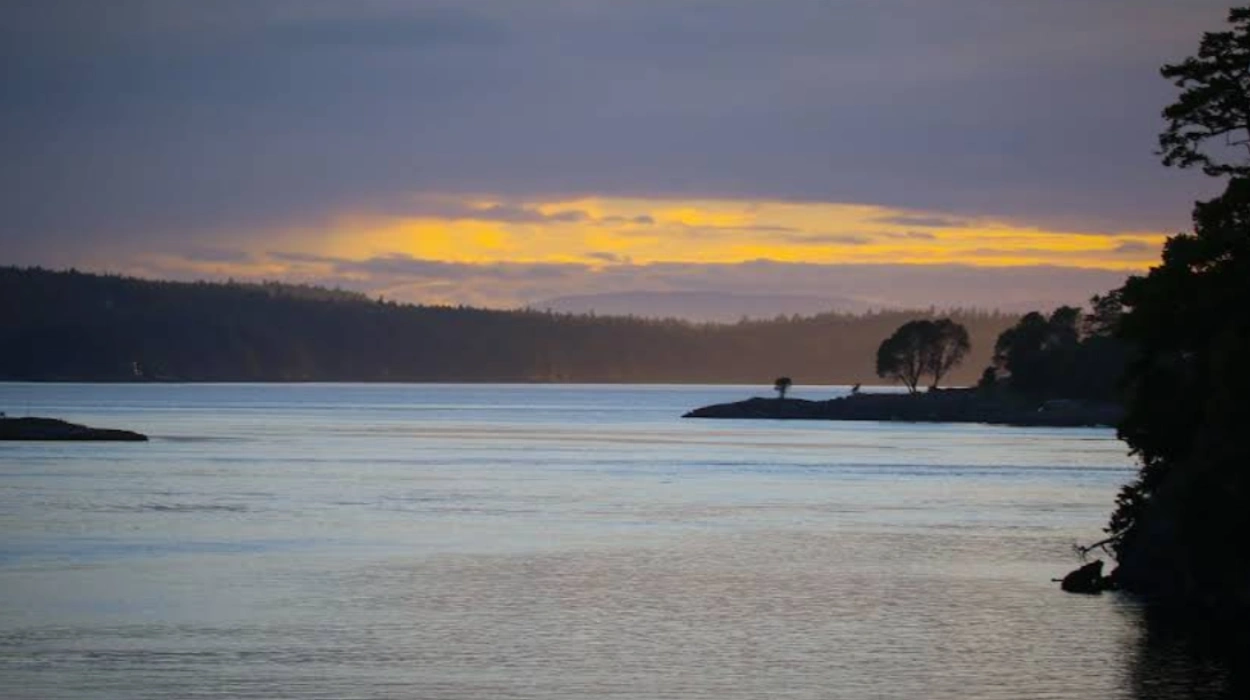
The San Juan Islands are a 400-square-mile archipelago in Washington’s Puget Sound containing 450+ islands, where resident orcas hunt salmon year-round in Haro Strait, making it the world’s top guaranteed whale watching destination. The islands sit between Washington and Vancouver Island, protected by the Pacific Ocean yet accessible via ferry from Anacortes.
The San Juan Islands National Marine Sanctuary encompasses this area, designated for its extraordinary marine biodiversity. Over 250 species of fish inhabit these waters, providing abundant food for whales. The region’s selection as a whale watching hotspot stems from the Southern Resident orca population’s dependence on chinook salmon, which congregate in Haro Strait and Juanelle Passage during summer months.
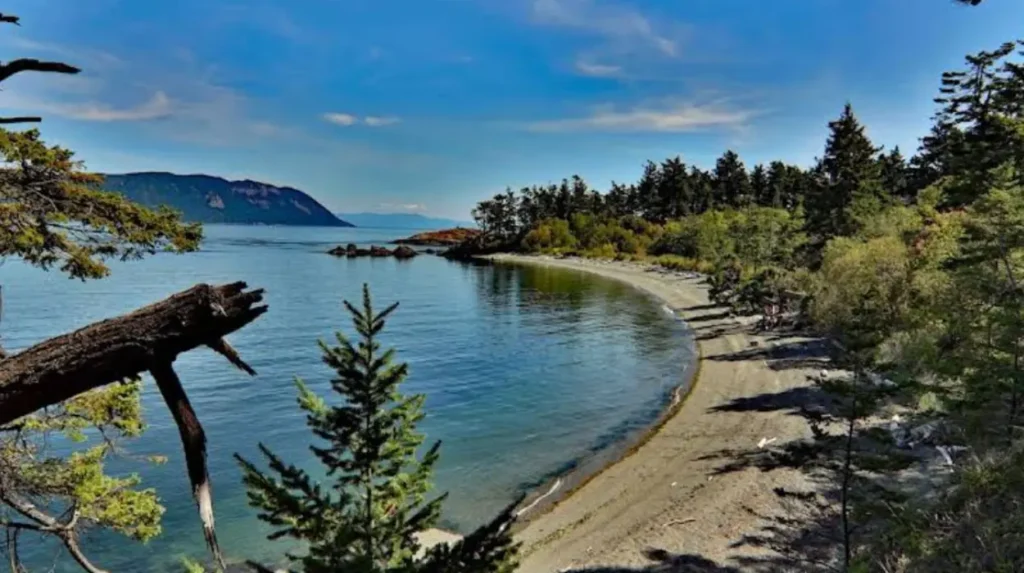
Three main islands receive visitors: San Juan Island (home to Friday Harbor), Orcas Island (with Deer Harbor), and Lopez Island. Friday Harbor serves as the primary gateway, featuring the largest harbor, daily ferry service, and most tour operators. The islands’ remote location preserves critical whale habitat while remaining accessible for tourism.
When Is the Best Time for Whale Watching in the San Juan Islands?
Peak whale watching season runs from May through September, with July and August offering the highest sighting odds across all species due to peak Bigg’s orca activity and reliable humpback returns. Resident orcas can be seen year-round, but April through October provides the best overall chances for orcas specifically.
Humpback whales are most commonly seen from August through October, coinciding with their migration past the islands. Gray whales pass through primarily in March and April during their northward migration, with some lingering through summer. Spring (late May–June) and fall (September) deliver rewarding experiences with smaller crowds and often favorable weather conditions.
Weather patterns significantly impact tour success. Summer months feature average temperatures of 65–75°F with minimal rain, creating stable viewing conditions. Wind warnings frequently cancel tours during winter months (November–February), when storms dominate the Pacific Northwest.
Monthly breakdown shows distinct patterns:
- May: Resident orcas arrive with juvenile salmon; crowds remain light
- June: Peak chinook salmon run; orca sightings increase dramatically
- July: Highest overall sighting probability; peak tourist season begins
- August: Humpbacks arrive alongside resident orcas; busiest month
- September: Humpback activity peaks; crowds diminish; reliable sightings continue
- October: Late-season humpbacks; resident orcas remain visible
Tour operators report 85–95% sighting success rates during peak season. If you don’t see whales, most companies offer free or discounted rebooking.
What Types of Whales Can You See in the San Juan Islands?
Four whale species regularly appear: Southern Resident orcas (year-round), Bigg’s transient orcas (year-round with summer peaks), humpback whales (August–October), and gray whales (March–April), each with distinct behaviors and sighting patterns. Examples include the L-Pod resident orcas, Bigg’s T66 family, migrating humpback groups, and gray whale calves.
Southern Resident Orcas
Southern Resident orcas consist of three pods (J, K, and L) totaling approximately 100 individuals. They hunt chinook salmon exclusively and visit the San Juan Islands year-round, primarily May through October. J-Pod is the most frequently observed, with J-52 “Swan” and her calves being regular visitors. These whales travel in groups of 3–20, displaying coordinated hunting behaviors and frequent surface activity.
Resident orcas emit distinctive whistles for communication, making them identifiable by sound. They typically swim 3–5 mph and dive 30–60 seconds between surfacings. Their black-and-white coloration includes characteristic eye patches and saddle markings behind dorsal fins.
Bigg’s Transient Orcas
Bigg’s orcas (formerly Transient orcas) number around 100 individuals across multiple families. They hunt marine mammals—primarily seals and sea lions—rather than fish. Bigg’s orcas appear year-round but peak in summer when seal populations increase. Examples include the T66 “Bob” family and T102 pod.
These whales display more stealthy hunting behaviors, often approaching silently before ambush. They surface less frequently than resident orcas, diving 2–5 minutes between appearances. Their larger size (males reach 22 feet) and broader dorsal fins distinguish them from residents.
Humpback Whales
Humpback whales measure 40–50 feet and weigh 60,000–80,000 pounds. They arrive August through October, feeding on krill and small fish. Humpbacks breach (launch entire bodies above water) and tail-slap dramatically, creating spectacular viewing. Examples include individual humpbacks identified by unique fluke patterns.
Humpbacks dive 5–15 minutes, surfacing with characteristic blow heights of 10–15 feet. Their pectoral fins reach 15 feet long, occasionally visible during breaches. Recent population recovery shows 10,000+ humpbacks in North Pacific waters, with San Juan Islands serving as a critical feeding zone.
Gray Whales
Gray whales reach 40–50 feet and migrate 10,000–12,000 miles annually between Alaska breeding grounds and Mexico feeding zones. They pass San Juan Islands March–April northward, with some returning south November–December. Gray whales bottom-feed, sucking sediment and filtering out crustaceans.
These whales lack dorsal fins, displaying a knobby ridge instead. They surface with 6–8 foot blows and dive 2–4 minutes. Gray whale populations rebounded from 20,000 in 1970 to 27,000 currently, making sightings more reliable.
Which Whale Watching Tour Companies Operate in the San Juan Islands?
Five top-rated companies lead San Juan Islands whale watching: San Juan Safaris (Friday Harbor, classic and speed boats), San Juan Outfitters (Roche Harbor), Western Prince Cruises (adventure boat), San Juan Excursions (1941 Navy vessel), and Maya’s Legacy Charters (innovative boats with expert crews). Each offers distinct vessel types, departure points, and pricing.
San Juan Safaris
San Juan Safaris operates two tour formats from Friday Harbor. The classic larger vessel tour accommodates 50+ passengers with covered cabins, heated interiors, and restroom facilities. The high-speed adventure boat carries 12–16 passengers on open-deck rides reaching 35 mph, getting closer to whales quickly. Prices range $129–$149 for adults.
Tours run 3–4 hours, covering Haro Strait, Juanelle Passage, andốPatton’s Ledge. The company maintains 90%+ sighting rates and offers free rebooking if whales aren’t seen. Guides are certified marine naturalists providing real-time education.
San Juan Outfitters
San Juan Outfitters launches from Roche Harbor on San Juan Island’s west side. Their 28-foot rigid hull boats carry 12 passengers, offering intimate experiences with minimal wake. Tours emphasize eco-friendly practices, maintaining 100-yard whale distances per Washington law.
Prices start at $135 for adults. Trip duration is 3 hours, focusing on west-side feeding zones where resident orcas hunt. The company employs local Biologist Guides who identify individual whales by photo-identification catalogs.
Western Prince Cruises
Western Prince Cruises offers short (3-hour) and extended (5–6 hour) whale watching tours aboard fast adventure boats. Departures occur from Friday Harbor, reaching distant sighting zones quickly. The 32-foot vessels carry 18 passengers with covered seating and marine radio connectivity.
Adult pricing is $129–$159 depending on tour length. The company partners with marine biologists for real-time whale tracking via radio networks connecting all operators.
San Juan Excursions
San Juan Excursions operates from Friday Harbor aboard a converted 1941 Navy search-and-rescue vessel. The 65-foot boat carries 49 passengers with full cabin coverage, heating, and restrooms. Tours run 3.5 hours, accessing both eastern and western channels.
Prices are $119–$139 for adults, making this the most affordable major operator. The historic vessel provides stable platform viewing even in choppy conditions.
Maya’s Legacy Charters
Maya’s Legacy Charters features innovative aluminum boats designed for whale watching, carrying 12–14 passengers. Departures from Friday Harbor emphasize expert crew education, with guides holding marine biology degrees. Tours last 3–4 hours.
Adult pricing is $145–$165. The company maintains the highest education standards, providing detailed species identification and behavioral explanations. Passenger reviews consistently rate Maya’s Legacy as the most informative experience.
Explore More Things to do
North Cascades Backpacking Guide — Beginner Essentials
Washington Mountain Lakes Guide for the Best Photography Spots
How Much Do Whale Watching Tours Cost and What Should You Expect?
Adult whale watching tours cost $119–$165, youth (6–17) $60–$85, and children under 6 free, with 3–6 hour durations covering multiple sighting zones and 85–95% success rates during peak season. Examples include San Juan Safaris at $129 adult, Maya’s Legacy at $145, and San Juan Excursions at $119.
Tour length varies by operator and departure point. Bellingham-based tours (5–6 hours) include ferry transit plus 3 hours searching. Friday Harbor departures run 3–4 hours directly in whale zones. Roche Harbor trips average 3 hours focusing on west-side channels.
What to expect includes:
- Professional marine naturalist guides providing species identification
- Marine radio updates connecting all operators for real-time whale locations
- Binoculars provided (though personal pairs recommended)
- Covered cabins with heating on larger vessels
- Restroom facilities on 49+ passenger boats
- Photographic opportunities with whales surface-active 60–80% of sighting time
- Sea lion, seal, dolphin, and bird sightings alongside whales
Tour operators maintain 100-yard minimum distances from whales per Washington State’s Whale Watching Best Practices. Boats never block whale movement paths or surround animals.
Safety equipment includes life jackets for all passengers, marine VHF radios, and EPIRB emergency transmitters. Most companies provide weather guarantees, canceling only for winds exceeding 25 mph or storm conditions.
How Do You Get to the San Juan Islands for Whale Watching?
Friday Harbor receives daily ferry service from Anacortes (35-minute crossing), while Orcas Island and Lopez Island require ferry transit from Anacortes; most whale watching tours depart from Friday Harbor, Roche Harbor, or Deer Harbor. Examples include the Washington State Ferry to Friday Harbor, Orcas Island ferry to Orcas Harbor, and Lopez Ferry to Fischer’s Landing.
To Friday Harbor (San Juan Island)
Anacortes serves as the mainland gateway. Drive 2 hours from Seattle via Interstate 5 north to Highway 20, then west to Anacortes. The Washington State Ferry runs hourly 6 AM–10 PM, with 35-minute crossings. Ferry costs $15–$25 per person, $30–$45 for vehicles.
Friday Harbor features parking lots ($10–$15/day), the San Juan Island Visitor Center, and numerous tour operator offices downtown. Most attractions cluster within 1 mile of the ferry dock.
To Orcas Island
Orcas Island ferry departs Anacortes every 2 hours, 45-minute crossing to Deer Harbor. Deer Harbor serves as whale watching launch point for Sea Quest and other operators. Orcas Island offers vacation rentals and quieter ambiance than San Juan Island.
To Lopez Island
Lopez Ferry runs from Anacortes to Fischer’s Landing (1 hour). Lopez Island lacks major whale watching operators but provides alternative marine activities including kayaking and bird watching.
Driving from Seattle
Seattle to Anacortes: 2 hours via I-5 north to Highway 20 west. Total Seattle-to-Friday-Harbor time is 3–3.5 hours including ferry. Book ferry reservations Weekdays recommended; weekends require early arrival.
Flying Options
Bellingham International Airport (BLI) is 45 minutes from Friday Harbor. Seattle-Tacoma (SEA) is 2.5 hours away. Both airports offer shuttle services to San Juan Islands.
What Should You Wear and Bring on a Whale Watching Tour?
Wear waterproof layers, wind-resistant jackets, warm hats, gloves, and closed-toe shoes; bring sunscreen, sunglasses with straps, binoculars, camera with zoom lens, and dry bags for electronics. Examples include fleece mid-layers, waterproof rain jackets, wool socks, and neoprene gloves.
Ocean conditions create wind 10–15 mph faster than land temperatures. Summer days feel 10–15°F cooler on water. Morning tours require additional warmth; afternoon sessions need sun protection.
Layering system:
- Base layer: Moisture-wicking synthetic or wool
- Mid layer: Fleece or wool sweater
- Outer layer: Waterproof windproof jacket and pants
Footwear must be non-slip rubber-soled shoes. Deck surfaces become wet and slippery. Avoid sandals or smooth sneakers.
Essential items:
- Sunscreen: SPF 30+ applied before departure (reapply every 2 hours)
- Sunglasses: Polarized with retention straps prevent loss overboard
- Binoculars: 7x–10x magnification ideal for whale viewing
- Camera: DSLR or mirrorless with 200–400mm zoom lens captures surface activity
- Dry bag: Protects phones and cameras from splash water
- Water/snacks: Most tours don’t provide food; pack portable items
- Motion sickness medication: Take 1 hour before departure if prone
Avoid cotton clothing (loses warmth when wet). Wool and synthetic materials maintain insulation. Bring extra layers even in summer.
What Are the Whale Watching Best Practices and Regulations in Washington?
Washington law requires 100-yard minimum distances from whales, 300-yard distances from eagle nesting sites, and prohibits blocking whale movement or surrounding animals; all licensed operators follow these rules strictly. Examples include maintaining 100-yard buffers around orcas, avoiding sudden speed changes near whales, and never pursuing animals.
The Washington State Whale Watching Best Practices Program, established 2003, educates boaters on responsible wildlife observation. Violations result in $1,000–$5,000 fines under the Marine Mammal Protection Act.
Key regulations:
- 100-yard distance: Never approach whales closer than 100 yards horizontally or vertically
- No blocking: Never position boats between whales and their destination
- No surrounding: Never encircle whales with multiple vessels
- Speed limits: Reduce to 5 knots within 400 yards of whales
- Quiet operation: Minimize engine noise near animals
- Emergency protocol: Report injured whales to NOAA Fisheries
Licensed tour operators maintain current permits and train guides in wildlife ethics. Passenger vessels undergo annual safety inspections.
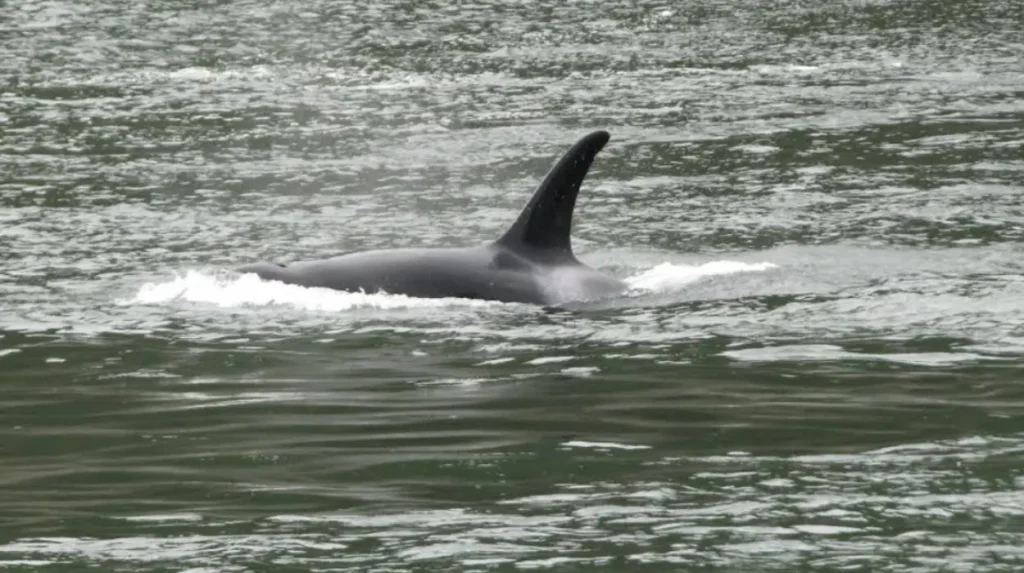
What Marine Life Besides Whales Will You See on San Juan Islands Tours?
Beyond whales, tours regularly spot Steller sea lions, harbor seals, bald eagles, pacific gulls, harbor porpoises, and dolphin species, creating multi-species wildlife experiences. Examples include sea lions on rocky outcrops, seals swimming near boats, eagles nesting on islands, and porpoises jumping alongside vessels.
Steller sea lions reach 11 feet and 2,400 pounds, congregating on rocky reefs. Harbor seals measure 5–6 feet, often swimming within 50 yards of boats. Bald eagles (100+ nesting pairs in San Juan Islands) nest on island cliffs, hunting fish and small mammals.
Harbor porpoises (6–7 feet) jump prominently, traveling in groups of 3–10. Pacific white-sided dolphins appear summer months, reaching 60 mph in bounds. Common dolphin species include Pacific white-sided and northern right whale dolphins.
Seabirds include:
- Pigeon guillemots: Black diving birds with red feet
- Rhino cormorants: Dark elongated diving birds
- Great blue herons: Shoreline waders 4 feet tall
- Bald eagles: 8-foot wingspan predators
Rocky intertidal zones feature octopus, sea stars, anemones, and mussels visible during low tide.
How Do You Plan a Complete San Juan Islands Whale Watching Trip?
Plan 2–3 days minimum: book ferry reservations 2–4 weeks ahead, select tour operator based on vessel type preference, arrive Friday Harbor 1 hour before departure, and pack layers plus wildlife photography gear. Examples include reserving Washington State Ferry Tuesday–Thursday slots, choosing San Juan Safaris speed boats for adventure, and arriving at 7 AM for 8 AM tours.
Booking timeline:
- 4 weeks out: Reserve ferry transportation and accommodation
- 2–3 weeks out: Book whale watching tour (peak season fills quickly)
- 1 week out: Confirm weather conditions and tour status
- Day before: Check email for departure instructions
- Day of: Arrive 60 minutes early for safety briefing
Accommodation options:
- Friday Harbor: Hotels, motels, bed-and-breakfasts within 1 mile of dock
- Roche Harbor: Resort lodging with marina access
- Orcas Island: Vacation rentals near Deer Harbor
- Lopez Island: Quiet cabins and cottages
Budget breakdown (per person, 2-day trip):
- Ferry: $40–$60
- Tour: $129–$165
- Accommodation: $150–$250/night
- Food: $60–$100/day
- Total: $400–$650
Peak season (July–August) requires earliest booking. September offers better availability with similar sighting rates.
The San Juan Islands deliver unparalleled whale watching with guaranteed resident orca sightings, diverse species encounters, and professional guides. Whether choosing speed boats for adventure or cabin vessels for comfort, your trip combines marine wildlife education with Pacific Northwest natural beauty.
Why are the San Juan Islands famous for whale watching?
The San Juan Islands are famous for whale watching because they offer some of the world’s most reliable opportunities to see orcas, humpback whales, gray whales, and other marine wildlife in their natural habitat.