UCLA Students Navigate Federal Crisis at Capitol, Washington DC 2026

Evening Washington
UCLA Students Navigate Federal Crisis at Capitol, Washington DC 2026
Credit: Google Maps/dailybruin.com
  • UCLA Student Insertion into Federal Arenas: The University of California Washington Program (UCDC) sent at least 31 UCLA undergraduate students per quarter into the heart of Washington, D.C., to intern across federal government, public policy, and non-profit sectors.
  • Navigation of Historic Political Upheaval: Participating students during the winter and spring quarters operated directly amidst intense geopolitical and domestic events, including nationwide anti-immigration enforcement protests and international military conflicts.
  • Witnessing the Appropriations Season: Interns experienced the legislative gridlock of the federal appropriations season firsthand, adapting to widespread structural and budgetary uncertainties within government-funded institutions.
  • Firsthand Exposure to Legislative Dynamics: Students tracking committee hearings observed real-time federal responses to major national crises, noting how local economic stability in the District remains closely tethered to congressional election outcomes.

Washington, D.C. (Evening Washington News) June 8, 2026 The UC Washington Program (UCDC), an academic initiative established in 1997, continues to serve as a direct pipeline connecting California undergraduate students to the core of United States governance and federal policy-making. According to official documentation on the program’s website, UCDC selects and dispatches at least 31 UCLA undergraduate students to the nation’s capital each academic quarter. While residing in the capital, participants undergo an intensive dual-track curriculum: they enroll in specialized, upper-division coursework covering national politics, public policy design, and international development, while concurrently fulfilling demanding internships within federal agencies, congressional offices, policy think tanks, and related civic organisations.

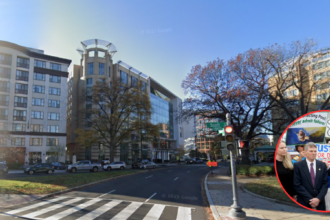
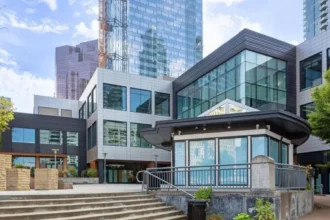
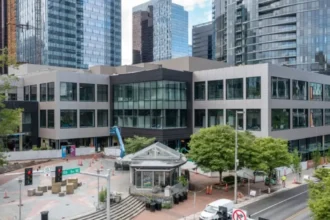
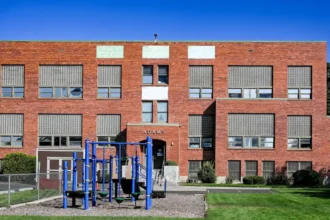
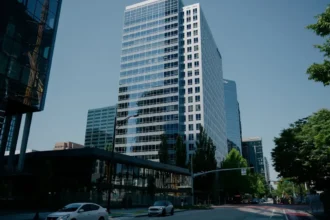
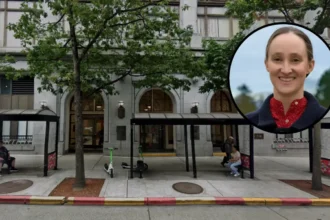
As detailed by student journalists covering the university’s administrative and experiential expansions, the program utilizes a dedicated residential and instructional facility—the UC Washington Center—located six blocks from the White House.

This strategic positioning places students directly within the geographical and operational orbit of the federal apparatus. During the winter and spring terms, participating undergraduates found themselves embedded in an exceptionally volatile political environment, forcing them to balance rigorous academic expectations with the realities of navigating a capital city disrupted by historic civil unrest, high-stakes fiscal negotiations, and dramatic international military escalation.

How Did Federal Budget Negotiations and Geopolitical Conflict Shape the Internships?
The operational climate for the interns was heavily influenced by broader institutional gridlock on Capitol Hill. As reported by the student editorial staff tracking the program, participants arrived in Washington during a high-stakes appropriations season—the critical window during which lawmakers draft and debate the omnibus bills that dictate how federal funds are allocated across the entirety of the United States government.

The resulting fiscal friction introduced immediate operational hurdles for the students as they attempted to secure and execute their duties.

Tracy Le, a fourth-year political science student who participated in the UCDC cohort during the winter quarter, was embedded directly within the administrative apparatus of the university system itself. Le served as an intern with the UC Office of the President’s federal governmental relations team.

In this capacity, her daily responsibilities included executing deep policy research on structural educational resources, specifically tracking the legislative status of federal Pell Grants, federal research funding pipelines, and the fluctuating interest rates and terms governing graduate student loans. Le noted that political tensions and advocacy inside government buildings peaked during the appropriations cycle, as various factions fought over finite federal resource pools.

This institutional tension was further complicated by sudden geopolitical crises. As documented by reporters covering international affairs for the Associated Press, the United States and Israel launched coordinated military strikes against Iran in February, resulting in the deaths of Supreme Leader Ayatollah Ali Khamenei and several high-ranking Iranian officials. Le stated that the domestic ripple effects of the U.S.-Iran conflict were immediate, with large-scale anti-war protests materialising directly outside the doors of the UC Washington Center.

The constant presence of advocacy groups and public demonstrations underscored the degree to which global military decisions instantly alter the physical and psychological landscape of the capital.

What Impact Did Nationwide Anti-Immigration Protests Have on Student Experience?

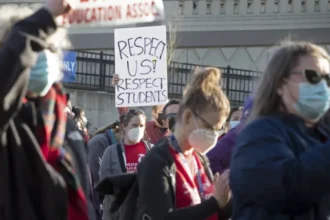
Domestically, the capital was simultaneously transformed by intense civil rights demonstrations. According to field reports from student correspondents, a heavy wave of anti-immigration enforcement protests erupted across the city following a federal immigration crackdown initiated by President Donald Trump in Minneapolis in January.

The federal actions sparked nationwide rallies targeting heightened U.S. Immigration and Customs Enforcement (ICE) operations. These public demonstrations were specifically organized to honour the memories of three United States citizens—Alex Pretti, Keith Porter Jr., and Renee Nicole Good—all of whom had been killed by federal agents in separate enforcement incidents.

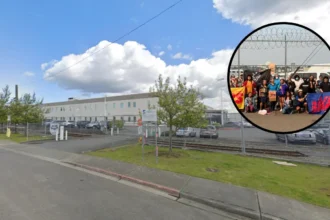
Michelle Gilman, a fourth-year history student who also served as a resource operations intern for UCDC during the winter quarter, witnessed the immediate intersection of this activism with student life. Gilman observed that the area surrounding the UC Washington Center became a primary staging ground for rallies protesting federal law enforcement actions.

She emphasized that the pervasiveness of the protests offered a stark departure from the traditional academic environment of Los Angeles, exposing students to raw public sentiment and systemic grievances just blocks from their residential quarters.

The systemic fallout from these events extended deep into the halls of Congress. Ricardo Muñoz, a fourth-year political science student who entered the UCDC program during the winter term to see abstract academic theories

“where the rubber meets the road,” found himself working directly with two prominent veterans’ advocacy organizations.

Muñoz reported that following the death of Alex Pretti in January, the incident completely altered the legislative agenda, emerging as a bitter, recurring topic of debate during formal congressional committee hearings. Through his placement, Muñoz was able to watch lawmakers dynamically react, argue, and construct policy responses to a national civil rights crisis in real time.

How Does the Professional Culture of Washington Affect Capital Interns?

Beyond the macro-political crises, the UCDC program exposed students to the distinct socioeconomic realities and transactional professional culture that defines the District of Columbia. For many participants, the experience revealed the degree to which local livelihoods, businesses, and institutional structures are completely dependent upon federal electoral outcomes and legislative cycles.

Thaer Makdsi, a third-year transfer political science student who joined the UCDC program during the spring quarter to broaden his professional portfolio, was assigned to the legislative staff of the House Committee on Financial Services.

Makdsi’s workload exposed him to the dense, often frustrating mechanics of statutory formulation, where he observed the committee processing hundreds of complex bills, only a minute fraction of which would ever successfully clear both chambers to become law. This high-volume, low-yield legislative reality provided a direct lesson in the deliberate friction built into the American government.

Furthermore, Makdsi highlighted the hyper-political nature of the city’s local economy, observing that even basic neighborhood commerce and retail shops are bound to the political survival of elected officials.

“A lot of people here – their shops depend on if a congressman loses or wins a race,”

Makdsi stated, illustrating the profound intersection between federal politics and local economic survival.

Shaily Sarmiento, a third-year student double-majoring in political science and psychology, echoed these sentiments while describing the logistical realities of daily life in the capital. Interning with two separate non-profit organizations during the winter term, Sarmiento noted that the sheer volume of political demonstrations, court hearings, and spontaneous marches frequently forced the closure of major transit arteries and city streets.

Rather than viewing this as a disruption, Sarmiento explained that the environment functioned as an immersive educational catalyst, forcing students to remain permanently informed about breaking news and judicial developments simply to navigate the city.

Background of the UCDC Program and Federal Internships

The UC Washington Program was conceptualized and implemented in 1997 by the University of California system to address a persistent geographical disadvantage faced by West Coast students seeking careers in federal public service.

Historically, elite internships within federal agencies, the judicial branch, and congressional committees were disproportionately secured by students attending East Coast institutions due to proximity and established alumni networks.

By building a permanent residential and instructional hub in the heart of the District, the University of California systematically democratised access to these high-level professional pipelines.

Over nearly three decades, the program has evolved from a standard study-abroad analogue into a vital institutional asset for federal talent acquisition.

The program’s structure forces undergraduate students to transition immediately from theoretical classroom analysis to active bureaucratic output.

This pedagogical model is particularly critical during periods of intense federal strain—such as the budgetary impasses, geopolitical shifts, and civil rights mobilisations seen in 2026. By navigating these complex environments, students do not merely watch history unfold; they learn the micro-mechanics of administrative resilience, crisis communication, and legislative drafting under pressure.

Prediction: How This Development Can Affect Future UCLA Applicants and Public Policy Career Tracks

The immersive, high-stakes nature of recent UCDC cohorts is poised to significantly alter the academic and professional trajectories of future UCLA applicants, as well as the broader recruitment landscape for public policy career tracks.

As undergraduate participants return to the home campus in Los Angeles, their firsthand experience navigating real-time federal crises—such as the budgetary restrictions of the appropriations season and the legal fallout of ICE enforcement controversies—will likely elevate the discourse within UCLA’s political science and history departments, shifting student focus toward practical crisis management and federal administrative law.

For future applicants, the documented challenges of the winter and spring quarters serve as a clear signal that the UCDC program is no longer a insulated academic excursion, but a demanding field assignment.

Prospective students will increasingly need to demonstrate high levels of emotional intelligence, adaptability, and baseline political literacy to secure slots in an environment where structural volatility is virtually guaranteed.

On a professional level, national security agencies, federal congressional committees, and non-profit think tanks are expected to view alumni of these specific, conflict-heavy quarters with heightened interest. Recruiters within the Washington ecosystem place an immense premium on entry-level professionals who have already been vetted by the logistical and psychological pressures of a disrupted capital.

Consequently, UCLA graduates who successfully navigated the UCDC terms are highly likely to secure accelerated placements within federal legislative staffs, campaign apparatuses, and international policy institutions, effectively solidifying UCLA’s footprint within the next generation of federal leadership.