
Key Points
- Washington Governor Bob Ferguson signed an expanded emergency proclamation suspending several state laws to support victims, families, and businesses affected by relentless wildfires sweeping through eastern and central Washington.
- The updated proclamation expands access to the state disaster cash assistance programme, simplifies the retrieval of vital lost documents, accelerates unemployment benefit claims, and introduces temporary protections against tenant evictions in impacted areas.
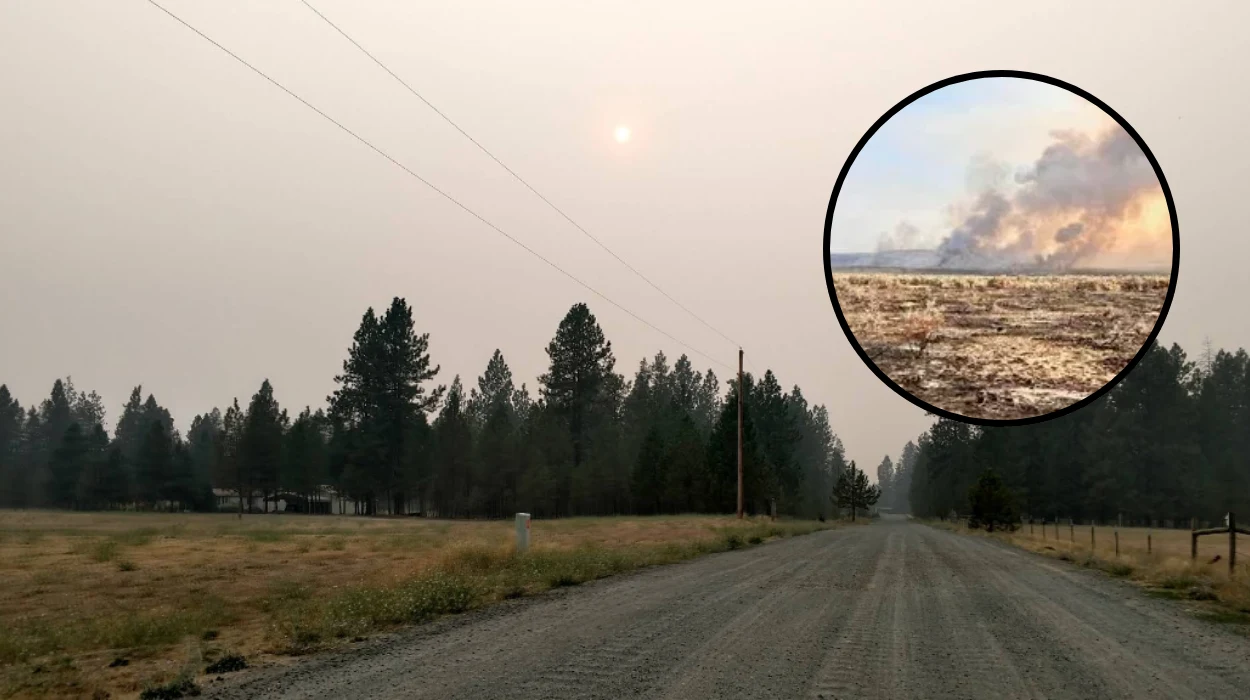
- Over 900 homes, commercial properties, and other structures have been destroyed since intense blazes ignited across the region on August 1.
- The emergency measures cover Chelan, Ferry, Okanogan, Spokane, Stevens, Douglas, and Yakima counties, along with the Confederated Tribes and Bands of the Yakama Nation, the Confederated Tribes of the Colville Reservation, and the Spokane Tribe of Indians.
- Federal authorities granted a preliminary emergency declaration covering multiple regional counties and tribal nations to assist with evacuations, emergency sheltering, and search-and-rescue operations.
- State officials are currently compiling detailed damage assessments in collaboration with the Federal Emergency Management Agency (FEMA) to petition for a federal Major Disaster Declaration for individual assistance.
Spokane (Evening Washington News) August 11, 2026 – Washington Governor Bob Ferguson announced a sweeping extension of emergency measures on Monday to bolster disaster relief for eastern and central Washington communities battered by a catastrophic series of wildfires.
- Key Points
- What specific state laws and regulations has Governor Ferguson suspended?
- Which regions and communities are included in the emergency declaration?
- How is the federal government responding to the Washington wildfires?
- What role are local fire crews and state emergency personnel playing on the ground?
- What safety restrictions and burn bans remain in effect across the state?
Speaking alongside Spokane Mayor Lisa Brown and a coalition of statewide leaders at Spokane City Hall, Governor Ferguson detailed targeted regulatory suspensions designed to untangle bureaucratic hurdles for displaced residents and strained local enterprises.
The proclamation, which updates the initial response framework enacted when regional fires erupted on August 1, arrives as firefighting divisions continue grappling with more than 900 destroyed structures and extensive acreage consumed by fast-moving flames. State authorities emphasize that the immediate priority centers on unlocking economic relief, safeguarding public health access, and securing long-term shelter options for thousands of displaced citizens.
What specific state laws and regulations has Governor Ferguson suspended?
As detailed by Governor Bob Ferguson during the press conference covered by Spokane Public Radio, the emergency proclamation deliberately targets legal and administrative bottlenecks to streamline recovery efforts. Governor Ferguson stated that
“one of my jobs in this situation is to make sure we are unlocking all the resources that state government can provide to help people during this time.”
According to official briefings released by the Office of the Governor, the proclamation implements several crucial changes:
- Disaster Assistance Access: Expands eligibility channels for the state’s disaster cash assistance programme and fast-tracks unemployment benefits for workers displaced by closures or property damage.
- Tenant Protections: Implements temporary safeguards shielding tenants in designated disaster counties from eviction-related actions, offering vital legal breathing room for both evacuees and households taking them in.
- Healthcare Flexibilities: Temporarily waives rigid licensing location mandates for pharmacies and hospitals, enabling medical providers to dispense essential care and medications from alternative sites without administrative penalties. Adult family homes and assisted living facilities are similarly granted relief from standard capacity and admission limits to accommodate transferred patients.
- Commercial and Tax Relief: Relaxes hours-of-service limitations for commercial truck drivers hauling emergency supplies and firefighting equipment, provided drivers receive adequate rest. Furthermore, second-quarter 2026 business tax filing late fees are waived for employers incapacitated by the fires.
Which regions and communities are included in the emergency declaration?
As reported by the Office of the Governor, the expanded geographical scope covers a broad expanse of eastern and central Washington. The proclamation encompasses Chelan, Ferry, Okanogan, Spokane, Stevens, Douglas, and Yakima counties.
In addition to county jurisdictions, the emergency framework explicitly covers sovereign tribal lands, including the Confederated Tribes and Bands of the Yakama Nation, the Confederated Tribes of the Colville Reservation, and the Spokane Tribe of Indians. State officials, including Washington National Guard Adjutant General Maj. Gen. Gent Welsh, Insurance Commissioner Patty Kuderer, Treasurer Mike Pellicciotti, and Public Lands Commissioner Dave Upthegrove, have coordinated closely with local leaders across these sectors to ensure equitable resource distribution.
Explore More Spokane News
Spokane Wildfires Wind Down, Evacuees Return, 2026
Arson Suspect Planned Spokane Wildfire For Weeks in 2026
How is the federal government responding to the Washington wildfires?
As noted in state administration updates, federal backing has begun flowing into the disaster zones following direct coordination between state leadership and federal partners. The federal administration previously approved an emergency declaration for six counties and three tribal nations, mobilizing federal personnel and unlocking funding for emergency protective measures.
Governor Ferguson acknowledged the rapid initial response, stating that
“I appreciate the federal government moving quickly and granting our request for this emergency declaration, and we are laser-focused on getting assistance to those Washingtonians who have lost so much.”
While the initial federal emergency allocation covers essential costs such as emergency sheltering, search-and-rescue operations, and public mass evacuations, state officials are actively preparing a formal request for a federal Major Disaster Declaration. As reported by regional journalists, obtaining a Major Disaster Declaration is critical because it unlocks Individual Assistance—the primary mechanism providing direct financial aid, temporary housing grants, and home repair loans to private citizens.
Addressing the prospects of the forthcoming individual assistance petition, Governor Ferguson noted during press briefings covered by The Spokesman-Review that
“I’m very aware that these major disaster declarations are not always granted, and so we are determined to make our case as compelling as possible.”
He added that evaluation of the state’s emergency framework remains ongoing, remarking that
“this will not be, I suspect, the last change to our emergency declaration, as we continue to evaluate what we can do to streamline things for folks.”
What role are local fire crews and state emergency personnel playing on the ground?
As documented by the Washington Military Department’s Emergency Management Division, firefighting forces face severe operational challenges compounded by high-risk weather patterns. Central Pierce Fire and Rescue crews recently redeployed after battling the Tonasket fire, which stands as one of the largest active wildfire complexes in the state.
Concurrently, the Washington State Fire Marshal’s Office has deployed multiple specialized task forces, including units stationed at the Sinlahekin Fire in Okanogan County and the Bradeen Hill Fire in Stevens County. Ground operations are bolstered by aviation assets and active personnel from the Washington National Guard, who were activated under prior executive orders to maintain containment lines and secure vulnerable infrastructure.
What safety restrictions and burn bans remain in effect across the state?
To mitigate further ignition risks during an exceptionally volatile fire season, the emergency declarations enforce strict preventive parameters. A comprehensive statewide prohibition on most outdoor and agricultural burning remains active through September 30, 2026.
The statutory burn ban prohibits:
- Yard debris burning and general trash disposal.
- Land clearing, weed abatement operations, and unregulated bonfires.
- Recreational campfires outside of approved, contained structures within designated public parks or private property.
The National Weather Service has repeatedly issued extreme Red Flag Alerts across eastern Washington, prompting the State Fire Marshal to issue public safety reminders regarding vehicle safety. Motorists are urged to inspect trailer safety chains and mechanical components to prevent roadside sparks, while residents are reminded that consumer fireworks sales and discharges remain strictly unlawful outside of licensed public displays.
As recovery operations persist, local and state agencies continue updating damage assessments from the Spokane complex fires and surrounding eastern zones. Officials encourage affected individuals to monitor official channels through the Washington Emergency Management Division to access updated assistance schedules, temporary housing directives, and document replacement services as emergency provisions evolve.