
Key Points
- U.S. Congressional Demand: Senior Democratic Representative Rick Larsen (WA-02), Ranking Member of the House Transportation and Infrastructure Committee, has formally requested the U.S. Coast Guard to review and update joint oil spill response plans following Canada’s proposed pipeline expansion.
- Proposed Infrastructure Expansion: The Government of Alberta announced a multi-billion-dollar crude oil pipeline project capable of transporting 1,000,000 barrels per day from Alberta to a new marine export terminal at Roberts Bank in Delta, British Columbia.
- Increased Salish Sea Vessel Traffic: The development would significantly increase tanker traffic across shared Pacific Northwest waterways, including the Haro Strait and Boundary Bay, escalating risks of catastrophic marine crude oil spills.
- Legislative Non-Compliance: Rep. Larsen cited Section 7407 of the National Defense Authorization Act for Fiscal Year 2026, noting that the statutory 180-day deadline for updating the Canada-United States Joint Maritime Pollution Contingency Plan has passed without a congressional update.
- Deadline Issued to Coast Guard: In a letter sent to U.S. Coast Guard Commandant Admiral Kevin E. Lunday, Rep. Larsen demanded a comprehensive formal update on cross-border spill mitigation efforts by 31 August 2026.
- Cross-Border Indigenous Concerns: Sovereign Native American tribes—including the Lummi Nation and Swinomish Indian Tribal Community—alongside the Tsawwassen First Nation in B.C., have raised major environmental and treaty considerations regarding the proposed terminal and shipping corridors.
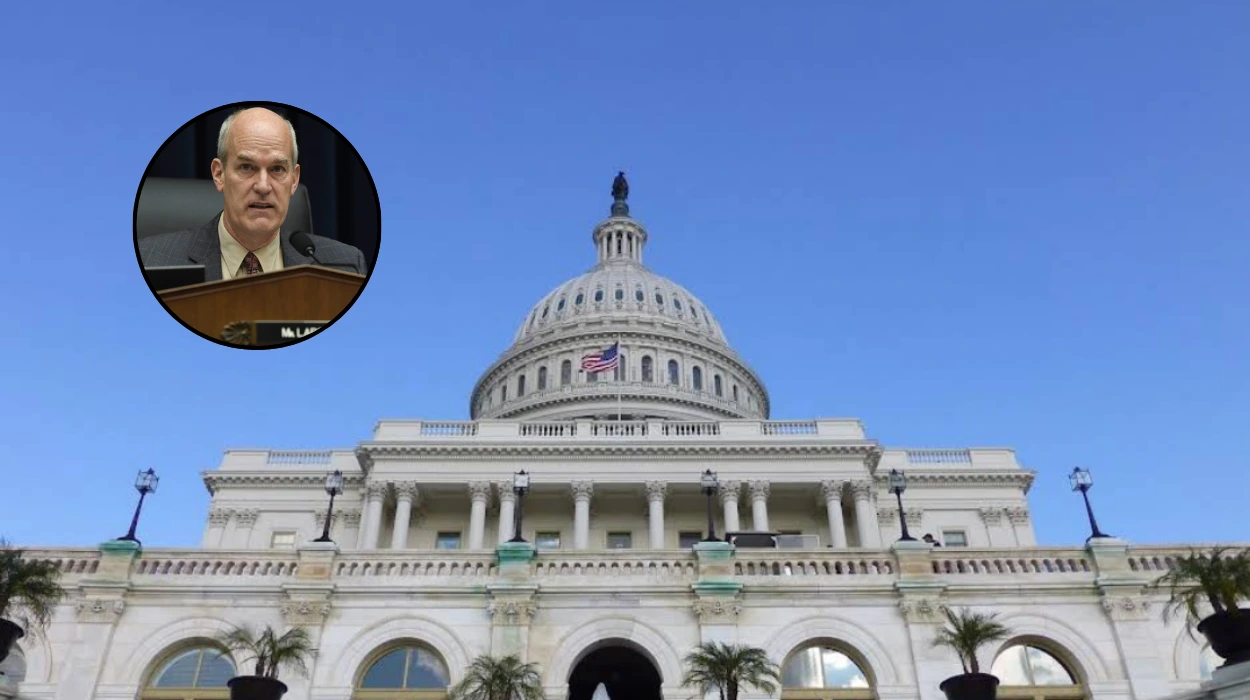
Washington (Evening Washington News) August 1, 2026 – Representative Rick Larsen presses Coast Guard for oil spill preparedness review over proposed Alberta-to-B.C. crude pipeline (The Canadian Press) August 1, 2026 — Senior United States lawmaker Rick Larsen has called on the United States Coast Guard to immediately review and modernize its cross-border oil spill response capabilities in response to newly unveiled Canadian infrastructure plans that would direct hundreds of additional crude oil tankers through the shared waters of the Salish Sea.
- Key Points
- What Prompted Representative Rick Larsen to Target the U.S. Coast Guard’s Spill Preparedness Plans?
- How Has the U.S. Coast Guard Missed Congressional Deadlines Under the National Defense Authorization Act?
- What Specific Environmental and Tribal Concerns Have Been Raised Regarding the Salish Sea?
- What Is the Background of the Particular Development After the News?
- What Is the Prediction for How This Development Can Affect the Particular Audience?
As reported by Nolan Baker of The Northern Light, Representative Rick Larsen (D-WA), who serves as the top Democrat on the House Committee on Transportation and Infrastructure, addressed a formal inquiry to Admiral Kevin E. Lunday, Commandant of the United States Coast Guard, expressing grave concerns over federal preparedness along the U.S.-Canada maritime boundary. Rep. Larsen emphasised that the Government of Alberta’s proposed $35.2 billion to $43.7 billion pipeline terminating at Roberts Bank, British Columbia—located just kilometres from Point Roberts and Blaine in Washington State—substantially heightens the environmental hazard profile for sensitive coastal ecosystems in both nations.
What Prompted Representative Rick Larsen to Target the U.S. Coast Guard’s Spill Preparedness Plans?
As reported by Nolan Baker of The Northern Light, the primary catalyst for Congressional intervention was the 2 July 2026 announcement by the provincial Government of Alberta detailing a major crude oil pipeline initiative. The proposed project aims to move up to 1,000,000 barrels of crude oil per day from Western Canadian oil fields to a terminal facility situated at Roberts Bank in Delta, British Columbia.
As disclosed in official provincial planning documents, Alberta intends to partner with Trans Mountain Corp. and Pembina Pipeline to construct the infrastructure. The blueprint includes a 260-hectare marine facility, 15 crude storage tanks with a combined capacity of 6.5 million barrels, and two dedicated deep-water berths capable of loading Very Large Crude Carriers (VLCCs) carrying up to 2.2 million barrels each.
As outlined in a public statement released by the office of Representative Rick Larsen, the Democratic lawmaker stressed the urgent necessity for bilateral action:
“People I represent need answers on how the new Alberta to B.C. pipeline at Roberts Bank is going to impact the Salish Sea and local marine habitats. Due to Canada’s plans to ship more oil in the Salish Sea, the Coast Guard‘s oil spill prevention and response mission in the Pacific Northwest is even more critical. The Coast Guard must immediately begin prevention planning through the Canada-United States Joint Marine Pollution Contingency Plan.”
Representative Larsen pointed to statutory requirements previously established by the United States Congress that mandated federal oversight of cross-border marine safety.
How Has the U.S. Coast Guard Missed Congressional Deadlines Under the National Defense Authorization Act?
In his formal correspondence to Coast Guard Commandant Admiral Kevin E. Lunday, Rep. Larsen cited specific legislative provisions governing joint pollution response protocols between Ottawa and Washington.
As reported by Nolan Baker of The Northern Light, Rep. Larsen highlighted Section 7407 of the National Defense Authorization Act (NDAA) for Fiscal Year 2026. The provision legally obligated the U.S. Coast Guard to co-ordinate with partner federal agencies to review and update the Canada-United States Joint Maritime Pollution Contingency Plan within 180 days of the bill’s enactment.
In his official letter to Admiral Lunday, Rep. Larsen stated:
“Section 7407 of the National Defense Authorization Act for Fiscal Year 2026 required the Coast Guard to coordinate with other federal agencies to review and update the Canada-United States Joint Maritime Pollution Contingency Plan, no later than 180 days after passage. I am concerned that the deadline has passed without Congress receiving an update on the Coast Guard’s efforts.”
The Canada-United States Joint Maritime Pollution Contingency Plan serves as the primary operational framework guiding bilateral emergency responses to oil discharges and hazardous substance spills in shared contiguous waters. Rep. Larsen requested that the Coast Guard provide a full compliance report and status update to the House Transportation and Infrastructure Committee no later than 31 August 2026.
What Specific Environmental and Tribal Concerns Have Been Raised Regarding the Salish Sea?
The geographic proximity of the proposed Roberts Bank terminus to the United States border places the marine shipping route directly through narrow waterways shared by Washington State and British Columbia, including Boundary Bay and the Haro Strait.
As reported by Nolan Baker of The Northern Light, Rep. Larsen expressed concern that federal assets are being diverted away from statutory maritime safety missions in the Pacific Northwest toward immigration security along the U.S. southern border.
In an interview conducted by Nolan Baker of The Northern Light, Rep. Larsen stated:
“There’s a lot of concern in Congress about whether the Coast Guard as a whole has the focus it needs on its statutory duties versus being dragged down to the southern water border in order to do work. I want to be sure that we have the assets here in the shared waters of the Salish Sea in order to do the appropriate pollution prevention, and marine safety mission that is going to be necessary in order to decrease the possibility of a massive oil spill risk.”
Rep. Larsen further emphasised the potential damage to decades of ecological restoration efforts across Puget Sound and the San Juan Islands. As reported by Nolan Baker of The Northern Light, Rep. Larsen stated:
“I’m really limited in what I can do to raise concerns from the U.S. side. I know that my constituents, from Lummi and Swinomish tribes … to folks who live in the San Juans, all of them have very serious concerns about the potential of an oil spill, which won’t respect the water border at all if it does happen. We’re trying to do things to help salmon recover here in the Salish Sea. That requires habitat and habitat restoration. I don’t want to see years of work being turned around because of a massive oil spill.”
In addition to American tribal concerns, Indigenous governments in Canada are assessing the project’s implications. As reported by Nolan Baker of The Northern Light, the Tsawwassen First Nation—whose treaty lands encompass the proposed Roberts Bank development site—issued a statement clarifying that neither the Canadian federal government nor the Alberta provincial government had formally initiated project consultations with the Nation.
The Tsawwassen First Nation stated that while it has not taken a formal position on the pipeline, “If this project proceeds, we expect to be meaningfully involved from the earliest stages of planning and decision-making,” noting that any ultimate position would follow thorough technical evaluations and community review.
What Is the Background of the Particular Development After the News?
The proposal by Alberta to construct a second major crude oil corridor to the Pacific Coast follows years of economic debate over Western Canadian energy transport capacity. Although the Trans Mountain Pipeline Expansion (TMX) completed its expansion in recent years, Alberta energy producers and provincial officials have advocated for additional long-term export infrastructure targeting Asian markets.
Following the announcement on 2 July 2026, Rep. Larsen initiated diplomatic outreach, conferring with Mark Wiseman, Canada’s Ambassador to the United States, to outline regional environmental concerns. Concurrently, Rep. Larsen’s office confirmed it is submitting a formal inquiry to the National Oceanic and Atmospheric Administration (NOAA) regarding vessel traffic management and maritime route mapping through the Salish Sea.
Because the physical construction of the pipeline and export terminal lies entirely within Canadian sovereign jurisdiction, U.S. federal officials lack direct statutory veto power over project approval. Consequently, American oversight efforts have centered on federal spill prevention mandates, joint coast guard co-ordination protocols, and international treaty standards governing shared waterways.
Explore More Local News
Lynden Man Arrested Following Assault in Downtown Bellingham 2026
Case Dropped Against Olympian David Hearn in Washington D.C. 2026
What Is the Prediction for How This Development Can Affect the Particular Audience?
The escalation of this cross-border debate is expected to have multi-faceted ramifications for several key constituent groups across the Pacific Northwest and Western Canada:
How Will Coastal Communities and Indigenous Nations Be Affected?
For residents of the San Juan Islands, Whatcom County, Skagit County, and neighboring Canadian coastal communities, the primary impact will be an increased risk profile regarding maritime vessel traffic. If the pipeline proceeds toward its target operational window between 2032 and 2034, vessel traffic density in the Haro Strait will rise significantly, increasing noise pollution and collision risks for local marine species, including the endangered Southern Resident killer whale population. Tribal and First Nation communities dependent on commercial and subsistence salmon fisheries face potential economic and cultural disruptions if joint response protocols are not significantly enhanced prior to terminal commissioning.
How Will Maritime Logistics and Commercial Shipping Operations Be Affected?
Commercial shipping operators navigating the Salish Sea will likely encounter stricter regulatory oversight and enhanced navigational requirements. Rep. Larsen’s push for an updated Canada-U.S. Joint Contingency Plan could lead to mandated tug escort protocols, reduced speed zones, and stricter anchorage regulations for crude carriers maneuvering near Roberts Bank. While these measures aim to reduce accident risks, they may increase operating costs and transit times for maritime freight carriers navigating shared channels.
How Will Cross-Border Diplomatic and Energy Relations Be Affected?
At the federal level, the issue will test diplomatic mechanisms governing shared environmental stewardship. As Congress scrutinizes Coast Guard resource allocation and NOAA route mapping, pressure will grow on Canadian federal regulators—including the Canada Energy Regulator and Impact Assessment Agency of Canada—to incorporate U.S. environmental impact studies into their formal review processes. The August 31 deadline set by Representative Larsen will serve as a key marker for whether the U.S. Coast Guard adjusts its Pacific Northwest operational posture to address the projected increase in tanker traffic.