
Key Points
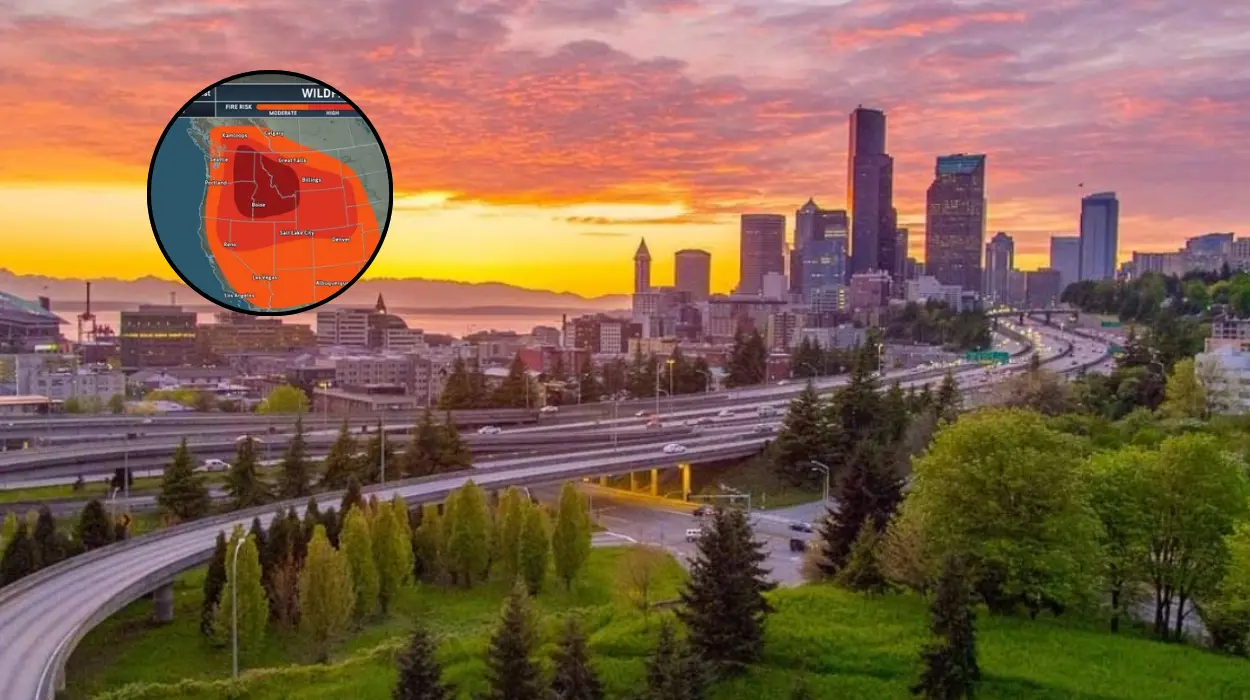
- Smoke Migration: Wildfire smoke originating from blazes in the northern Cascades, British Columbia, and eastern Washington is projected to move into western Washington, degrading air quality through the middle of the week.
- Atmospheric Elevation & Mixing: Atmospheric smoke on Monday is expected to remain predominantly high in the sky, with surface-level mixing occurring later in the day and denser smoke settling near the surface on Tuesday and Wednesday.
- Health Category Impact: Air quality levels are anticipated to drop into the ‘Unhealthy for Sensitive Groups’ (USG) category across several areas within the Puget Sound region, Whatcom County, and Skagit County.
- Weather Pattern Driver: High pressure off the coast and shifting northeasterly offshore winds are driving the heat and transport of smoke, with temperatures expected to peak near 90°F (32°C) on Wednesday and Thursday.
- Expected Relief: An onshore marine push from the Pacific Ocean is forecast to arrive late Thursday into Friday, flushing out the particulate pollution and lowering temperatures.
Seattle (Evening Washington News) August 3, 2026 — Wildfire smoke is moving into western Washington and is expected to progressively lower ambient air quality across the region through midweek. While higher-altitude haze was visible on Monday morning, meteorologists warn that fine particulate pollution will mix down to ground level by late Monday afternoon and evening, causing deteriorating air conditions through Wednesday night.
- Key Points
- What Weather Dynamics Are Driving Smoke Into the Puget Sound Region?
- Which Regional Wildfires Are Contributing to the Degrading Air Quality?
- Who Is Most Vulnerable to Increased Air Pollution Levels?
- What Safety Steps Should Residents Take to Minimise Exposure?
- Background of the Wildfire Smoke Conditions in Washington State
- Prediction: How Will This Development Affect Western Washington Residents?
As reported by Meteorologist Nick Allard of KIRO 7 News, elevated haze from Canadian wildfires initially drifted overhead while high pressure kept skies mostly sunny with temperatures in the upper 70s to lower 80s. However, Nick Allard noted that as winds shift to bring smoke from eastern Washington into the region, skies will become noticeably hazier, with the potential for air quality to degrade depending on how much smoke mixes down to the surface. The warmest weather is scheduled to coincide with the densest smoke concentrations on Wednesday and Thursday, before relief arrives late Thursday via a marine air push.
What Weather Dynamics Are Driving Smoke Into the Puget Sound Region?
According to forecasters at the National Weather Service (NWS), a building high-pressure system positioned off the coast is moving over western Washington, creating a atmospheric setup that pulls air from eastern Washington and British Columbia into western valleys. This meteorological pattern produces northeasterly offshore winds, effectively channeling smoke across the Cascade Range and into populated lowlands including the Puget Sound area.
As documented in official updates from the Washington State Department of Ecology on the Washington Smoke Blog, light offshore flow enables smoke to drain into western Washington valleys. The most significant smoke impacts are anticipated in Whatcom and Skagit Counties, alongside mountain valley communities in King and Snohomish Counties. Forecasters emphasize that precise smoke concentrations remain difficult to model with certainty due to shifting fire activity across eastern Washington, northern Oregon, and British Columbia.
Which Regional Wildfires Are Contributing to the Degrading Air Quality?
As reported by journalist Lexi Herda of KIRO 7 News, wildland fire activity across the region has escalated rapidly, highlighted by the Spokane Complex fires in eastern Washington which triggered thousands of evacuations and destroyed hundreds of structures. Smoke generated by these intense eastern Washington fires is being carried westward alongside emissions from active blazes in the northern Cascades and extensive wildfires across British Columbia.
As confirmed by the Environment and Climate Change Canada (ECCC) air quality reporting network, multiple regional air quality warnings have been established across Southern British Columbia and the Pacific Northwest boundary due to lingering particulate plumes. When combined with localized thermal troughs, these multi-source emissions create widespread ground-level haze across western Washington corridors.
Who Is Most Vulnerable to Increased Air Pollution Levels?
According to guidance published by the Puget Sound Clean Air Agency, fine particulate matter ($PM_{2.5}$) contained within wildfire smoke poses severe health risks, particularly for designated sensitive populations. The agency identifies high-risk individuals as infants, children, adults over 65 years of age, pregnant individuals, and people with pre-existing heart or lung conditions such as asthma, chronic obstructive pulmonary disease (COPD), or stroke history.
As detailed in health advisories from the Washington State Department of Ecology, when the Air Quality Index (AQI) enters the ‘Unhealthy for Sensitive Groups’ range (AQI 101–150), vulnerable individuals are strongly advised to limit prolonged outdoor exertion and remain indoors in spaces with clean air filtration. If air pollution levels advance into the ‘Unhealthy’ tier (AQI 151–200), the general public is likewise urged to reduce strenuous outdoor activities and take precautionary measures to minimize exposure to smoke particles.
What Safety Steps Should Residents Take to Minimise Exposure?
Officials at the Puget Sound Clean Air Agency advise residents to monitor local monitoring stations and adjust daily outdoor routines accordingly. To protect indoor air quality, public health authorities recommend closing doors and windows, setting home ventilation systems to recirculate air, and utilising high-efficiency particulate air (HEPA) filters or MERV-13 box-fan filter configurations in designated clean rooms.
For individuals who must go outdoors, health agencies note that well-fitted NIOSH-certified N95 or N100 respirator masks provide effective protection against fine smoke particles, whereas standard surgical or cloth masks offer minimal defense against micro-particulates. Community members seeking refuge from hot temperatures and smoky conditions are advised to utilise local public cooling centres, libraries, and commercial facilities equipped with commercial-grade air filtration systems.
Background of the Wildfire Smoke Conditions in Washington State
Wildfire smoke events have become an increasingly frequent occurrence in western Washington during the late summer months, driven by persistent summer heatwaves and dry vegetation across the Pacific Northwest. Historically, western Washington benefited from prevailing onshore winds from the Pacific Ocean, which acted as a natural barrier keeping marine air clean and cool. However, periodic atmospheric shifts—specifically summer high-pressure ridges—frequently reverse these wind patterns, causing dry, smoky offshore winds to blow from the east over the Cascades toward coastal urban centers.
Data from the Washington State Department of Ecology indicates that wildfire smoke represents the primary source of fine particle pollution ($PM_{2.5}$) in the state during the summer season. $PM_{2.5}$ particles measure 2.5 micrometres or smaller in diameter—roughly 30 times smaller than the width of a human hair—allowing them to penetrate deep into lung tissue and enter the bloodstream, causing both acute respiratory distress and long-term cardiovascular stress. Over the past decade, state agencies including the Washington Department of Ecology and regional clean air authorities have expanded air monitoring networks and public forecasting tools, such as the Washington Smoke Blog, to provide real-time updates and health guidance as wildfire seasons grow more intense and extended.
Explore More Seattle News
Seattle business survival survey: metro ranks 8th in 2026
Census Data Identifies Top Immigrant Origin Nations in Seattle Metro 2026
Prediction: How Will This Development Affect Western Washington Residents?
The anticipated smoke event and associated heat through midweek will have direct, multi-faceted impacts across western Washington communities:
- Impact on Vulnerable and Sensitive Health Groups: Individuals with asthma, cardiovascular illnesses, and respiratory conditions face heightened risk of symptom flare-ups, airway irritation, and emergency room visits. Sensitive groups will need to restrict outdoor activity, keep rescue medications accessible, and maintain filtered indoor air environments through Thursday.
- Impact on Outdoor Workers and Labor Sectors: Construction workers, agricultural laborers, utility crews, and municipal outdoor workers will experience compromised working conditions due to combined heat stress and poor air quality. Employers will likely be required under state workplace safety standards to provide N95 respirators, increase rest breaks, and shift strenuous tasks to earlier hours when surface smoke levels may be lower.
- Impact on Outdoor Recreation and Event Organisers: Sports leagues, summer day camps, outdoor concert venues, and recreational facilities in Whatcom, Skagit, King, and Snohomish counties will likely face schedule adjustments, indoor relocations, or event cancellations as local AQI readings reach unhealthy levels.
- Impact on Energy Consumption and Public Services: With temperatures forecasted to reach the 90°F mark on Wednesday and Thursday alongside smoky air, home cooling demand will surge. Residents lacking home air conditioning who cannot open windows due to smoke will rely heavily on municipal cooling centers and public libraries to avoid heat-related illness and smoke inhalation.
- Timeline to Air Quality Recovery: Meteorological models indicate that conditions will begin improving dramatically late Thursday evening into Friday as a strong marine push delivers cooler air off the Pacific Ocean. This onshore breeze is forecast to flush lingering smoke eastward out of the Puget Sound basin, bringing temperatures back into the comfortable mid-70s to low-80s with returning clear skies by the weekend.