
Key Points
- Widespread Balloting: Washington voters are participating in primary elections to select candidates across 688 elected offices and 80 local measures, featuring a total of 1,334 candidates.
- Legislative Control: All 98 seats in the Washington House of Representatives and 24 seats in the state Senate are on the ballot, with Democrats seeking to widen their majorities and Republicans aiming to regain ground.
- High-Profile Congressional Battles: Key contests include Democratic Representative Marie Gluesenkamp Perez fighting for a third term in the 3rd Congressional District, an open race for Representative Dan Newhouse’s seat in the 4th Congressional District, and a far-left primary challenge by Kshama Sawant against incumbent Representative Adam Smith in the 9th District.
- State Supreme Court Turnover: Four state Supreme Court seats are being contested on the primary ballot, including first electoral tests for Governor Bob Ferguson’s appointees, amidst upcoming legal challenges regarding high-earner taxation.
- Voter Participation Rates: As of Monday evening, just over 1 million of the state’s 5.1 million registered voters had submitted their ballots, representing a 19.9% preliminary turnout, with total turnout projected to reach approximately 40%.
Olympia (Evening Washington News) August 4, 2026 – As reported by Jake Goldstein-Street of the Washington State Standard, voters across Washington State are casting their ballots today to winnow down expansive fields of candidates in hundreds of federal, state, and local contests during this primary election cycle. Under Washington’s non-partisan top-two primary system, all 1,334 candidates across 688 elected offices and 80 local ballot measures are competing for positions on the top line, with only the top two vote-getters in each contest advancing to the general election scheduled for November 3, 2026.
- Key Points
- Which Key Legislative and Congressional Races Are Under the Spotlight?
- Why Are the State Supreme Court Contests Receiving Extraordinary Attention?
- How Are Voters Returning Their Ballots and What Are the Turnout Expectations?
- What Is the Background of This Election Development?
- What Is the Prediction for How This Primary Will Affect Washington Voters?
Which Key Legislative and Congressional Races Are Under the Spotlight?
At the legislative level, control of both chambers in Olympia is directly on the line. As noted by reporter Jake Goldstein-Street of the Washington State Standard, all 98 seats in the state House of Representatives and 24 seats in the state Senate are up for election. Democrats currently enter the primary looking to expand their legislative majorities, while Republicans are striving to claw back seats. Due to several retirements leaving open seats, the upcoming legislative session in January is guaranteed to feature new lawmakers.
Several prominent incumbents face notable challenges, including from within their own political parties:
- State Senate Majority Leader Jamie Pedersen (D-Seattle): Facing a primary challenge from activist Hannah Sabio-Howell, who is running to his left. Pedersen has been targeted by conservative-funded mailers criticising his leadership in passing the state’s tax on high earners, though the ultra-liberal Seattle district remains out of reach for Republicans.
- Representative Mike Steele (R-Chelan): Challenged in Central Washington by Republican pastor Adam James, who has emerged as one of the cycle’s most prolific campaign fundraisers.
At the federal level, all 10 of Washington’s seats in the United States House of Representatives are on the ballot. While most incumbents are expected to secure reelection comfortably, three specific congressional districts are drawing intense national and regional scrutiny:
- 3rd Congressional District: Democratic Representative Marie Gluesenkamp Perez is vying for a third term in a race that could directly impact the broader balance of power in Congress. She faces state Senate Minority Leader John Braun, a Republican, as well as Democrat Brent Hennrich, who is challenging her from the left.
- 4th Congressional District: Following the retirement of Representative Dan Newhouse, nearly a dozen candidates are competing for this safely Republican seat in central Washington. Leading contenders include Newhouse’s 2024 challenger Jerrod Sessler, Yakima County Commissioner Amanda McKinney, and state Senator Matt Boehnke.
- 9th Congressional District: Extending south from Seattle, this primary will demonstrate whether former far-left Seattle City Councilmember Kshama Sawant’s insurgent campaign can unseat long-serving Democratic Representative Adam Smith.
Why Are the State Supreme Court Contests Receiving Extraordinary Attention?
As reported by Jake Goldstein-Street of the Washington State Standard, state Supreme Court races—which typically attract minimal public attention—are receiving unprecedented scrutiny this election year. The judicial bench is experiencing significant turnover, with four judicial positions appearing on the primary ballot:
- Appointee Tests: Two races mark the first electoral evaluations for appointees made by Governor Bob Ferguson, specifically Justices Colleen Melody and Theo Angelis.
- Vacant Seat: One contest will determine candidates to fill an open seat created by a departing justice.
- Chief Justice Challenge: Chief Justice Debra Stephens is defending her seat against multiple primary challengers.
- Fifth Position: A fifth Supreme Court seat will proceed directly to the November ballot, featuring only two registered candidates.
The heighten scrutiny surrounding these judicial races stems largely from upcoming constitutional challenges. Legal observers expect the state’s high court to hear pivotal litigation regarding the state’s controversial “millionaires’ tax,” making the ideological composition of the bench a critical point of focus for business groups and policy advocates alike.
How Are Voters Returning Their Ballots and What Are the Turnout Expectations?
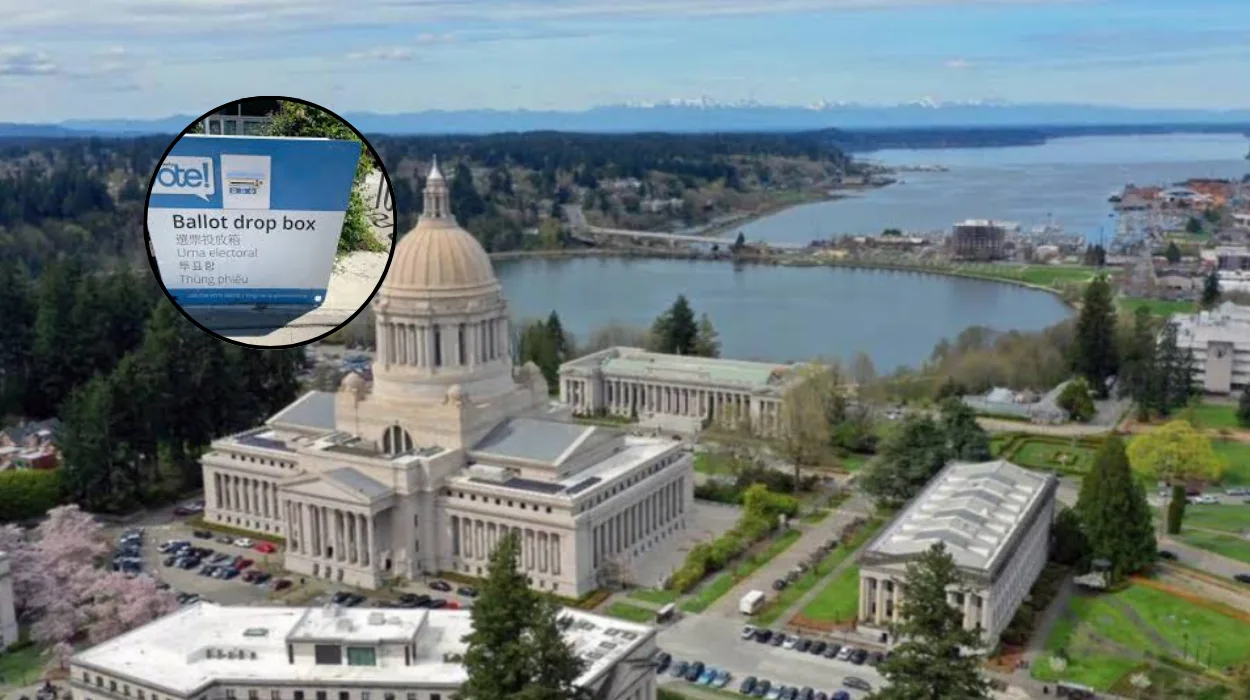
Washington operates a vote-by-mail system where ballots must either be postmarked by Election Day or deposited into an official drop box or voting centre by 8:00 p.m. local time.
According to figures published by the Washington State Standard, initial participation metrics recorded on the eve of the election showed:
| Region / Metric | Recorded Return / Figure | Status / Context |
| Total Registered Voters | 5.1 Million | Eligible state electorate |
| Ballots Returned (as of Monday night) | ~1.01 Million | 19.9% preliminary turnout |
| King County | Among the lowest | Slower early ballot returns |
| Garfield, Jefferson & Wahkiakum Counties | Highest return rates | Leading early participation |
| Projected Final Turnout | ~40% | Based on historical midterm primary trends |
Given reduced collection frequencies by the U.S. Postal Service, election administrators advised voters utilizing mail services to dispatch their completed ballots at least one week prior to Election Day. Electors tracking their submissions can monitor ballot status online via VoteWA.gov or register for automated updates by sending a text message reading “VOTE” to 868392.
Initial preliminary results will be published online by county election departments and the Office of the Secretary of State shortly after 8:00 p.m. Under Washington’s mail-in process, overall tallies will continue to shift as additional ballots arrive and undergo signature verification over the coming days. The Secretary of State is required by law to formally certify final primary results by August 21, 2026.
What Is the Background of This Election Development?
Washington State’s top-two primary system was adopted to allow all registered voters, regardless of party affiliation, to vote for any candidate on the ballot, with the top two vote-receivers moving forward to the general election. Over recent legislative sessions, state lawmakers in Olympia have debated major fiscal policies, culminating in the enactment of high-earner revenue measures and capital gains taxation. These legislative acts have reshaped campaign dynamics, drawing significant financial contributions from both progressive advocacy groups and conservative donors seeking to influence state legislative majorities. Additionally, redistricting adjustments and judicial retirements have accelerated turnover within state agencies, the state Legislature, and the Washington Supreme Court, creating high-volume candidate fields across urban and rural districts.
Explore More Olympia News
Nick Brown Fights PSE Energy Rate Hikes in Olympia WA 2026
Washington Department of Agriculture Misses Egg Facility Inspections (Olympia, Washington 2026)
What Is the Prediction for How This Primary Will Affect Washington Voters?
The outcome of today’s primary elections will immediately set the political parameters for Washington voters heading into the November 3 general election.
For the general electorate, the narrowing of 1,334 candidates down to two contenders per race will dictate the specific policy platforms presented in the autumn. In key legislative districts, the performance of incumbents facing internal party challenges will signal whether voters favour traditional legislative leadership or more activist, ideological shifts. In federal congressional races—particularly the 3rd, 4th, and 9th Districts—the primary results will determine whether key swing or open seats remain competitive for national party committees seeking to shape congressional control. Finally, the selection of judicial candidates advancing to November will directly dictate how future legal challenges surrounding tax policy, state regulations, and constitutional rights are adjudicated by the state Supreme Court over the coming decade.