A lesser known National Park Service unit in Washington State is any of the ten federal protected areas managed by the National Park Service outside of the three primary national parks: Mount Rainier, Olympic, and North Cascades.
- How Does the National Park Service Categorize Non Park Units?
- What is the Historical Context of These Washington Protected Areas?
- Which Lesser Known Park Units Protect Eastern Washington Landscapes?
- Which Maritime Units Preserves Western Washington History?
- How Does the Manhattan Project National Historical Park Function?
- What Field Data Illustrates the Value of These Quieter Parks?
- What Infrastructure is Available at These Lesser Known Units?
- What Future Challenges Do These Alternative Units Face?
The National Park System consists of 431 units across the United States. These designations encompass alternative structural classifications including National Recreation Areas, National Historic Sites, National Historical Parks, and National Reserves. While the iconic mountain parks draw millions of annual visitors, the remaining properties preserve distinct ecological regions and historical archives that remain largely uncrowded.
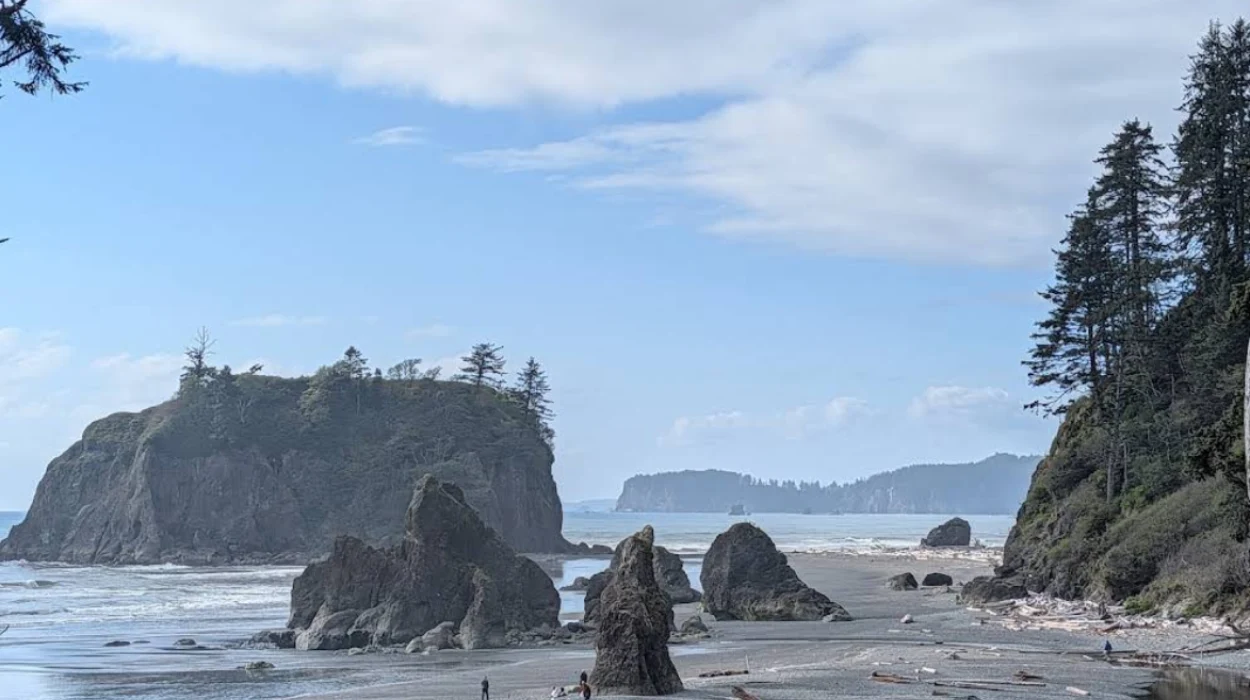
These alternative units protect diverse ecosystems such as the shrub-steppe deserts of Eastern Washington, the maritime coastlines of Puget Sound, and the riparian corridors of the Columbia River basin. By expanding the geographic definition of park units, the National Park Service preserves critical resources that do not fit the traditional mountainous profile of a standard National Park.
How Does the National Park Service Categorize Non Park Units?
The National Park Service categorizes non park units through specific congressional designations based on the primary resource protected, utilizing classifications such as National Recreation Areas, National Historic Sites, National Historical Parks, and National Historical Reserves.
National Recreation Areas
National Recreation Areas focus on large water resources and maximize outdoor public utilization. Lake Roosevelt National Recreation Area encompasses 130 miles of the Columbia River, spanning from Grand Coulee Dam to the Canadian border. The primary mechanism of this unit is managing water-based access while conserving the surrounding shoreline habitat.
National Historic Sites and Parks
National Historic Sites protect a single historical feature or building, whereas National Historical Parks encompass broader complexes extending across multiple structures or landscapes. Whitman Mission National Historic Site preserves the physical grounds of an early immigration outpost. Conversely, the Manhattan Project National Historical Park covers multi-state facilities involved in World War II industrial development, including the B Reactor at Hanford.
National Historical Reserves
National Historical Reserves utilize a unique governance structure blending federal, state, and private land ownership. Ebey’s Landing National Historical Reserve on Whidbey Island operates under this model. The federal government provides administrative oversight, but local agricultural families maintain functional ownership of the historical farming plains.
What is the Historical Context of These Washington Protected Areas?
The historical context of these Washington protected areas spans across thousands of years of Indigenous habitation, the mid nineteenth century overland migration era, the early twentieth century industrialization period, and the mid century developments of the Second World War.
Pre Settlement and Indigenous Land Use
Long before federal designations were established, the land belonged to sovereign Native nations. The geologically complex terrains of Washington hosted distinct cultural practices across various geographic zones.
- Coastal and Salish Sea Regions: The Coast Salish peoples utilized areas like Ebey’s Landing for sustainable shellfish harvesting and camas root cultivation.
- Columbia River Basins: Tribal nations including the Colville, Spokane, and Sanpoil relied on the seasonal salmon runs of the upper Columbia River rapids, areas now submerged under federal reservoir waters.
The Overland Migration and Colonial Conflict
During the 1830s and 1840s, the Pacific Northwest became the terminus for the Oregon Trail. The influx of Euro-American settlers disrupted established Indigenous populations, leading to regional conflicts. The federal government established military outposts and treaty parameters to assert governance over the territory, laying the groundwork for future historical preservation sites.
Industrialization and the Atomic Era
In the twentieth century, federal projects transformed the landscape of Washington State. The construction of the Grand Coulee Dam in 1933 created a massive reservoir that required federal management, leading directly to the creation of the Columbia River Reservoir Area, later renamed Lake Roosevelt National Recreation Area.
During World War II, the secret development of atomic weaponry under the Manhattan Project selected Hanford, Washington, as a plutonium production site. The structural remains of this facility were officially incorporated into the National Park System in 2015 to document the complex socio-political impacts of the nuclear age.
Which Lesser Known Park Units Protect Eastern Washington Landscapes?
The lesser known park units protecting Eastern Washington landscapes are Lake Roosevelt National Recreation Area and Whitman Mission National Historic Site, both conserving arid environments dominated by sagebrush and basalt.
Lake Roosevelt National Recreation Area
Lake Roosevelt National Recreation Area encompasses 100,390 acres along the Columbia River. The landscape features dramatic basalt coulees formed by the catastrophic Missoula Floods during the last Ice Age. Ponderosa pine forests meet the sagebrush plains along the water’s edge, creating a distinct microclimate.
The park unit provides a crucial habitat corridor for regional wildlife populations. The dry ecosystem supports unique communities of plants and animals that contrast sharply with the temperate rainforests found on the western side of the state.
- Avian Species: Bald eagles, osprey, and peregrine falcons nest along the sheer canyon walls.
- Terrestrial Mammals: Mule deer, coyotes, and occasional bighorn sheep utilize the riparian zones for foraging.
Whitman Mission National Historic Site
Located west of Walla Walla, this 138-acre site preserves the valley landscape where Marcus and Narcissa Whitman established a medical and religious mission in 1836. The site sits within the rolling hills of the Palouse bioregion. It features restored wetlands, native rye grasslands, and a historic orchard that represents early agricultural modifications to the regional ecosystem.
Which Maritime Units Preserves Western Washington History?
The maritime units preserving Western Washington history are Ebey’s Landing National Historical Reserve and the Klondike Gold Rush National Historical Park, both safeguarding critical coastal transportation and migration corridors.
Ebey’s Landing National Historical Reserve
Ebey’s Landing sits at the gateway to Puget Sound on Whidbey Island. This 17,572-acre reserve protects a continuous record of human exploration and settlement from the early exploration era to the modern period. The reserve encompasses distinct environmental zones:
- The Bluff Trail Rim: High, windswept gravel ridges overlooking the Strait of Juan de Fuca.
- The Prairie Floors: Fertile glaciated soils cultivated continuously since the 1850s.
- The Marine Shoreline: A dynamic saltwater beach interface that served as a historic canoe landing.
The preservation mechanism keeps 85% of the land in private hands while utilizing strict conservation easements to prevent commercial development, keeping the nineteenth-century coastal vistas completely intact.
Klondike Gold Rush National Historical Park
Located in the Pioneer Square Historic District of Seattle, this urban park unit functions inside an authentic 1889 brick building. It preserves the history of the 1897 gold strike in the Canadian Yukon. Seattle acted as the primary outfitting port where tens of thousands of prospectors purchased tons of supplies before boarding steamships bound for Alaska. The park preserves artifacts, photographs, and personal journals illustrating the economic explosion that transformed Seattle from a regional port into a major global metropolis.
How Does the Manhattan Project National Historical Park Function?
The Manhattan Project National Historical Park functions as a unique multi site partnership between the National Park Service and the United States Department of Energy, explicitly separating interpretative duties from environmental remediation tasks.
Administrative Division of Labor
The park relies on a strict administrative division of labor between two federal entities. This cooperation ensures public safety while delivering historical education inside an active industrial reservation.
| Federal Agency | Primary Operational Responsibility |
| National Park Service | Manages historic interpretation, public educational tours, archival preservation, and visitor services. |
| Department of Energy | Retains physical ownership of the land, maintains structural integrity of facilities, and enforces radiological safety protocols. |
The B Reactor Facility
The central feature of the Hanford unit is the B Reactor, the world’s first full-scale nuclear production reactor. Completed in 14 months by the DuPont corporation, the facility began operations in September 1944. The engineering process utilized a massive graphite core intersected by 2,004 aluminum process tubes carrying uranium fuel slugs.
Cold river water from the adjacent Columbia River circulated through these tubes at a rate of 30,000 gallons per minute to cool the intense heat generated by nuclear fission. The process successfully irradiated uranium-238 to synthesize plutonium-239, the material used in the Trinity test bomb and the weapon detonated over Nagasaki, Japan, in 1945.
What Field Data Illustrates the Value of These Quieter Parks?
Field data illustrating the value of these quieter parks reveals significantly lower annual visitation rates and vastly higher campsite-to-visitor ratios compared to the congested alpine parks.
Comparative Attendance Metrics
Data compiled by the National Park Service Social Science Program highlights the distinct difference in crowd density across the different classifications of public land within the state.
- Mount Rainier National Park: Attracts over 1.6 million concentrated visitors annually, leading to multi-hour vehicle delays at the Nisqually and White River entrances during summer weekends.
- Lake Roosevelt National Recreation Area: Records roughly 1.2 million annual visitors, but disperses them across 130 miles of waterway and 22 separate public boat launches. This spatial distribution prevents crowding.
- Ebey’s Landing National Historical Reserve: Experiences fewer than 250,000 visitors per year, leaving the trail networks quiet even during peak summer periods.
- Whitman Mission National Historic Site: Receives approximately 60,000 annual visitors, offering a highly reflective, quiet educational environment.
Density and Spatial Analysis
The lower visitation density protects natural resources from heavy footsteps and human waste issues. Soil compaction rates along the trails at Ebey’s Landing measure significantly lower than the heavily impacted subalpine meadows of Mount Rainier’s Paradise area. This lower impact allows delicate native plants, such as the golden paintbrush wildflower, to recover from the brink of regional extinction.
What Infrastructure is Available at These Lesser Known Units?
The infrastructure available at these lesser known units includes extensive boat launches, historic hiking loops, specialized interpretive centers, and primitive campgrounds designed for low impact exploration.
Lake Roosevelt Facilities
Lake Roosevelt provides developed infrastructure designed to maximize maritime recreation without disturbing shorebirds. The park features 27 distinct vehicle campgrounds, such as Fort Spokane and Spring Canyon, which offer plumbing, fire rings, and shade structures. Paved boat launches accommodate deep-hulled motorized vessels, kayaks, and sailboats.
Trail Systems and Museums
The trail networks at Ebey’s Landing include the iconic 5.6-mile loop that traverses the steep coastal bluff before dropping directly onto the rocky beach. The trail connects to the Pratt Loop Trail and Robert Pratt Preserve, which are managed alongside The Nature Conservancy.
For indoor exhibits, both the Whitman Mission visitor center and the Seattle Klondike museum offer specialized climate-controlled repositories. They house authentic pioneer journals, trade beads, gold-mining panning gear, and interactive multimedia maps detailing historical travel routes.
What Future Challenges Do These Alternative Units Face?
The future challenges these alternative units face involve direct climate change impacts on shorelines, aging structural foundations at historic locations, and increasing pressure from regional population growth.
Climate Change and Sea Level Rise
As global temperatures alter weather patterns, coastal park units face immediate physical threats from rising sea levels and intensified winter storms.
- Coastal Erosion: The high bluffs at Ebey’s Landing consist of loose glacial outwash gravel. Increased wave action at the base accelerates landslides, threatening the stability of the historical bluff trails.
- Ocean Acidification: Shifting water chemistry in Puget Sound impacts the shell development of native marine organisms, altering the intertidal ecosystems protected within the maritime reserves.
Structural Degradation of Historic Assets
Preserving old wood and brick structures requires constant maintenance against moisture and pests. The B Reactor at Hanford requires continuous structural monitoring to prevent rainwater from leaking into the historic core wrapper. At Whitman Mission, preserving underground archeological foundations against shifting soil and groundwater tables requires expensive preservation techniques.
Population Demands and Access Management
The rapid growth of the Seattle-Tacoma metropolitan area drives more people into public outdoor spaces. As the primary national parks implement vehicle reservation systems to curb overcrowding, these alternative units experience a steady increase in daily visitors. Park planners must build new parking lots and restrooms to prevent increased foot traffic from degrading the very historical and natural landscapes these units were designed to protect.
What are the lesser-known National Park Service units in Washington State?
Lesser-known National Park Service units in Washington include Lake Roosevelt National Recreation Area, Ebey’s Landing National Historical Reserve, Manhattan Project National Historical Park, Whitman Mission National Historic Site, and Klondike Gold Rush National Historical Park. These sites preserve recreation areas, historic landscapes, and cultural heritage beyond the state’s three major national parks.