
Key Points
- Finance Minister Muhammad Aurangzeb is expected to arrive in Washington on Saturday for a three-day visit, according to diplomatic sources cited by Dawn.
- He is scheduled to meet officials from the USTR, the US Exim Bank, the DFC and the IMF.
- The talks are expected to focus on trade, finance, investment, tariffs, market access and wider economic cooperation.
- The Exim Bank and the DFC meetings are likely to examine financing for infrastructure, energy and private-sector projects.
- The visit comes as Pakistan and the United States continue negotiations on a broader bilateral economic partnership.
- Dawn reported that the discussions follow earlier talks in Washington on tariffs and a possible trade agreement.
- The report also noted that Pakistan has already submitted responses to the USTR in connection with a Section 301 review.
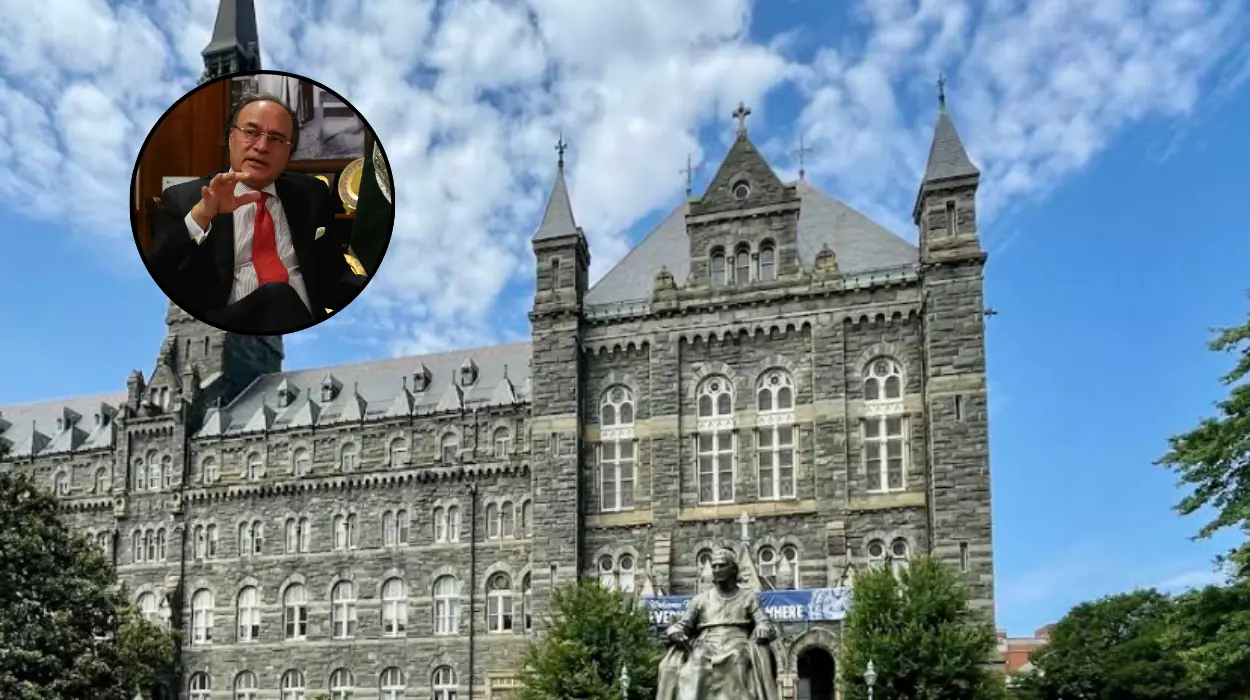
Washington (Evening Washington News) July 17, 2026 — Pakistan’s Finance Minister Muhammad Aurangzeb is expected to begin a three-day visit to the US capital on Saturday for talks covering trade, finance and investment, according to diplomatic sources quoted by Dawn.
As reported by Dawn, the visit comes at a time when Pakistan and the United States are still discussing a wider economic partnership that could include a possible bilateral trade framework.
The talks are expected to involve officials from the Office of the United States Trade Representative, the US Export-Import Bank, the US International Development Finance Corporation and the International Monetary Fund.
Dawn said the discussions are likely to cover tariffs, market access, investment opportunities and broader economic cooperation.
Which agencies will he meet?
Dawn reported that Aurangzeb is scheduled to meet officials from several key institutions during the trip.
These include the USTR, which is central to trade negotiations and tariff issues, as well as the US Exim Bank and the DFC, both of which are linked to financing and investment support.
Meetings with the IMF are also on the agenda, reflecting Pakistan’s continued engagement with international financial institutions.
The report said the Exim Bank and DFC discussions may explore financing for infrastructure, energy and private-sector investment projects.
That suggests the visit is not limited to trade policy alone, but also includes practical questions about how future projects could be funded. Dawn said this wider focus fits into the ongoing push for a more structured economic partnership between the two countries.
Why do tariffs matter now?
The timing of the visit is linked to continuing negotiations in Washington over tariffs on Pakistani exports, according to Dawn.
The report said these talks began last week and are connected to a broader trade agreement under discussion between Pakistan and the US. Dawn added that the current phase of talks follows months of diplomacy after President Donald Trump announced global tariff measures on 2 April 2025.
According to the report, Pakistan was initially hit with a 29 percent tariff on its exports. Dawn said a Pakistani delegation that visited Washington in July 2025 persuaded US officials to reduce the proposed rate to 19 percent.
The report also noted that the tariff situation later changed after a US Supreme Court decision invalidated tariffs imposed under the International Emergency Economic Powers Act.
What changed in US tariff policy?
Dawn reported that, after the Supreme Court ruling, President Trump used Section 122 of the Trade Act to impose a temporary global tariff of 10 percent. That measure is set to expire on 24 July after the required 150-day period.
The report placed these changes within a broader and evolving trade dispute environment that still affects Pakistan’s export outlook.
The story also said Pakistan is among nearly 60 countries being investigated by the USTR under Section 301 over alleged forced labour and related trade practices.
Dawn reported that Islamabad has submitted detailed responses to the USTR, including an additional submission this week ahead of the latest round of negotiations.
Under the current Section 301 process, Pakistan faces a proposed additional tariff of 10 percent, while India and 53 other countries are facing proposed tariffs of 12.5 percent, according to the report.
How does this fit Pakistan’s wider talks?
The Dawn report framed Aurangzeb’s trip as part of a broader sequence of high-level engagements between Pakistan and international institutions.
It said the finance minister previously visited Washington in April during the IMF and World Bank spring meetings, where he held more than 50 discussions with financial institutions, investors and rating agencies.
Those talks were used to present Pakistan’s economic reform plans and efforts to restore macroeconomic stability.
Dawn said that during the April visit, Aurangzeb also informed investors about Pakistan’s plans to return to international capital markets through Panda Bonds and Eurobonds after a long gap.
He additionally met officials from the US Treasury and representatives of multilateral institutions to discuss the economic effects of regional tensions and the volatility in global energy markets linked to the conflict involving Iran.
The report suggests that the new visit continues that diplomatic and financial engagement rather than starting a separate track.
What is the current stage of the talks?
According to Dawn, the latest round of discussions in Washington is still ongoing and remains focused on tariffs and a possible trade agreement.
The report said Pakistan and the United States are also looking at ways to increase bilateral trade and investment more generally. That means the trip is likely to combine immediate trade concerns with longer-term economic planning.
The report did not state whether any final agreement is expected during the visit. Instead, it indicated that the meetings are part of a continuing negotiation process involving trade officials, financial agencies and multilateral lenders.
Dawn’s account shows that the next steps may depend on how the Washington discussions progress over the three-day period.
Background of the development
Pakistan and the United States have been discussing trade and investment issues against the backdrop of changing American tariff policy and Pakistan’s need to strengthen external economic ties.
Dawn reported that Pakistan’s exports were first affected by a 29 percent tariff announcement in April 2025, later reduced to 19 percent after lobbying by a Pakistani delegation.
The report also noted that the tariff environment shifted again after a Supreme Court ruling and a temporary 10 percent tariff imposed under Section 122.
The broader context includes Pakistan’s efforts to secure financing, manage external pressures and attract investment while continuing talks with the IMF and other lenders.
Dawn said Aurangzeb’s earlier Washington visit in April involved wide-ranging meetings with investors, financial institutions and US officials, showing that the current trip builds on an established diplomatic and economic dialogue.
The Section 301 review and related tariff proposals have also added urgency to the current negotiations.
Prediction for Pakistan’s exporters and investors
For Pakistan’s exporters, the immediate effect of the Washington talks will likely depend on whether the tariff discussions produce any easing or clarification.
If the negotiations improve access or reduce trade barriers, export-oriented sectors could gain some relief in the medium term.
If the discussions remain inconclusive, exporters may continue to face uncertainty around pricing, competitiveness and planning.
For investors and policymakers, the visit may help signal whether Pakistan and the US are moving toward a more stable economic framework.
A clearer trade and financing pathway could support infrastructure, energy and private-sector projects if talks with the Exim Bank and DFC advance.
For the wider Pakistani business community, the main impact will likely be felt in trade costs, financing prospects and market access conditions if any follow-up measures emerge from the visit.