Washington State has many famous landmarks, but its strongest travel appeal often comes from lesser-known places that combine geology, history, wildlife, and local culture. These hidden destinations include remote parks, quiet heritage sites, and scenic landscapes that sit outside the main tourist circuits.
- What are the secret places in Washington State tourists miss?
- Why do tourists overlook these places?
- Which natural places stay quieter?
- What hidden coastal spots matter most?
- Which historic sites are easy to miss?
- How do Ice Age landscapes shape these places?
- Which state parks deserve more attention?
- What should travelers know before visiting?
- Why do these places matter now?
- What is the best way to explore them?
What are the secret places in Washington State tourists miss?
Washington State tourists miss remote parks, small heritage sites, and low-profile natural landmarks that sit away from Seattle, Mount Rainier, and the busiest coastal routes. These places include state parks, national park sites, rainforests, islands, historic reserves, and landscapes shaped by Ice Age floods.
Washington is built around dramatic geography. The state contains alpine peaks, temperate rain forests, shoreline forests, river canyons, and inland basalt plains. That variety creates many destinations that receive far less attention than the state’s biggest attractions. Some of the most overlooked places are on the Olympic Peninsula, in Northeast Washington, and in the Columbia Basin.
The phrase “secret places” does not mean inaccessible places only. It also includes sites that are open to the public but still receive relatively light attention because they are farther from major highways or overshadowed by more famous neighbors. That pattern is common in Washington because tourism often concentrates in Seattle, Mount Rainier, and the Olympic coast.
Why do tourists overlook these places?
Tourists overlook these places because Washington’s best-known destinations dominate trip planning, while many quieter sites sit in rural areas, require extra driving, or demand more preparation. The result is a travel pattern that favors iconic parks and leaves smaller destinations with fewer visitors.
Washington’s geography spreads attractions across long distances. A trip to the North Cascades, the Olympic Peninsula, or the northeast corner of the state takes time, and that distance reduces casual visitation. Many visitors also choose familiar names over lesser-known areas because those names are easier to plan around and easier to recognize in travel guides.
There is also a cultural factor. Travelers often prioritize landmarks that already have strong reputation, such as Mount Rainier or Olympic National Park. That leaves room for nearby or similarly scenic places to remain hidden in plain sight.
Which natural places stay quieter?
Some of Washington’s quietest natural places include Lake Roosevelt, North Cascades, Ebey’s Landing, Ginkgo Petrified Forest, and lesser-known state parks in rural counties. These sites offer strong scenery, but they attract fewer casual visitors because they sit outside major metropolitan travel loops.
Lake Roosevelt stands out as one of the most remote-feeling public destinations in the state. It offers shoreline recreation, boating, hiking, camping, and fishing, yet many tourists never reach that part of Washington. Its size and location make it ideal for travelers who want water and open space without heavy crowds.
North Cascades also remains less crowded than many famous western parks. The park contains jagged peaks, glaciers, and forested valleys. Even with its scenic strength, it receives less casual attention than many urban-edge attractions.
Ebey’s Landing on Whidbey Island combines natural scenery and cultural history. It preserves agricultural and cultural traditions while offering recreation on the Salish Sea. This makes it a strong example of a place tourists miss because it is neither a pure city attraction nor a headline national park.
What hidden coastal spots matter most?
Washington’s hidden coastal spots include Cape Flattery, Ruby Beach, and the quieter reaches of the Olympic Peninsula and San Juan Islands. These places matter because they combine ocean scenery, wildlife viewing, and strong cultural significance without the intensity of the state’s most visited urban attractions.
Cape Flattery stands out as one of the most dramatic overlooked places in the state. It sits at the northwesternmost point of the contiguous United States and lies on tribal land, where access requires respect for local rules and stewardship. Its cliffs, sea stacks, and Pacific views make it a serious destination for travelers who want a remote coastal experience.
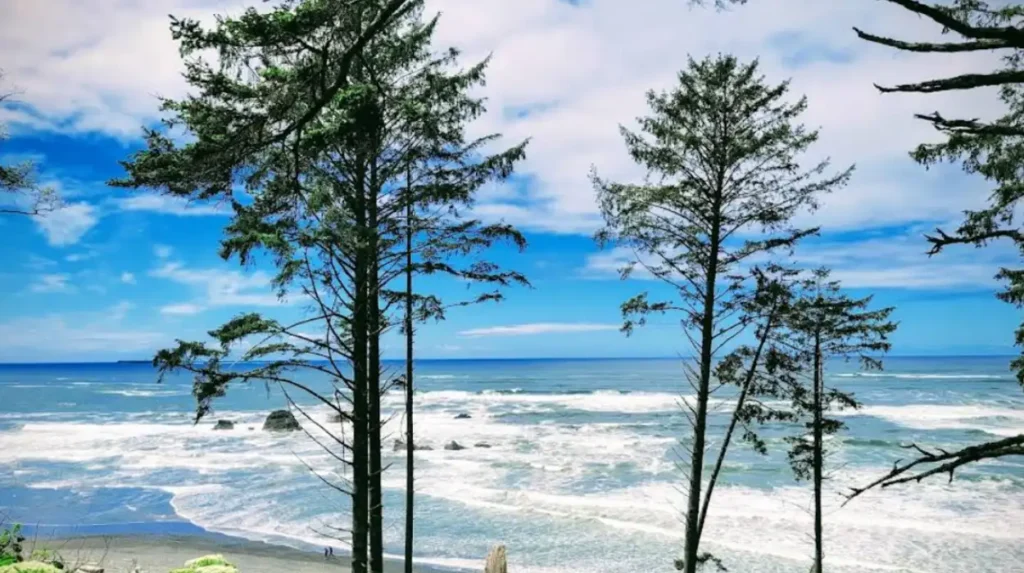
The Olympic coast also includes famous but still underused places such as Ruby Beach. It draws visitors for driftwood, sea stacks, and broad tide-swept shoreline, but it is still less immediate to many tourists than Seattle-based sightseeing.
San Juan Island deserves attention as a coastal and cultural site. It includes broad vistas, saltwater shores, quiet woodlands, and wildlife viewing. That combination gives the area a layered appeal that rewards slower travel.
Which historic sites are easy to miss?
Washington’s easiest historic sites to miss include Fort Vancouver, Whitman Mission, the Klondike Gold Rush sites in Seattle, and the historic places connected to Hanford. These sites explain settlement, conflict, migration, and wartime science, yet many travelers focus on scenery before history.
Fort Vancouver is one of the state’s most important historic places. It carries a cultural past that spans a frontier fur trading post, military history, aviation, and the broader early story of the Pacific Northwest. It is close to an urban corridor, but many visitors still pass it by.
Whitman Mission in Walla Walla offers a very different context. It marks a turning point in the history of the Cayuse Nation, the Oregon Trail, and the spread of disease and conflict in the Columbia River Plateau. It is one of the clearest places in the state for understanding how settlement changed the region.
The Klondike Gold Rush site in Seattle adds another historic layer. It shows how Seattle grew by supplying travelers headed north during the gold rush era. That history remains visible in downtown Seattle, but many tourists never connect the city’s growth to the gold rush.
How do Ice Age landscapes shape these places?
Ice Age flooding shaped many of Washington’s secret places by carving basalt canyons, forming lakes, and leaving unusual geologic landmarks. A massive burst from Glacial Lake Missoula sent floodwaters across Washington thousands of years ago and created much of the state’s unusual eastern terrain.
This geologic history explains why places such as Palouse Falls, Dry Falls, Ginkgo Petrified Forest, Lake Roosevelt, and the Columbia Basin look so different from one another. The floods carved deep channels, exposed rock layers, and created the dramatic dry waterfalls and cliffs that define parts of eastern Washington.
Palouse Falls is one of the most visible results of this ancient landscape change. It combines waterfall scenery with a stark basalt canyon. The site shows how geology can create a destination that feels remote and cinematic at the same time.
Dry Falls is another key example. It is known as a waterfall without water and represents a huge Ice Age feature formed by flood erosion. That makes it a strong educational destination as well as a scenic one, and it gives travelers a clear way to understand the scale of ancient flooding in Washington.
Which state parks deserve more attention?
Washington’s under-visited state parks include Federation Forest, Fields Spring, Curlew Lake, Ginkgo Petrified Forest, and Steamboat Rock. These parks offer old-growth forest, lakes, hills, fossil landscapes, and flood-carved scenery, but they draw less attention than the state’s flagship parks.
Federation Forest State Park sits on Highway 410 near the route to Mount Rainier, yet many drivers miss it. The park includes old-growth trees, hiking trails, and views of the White River. Its lower profile makes it useful for visitors who want a quieter forest stop without a major detour.
Fields Spring State Park in Asotin County opens access to the Blue Mountains. The park is far southeast of the state’s biggest tourism centers, and that location keeps visitation lower. It also serves travelers who want cabins and outdoor recreation away from crowded routes.
Curlew Lake State Park in Ferry County and Steamboat Rock State Park in Grant County show the range of eastern and central Washington recreation. Curlew Lake offers forested shoreline and fishing, while Steamboat Rock offers a dramatic basalt butte and a clear lesson in Ice Age geography. Ginkgo Petrified Forest adds fossil wood and interpretive value, making it one of the state’s most unusual public lands.
What should travelers know before visiting?
Travelers should treat these places as real public lands with distance, weather, and access rules that affect the trip. Washington’s secret places often require longer drives, seasonal planning, and respect for tribal land, park rules, and conservation limits.
Cape Flattery sits on tribal land, so visitors need to follow local requirements and prepare for a remote coastal outing. That matters because cultural and land access rules are part of the travel experience, not separate from it. Responsible visitation protects both the site and the community that manages it.
Washington’s larger natural sites also require seasonal awareness. Mountain, coast, and forest conditions change through the year, and that affects road access, trail safety, and shoreline travel. Even less famous places in those regions follow the same pattern of rain, snow, trail conditions, and access limits.
Planning also matters in state parks with lower visitation. Many of these parks sit in rural counties with fewer services nearby. That means fuel, food, lodging, and timing deserve more attention than they do in city-based sightseeing.
Why do these places matter now?
These places matter now because travelers want less crowded, more meaningful experiences, and Washington has a large inventory of sites that combine nature, history, and geology. The state’s public lands system supports recreation, education, and regional tourism beyond the big-name icons.
Washington’s hidden places serve different kinds of visitors. Some travelers want solitude and scenery. Others want Native history, settlement history, or Ice Age geology. The strongest secret places deliver all three in one itinerary, which is why they remain valuable in an era of search-driven travel.
Washington also has a broad and diverse set of protected places, from national parks to historical parks, trails, recreation areas, and reserves. That structure means the state does not rely on a single type of attraction. It has depth, and that depth creates room for less famous places to stand out.
For travelers, that means Washington remains a state where the best trips often happen away from the obvious route. The secret places are not empty spaces. They are active parts of the state’s landscape, memory, and public lands system.
What is the best way to explore them?
The best way to explore these places is to plan by region, allow extra driving time, and pair one famous stop with one quieter stop. That approach reduces crowd pressure, improves trip efficiency, and creates a fuller picture of Washington’s geography and history.
A practical itinerary starts with one base region, such as the Olympic Peninsula, Puget Sound islands, the Columbia Basin, or eastern Washington. That makes routing simpler and prevents long cross-state driving on a single day. It also gives travelers time to reach places that sit outside the most obvious tourism loop.
A second useful strategy is to combine one major attraction with one lesser-known site. For example, a Mount Rainier trip can include a quieter state park nearby. A coastal route can include a famous beach and a less-visited headland. That balance gives the trip more texture and keeps it from feeling repetitive.
Travelers who want secret places in Washington get the best results when they think in terms of landscapes, not just landmarks. The state rewards that approach because its strongest destinations are often the ones that sit just beyond the obvious route.
What are the best secret places to visit in Washington State?
Some of the best hidden places in Washington State include Cape Flattery, Ebey’s Landing, Ginkgo Petrified Forest State Park, Dry Falls, Lake Roosevelt, Curlew Lake State Park, Fields Spring State Park, and Steamboat Rock State Park. These destinations offer scenic landscapes, outdoor recreation, and cultural or geological significance while attracting fewer visitors than the state’s most famous attractions.