Washington, D.C. serves as the capital of the United States and welcomes over 27 million visitors annually, offering free access to world-class Smithsonian museums, iconic monuments along the National Mall, and historic government buildings that define American democracy. The city attracts both domestic travelers (25.1 million in 2025) and international visitors (2.1 million in 2025), generating $11.9 billion in visitor spending. First-time visitors gain comprehensive understanding of U.S. history, government structure, and cultural heritage through accessible attractions requiring minimal advance planning.
- What Are the Must-See Attractions for First-Time Visitors to Washington, D.C.?
- Which Smithsonian Museums Should First-Time Visitors Prioritize?
- How Do Visitors Navigate the National Mall Monuments and Memorials Effectively?
- What Are the Best Neighborhoods to Explore Beyond the National Mall?
- When Is the Best Time to Visit Washington, D.C. for First-Time Travelers?
- How Much Does It Cost to Visit Washington, D.C.’s Top Attractions?
- What Transportation Options Work Best for First-Time Washington, D.C. Visitors?
- What Should First-Time Visitors Know About Washington, D.C.’s History and Government?
- How Can First-Time Visitors Maximize Their Washington, D.C. Experience?
- What Are Common Mistakes First-Time Visitors Make in Washington, D.C.?
What Are the Must-See Attractions for First-Time Visitors to Washington, D.C.?
The National Mall, Smithsonian museums, White House, U.S. Capitol Building, and Arlington National Cemetery represent the five essential attractions that every first-time visitor must experience during their Washington, D.C. trip. These landmarks provide foundational understanding of American government, history, and cultural identity while remaining freely accessible to all visitors. The National Mall alone receives 32 million visitors annually, making it America’s most-frequented green space.
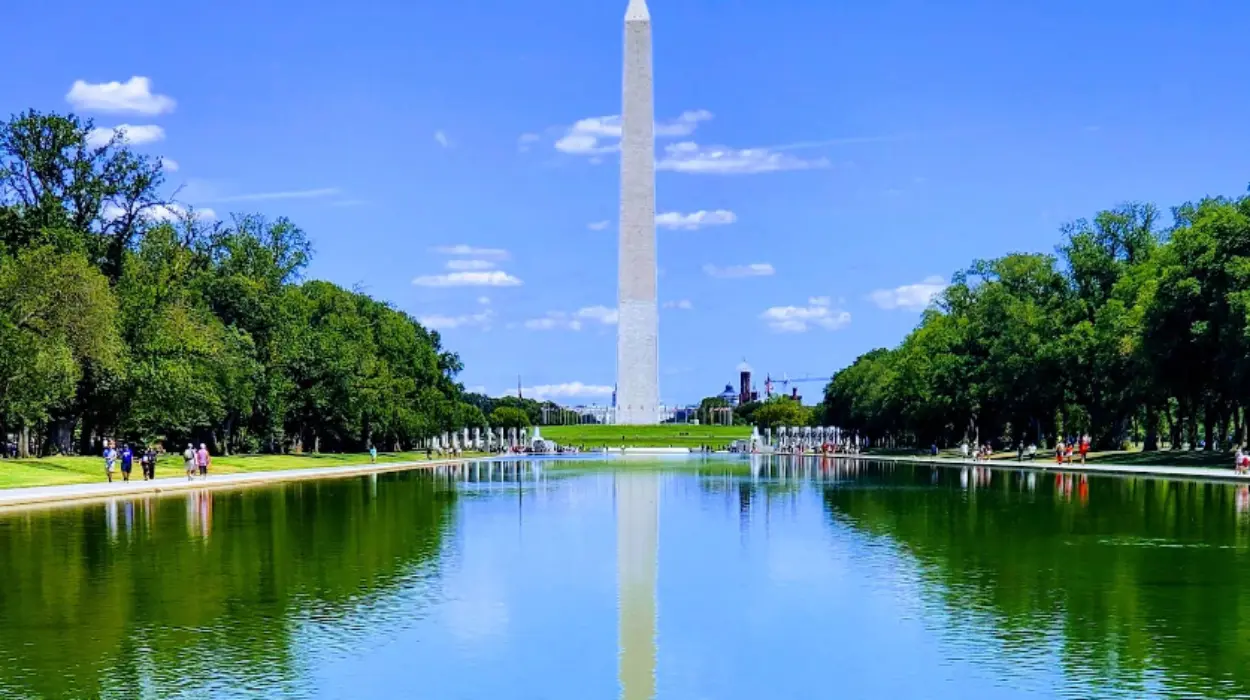
The National Mall stretches 2 miles from Capitol Hill to the Lincoln Memorial, containing the Washington Monument, World War II Memorial, Vietnam Veterans Memorial, and Korean War Veterans Memorial. This 59-hectare park hosts major national events including presidential inaugurations and the 1963 March on Washington where Martin Luther King Jr. delivered his “I Have a Dream” speech. The Smithsonian Institution operates 17 museums and galleries plus the National Zoo, all offering free admission through federal funding established by James Smithson’s 1835 bequest.
The White House, located at 1600 Pennsylvania Avenue NW, has served as the presidential residence since 1800. Public tours require advance requests through Members of Congress up to three months ahead, though exterior viewing from Lafayette Square remains unrestricted. The U.S. Capitol Building houses Congress and offers free tours Monday through Saturday, featuring the Rotunda, National Statuary Hall, and Senate and House chambers.
Arlington National Cemetery spans 693 acres across the Potomac River in Virginia, containing over 400,000 military graves including President John F. Kennedy’s gravesite. The Tomb of the Unknown Soldier features hourly Changing of the Guard ceremonies from October 1 to March 31 and half-hourly ceremonies from April 1 to September 30.
Which Smithsonian Museums Should First-Time Visitors Prioritize?
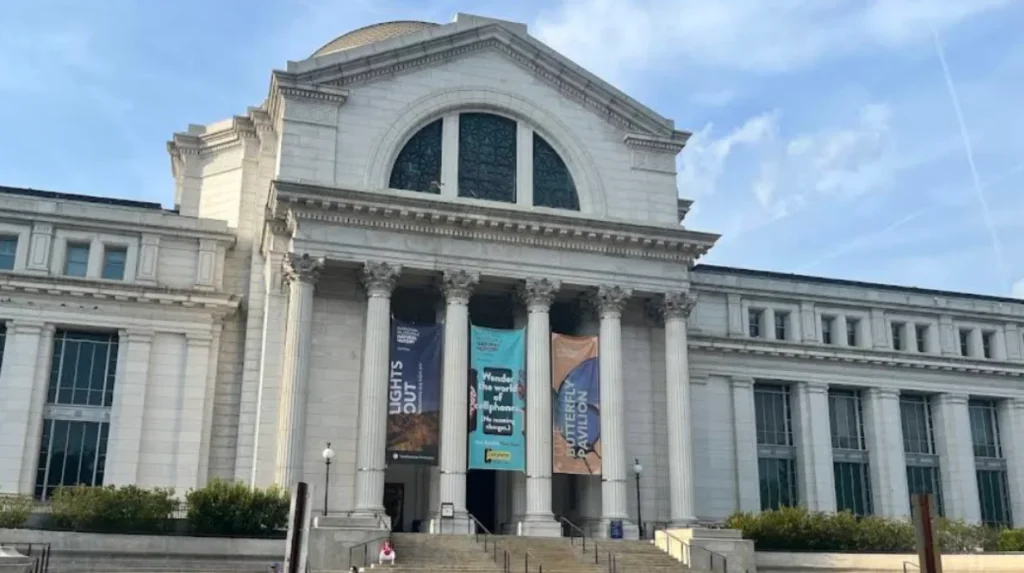
The National Museum of Natural History, National Museum of African American History and Culture, National Air and Space Museum, and National Gallery of Art represent the top four Smithsonian museums that first-time visitors should prioritize during their Washington, D.C. visit. All Smithsonian museums maintain free admission policies established through the Institution’s 1846 congressional charter and ongoing federal appropriations.
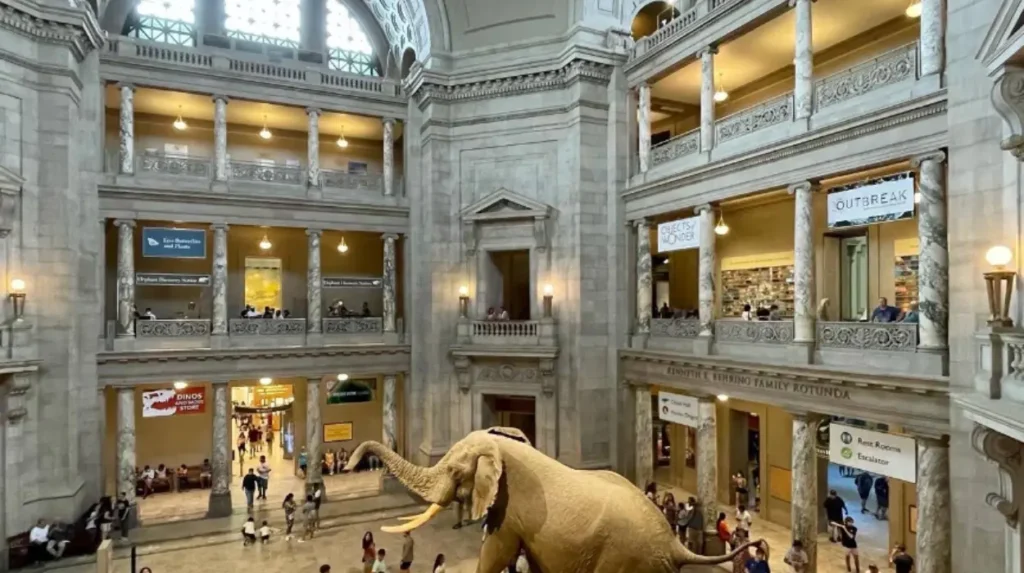
The National Museum of Natural History ranks as the most-visited museum in the United States with 3.9 million visitors in 2022, housing over 140 million specimens including dinosaur fossils, the Hope Diamond, and live insect exhibits. The museum’s collection spans Earth’s biological and geological history, featuring the 45.52-carat Hope Diamond donated by Harry Winston in 1958 after its 1791 theft and recutting from the original French crown jewels.
The National Museum of African American History and Culture opened in 2016 with 37,000 artifacts documenting African American experiences from slavery through the Civil Rights Movement to contemporary achievements. The building’s bronze-colored aluminum lattice exterior symbolizes light entering racial dialogue, while interior exhibits include the Emmett Till Memorial and Oprah Winfrey Theater. Timed entry tickets remain free but require advance reservation due to high demand.
The National Air and Space Museum reopened after extensive renovations with interactive exhibits displaying Neil Armstrong’s spacesuit, the Apollo 11 command module, and aviation artifacts spanning from the Wright Flyer to modern spacecraft. The museum’s main location sits on the National Mall at 6th Street and Independence Avenue SW, while the Steven F. Udvar-Hazy Center in Chantilly, Virginia houses larger aircraft including the Space Shuttle Discovery.
The National Gallery of Art contains over 150,000 paintings, photographs, drawings, and sculptures spanning Western art history from the Middle Ages to the present. The building itself represents architectural significance, while special exhibitions rotate regularly without admission charges.
How Do Visitors Navigate the National Mall Monuments and Memorials Effectively?
Visitors navigate the National Mall most effectively by starting at the Washington Monument in the center, then walking westward to the World War II Memorial, Vietnam Veterans Memorial, Korean War Veterans Memorial, and finally the Lincoln Memorial at the western end. This 2-mile route covers all major monuments within 3-4 hours of walking, with the Washington Monument requiring advance timed tickets for elevator access to the 555-foot observation deck.
The Washington Monument, completed in 1884, held the world’s tallest building title until the 1889 Eiffel Tower construction. Recent 2021 renovations added modern elevator systems requiring two-minute ascent time, with interior stone walls commemorating George Washington through donations from all 50 states represented by surrounding flags. Walk-up tickets are not accepted; all visits require online reservation.
The World War II Memorial features 56 pillars representing each U.S. state and territory during the 1940s, plus two triumphal arches marking Atlantic and Pacific theaters of operation. Located at 1750 Independence Avenue SW, the memorial includes a central fountain and walls commemorating allied nations that fought alongside American forces.
The Vietnam Veterans Memorial displays 58,320 names of Americans killed or missing in action, with families creating paper rubbings of loved ones’ engraved names on the black granite wall. The 2-acre site receives over 5 million visitors annually, making it the most-visited memorial on the National Mall.
The Korean War Veterans Memorial presents 19 stainless steel statues, each 7 feet tall, representing the 5.8 million Americans who served during the three-year conflict. Located at 900 Ohio Drive SW in West Potomac Park, the memorial’s realistic facial expressions create emotional impact for visitors.
The Lincoln Memorial houses the 19-foot seated marble statue of Abraham Lincoln, positioned to overlook the 2,000-foot Reflecting Pool extending toward the Washington Monument. The memorial hosted Martin Luther King Jr.’s 1963 “I Have a Dream” speech and remains open 24 hours daily, particularly beautiful during spring cherry blossom season.
What Are the Best Neighborhoods to Explore Beyond the National Mall?
Georgetown, Capitol Hill, and Dupont Circle represent the three best neighborhoods for first-time visitors to explore beyond the National Mall, each offering distinct historical character, dining options, and cultural attractions. These neighborhoods provide authentic Washington, D.C. experiences away from tourist concentration while maintaining easy Metro access to major attractions.
Georgetown features cobblestone streets, Federal-style brick homes, and the C&O Canal dating to the 1820s. The neighborhood contains Georgetown University’s campus, Rock Creek Park, and the Old Stone House open daily with historic gardens. Dining options include Levain Bakery for chocolate chip cookies, Georgetown Seafood for crab cakes, and Bandoola Bowl for Burmese cuisine. The Georgetown Waterfront Park offers kayak and canoe rentals from Thompson Boat Center with Potomac River views.
Capitol Hill houses the U.S. Capitol Building, Library of Congress, and Supreme Court within tree-lined streets of historic row houses. Eastern Market, operating since 1873, offers fresh produce, artisanal cheeses, and local food vendors during weekdays, expanding to weekend flea markets with antiques and crafts. Market Lunch serves the famous blueberry pancakes that draw morning crowds.
Dupont Circle contains historic mansions now housing embassies, the Phillips Collection art museum featuring Renoir and other Impressionist works, and Kramerbooks & Afterwords Café combining book browsing with dining. The neighborhood’s central fountain serves as a gathering point, while Connecticut Avenue offers boutique shopping and diverse restaurants.
When Is the Best Time to Visit Washington, D.C. for First-Time Travelers?
Spring (March through May) and fall (September through November) represent the optimal visiting seasons for first-time travelers to Washington, D.C., offering comfortable temperatures, manageable crowds, and seasonal attractions like cherry blossoms or fall foliage. These periods avoid summer’s intense heat and humidity while maximizing outdoor exploration opportunities.
Spring brings the National Cherry Blossom Festival celebrating the 1912 gift of 3,000 cherry trees from Tokyo’s mayor, with peak bloom typically occurring late March to early April. The Tidal Basin draws 1.5 million visitors during the three-week festival, creating picturesque backdrops for the Jefferson Memorial and Martin Luther King Jr. Memorial. Mild weather enables comfortable walking along the National Mall and outdoor monument visits.
Fall provides cooling temperatures after summer’s heat, with reduced tourist crowds and colorful foliage transforming Rock Creek Park and National Mall landscapes. September through November offers ideal conditions for outdoor strolls and sightseeing before winter’s cold arrives. The Smithsonian Folklife Festival occurs during summer’s final weeks, showcasing international cultural heritage on the National Mall.
Summer (June through August) brings intense heat, humidity, and peak tourist crowds, making indoor museum visits preferable during midday hours. Outdoor monument visits work best in early morning or evening to avoid heat exhaustion. Winter (December through February) offers fewer crowds and holiday decorations including the National Christmas Tree, though outdoor activities face cold weather limitations.
How Much Does It Cost to Visit Washington, D.C.’s Top Attractions?
Most of Washington, D.C.’s top attractions including all Smithsonian museums, the National Mall monuments, Library of Congress, and U.S. Capitol tours maintain completely free admission policies, making Washington, D.C. one of America’s most affordable major tourist destinations. Visitor spending in 2025 reached $11.9 billion, with each D.C. household saving $3,608 in taxes due to tourism revenue.
The Smithsonian Institution’s free admission policy stems from James Smithson’s 1835 bequest of $515,169 (equivalent to over $15 million today) to establish an institution “for the increase and diffusion of knowledge among men.” Federal appropriations provide 62% of Smithsonian funding, with the fiscal year 2021 budget allocating $1 billion to the Institution. Additional revenue comes from private donors, magazine subscriptions, on-site restaurants, and gift shops.
The National Mall and Memorial Parks receive 32 million annual visitors without admission charges, funded through the National Park Service’s congressional appropriations. The Library of Congress, world’s largest library, offers free tours of the Main Reading Room and Thomas Jefferson Building. U.S. Capitol tours operate free Monday through Saturday with advance online booking recommended.
Paid attractions include the International Spy Museum (admission charge applies), Museum of the Bible (privately funded, admission required), and Ford’s Theatre museum complex (advance tickets required). The People’s House, a new interactive White House experience across from the actual residence, offers free timed tickets but requires advance online reservation.
What Transportation Options Work Best for First-Time Washington, D.C. Visitors?
The Washington Metro rail system, DC Circulator buses, and walking represent the three most effective transportation options for first-time visitors navigating Washington, D.C.’s attractions while avoiding expensive parking and traffic congestion. The Metro’s six color-coded lines connect major tourist areas, while SmarTrip cards or mobile apps facilitate fare payment.
The Washington Metro operates six lines covering the District, Maryland, and Virginia suburbs, with peak fares (7:00-9:00 AM and 4:00-6:00 PM weekdays) costing more than off-peak rates. The WMATA app provides real-time updates and trip planning, while SmarTrip cards work on both Metro and bus systems. Ronald Reagan Washington National Airport (DCA) offers direct Metro access via the Blue and Yellow lines, making it the most convenient airport for tourists.
The DC Circulator bus system provides affordable transportation between Georgetown, the National Mall, Capitol Hill, and Union Station with frequent service. The National Mall route connects major attractions, while the Georgetown-Union Station route serves both neighborhoods efficiently.
Walking remains viable for the National Mall area, though the 2-mile length requires comfortable footwear and weather preparation. Georgetown, Dupont Circle, and Capitol Hill neighborhoods offer walkable experiences within their boundaries. Rideshare services and bike-sharing programs supplement public transit, though parking remains difficult and expensive throughout the city.
What Should First-Time Visitors Know About Washington, D.C.’s History and Government?
Washington, D.C. was established in 1790 as the permanent U.S. capital through the Residence Act, with the District of Columbia Organic Act of 1801 placing it under direct congressional control, creating the unique federal district status that continues today. The city’s layout, designed by Pierre Charles L’Enfant in 1791, organized the National Mall as the central axis connecting government buildings.
The White House, designed by Irish-born architect James Hoban, received its first stone in 1792 and housed President John Adams starting in 1800. The building survived British burning during the War of 1812 and underwent numerous renovations, including the 1902 Theodore Roosevelt reconstruction and 1948-1952 Truman renovation adding the executive office wing.
The U.S. Capitol Building, completed in 1800 from an amateur architect’s competition-winning design, suffered British destruction in 1814 before reconstruction. The building houses the Senate and House of Representatives, with the Supreme Court occupying its own building across the street since 1935.
The Smithsonian Institution, established by Congress in 1846 following James Smithson’s 1835 bequest, grew to 17 museums, galleries, and the National Zoo, all maintaining free admission through federal support and private donations. The Institution’s fiscal year 2021 received $1 billion in federal appropriations, representing 62% of total funding.
Arlington National Cemetery, established during the Civil War on Robert E. Lee’s confiscated estate, contains over 400,000 military graves and notable civilian burials including President John F. Kennedy. The cemetery remains active with multiple daily funerals, requiring visitor awareness during ceremonies.
How Can First-Time Visitors Maximize Their Washington, D.C. Experience?
First-time visitors maximize their Washington, D.C. experience by combining advance reservations for timed-entry attractions, strategic neighborhood exploration beyond the National Mall, and utilization of free walking tours and educational programs offered throughout the city. Downloading the SmarTrip app, booking monument tickets early, and wearing comfortable walking shoes prepare visitors for optimal experiences.
Free walking tours through organizations operating since 2007 provide knowledgeable local guides covering Historic Georgetown, Arlington Cemetery, ghost tours, and Washington National Cathedral experiences. The People’s House offers high-tech interactive White House experiences with free timed tickets, while monuments by night cycle tours provide illuminated views of the Washington Monument, WWII Memorial, Vietnam Veterans Memorial, and Lincoln Memorial.
The Smithsonian Folklife Festival, occurring annually for two weeks around July 4th on the National Mall, showcases international cultural heritage through music, crafts, and performances without admission charges. The 2024 festival focused on Indigenous voices of the Americas, continuing the 1967-established tradition of rotating country or regional themes.
Neighborhood food experiences include Ethiopian cuisine along U Street (Chercher, Ghion, Family Ethiopian restaurants), Ben’s Chili Bowl’s half-smoke sausages on U Street since 1958, and Eastern Market’s weekend artisan vendors. The city’s diverse culinary scene reflects its large Ethiopian community, the largest concentration in the United States, established through 1970s-1980s refugee resettlement.
What Are Common Mistakes First-Time Visitors Make in Washington, D.C.?
First-time visitors commonly make mistakes by attempting to visit all attractions in insufficient time, driving into the city instead of using public transit, spending entire visits only on the National Mall, and neglecting advance reservations for timed-entry attractions. These errors reduce visit quality while increasing costs and physical exhaustion.
Attempting comprehensive coverage in 2-3 days proves impossible given the 17 Smithsonian museums alone, 32 million annual National Mall visitors, and extensive neighborhood attractions.