
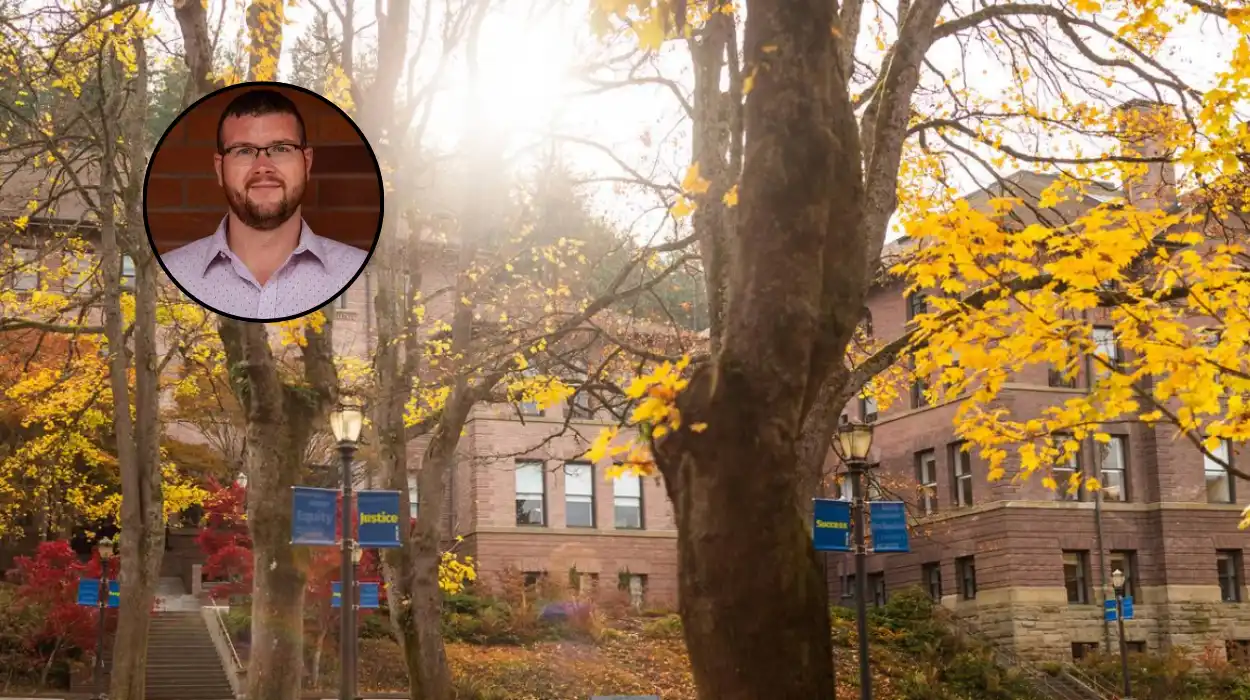
Key Points
- Jared Ross Hardesty is a professor of history at Western Washington University and an AHA member since 2006.
- He holds a BA from Ohio Northern University (2008) and an MA and PhD from Boston College (2010, 2014).
- His fields of interest include colonial America, the Atlantic world, slavery, and labour history.
- He is working on two book projects: a microhistory of pirate Thomas Anstis and a study of absentee plantation ownership in early New England.
- His research has expanded from slavery in colonial New England to broader Atlantic and Caribbean slave societies.
- Hardesty highlights a round‑robin pirate petition as a striking archival find that sheds light on shipboard hierarchies.
- He credits undergraduate mentor Robert Waters and invokes Robert Caro’s “turn every page” principle as formative.
- He values the discipline’s commitment to asking “How do you (or I) know that?” and sees the AHA book exhibit as a favourite annual experience.
- He served on the Beveridge Family Research Grants committee and enjoyed reviewing emerging scholarship.
- The piece is part of the AHA’s Member Spotlight series, which profiles diverse historians.
Bellingham (Evening Washington News) July 29, 2026 — This profile from the American Historical Association’s Perspectives Daily outlines the career trajectory, research interests, and professional reflections of Jared Ross Hardesty, a professor of history at Western Washington University and a longstanding member of the AHA. The article, structured as a Q&A, presents Hardesty’s own statements on his path into the profession, his favourite historical sites, current book projects, evolving research agenda, notable archival discoveries, mentorship influences, disciplinary values, and AHA‑related experiences.
- Who is Jared Ross Hardesty and what is his academic background?
- What projects is Hardesty currently working on?
- How have his historical interests evolved across his career?
- What does he describe as the most fascinating archival find?
- Which mentors influenced his understanding of history?
- What does he value most about the history discipline and community?
- What is his favourite AHA experience?
- What has been his favourite part of AHA committee service?
- Background of the particular development
- Prediction: how this development can affect historians and the wider public
Who is Jared Ross Hardesty and what is his academic background?
According to the AHA’s Member Spotlight, Jared Ross Hardesty is a professor of history at Western Washington University, based in Bellingham, Washington, and has been an AHA member since 2006.
His formal training includes a BA from Ohio Northern University in 2008, followed by an MA in 2010 and a PhD in 2014, both from Boston College. The profile lists his fields of interest as colonial America, the Atlantic world, slavery, and labour history.
What projects is Hardesty currently working on?
As reported in the AHA profile, Hardesty states he is currently working on two book projects. The first, he explains, emerges from years of teaching historical methodology through the lens of the Golden Age of Piracy (1716–26) and is a microhistory of the notorious pirate Thomas Anstis, focusing on Anstis’s final months at sea before being murdered in a mutiny.
The second project, tied to his broader research agenda, is a history of absentee plantation ownership in early New England; he notes he has identified dozens of wealthy New England families who owned plantations in the West Indies and the American South between 1630 and the American Civil War.
How have his historical interests evolved across his career?
Hardesty tells the AHA that his early research focused on slavery in colonial New England, but that he has since broadened the scope of his work significantly.
While he has always engaged with slavery scholarship beyond New England, he says he has become increasingly interested in the region’s place and role in the wider world of enslavement.
That research, he adds, has taken him beyond Boston to the slave societies of the Caribbean, including Dutch and Danish colonies, revealing connections and insights that he believes change understandings of both early New England and slavery more broadly.
What does he describe as the most fascinating archival find?
In response to the AHA’s question about the most fascinating thing he has found in archives or during research, Hardesty points to work on the pirate project, where he encountered a petition signed by Thomas Anstis and his crew as a round‑robin.
He describes the document as visually striking and says it raises questions about why the sailors signed it in that way.
In his view, the form of the petition offers clues about relations on board the pirate ship, potential hierarchies and relationships, and negotiations between more willing pirates and those they forced aboard.
Which mentors influenced his understanding of history?
Hardesty states that many people influenced him, but singles out his undergraduate mentor, Robert Waters at Ohio Northern University, as particularly important. He says Waters
“really showed me the ropes of how the profession works—and may have taught me a thing or two about writing as well”.
Most significantly, he adds, he learned that sound historical arguments can only come from deep engagement with the sources, even when they challenge one’s own and others’ beliefs, invoking Robert Caro’s admonition to “turn every page”.
What does he value most about the history discipline and community?
Quoting his undergraduate professor John Phillip Lomax, Hardesty tells the AHA that history teaches us to ask, “How do you (or I) know that?” He describes this as a simple yet powerful question and says that having an entire community committed to answering it makes the discipline feel special, or at least uniquely positioned to evaluate claims of truth and knowledge.
What is his favourite AHA experience?
Hardesty reports that he has attended almost every AHA annual meeting since 2011 and that his favourite experience each year is the book exhibit. He describes seeing all the new books, speaking with editors and press staff, and running into friends while perusing the exhibit as an “incredible experience”.
He recalls arriving a few minutes before opening one year to find a crowd waiting to enter, likening it to “Black Friday for historians” and, as a millennial, to “the Scholastic Book Fair for history nerds”.
What has been his favourite part of AHA committee service?
Hardesty notes he recently finished a three‑year term on the Beveridge Family Research Grants in Western Hemisphere History committee.
He says he enjoyed reading the applications and learning about new scholarship, often by young, up‑and‑coming historians.
The AHA frames the piece as part of its regular Member Spotlight series, which recognises its talented and eclectic membership across all fields of history.
Background of the particular development
The AHA Member Spotlight is a recurring feature in Perspectives Daily, the American Historical Association’s daily publication, designed to profile individual members and their work.
In this iteration, the Association selected Jared Ross Hardesty, a historian specialising in colonial America, Atlantic history, and slavery, to illustrate the breadth of research interests and career paths represented within its membership.
Hardesty’s profile follows the standard Q&A format used in the series, inviting him to reflect on his training, research projects, archival discoveries, mentorship, disciplinary values, and AHA‑related experiences.
The piece situates his microhistorical work on piracy and his broader study of absentee plantation ownership within a growing scholarly conversation that links New England’s early history to Caribbean and Atlantic slave societies.
Prediction: how this development can affect historians and the wider public
The publication of detailed member profiles such as Hardesty’s is likely to affect historians, graduate students, and the wider public interested in history by clarifying the range of questions and methods that define contemporary historical research.
For emerging scholars, the explicit emphasis on deep archival engagement, the “turn every page” ethic, and the willingness to follow evidence beyond familiar regions may encourage more geographically expansive projects that connect local histories to Atlantic and global frameworks.
For the public, the spotlight on microhistory (as in the Anstis project) alongside large‑scale structural studies (absentee plantation ownership) may help audiences understand how detailed case studies and long‑term patterns jointly shape historical understanding.
Within the profession, repeated exposure to such profiles may reinforce norms of source‑based argumentation and cross‑regional research, potentially influencing hiring, funding, and editorial priorities toward work that bridges colonial North America, labour history, and Atlantic slavery.