Georgetown offers a full day of low-cost sightseeing through historic streets, Federal-style homes, the C&O Canal, and the Potomac riverfront. The neighborhood began as a port town decades before Washington, D.C. became the capital, and its free public spaces now make it one of the city’s strongest budget-friendly walking destinations.
- What makes Georgetown worth visiting for free?
- Why Georgetown fits budget travel
- How did Georgetown begin?
- What historical layers remain visible
- Which free landmarks should you see first?
- How to use a self-guided route
- What architecture defines Georgetown?
- Which buildings stand out most
- Where are the best waterfront walks?
- What to expect on the route
- How much time and money does it take?
- What a low-cost visit includes
- Why does Georgetown matter today?
- Why this stays evergreen
- How should a visitor plan the walk?
What makes Georgetown worth visiting for free?
Georgetown is a historic Washington neighborhood with free public access to some of the city’s most recognizable streets, waterfront paths, and landmark exteriors. Its value for budget travelers comes from concentrated architecture, walkable blocks, and open-air views that require no admission fee.
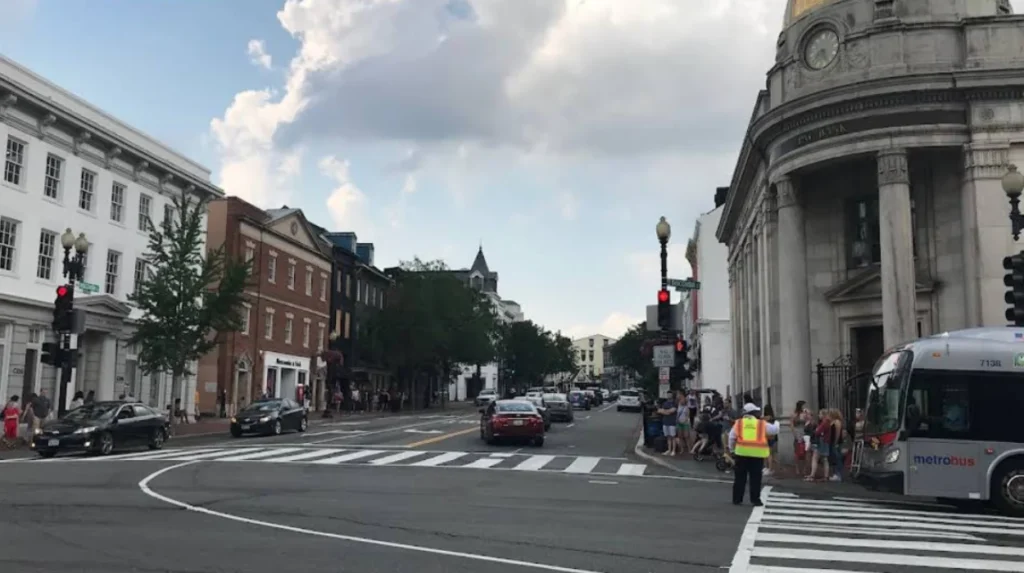
Georgetown is one of Washington’s oldest neighborhoods, founded more than 50 years before Washington became the capital. That long timeline is visible in the built environment, including cobblestone streets, brick rowhouses, church facades, and preserved commercial corridors. The neighborhood also sits beside the Potomac River and the C&O Canal, which gives visitors a rare mix of urban history and waterfront scenery in one walkable area.
For budget-conscious visitors, the core experience is simple: walk the streets, observe the architecture, and use the public riverfront and canal paths. Free sightseeing in Georgetown works best when the route focuses on exterior landmarks and public spaces rather than ticketed interiors.
Why Georgetown fits budget travel
Georgetown works well for free exploration because its most important attractions are outdoors and publicly accessible. The historic streets, waterfront park, and canal towpath all support self-guided walking without an admission charge.
The neighborhood is also compact enough for a single walking route. One documented historic walk covers about 2.5 miles and about 2.5 hours, ending near Georgetown Waterfront Park. Another self-guided route is described as roughly 2.5 miles and largely flat, which makes it manageable for many visitors on foot.
How did Georgetown begin?
Georgetown began as a port town on the Potomac River, not as a planned tourist district. Its early development centered on trade, shipping, and river access, which shaped the streets, commercial blocks, and warehouse-era landscape that still influence the neighborhood today.
The area’s age matters for modern visitors because it explains the mix of architectural periods in a small area. Georgetown’s long growth from port settlement to wealthy residential district created layers of history that remain visible in its streetscape. That transformation makes the neighborhood useful for understanding Washington’s urban development outside the National Mall.
The story also includes labor, commerce, and change. Historic walks through Georgetown commonly interpret the neighborhood’s evolution from working-class waterfront to elite enclave, showing how commerce, architecture, and social status changed the district over time. This historical context gives the free walk stronger meaning than a simple shopping stroll.
What historical layers remain visible
Several kinds of historic traces still appear in Georgetown’s public spaces. These include 18th- and 19th-century homes, preserved canal structures, old stone construction, and narrow streets that predate many parts of the capital.
The Old Stone House, built in 1765, is one of the neighborhood’s best-known surviving structures. Even when visitors do not enter buildings, the exterior form of places like this helps explain the district’s pre-Revolutionary and early American history. The C&O Canal corridor also reflects Georgetown’s former commercial importance as a transportation node.
Which free landmarks should you see first?
Start with the C&O Canal area, the Old Stone House exterior, the Georgetown waterfront, and the tree-lined residential blocks near the historic core. These locations provide the strongest combination of history, architecture, and public access without requiring admission.
The C&O Canal is one of the most important free historic landscapes in Georgetown. The towpath connects Georgetown with Cumberland, Maryland, and the canal corridor is now a popular place for walking, running, and biking. Its presence explains how goods once moved through the neighborhood and why Georgetown developed as a commercial waterfront settlement.
The Old Stone House is another essential stop because it is the oldest unchanged structure in Washington, D.C. and dates to 1765. Visitors can view its exterior and use it as a reference point for the neighborhood’s early architecture. Nearby homes and side streets provide a broader view of Georgetown’s domestic building styles, especially brick rowhouses and historic facades.
How to use a self-guided route
A self-guided route works best when it follows a logical sequence from inland streets toward the waterfront. One published walking route highlights the C&O Canal Towpath Lock 4, Cecil Place Northwest, and Georgetown Waterfront Park as efficient free-access stops.
A practical route begins near the canal, moves through older residential blocks, and ends at the river. This structure allows visitors to see Georgetown’s historical layers in order: transportation history, domestic architecture, and open waterfront recreation. A route of roughly 2.5 miles suits most visitors and keeps the outing affordable because it depends on walking rather than paid transit or tours.
What architecture defines Georgetown?
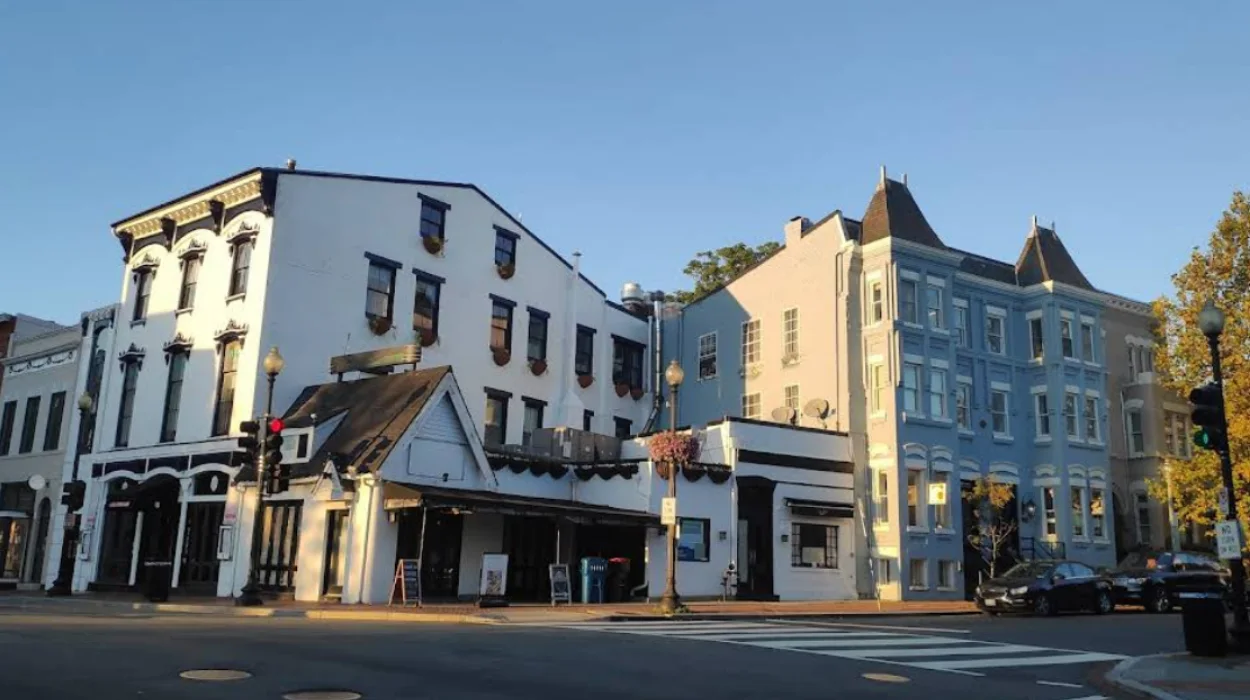
Georgetown is defined by historic rowhouses, Federal-era forms, church landmarks, cobblestone or brick streets, and preserved 18th- and 19th-century buildings. The neighborhood’s architecture reflects its long transition from port town to affluent urban district.
The architectural value of Georgetown lies in consistency and variety at the same time. Streets feature uniform rows of townhouses, but each block changes in color, material, height, and detail. This gives visitors a dense lesson in urban design without entering private properties.
The neighborhood’s best-known architectural experiences come from exterior observation. Historic tours describe elegant churches, grand mansions, and hidden alleys alongside working waterfront remnants. That combination makes Georgetown one of the most readable historic districts in Washington, D.C. for people who want to study architecture for free.
Which buildings stand out most
Several buildings and building types define the area. The Old Stone House, historic rowhouses, former residences associated with major American figures, and preserved 18th- and 19th-century homes all contribute to the district’s identity.
Some guided routes note homes connected to John and Jackie Kennedy and to Julia Child, which shows how Georgetown’s residential architecture later became tied to national cultural history. Even when these places are viewed only from the street, they demonstrate how the neighborhood evolved from local commerce to high-status residential life.
The most useful visual vocabulary in Georgetown includes brick facades, narrow lots, stoops, pitched roofs, and decorative trim. These features are concentrated enough that a short walk yields repeated examples, which helps visitors recognize recurring urban design patterns.
Where are the best waterfront walks?
The best waterfront walking area is Georgetown Waterfront Park and the adjoining canal paths. These spaces are free, scenic, and directly connected to Georgetown’s history as a riverside port and transportation hub.
Georgetown Waterfront Park provides open river views and public green space along the Potomac. It is one of the neighborhood’s strongest free attractions because it combines recreation with historical context. Visitors can stand at the water’s edge and see how the neighborhood’s geography shaped its development.
The C&O Canal Towpath also adds a different kind of waterfront experience. Instead of broad river views, it offers a linear historic corridor where walking, biking, and running follow the path of former canal commerce. This makes the area valuable for both leisure and heritage interpretation.
What to expect on the route
A Georgetown waterfront walk is usually short, level, and easy to combine with the historic core. One route description notes a largely flat 2.5-mile walk, with one option to avoid stairs by crossing at Wisconsin Avenue Northwest.
The route’s accessibility matters for a broad audience. Families, casual walkers, and visitors on a tight budget all benefit from free paths that do not require a guide, a ticket, or a vehicle. Seasonal features at the waterfront park can add variety, including outdoor programming and recreational amenities.
For readers building a budget itinerary, the waterfront should come near the end of the route. That sequence lets the walk finish with open space, river air, and a clear sense of Georgetown’s geographic role in Washington’s development.
How much time and money does it take?
A free Georgetown visit can cost almost nothing beyond transportation and food. The main walking routes are about 2 to 2.5 miles and take roughly 2 to 2.5 hours, depending on pace and stops.
That time estimate makes Georgetown ideal for an afternoon or early evening outing. Visitors can combine one historic loop with a waterfront pause and still keep the total spend low. A self-guided walk also avoids tour fees, which makes the neighborhood especially attractive for students, solo travelers, and local residents looking for low-cost weekend plans.
Budget control improves when the route stays centered on public streets and parks. The neighborhood does contain paid shops and dining, but none of those are required for a meaningful historic visit. That distinction matters because Georgetown’s strongest attractions are visible from sidewalks, canal paths, and public parks.
What a low-cost visit includes
A low-cost visit includes walking the historic core, viewing exterior landmarks, and spending time at the waterfront. It also includes using free interpretation from the street and choosing a route with minimal elevation and simple navigation.
The best free version of Georgetown does not depend on interior access. It depends on the district’s compact layout, dense architecture, and public open space. That design lets visitors experience a historically rich part of Washington without paying for museum entry or a commercial tour.
Why does Georgetown matter today?
Georgetown remains relevant because it shows how a historic district can serve as both a preserved environment and a living neighborhood. Its streets still function as residential, commercial, and recreational space while also carrying layers of colonial, federal, and modern Washington history.
The neighborhood also matters for urban heritage tourism. It demonstrates how architecture, transportation, and geography shape identity over centuries. Visitors who walk Georgetown for free learn how a port town became an elite district and how public streets preserve that history today.
Its current value is not only visual. Georgetown offers an example of how free public space supports cultural access. The canal, the waterfront, and the street grid remain open to everyone, which makes the neighborhood one of Washington’s most efficient free-history destinations.

Why this stays evergreen
Georgetown’s appeal stays evergreen because the core attractions are stable: historic streets, preserved buildings, canal paths, and riverfront public space. These elements do not depend on a temporary exhibit or seasonal event calendar.
That stability supports long-term search value. Travelers continue to look for free things to do in Washington, D.C., budget walking itineraries, and historic neighborhoods with architecture and water views. Georgetown answers all three needs in one place.
How should a visitor plan the walk?
A practical Georgetown plan starts with the historic interior streets, continues through the canal corridor, and ends at the waterfront. This sequence gives the best balance of architecture, history, and open space while staying entirely free.
A simple route can include the Old Stone House area, canal-side walking, notable residential blocks, and Georgetown Waterfront Park. Keep the visit on foot, allow about 2 to 2.5 hours, and use the public paths as the main backbone of the trip. That format keeps the experience focused, affordable, and easy to repeat.
For an evening-friendly version, arrive before sunset and prioritize the waterfront at the end. The riverfront gives the walk a clean finish, while the historic blocks remain the best place for architecture viewing as daylight fades.
Is Georgetown worth visiting if I’m on a budget?
Yes. Georgetown is one of DC’s best free walking areas thanks to its historic streets, canal paths, and waterfront views.