
Washington, DC serves as the capital of the United States. The city hosts numerous museums, monuments, and parks designed for families. These attractions draw over 20 million visitors annually, with Smithsonian institutions alone accounting for 22 million visits in recent years.
- What are the top museums for kids in DC?
- Which outdoor activities suit families in DC?
- What free attractions work best for young children?
- How do teens enjoy DC activities?
- What role do Smithsonian museums play in family visits?
- Which seasonal events boost DC family trips?
- How to plan a one-day DC itinerary with kids?
- What transportation options serve DC families?
- Are there hands-on workshops for kids in DC?
- What dining fits family meals near attractions?
- How accessible are DC sites for families with strollers?
- What nearby day trips work from DC with kids?
What are the top museums for kids in DC?
The top museums for kids in DC include the National Air and Space Museum, National Museum of Natural History, and International Spy Museum. These venues feature interactive exhibits on aviation, dinosaurs, and espionage. Families visit these free or low-cost sites year-round for hands-on learning experiences.
The National Air and Space Museum spans 23 galleries with aircraft like the Wright Flyer from 1903. Children engage with flight simulators and planetarium shows. The museum, part of the Smithsonian Institution founded in 1846, receives over 7 million visitors yearly.
The National Museum of Natural History displays a 14-billion-year timeline of Earth. Kids explore the dinosaur hall with over 700 specimens, including a T. rex skeleton. The Hope Diamond, a 45.52-carat gem discovered in 1830, anchors the gem collection.
The International Spy Museum houses 1 million artifacts on global espionage since the 1700s. Interactive missions let children decode messages and test disguises. This privately funded museum opened in 2002 and attracts 800,000 visitors annually.
These museums cluster on or near the National Mall, a 146-acre park established in 1791. Free admission to Smithsonian sites supports repeat visits. Families gain educational value through STEM-focused programs.

Which outdoor activities suit families in DC?
Outdoor activities for families in DC feature the National Mall monuments, U.S. Botanic Garden, and Tidal Basin paddle boats. These sites offer walking tours, scavenger hunts, and water rentals. Spring cherry blossoms and summer fountains enhance seasonal appeal for all ages.
The National Mall stretches two miles from the U.S. Capitol to the Lincoln Memorial. Families walk past the Washington Monument, a 555-foot obelisk completed in 1884. Reflecting pools and lawns provide picnic spots.
The U.S. Botanic Garden covers 5 acres with 65,000 plants. The Children’s Garden includes playhouses, water pumps, and digging areas for ages 2-10. Scavenger hunts stamp passports as kids identify species.
Tidal Basin paddle boats rent hourly during warm months. Surrounded by 3,000 cherry trees gifted in 1912, the basin spans 107 acres. Rentals accommodate up to four people per boat.
Georgetown Waterfront Park features spray fountains and carousel rides. Gravelly Point Park lets families watch planes land at Reagan National Airport. These spots integrate nature and urban excitement.
Parks like Rock Creek Park, at 1,754 acres since 1890, offer trails and planetarium shows. Free ranger programs teach ecology year-round. These activities promote physical health amid historical settings.
What free attractions work best for young children?
Free attractions for young children in DC center on the Smithsonian National Zoo, National Mall playgrounds, and U.S. Botanic Garden. These sites provide animal encounters, open play areas, and plant hunts. Accessibility ensures daily visits without entry fees.
The Smithsonian National Zoo houses 2,100 animals across 163 acres. Giant pandas, established in 1972 via China loan, draw crowds. Daily feedings and the Kids’ Farm engage toddlers.
National Mall playgrounds near Smithsonian Castle include climbing structures. The carousel, built in 1967, spins with 33 hand-carved animals. Open spaces allow kite flying on 146 acres.
The U.S. Botanic Garden’s Youth Garden spans one acre with xylophones and sandboxes. Children plant and harvest produce seasonally. This 1820-founded conservatory stamps activity passports.
These venues operate daily from dawn. No reservations required supports spontaneous outings. Educational signage covers biology and history for parental reinforcement.
How do teens enjoy DC activities?
Teens enjoy DC activities like the International Spy Museum, kayaking on the Potomac River, and National Building Museum exhibits. These options involve spy challenges, paddling tours, and architectural models. Group rates and evening hours fit teen schedules.
The International Spy Museum offers teen missions with code-breaking and surveillance tools. Exhibits span Cold War gadgets from 1947-1991. Teens compete in timed challenges.
Potomac River kayaking launches from Georgetown. Two-hour tours cover three miles past the Kennedy Center. Operators provide gear for ages 12+ since 1990s programs.
The National Building Museum displays massive architectural models. The Inventing America exhibit lets teens design structures via apps. This 1881 building hosts STEM workshops.
Mount Vernon, George Washington’s 1732 estate 15 miles south, includes slave quarters tours. Teens explore 500 acres with farm animals and distillery. Shuttle services run daily.
These activities build skills in history and adventure. Evening options extend daylight fun into nights.
What role do Smithsonian museums play in family visits?
Smithsonian museums anchor family visits in DC with 19 free institutions on the National Mall. They cover air, space, history, and nature via 154 million artifacts. Daily programs ensure engagement for ages 3-18.
The Smithsonian Institution, established by 1836 congressional act, manages 19 DC museums. Artifacts include the Star-Spangled Banner from 1814. Over 22 million annual visits occur across sites.
National Air and Space Museum simulates space walks. National Museum of American History displays Kermit the Frog from 1955. Natural History’s fossil hall spans 4 billion years.
Family days feature crafts and scientist meetups. Story times for ages 3-8 occur weekly. These 1846-founded resources educate without cost barriers.
Proximity on the Mall reduces travel time. Metro access serves all sites. This network supports full-day itineraries.
Which seasonal events boost DC family trips?
Seasonal events in DC boost family trips with National Cherry Blossom Festival in spring, Smithsonian Folklife Festival in summer, and National Zoo Boo in fall. These free parades, crafts, and costumes draw 1.5 million attendees yearly.
The National Cherry Blossom Festival runs late March to early April since 1912. Parades and boat tours celebrate 3,000 trees. Peak bloom lasts one week.
Smithsonian Folklife Festival occupies the Mall in late June for three days. Cultural demos include music and food from 100 nations. Attendance hits 1 million.
National Zoo Boo transforms the zoo in October weekends. Costumed animal talks and trick-or-treat paths suit ages 2-12. This event started in 1991.
Winter includes Model Train display at the Botanic Garden. Ice rink at National Gallery opens November-March. These maintain year-round appeal.
Events align with school breaks. Free entry maximizes value.
How to plan a one-day DC itinerary with kids?
Plan a one-day DC itinerary with kids by starting at the National Mall for monuments, visiting Air and Space Museum mid-morning, lunch picnic, then Natural History Museum. End at the carousel. Use Metro and allocate 8 hours for 5 miles walking.
Begin at Smithsonian Metro station at 9 AM. Walk to Washington Monument base for photos. Proceed to Lincoln Memorial, dedicated 1922, for steps views.
Enter National Air and Space Museum by 10 AM. Spend 90 minutes on simulators. Exit to Mall for picnic with packed foods.
Afternoon shifts to Natural History Museum. One hour on dinosaurs precedes carousel rides. Depart by 5 PM via Metro.
This path minimizes crowds. Water fountains and restrooms dot the route. Apps track wait times.
What transportation options serve DC families?
Transportation options for DC families include Metro rail and bus system, Capital Bikeshare, and free Circulator buses. Metro spans 129 stations with kid fares under 5 free. Rideshares cover gaps efficiently.
Washington Metro, opened 1976, carries 1 million daily riders. Six color-coded lines connect museums. Kids 5 and under ride free.
Capital Bikeshare stations number 700 citywide since 2010. Family bikes with trailers seat two children. Hourly rates start at $8.
DC Circulator buses loop Mall and monuments free since 2005. 30-minute frequencies reduce waits. Exact change not required.
Walking paths link close sites. Strollers fit Metro elevators. These options cut parking hassles.
Are there hands-on workshops for kids in DC?
Hands-on workshops for kids in DC occur at National Children’s Museum, Building Museum, and Spy Museum. Sessions cover invention, architecture, and spy crafts for ages 4-14. Weekly schedules fill 500 spots monthly.
National Children’s Museum in NoMA opened 2024 with maker labs. Kids build robots and forts. Tickets cost $16.95.
National Building Museum runs design workshops. Children construct cities from blocks. Free with admission.
Spy Museum crafts involve invisible ink. Sessions last 45 minutes for groups. Book ahead online.
These programs teach engineering basics. Museums partner with schools for curricula alignment.
What dining fits family meals near attractions?
Dining near DC attractions fits families with food trucks on the National Mall, museum cafes, and Georgetown ice cream shops. Options include kid menus under $10 and allergy notations. 200 trucks rotate daily.
National Mall food trucks serve tacos, falafel, and crepes from 11 AM-9 PM. Permits ensure health standards since 2008.
Smithsonian cafes offer salads and sandwiches. Air and Space Museum’s McDonald’s seats 200. Prices range $5-12.
Georgetown’s Ben & Jerry’s provides 30 flavors. Build-a-Bear nearby combines dessert with play. Open till 10 PM.
Picnics from grocery stores save costs. Water bottles refill at fountains. These choices sustain energy.
How accessible are DC sites for families with strollers?
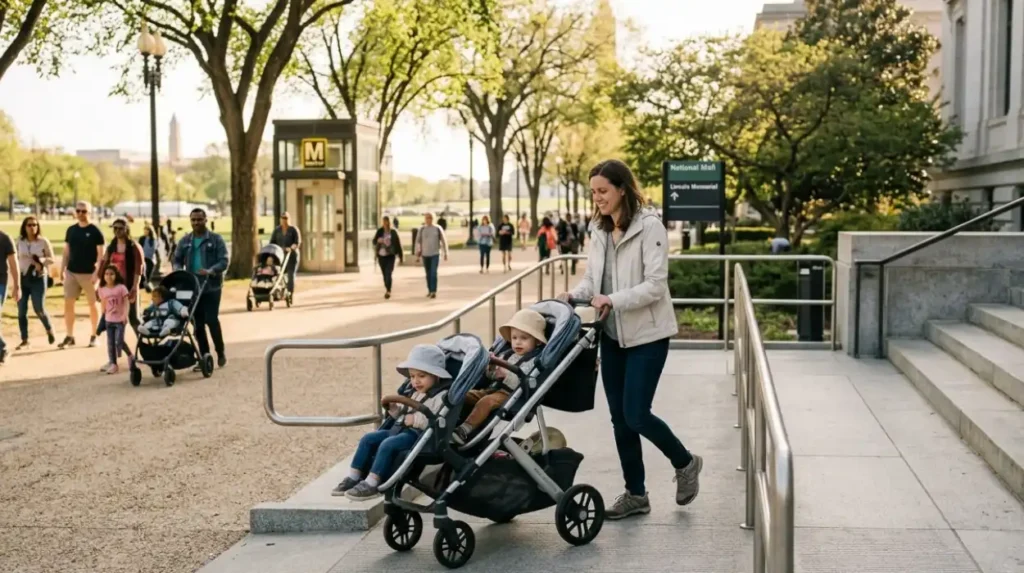
DC sites prove accessible for stroller families via Mall ramps, Metro elevators, and museum changing stations. 90% of Smithsonian buildings comply with ADA since 1990. Ramps span 1:12 slopes.
National Mall paths measure 8 feet wide with curb cuts. Monuments include accessible viewing platforms.
Metro elevators operate 24/7 at all stations. Stroller zones exist on trains. Staff assist during rush hours.
Museums feature 50+ family restrooms with changing tables. Elevators connect all floors. Free loaner gear available.
These features support inclusive visits. Advance notices aid planning.
What nearby day trips work from DC with kids?
Nearby day trips from DC include Mount Vernon, Great Falls Park, and Harpers Ferry. Distances range 15-60 miles with shuttles or drives. Activities feature farms, hikes, and canal locks for 4-12 hour outings.
Mount Vernon sits 15 miles south. Washington’s estate includes gristmill and slaves’ quarters tours. Entry $28 adults, $15 kids.
Great Falls Park, 15 miles northwest, spans 800 acres. Billy Goat Trail covers 1.6 miles with river views. $20 vehicle fee.
Harpers Ferry, 60 miles west, marks 1859 John Brown raid site. Canal boat rides run seasonally. Amtrak connects directly.
These trips use I-495 or MARC trains. Pack snacks for flexibility.
Is Washington, DC a good place to visit with kids?
Yes, Washington, DC is one of the most family-friendly cities in the U.S., with free museums, open parks, and interactive attractions.