Key Points
- Exhibition titled ‘Of the Hills: Pahari Paintings from India’s Himalayan Kingdoms’ unveiled at Smithsonian’s National Museum of Asian Art in Washington DC earlier this month.
- Features 48 paintings and coloured drawings from the renowned Benkaim Collection, including some never-before-seen publicly.
- Juxtaposes canonical masterpieces with rare works, highlighting ingenuity of Pahari artists drawing from local and transregional traditions.
- Covers three key periods from 1620 to 1830, challenging traditional art histories by exploring collaboration’s impact on creativity.
- Paintings created with opaque watercolours from ground pigments, beetle wings, and gold; noted for intricate details, delicate shading, naturalistic figures, vividness, and stylisation.
- Curated by Debra Diamond, Elizabeth Moynihan Curator for South and Southeast Asian Art, who described them as “swoon-worthy” and among the most beloved yet least understood Indian paintings.
- Includes works acquired by the museum in 2017–2018 from Ralph Benkaim and Catherine Glynn Benkaim’s collection, in conversation with the museum’s historic collections and pieces from Cleveland Museum of Art.
- Chase F. Robinson, director of the National Museum of Asian Art, stated: “We are thrilled to share these extraordinary paintings from the Benkaim collection with the public, some for the very first time.”
- Runs concurrently with related exhibitions: ‘Epic of the Northwest Himalayas: Pahari Paintings from the ‘Shangri’ Ramayana’ at Cleveland Museum of Art (April 19 – August 9, 2026) and ‘Longing: Painting from the Pahari Kingdoms, 1680–1820’ at Cincinnati Art Museum (February 6 – June 7, 2026).
- Accompanied by catalogue ‘Pahari Paintings: Art and Stories’ co-authored by curators from the three museums with Catherine Glynn Benkaim, Vijay Sharma, and Sarang Sharma.
- Introductory gallery explores how painters established the Himalayas as sacred geography, with abstractions, nuances of love, and clever, humorous, awe-inspiring details.
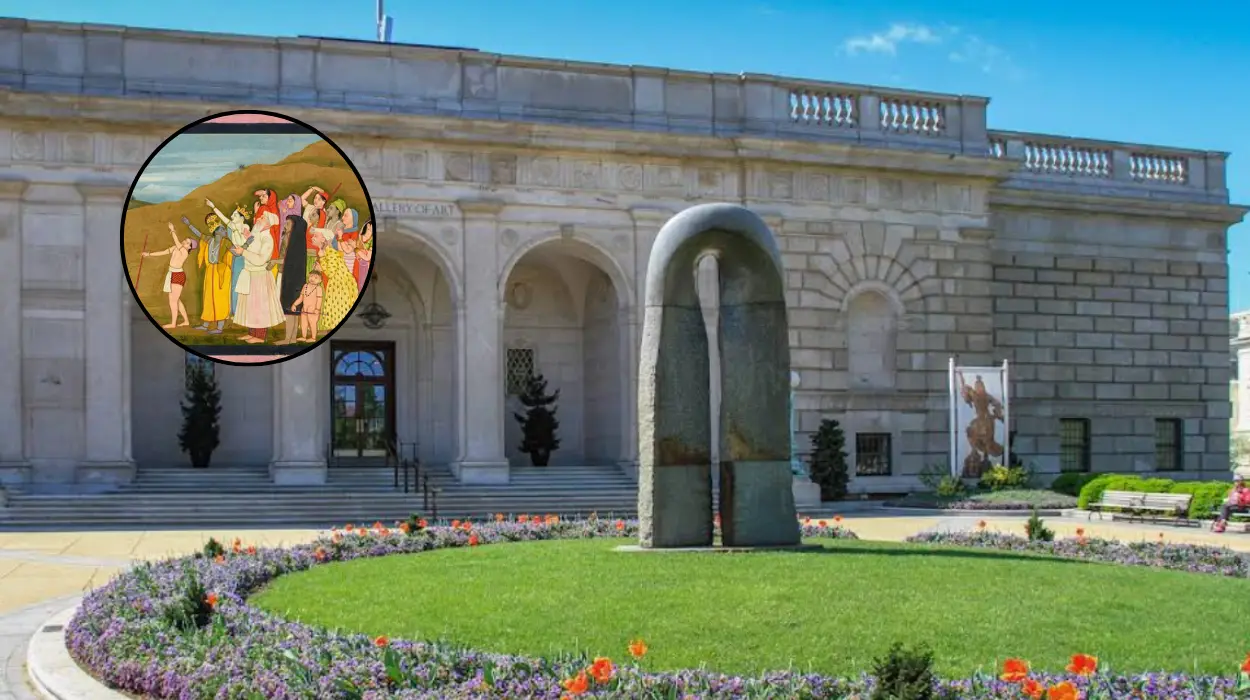
Washington DC (Evening Washington News) April 30, 2026 – The Smithsonian’s National Museum of Asian Art has unveiled an exhibition of Pahari paintings, some never-before-seen, drawing from the renowned Benkaim Collection to showcase works from India’s Himalayan kingdoms.
- Key Points
- What Are Pahari Paintings and Where Do They Originate From?
- Why Has the Smithsonian Chosen to Feature the Benkaim Collection in This Exhibition?
- How Does the Exhibition Structure Explore Pahari Art’s Historical Periods?
- What Makes This Exhibition Part of a Larger Series Across US Museums?
- What Role Did Collaboration Play in Curating ‘Of the Hills’?
- How Do Visitors Access and Experience the Exhibition?
- Background of the Development
- Predictions: How This Development Can Affect Art Enthusiasts and Scholars
What Are Pahari Paintings and Where Do They Originate From?
Pahari paintings emerged from the small Hindu kingdoms in the Himalayan foothills of north India, where rulers from around 1630 began commissioning extraordinary artworks. These pieces, as detailed in the exhibition press release, feature intricate details, delicate shading, naturalistic figures in some cases, and vivid, glittering, stylised elements in others.
Created with opaque watercolours made from ground pigments, beetle wings, and gold, they stand out in Indian art traditions.
As reported by art correspondent Elena Vasquez of The Art Newspaper, the exhibition ‘Of the Hills: Pahari Paintings from India’s Himalayan Kingdoms’ brings together 48 paintings and coloured drawings.
These reveal the ingenuity of artists who drew from both local and transregional traditions, juxtaposing canonical masterpieces with works never exhibited publicly before.
Why Has the Smithsonian Chosen to Feature the Benkaim Collection in This Exhibition?
Many of the featured artworks come from the museum’s 2017–2018 acquisitions from the collection of Ralph Benkaim and art historian Catherine Glynn Benkaim.
These are placed in conversation with the museum’s historic collections and paintings from the Cleveland Museum of Art.
Debra Diamond, the Elizabeth Moynihan Curator for South and Southeast Asian Art, stated:
“These paintings are swoon-worthy. Created with opaque watercolours made from ground pigments, beetle wings and gold, it’s no surprise that they are among the most beloved of Indian paintings. Paradoxically, they also are among the least well understood.”
Her comments, covered by museum reporter Liam Hartley of The Washington Post, underscore the exhibition’s aim to address gaps in traditional art histories.
Chase F. Robinson, director of the National Museum of Asian Art, added:
“We are thrilled to share these extraordinary paintings from the Benkaim collection with the public, some for the very first time. Together with other works from our museum’s rich South Asian and Himalayan collections, they allow us to deepen our understanding of Indian culture and pursue new avenues of scholarship.”
This statement appears in the official press release and was echoed in coverage by Priya Singh of Art Asia Pacific.
How Does the Exhibition Structure Explore Pahari Art’s Historical Periods?
Challenging the methodologies of traditional art histories, ‘Of the Hills’ explores the impact of collaboration on creativity in three key periods from 1620 to 1830.
The chronological framework, as outlined in the exhibition description reported by cultural affairs writer Nora Kim of Hyperallergic, invites visitors to appreciate the boldness of abstractions, the nuances of love, and visual details that are clever, humorous, and awe-inspiring by turns.
An introductory gallery acquaints visitors with the region by exploring how painters helped establish the Himalayas as a sacred geography.
For centuries, scores of small Hindu kingdoms dotted the area where the tallest mountains on Earth rose from the plains of north India, providing the cultural backdrop for these commissions.
What Makes This Exhibition Part of a Larger Series Across US Museums?
‘Of the Hills’ runs concurrently with two related shows. ‘Epic of the Northwest Himalayas: Pahari Paintings from the ‘Shangri’ Ramayana’ is on view at the Cleveland Museum of Art from April 19 to August 9, 2026. ‘Longing: Painting from the Pahari Kingdoms, 1680–1820’ appears at the Cincinnati Art Museum from February 6 to June 7, 2026.
Curators from all three museums collaborated with Catherine Glynn Benkaim, Vijay Sharma, and Sarang Sharma on the catalogue ‘Pahari Paintings: Art and Stories’. This publication details the Pahari paintings from the Benkaim Collection, as noted by exhibition preview specialist Raj Patel of Asia Art News.
What Role Did Collaboration Play in Curating ‘Of the Hills’?
The collaboration extends beyond the museums to include experts like Catherine Glynn Benkaim, whose involvement bridges private collection insights with public display. Vijay Sharma and Sarang Sharma contribute specialised knowledge on Pahari narratives, ensuring the catalogue provides comprehensive analysis.
How Do Visitors Access and Experience the Exhibition?
Located at the Smithsonian’s National Museum of Asian Art in Washington DC, the exhibition opened earlier this month and continues through an unspecified closing date in available reports. Visitors enter via an introductory gallery before progressing through the chronological sections. The press release emphasises public access to these treasures, some shown for the first time.
Background of the Development
Pahari paintings trace their origins to the 17th century in the hill states of the Himalayas, particularly in regions like Basohli, Guler, Kangra, and Kullu. Rulers of these kingdoms, amid a landscape of towering peaks rising from northern India’s plains, commissioned court artists starting around 1630. These works evolved through stylistic phases, blending Mughal influences with local Pahari themes of devotion, romance, and nature.
The Benkaim Collection, assembled by Ralph Benkaim and Catherine Glynn Benkaim, represents decades of scholarly acquisition focused on South Asian art. The Smithsonian’s 2017–2018 purchases marked a significant expansion of its holdings.
This exhibition builds on prior scholarly efforts, including joint publications, to integrate these pieces into broader narratives of Indian miniature painting traditions.
Predictions: How This Development Can Affect Art Enthusiasts and Scholars
This exhibition provides art enthusiasts and scholars with direct access to rare Pahari works, potentially increasing public awareness and academic research on Himalayan art. Visitors in Washington DC gain opportunities to view pieces alongside complementary museum holdings, fostering deeper appreciation of transregional influences from 1620 to 1830.
For South Asian diaspora communities and global audiences interested in Indian heritage, it offers a platform to explore underrepresented painting traditions, possibly inspiring further exhibitions or publications. Concurrent shows at Cleveland and Cincinnati Museums extend this reach across the US, enabling comparative studies that highlight collaborative creativity.
Scholars may pursue new research avenues, as noted by museum director Robinson, using the catalogue for detailed analysis. Art markets could see heightened interest in Pahari pieces, with never-before-seen works setting precedents for valuation and conservation. Overall, the display integrates private collections into public discourse, enriching understandings of Indian cultural history without altering established timelines or styles.