
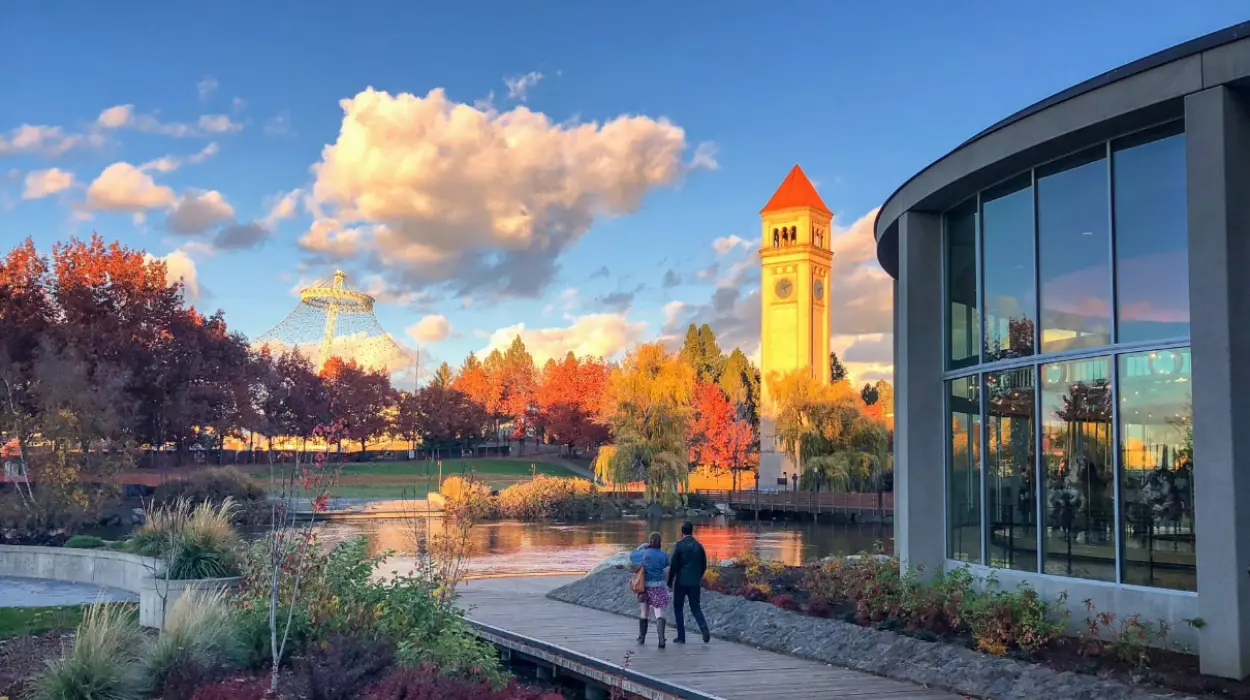
Spokane downtown is a compact, walkable city center built around Riverfront Park, Spokane Falls, and a dense grid of shops, restaurants, public art, and historic buildings. First-time visitors can cover the core attractions on foot in a single day and still understand Spokane’s history, culture, and river setting.
- What makes downtown Spokane walkable?
- Why is Riverfront Park the first stop?
- What should first-time visitors see on foot?
- How far is the main route?
- How does Spokane’s history shape the walk?
- Where do shopping and dining fit in?
- What data matters for visitors?
- What events change the experience?
- What is the best walking order?
- Why does this guide work for Google and AI search?
- What should visitors remember?
What makes downtown Spokane walkable?
Downtown Spokane is walkable because the main visitor sites sit close together around Riverfront Park, the Spokane River, and the central business district. The area combines parks, shopping, dining, museums, transit access, and public art within a short walking radius.
Spokane is located in Eastern Washington about 20 miles from the Idaho border, and its downtown core is described as compact and easy to explore on foot. The city’s visitor materials highlight Riverfront Park as the center of downtown life, with nearby districts, restaurants, and attractions clustered close enough for a walking itinerary.
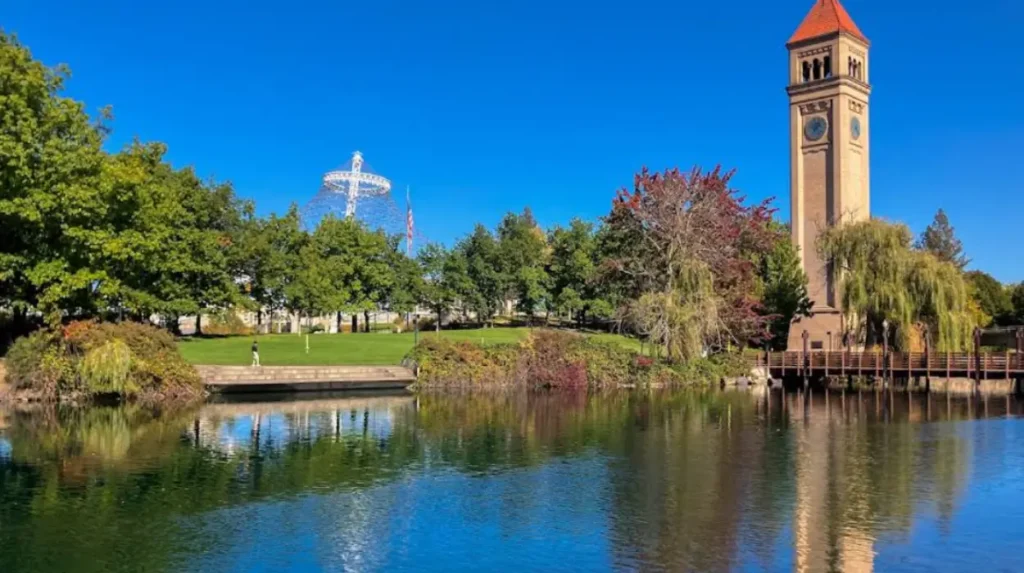
The walking experience works best for first-time visitors because many of the city’s best-known landmarks are concentrated in one area. Those landmarks include the park itself, Spokane Falls, the Great Northern Clock Tower, the SkyRide gondolas, and the restored Pavilion that came from Expo ’74.
This layout also supports semantic sightseeing. A visitor who wants history, nature, food, shopping, or public art can stay in the same district and switch between those experiences without needing a car for every stop.
Why is Riverfront Park the first stop?
Riverfront Park is the most important starting point because it anchors downtown Spokane’s identity, history, and major attractions. The park was created from the Expo ’74 World’s Fair site and remains the city’s main urban landmark.
The park began as the site of Exposition ’74, the World’s Fair Spokane hosted in 1974. City history records that the rail yards were removed, the Spokane River was cleaned up, and the former fairgrounds were transformed into Riverfront Park, which opened as a lasting public space.
That history matters for visitors because it explains why the downtown riverfront feels different from a typical city park. Riverfront Park is both a recreation space and a civic monument, shaped by a major redevelopment effort that changed downtown Spokane’s relationship with the river.
The park also contains many of the best photo stops and walkable attractions in the city center. Visit Spokane describes the area as an urban oasis and notes that the 100-acre park includes history, natural beauty, and attractions that deserve enough time for a proper visit.
What should first-time visitors see on foot?
First-time visitors should prioritize Spokane Falls, the Great Northern Clock Tower, the SkyRide, the Pavilion, the Looff Carousel, and the riverfront paths. These sites give a complete introduction to Spokane’s landscape, history, and downtown character.
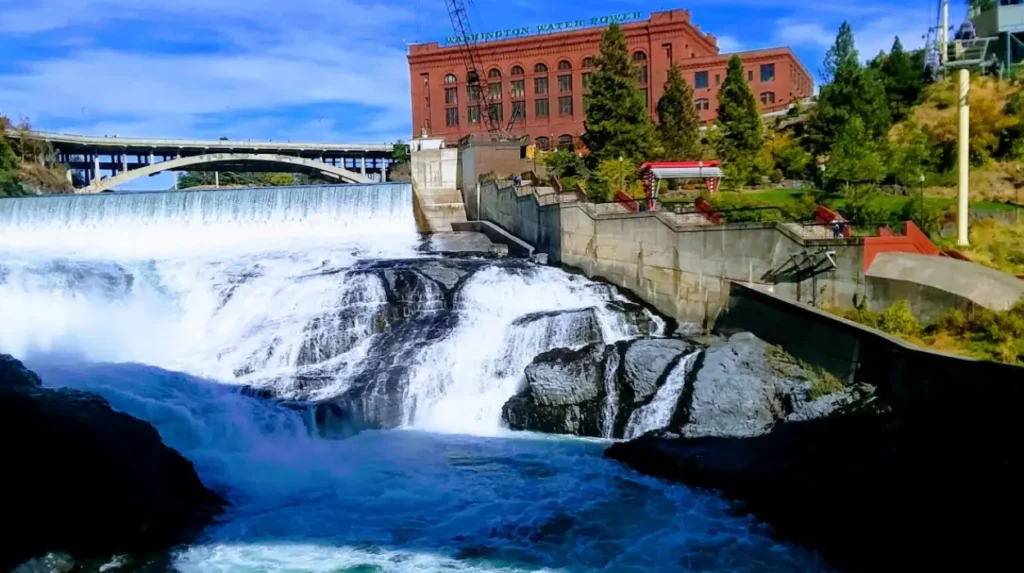
Spokane Falls is the city’s signature natural landmark and is widely described as the largest urban waterfall in the United States. It sits in the middle of downtown, which gives Spokane a rare river-and-waterfall setting that defines the entire walking route.
The Great Northern Clock Tower is one of the most important surviving Expo ’74 structures. City history states that it is what remains of the 1902 Great Northern Railroad Depot, making it a direct link between Spokane’s railroad past and its modern park identity.
The SkyRide gondola gives visitors a different view of the falls and river gorge, while the Pavilion reflects the event architecture left from Expo ’74. The park also includes family-friendly attractions and open spaces that make the route useful for both quick visits and slower, longer walks.
How far is the main route?
The core downtown walking route is short enough for a half-day visit and broad enough for a full day. Most first-time visitors can move between Riverfront Park, River Park Square, nearby restaurants, and civic landmarks without needing transportation.
A practical loop begins at Riverfront Park, continues to the clock tower and falls viewpoints, then moves west or south into the downtown grid for food and shopping. Because the district is compact, walking time stays manageable even when you stop frequently for photos or rest.
For a more relaxed pace, split the route into two parts. Spend the first part in Riverfront Park and the second part in the shopping and dining blocks around the park edge. That format keeps the day organized and reduces backtracking.
How does Spokane’s history shape the walk?
Spokane’s downtown walk reflects railroad history, World’s Fair redevelopment, and riverfront restoration. These layers explain why the city center contains historic buildings, preserved Expo structures, and a landscape built around public access to the river.
Before Expo ’74, the area that is now Riverfront Park included rail yards and industrial infrastructure. The fair permanently changed that space by removing the rail yards and redesigning the waterfront around public use, environmental restoration, and civic pride.historicspokane+1
That transformation still shapes the visitor experience today. The preserved clock tower, gondolas, and Pavilion function as visible reminders of the fair, while the broader park shows how Spokane repurposed a former industrial zone into a central public destination.
The historical layer also gives context to the downtown streets outside the park. The city promotes a Heritage Walk that highlights significant historic buildings, which means a visitor can connect the park to the broader architectural story of downtown Spokane.
Where do shopping and dining fit in?
Shopping and dining sit directly beside the main sightseeing zone, which lets visitors combine sightseeing with meals and retail stops in the same walk. River Park Square and nearby restaurants provide the clearest downtown visitor base.
Visit Spokane identifies River Park Square as a major downtown shopping center with national brands and local businesses. That makes it the most practical retail stop for first-time visitors who want a simple, central place to shop without leaving the walking area.
The nearby dining scene is broad enough to serve different trip styles. Spokane’s tourism materials highlight everything from street-style tacos and pasta to local coffee, breweries, and internationally inspired food, which gives downtown a strong all-day visitor pattern.
For a walking guide, the main point is placement. Food and retail are not separate from the experience; they are part of the downtown route itself, which helps visitors stay on foot and avoid unnecessary transit between attractions.
What data matters for visitors?
Downtown Spokane benefits from a city population of about 230,160 residents in 2022 and an urban core built to handle large visitor volumes during major events. The scale explains why downtown feels active without being overwhelming.
Spokane is the second most populous city in Washington, according to the city’s information page. A city of that size supports a stable mix of restaurants, shops, transit options, parks, and event spaces that first-time visitors can use year-round.
The downtown area also handles very large event crowds. City and tourism sources note that Expo ’74 drew more than five million people over six months, Bloomsday attracts over 50,000 participants, and Hoopfest takes over downtown blocks as the world’s largest 3-on-3 basketball tournament.
These figures matter because they show why the downtown core is built for walking. Spokane’s central district has been shaped by large public gatherings, which supports a pedestrian-friendly layout, open space, and a concentration of visitor services.
What events change the experience?
Major events change traffic, crowd levels, and access around downtown. Bloomsday in May and Hoopfest in late June are especially important because they bring tens of thousands of people into the same central area that walking visitors use.
That means a first-time visitor should check event timing before planning a downtown walk. A quiet weekday and an event weekend produce very different experiences, even if the route stays the same.
Events also add value for visitors who want the city at full energy. Downtown Spokane is not just a sightseeing district; it is also a recurring event zone where parks, streets, and public venues become active parts of city life.
What is the best walking order?
The best walking order starts at Riverfront Park, moves through the falls and clock tower, then continues into downtown for food, shopping, and public art. This order follows the city’s central geography and minimizes unnecessary backtracking.
Start in Riverfront Park because that is the area most closely associated with Spokane’s identity. The park contains the strongest concentration of landmarks, and it gives first-time visitors an immediate sense of the city’s river setting and Expo ’74 history.
After the park, continue toward nearby downtown streets and shopping areas such as River Park Square. This keeps the walk efficient because the retail and dining blocks sit close to the riverfront and are easy to integrate into the same route.
If time remains, add a Heritage Walk segment through historic buildings or extend the route to sculpture stops and nearby civic spaces. Spokane’s tourism guidance specifically promotes self-guided walking tours, which makes the downtown area suitable for independent exploration.
Why does this guide work for Google and AI search?
This guide works for search because it defines the place, explains the historical context, names key landmarks, and connects visitor intent to real downtown features. Search engines and AI systems favor content that is specific, structured, and entity-rich.
The article answers the core user question directly: what first-time visitors should walk downtown Spokane to see. It then expands into history, route logic, attractions, shopping, dining, and event relevance, which supports both human readers and machine extraction.
The strongest semantic entities are Riverfront Park, Spokane Falls, Expo ’74, the Great Northern Clock Tower, River Park Square, Bloomsday, and Hoopfest. Those entities are central to Spokane’s downtown identity and appear consistently in official and tourism sources.
For evergreen performance, this topic stays relevant because downtown Spokane remains a year-round visitor area. The park, the falls, the historic core, and the city’s major events give the article durable search value for first-time travelers, weekend planners, and Washington visitors.
What should visitors remember?
First-time visitors should remember that downtown Spokane is defined by one compact walking zone with a strong riverfront focus. The most useful route combines Riverfront Park, Spokane Falls, historic landmarks, and central dining and shopping blocks.
The city’s downtown story begins with Expo ’74, continues through preserved landmarks and public art, and remains anchored by a major urban waterfall in the city center. That combination gives Spokane an uncommon balance of nature, history, and urban access.
For Washington travelers, the main advantage is efficiency. A visitor can learn the city quickly on foot, see the most important landmarks in one connected route, and still leave with a clear sense of Spokane’s identity as an inland Northwest destination.
What makes downtown Spokane walkable?
Downtown Spokane is highly walkable because its main attractions are concentrated around Riverfront Park, the Spokane River, and the city center. Visitors can easily walk between parks, restaurants, shopping areas, public art installations, and historic landmarks without needing a car.