

Olympic National Park offers 144 designated hiking trails spanning 620 miles, ranging from flat 0.8-mile rainforest loops to 17-mile alpine expeditions with 4,400 feet of elevation gain. Washington visitors can choose from easy coastal walks, intermediate mountain basins, and strenuous glacier climbs across three distinct ecosystems: temperate rainforest, alpine ridge, and Pacific coastline.
- What Are the Best Easy Hiking Trails in Olympic National Park for Beginners?
- Which Intermediate Hiking Trails Challenge Olympic National Park Visitors Without Requiring Mountaineering Skills?
- What Advanced and Strenuous Hiking Trails Exist for Experienced Athletes in Olympic National Park?
- How Do You Choose the Right Trail Based on Your Fitness Level and Hiking Experience in Olympic National Park?
- WhatPermits, Fees, and Regulations Apply to Hiking in Olympic National Park?
- When Is the Best Time of Year to Hike Different Trails in Olympic National Park?
- What Safety Precautions and Gear Do You Need for Hiking Olympic National Park Trails?
What Are the Best Easy Hiking Trails in Olympic National Park for Beginners?
Easy trails include Hall of Mosses (0.8 miles, 126 feet elevation), Spruce Railroad (8 miles roundtrip, 250 feet gain), Ruby Beach (0.5 miles, 80 feet), and Hurricane Hill (3.2 miles, 650 feet). These trails feature maintained paths, minimal elevation, and complete most hikers in under 2 hours.
Hall of Mosses Trail in the Hoh Rainforest serves as the park’s most accessible hike. This 0.8-mile loop trail starts at the Hoh Rainforest Visitor Center and climbs 126 feet to 597 feet elevation. Giant western hemlock trees draped in moss create the signature rainforest experience. The trail is wheelchair-accessible with rentals available at the visitor center. Most visitors complete this walk in 25 minutes to 1 hour.
Spruce Railroad Trail follows Lake Crescent’s northern shoreline for 4 miles one-way with only 250 feet of elevation gain. The paved section makes this trail wheelchair-accessible since 2024 improvements. Hikers see sparkling lake views, small waterfalls, wildflowers, and mature forest. The trail connects to Storm King Ranger Station and includes historic Ellison Creek Bridge.
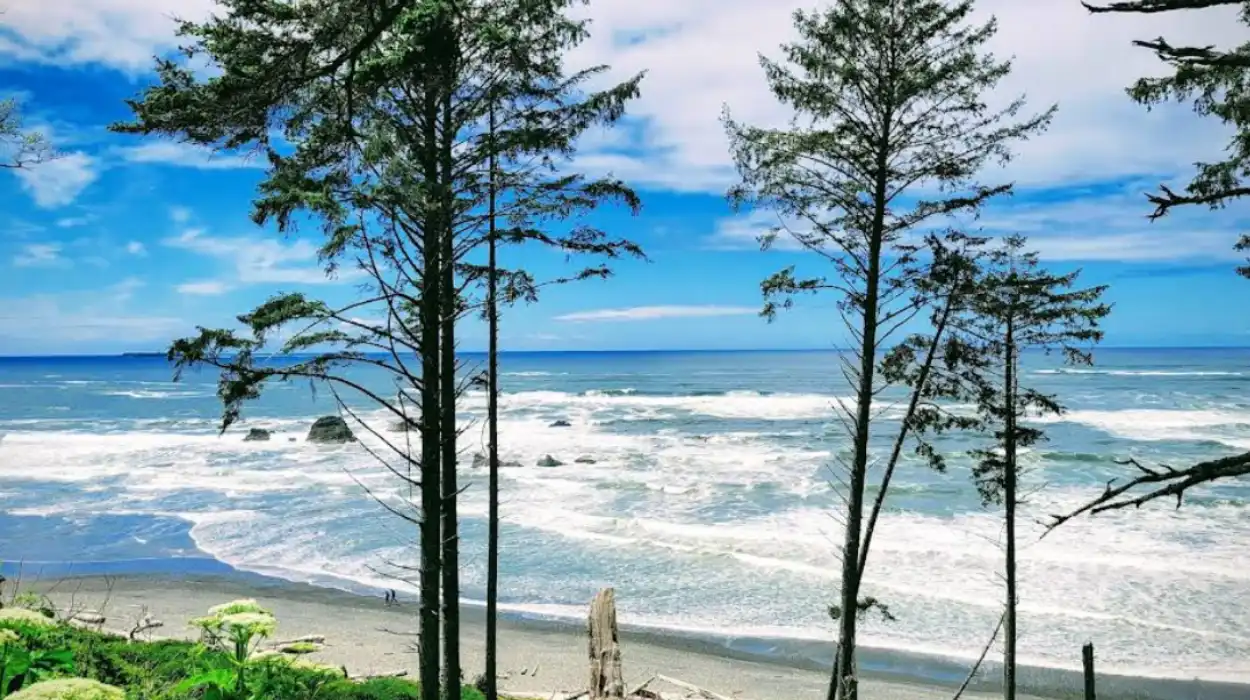
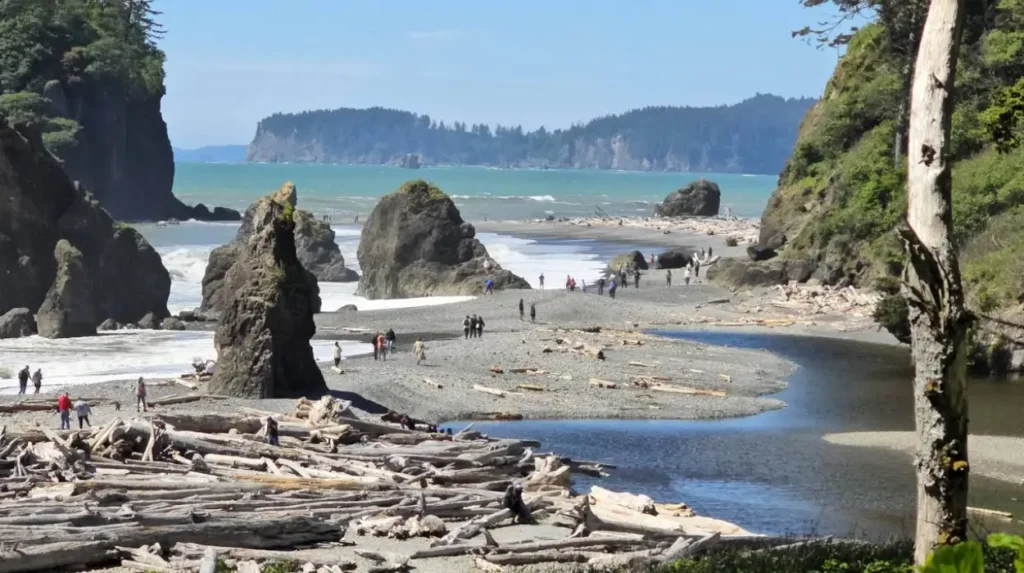
Ruby Beach Trail offers a 0.5-mile out-and-back walk with 80 feet elevation gain near Forks, Washington. The trailhead sits 27 miles south of Forks on US Highway 101. Driftwood-lined shores and sea stacks characterize this coastal hike. Average completion time is 21 minutes.
Hurricane Hill Trail delivers mountain views without technical difficulty. This 3.2-mile roundtrip trail gains 650 feet to reach 5,757 feet at the summit. The path starts 1.5 miles past Hurricane Ridge Visitor Center. Wildflowers bloom July through September, and elk sightings occur frequently. Families with children complete this hike in 1.5 to 2 hours.
Marymere Falls Trail provides a 1.8-mile roundtrip walk to a 90-foot waterfall near Lake Crescent. The trail climbs gradually through old-growth forest. Visitors reach the falls in 45 minutes. This hike requires no technical skills and accommodates most fitness levels.
Which Intermediate Hiking Trails Challenge Olympic National Park Visitors Without Requiring Mountaineering Skills?
Intermediate trails include Seven Lakes Basin (19 miles, 4,000 feet gain), Hoh River Trail to Glacier Meadows (17.4 miles, 3,700 feet gain), Klahhane Ridge (2.8 miles one-way), and Devil’s Punchbowl via Spruce Railroad (8 miles, moderate steepness). These require 4-8 hours, good fitness, and trail experience.
Seven Lakes Basin delivers alpine meadows and seven glacial lakes from the Sol Duc area. The 19-mile loop gains 4,000 feet to reach 5,120 feet at the basin’s highest point. Hikers complete this in 7-10 hours on well-maintained switchbacks. Wildflower displays peak in mid-July. The basin connects to higher routes for experienced backpackers.
Hoh River Trail extends 17.4 miles to Glacier Meadows with 3,700 feet elevation change from 600 to 4,300 feet. The first 13 miles stay flat through rainforest, then steepen significantly. This trail serves as the route to Mount Olympus base camp. Late June through September offers the best conditions. Snow blocks early-season travel above Elk Lake.
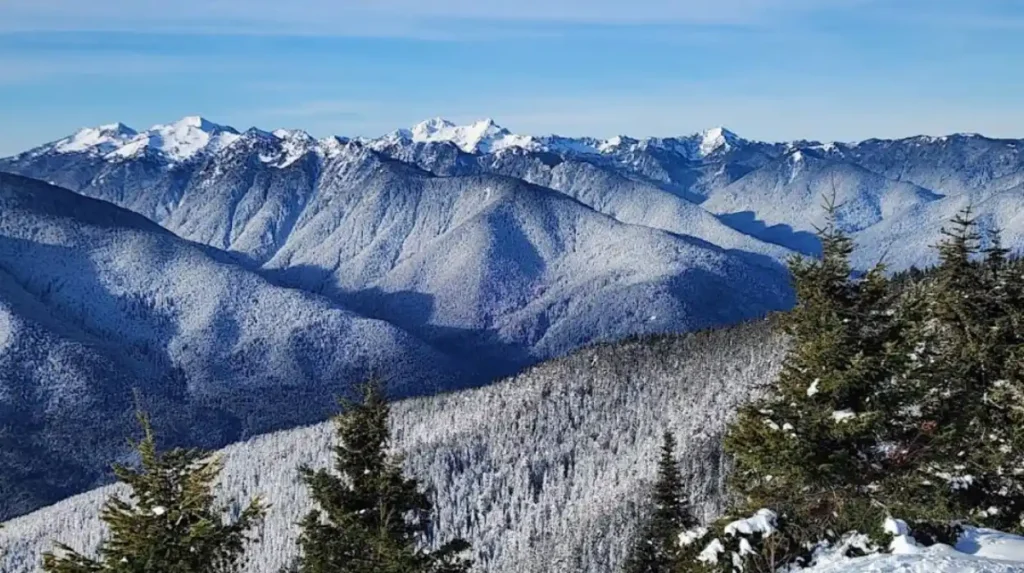
Klahhane Ridge Trail starts at Hurricane Ridge Visitor Center and climbs 2.8 miles one-way to expansive alpine views. The steeper terrain challenges hikers with moderate fitness. Mountain vistas include Mount Angeles and the Strait of Juan de Fuca. This trail connects to additional routes for longer day hikes.
Devil’s Punchbowl via Spruce Railroad Trail creates an 8-mile roundtrip with moderate elevation changes. The route follows the shoreline then climbs to a dramatic rock formation. Tide tables matter for coastal sections. This hike combines forest, lake, and coastal views in one experience.
Lake Angeles Trail gains 750 feet over 3.2 miles for a solid intermediate workout. The path winds through old-growth forest to a pristine alpine lake. Hikers complete this in 2.5-3.5 hours. Swimming in the lake stays cold even in summer.
What Advanced and Strenuous Hiking Trails Exist for Experienced Athletes in Olympic National Park?
Advanced trails include Mount Storm King (4 miles roundtrip, ~2,000 feet gain, fixed ropes), Mount Olympus climbing expedition (4-6 miles from glacier meadows, 4,400 feet gain, technical gear required), and Olympic National Park Traverse (104.5 miles, 7,776 feet gain). These demand excellent fitness, technical skills, and experience.
Mount Storm King Trail delivers 2,000 feet of elevation gain in just 4 miles roundtrip with six fixed rope sections. The National Park Service rates this trail as difficult with 1.7 miles and 2,100 feet elevation from 600 to 2,700 feet. Rope sections cover loose sand with minimal traction, requiring hiking boots. Steep switchbacks and exposed ridges create mental challenges beyond physical demands. Mountaineers complete this in 3-5 hours.
Mount Olympus climbing requires glacier travel and crevasse rescue skills. The expedition spans 4-6 miles from Glacier Meadows to the 7,980-foot summit with 4,400 feet elevation gain. Ice axes and crampons remain necessary through early summer. Late June through mid-August offers the only safe climbing window. Experience with steep snow slopes and avalanche chutes is mandatory. Winter travel above Elk Lake is not recommended.
The Olympic National Park Traverse creates a 104.5-mile self-guided route through remote wilderness. This route patches together difficult trails with 7,776 feet total elevation gain. No resupply points exist along the route. Solo hikers complete this in 5-7 days. Average elevation gain is 256 feet per mile.
High Divide Loop through 7 Lakes Basin spans 18.2 miles with 3,050 feet elevation gain. The route connects multiple alpine basins and mountain passes. Hikers need 8-10 hours for completion. Wildflower displays peak in August. This trail requires backcountry navigation skills.
How Do You Choose the Right Trail Based on Your Fitness Level and Hiking Experience in Olympic National Park?
Beginners select trails under 3 miles with under 300 feet elevation gain. Intermediate hikers choose 3-10 mile trails with 500-2,500 feet elevation. Advanced hikers tackle 10+ mile routes with 2,500+ feet elevation and technical sections. Match trails to your longest previous hike plus 20% distance.
Fitness assessment starts with your current walking capacity. If you comfortably walk 2 miles on flat ground, start with Hall of Mosses (0.8 miles) or Ruby Beach (0.5 miles). Add 0.5 miles every 2 weeks until reaching 3 miles, then attempt Hurricane Hill.
Elevation gain matters more than distance for difficulty. A 2-mile trail with 1,000 feet gain challenges more than a 5-mile trail with 200 feet gain. Count your steps per minute on stairs. If you sustain 60 steps per minute for 10 minutes, you handle intermediate elevation. Below 40 steps per minute means stick to easy trails.
Experience determines technical readiness. Never attempt rope sections without prior scrambling experience. Mount Storm King’s six rope sections require comfort with exposure and heights. If heights cause anxiety, skip Storm King and choose Seven Lakes Basin instead.
Group composition affects trail selection. Children under 10 handle trails under 2 miles. Elderly hikers need flat, paved sections. Dogs require leashed trails (all Olympic National Park trails mandate leashes except designated wilderness).
WhatPermits, Fees, and Regulations Apply to Hiking in Olympic National Park?
Day hiking requires no wilderness permits but costs $30 per vehicle entrance fee or $15 per person. The America the Beautiful Pass ($80) covers all entrance fees. Overnight backcountry camping requires wilderness permits from April 15 for May 15-October 15 season via Recreation.gov.
The standard vehicle entrance pass costs $30 and covers all passengers. Individual entry costs $15 for pedestrians and cyclists. The America the Beautiful Pass costs $80 and grants access to 2,000+ federal recreation sites nationwide. Washington residents often find the annual pass cost-effective for 3+ park visits.
Wilderness permits become available April 15 at 7:00 AM for the summer season (May 15-October 15). Reservations occur online at Recreation.gov or through the Wilderness Information Center at 360-565-2992. Email contact at OLYM_WIC@nps.gov handles high call volumes.
All overnight backcountry camping requires permits, including Enchanted Valley. Day hikers never need wilderness permits regardless of distance traveled. Popular routes like Seven Lakes Basin and Mount Olympus sell out within hours of release.
Wildlife regulations mandate 50-yard minimum distance from all animals. This equals half a football field’s length. Feeding wildlife is strictly prohibited, including birds, squirrels, marmots, deer, elk, and otters. Bear spray is recommended but not required for day hiking.
When Is the Best Time of Year to Hike Different Trails in Olympic National Park?
Summer (July-September) offers optimal conditions for alpine and high-elevation trails. Late spring (May-June) works for coastal and rainforest trails. Fall (October) provides fewer crowds but increasing rain. Winter trails remain snowblocked above 3,000 feet elevation.
Hurricane Hill and Seven Lakes Basin open late June when snow melts from 5,000+ foot elevations. Wildflower displays peak mid-July through August. These trails remain accessible through September before early snowfall.
Hoh Rainforest trails stay accessible year-round. The Hall of Mosses and Spruce Nature Trail see minimal snow even in winter. Rain occurs 12-15 days monthly, requiring waterproof gear always.
Coastal trails like Rialto Beach and Ruby Beach require tide table checks. Hole-in-the-Wall at Rialto Beach demands low tide access within 2 hours of low water. Winter storms create dramatic wave action but increase danger.
Mount Olympus climbing only occurs late June through mid-August. Ice axes and crampons stay necessary through early July. Avalanche chutes block winter travel above Elk Lake.
September offers the best balance of weather and crowds. August brings peak tourism. July provides the most reliable alpine access.
What Safety Precautions and Gear Do You Need for Hiking Olympic National Park Trails?
Essential gear includes waterproof layers, hiking boots with traction, 2 liters water per person, navigation tools, and tide tables for coastal hikes. Advanced trails require ice axes, crampons, ropes, and bear canisters. Always tell someone your route and return time.
Waterproof clothing is non-negotiable. Olympic National Park receives 140+ inches annual rainfall in the Hoh Rainforest. Moisture-wicking base layers prevent hypothermia when temperatures drop to 40°F at elevation.
Hiking boots with aggressive tread handle Mount Storm King’s six rope sections covering loose sand. Trail runners fail on steep, wet rock. Gaiters keep debris out of boots on forest trails.
Navigation tools include physical maps since cell service is nonexistent in 90% of the park. GPS devices work but batteries drain fast in cold. Download offline maps before entry.
Tide tables are mandatory for Rialto Beach, Hole-in-the-Wall, and all coastal hikes. Start hiking 90 minutes before low tide to reach Hole-in-the-Wall at lowest water.
Bear canisters are required for overnight backpacking. Day hikers carry bear spray as precaution. Black bears inhabit the park but rarely approach humans.
First aid kits include blister treatment, pain relievers, and emergency blankets. Hypothermia occurs even in summer when wet and windblown at 5,000+ feet.
Olympic National Park’s 922,650 acres contain 620 miles of trails across three distinct ecosystems. Washington visitors access easy rainforest loops, intermediate alpine basins, and strenuous glacier climbs with proper planning. Match trails to fitness, respect weather windows, and prepare for wet conditions. The park rewards preparation with temperate rainforest moss, wildflower-filled meadows, and rugged Pacific coastline views.
What are the best hiking trails in Olympic National Park?
Some of the most popular hiking trails in Olympic National Park include Hall of Mosses, Hurricane Hill, Marymere Falls, Spruce Railroad Trail, Seven Lakes Basin, Mount Storm King, and the Hoh River Trail. These routes range from easy rainforest walks to challenging alpine hikes.