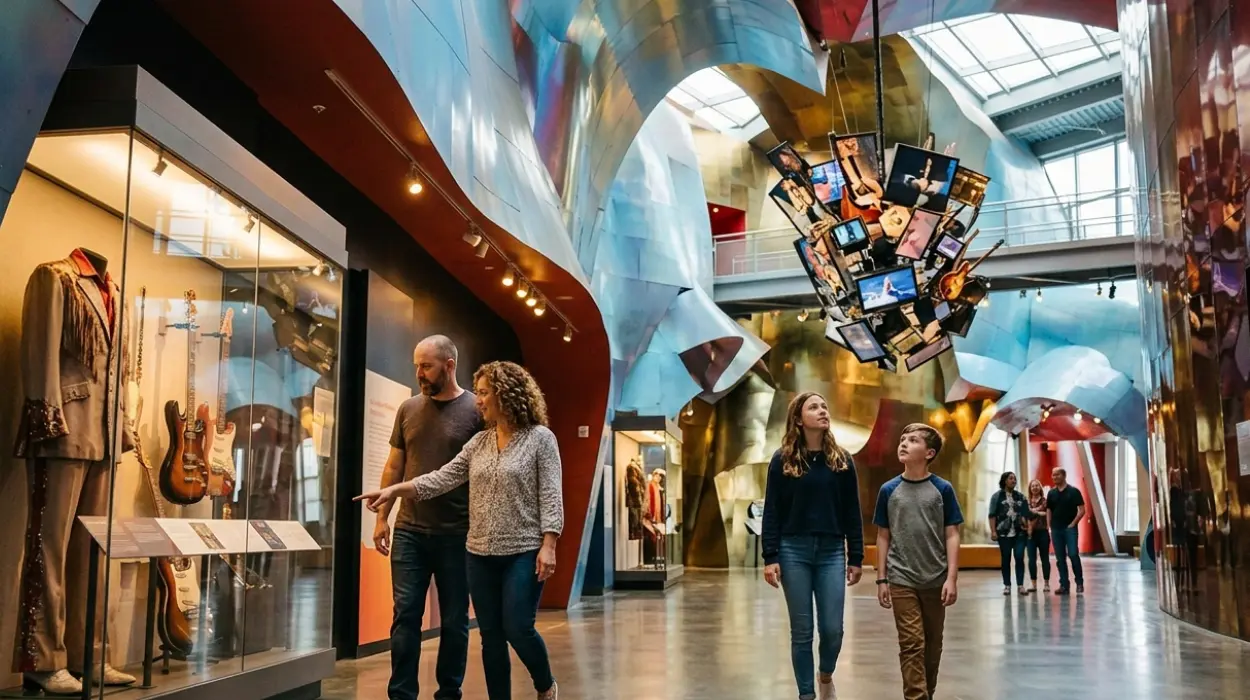
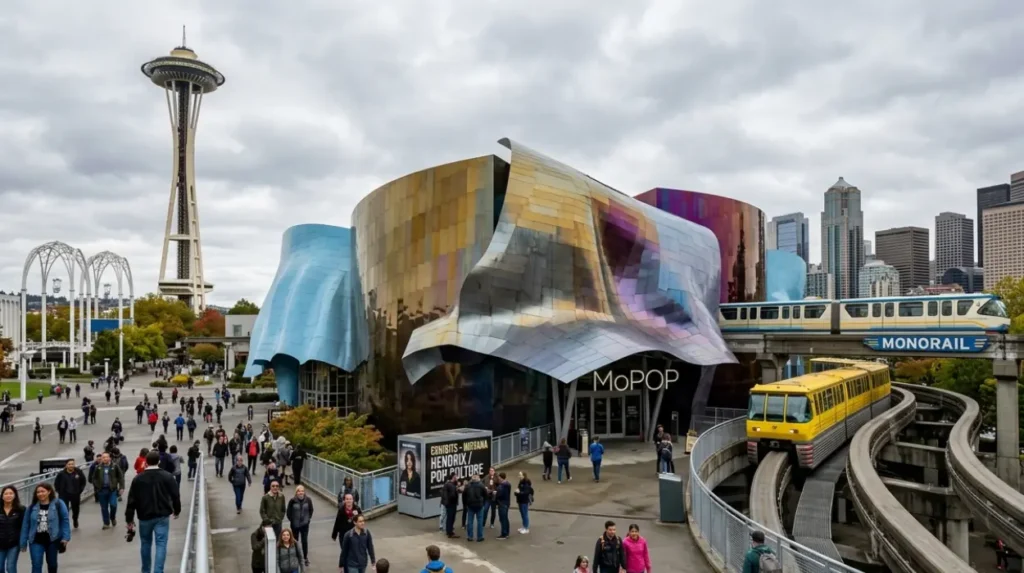
The Museum of Pop Culture Seattle, known as MoPOP, is a nonprofit museum at Seattle Center dedicated to contemporary popular culture, including music, film, science fiction, fantasy, gaming, and related art forms. It was founded in 2000 by Microsoft co-founder Paul Allen, occupies a 140,000-square-foot Frank Gehry-designed building, and remains one of Seattle’s most recognisable visitor attractions.
- What is the Museum of Pop Culture Seattle?
- Why was MoPOP created?
- What makes the building important?
- Which exhibits can visitors see?
- Music and Seattle roots
- Science fiction and fantasy
- Gaming and interactivity
- How should visitors plan a trip?
- Best timing
- Ticket structure
- How do visitors get there?
- What is inside a full visit?
- Why does MoPOP matter to Seattle?
- What should visitors know before they go?
What is the Museum of Pop Culture Seattle?
MoPOP is a Seattle museum focused on modern popular culture, with exhibitions on music, film, gaming, science fiction, fantasy, and fashion. It sits on the Seattle Center campus and combines permanent collections, rotating exhibitions, and interactive galleries for visitors of different ages.
MoPOP defines pop culture as a changing mix of media, genres, and creative expression. The institution presents that idea through exhibitions and hands-on experiences rather than traditional art-museum display alone. Its current public-facing content highlights major areas such as music, hip-hop, science fiction, guitars, grunge, and gaming.
The museum’s scope makes it useful for families, tourists, and local visitors who want one stop for several cultural interests. It also fits Seattle’s identity because the city is strongly associated with grunge music, technology, independent games, and science fiction communities.
Why was MoPOP created?
MoPOP was created in 2000 by Paul Allen to celebrate the creative force of popular music and Seattle’s cultural legacy, especially Jimi Hendrix and later the broader world of pop culture. The museum opened as the Experience Music Project and expanded over time into MoPOP.
HistoryLink records that the Experience Music Project opened at Seattle Center on June 23, 2000, in a flowing building designed by Frank O. Gehry and inspired by Jimi Hendrix. The project grew from Allen’s interest in Hendrix, and the original concept centred on music history and memorabilia.
The institution later broadened its mission. A science fiction museum joined the same roof in 2004, and the unified MoPOP name arrived in 2016 after the museum folded its major themes into one identity. That evolution matters because today’s visitor experience reflects both the original music focus and the wider pop-culture mandate.
What makes the building important?
The MoPOP building is important because Frank Gehry designed it as a landmark structure with a bold, sculptural exterior and a large interior devoted to exhibitions and events. It covers about 140,000 square feet and sits prominently beside Seattle Center attractions.
The architecture is part of the attraction. HistoryLink describes the building as a flowing polychrome pavilion, while other sources note its curved, metallic surfaces and strong visual presence. The form is not decorative only; it gives the museum a distinct identity in Seattle’s skyline.
Inside, the museum supports galleries, display zones, activity stations, and event spaces. One major venue is Sky Church, which appears in multiple references as one of the museum’s signature interior spaces. That blend of architecture and function makes the building part of the visitor experience rather than just the container for it.
Which exhibits can visitors see?
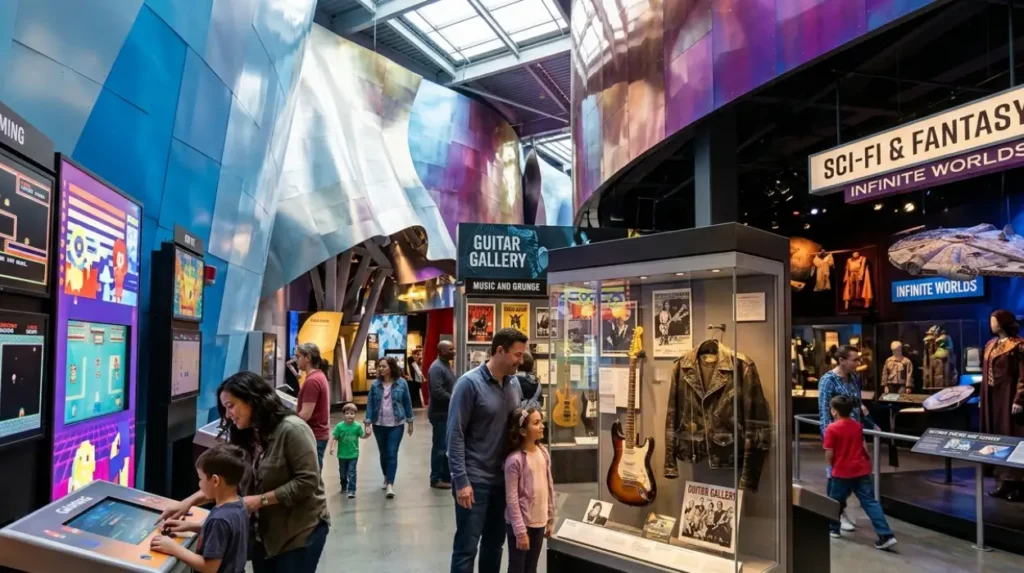
MoPOP’s general admission currently includes around 10 exhibits, with core areas covering Nirvana, Hendrix, science fiction, fantasy, horror, indie games, guitars, and hands-on music experiences. The museum updates these exhibits over time, so the exact mix changes while the overall themes remain consistent.
The official visit page lists included experiences such as Massive: The Power of Pop Culture, Nirvana: Taking Punk to the Masses, Infinite Worlds of Science Fiction, Indie Game Revolution, Fantasy: Worlds of Myth and Magic, Hendrix: Wild Blue Angel, Science Fiction and Fantasy Hall of Fame, Guitar Gallery, and Sound Lab. These names show the museum’s structure clearly: music, media, genre storytelling, and interactivity.
MoPOP’s online exhibition page groups the museum’s themes under music, film, fashion, gaming, and art, with genres ranging from grunge to science fiction and fantasy. That broader framing helps explain why visitors find both object-based displays and immersive, participatory installations in the same visit.
Music and Seattle roots
MoPOP’s music collections are central to its identity, especially the history of Jimi Hendrix and Nirvana. One source describes the museum as holding a large Nirvana collection, including guitars, drum kits, photographs, and oral histories. This makes the museum especially relevant to visitors interested in Seattle’s global influence on modern rock.
The museum also connects to live music culture through public programmes such as Sound Off!, an all-ages battle-of-the-bands, and the Pop Conference, an annual gathering for critics, musicians, and academics. These programmes show that MoPOP is not only a display venue but also an active cultural institution.
Science fiction and fantasy
MoPOP’s science fiction and fantasy content preserves the museum’s original genre emphasis. The museum and its related collection materials reference a Hall of Fame and exhibitions covering major ideas, characters, and production objects from science-fiction storytelling.
This area matters because it links literature, film, television, and visual culture in one setting. Visitors who care about speculative storytelling see how the genre has shaped entertainment across several decades and media formats.
Gaming and interactivity
The museum includes Indie Game Revolution and other interactive areas that connect with the gaming industry. These spaces reflect Seattle’s wider technology culture and the rise of independent game development as a creative field.
Hands-on features such as Sound Lab give visitors direct participation, which separates MoPOP from a purely archival museum. The experience focuses on experimentation, performance, and audience interaction instead of passive viewing alone.
How should visitors plan a trip?
Visitors should plan around timed entry, plan-ahead pricing, and the museum’s current opening hours. MoPOP is on the Seattle Center campus, open Thursday through Tuesday from 10:00 am to 5:00 pm, and closed on Wednesdays according to the official visit page.
The museum states that tickets use timed entry and plan-ahead pricing, with earlier purchases offering lower prices than later ones. That means the best planning strategy is to choose a date early, reserve a time, and verify the final ticket price during checkout.
The museum also notes occasional closures for special events and temporary theatre changes, so date-specific checking matters before travel. For an evergreen visitor guide, the key point is that MoPOP operates on a structured schedule and uses advance booking to manage capacity.
Best timing
Weekday visits usually suit travellers who want lighter crowds and more time in each gallery. The official hours show a consistent daytime schedule, which makes MoPOP practical as part of a larger Seattle Center itinerary.
Because the museum sits near other major attractions, some visitors pair MoPOP with the Space Needle, Chihuly Garden and Glass, or Seattle Center events. That cluster makes timing important, especially for people building a full-day urban visit.
Ticket structure
The museum’s plan-ahead pricing system changes price by date and demand factors such as capacity, holidays, events, and weather. This system means there is no single permanent lowest fare for all dates.
General admission includes the listed exhibitions, so most first-time visitors do not need separate tickets for core galleries. That simplifies trip planning for broad audiences because the major collections are bundled under one admission format.
How do visitors get there?
MoPOP is easiest to reach through Seattle Center, and the Seattle Center Monorail gives a direct downtown connection between Westlake and Seattle Center. The museum is on the Seattle Center campus, close to major city attractions and public transport options.
The official museum page says the Seattle Center Monorail offers a fast connection between downtown Seattle and Seattle Center, with trains departing every 10 minutes. The monorail’s own site says it runs daily and connects Westlake with Seattle Center in about two minutes.
This matters for visitors staying downtown because it removes the need to drive or search for parking in a busy tourist district. Seattle Center is a compact attraction zone, so transit access supports easier same-day visits to multiple sites.
What is inside a full visit?
A full MoPOP visit usually combines permanent galleries, temporary exhibitions, interactive stations, and retail or dining stops. The museum promotes Culture Kitchen and the MoPOP shop, so the visit often extends beyond gallery viewing alone.
The museum’s official visit information points to dining and shopping as part of the guest experience. This matters because pop-culture museums often work best when visitors can spend time, rest, and explore without rushing between installations.
The structure of the building supports that flow. Visitors move from exhibition spaces into activity areas and then into public amenities, creating a sequence rather than a single-room stop. That layout fits the museum’s mission of immersion and participation.
Why does MoPOP matter to Seattle?
MoPOP matters to Seattle because it combines local music history, major architecture, and a broad cultural mission in one institution. It reinforces Seattle’s identity as a city shaped by rock music, technology, genre storytelling, and creative experimentation.
The museum’s strongest local connections include Hendrix, Nirvana, and the city’s wider grunge legacy. Those names anchor the museum in Seattle history rather than making it a generic pop-culture venue.
Its location at Seattle Center also increases its civic importance. The area already functions as a cultural district, and MoPOP adds an institution that draws visitors into the city’s creative economy. That role keeps the museum relevant well beyond a single exhibition cycle.
What should visitors know before they go?
Visitors should check the official MoPOP site for hours, timed-ticket availability, and special closures before travelling. The museum’s operating pattern, plan-ahead pricing, and exhibit mix change over time, but the core focus on pop culture stays constant.
For first-time visitors, the practical essentials are simple. Book ahead, use Seattle Center transit if possible, and expect a mix of music history, science fiction, gaming, and interactive experiences. That combination is the museum’s defining feature.
The most useful evergreen insight is that MoPOP is both a museum and a cultural engine. It preserves artefacts, stages public programmes, and presents changing exhibitions inside a landmark building that helps define modern Seattle.
Is MoPOP worth visiting in Seattle?
Yes, MoPOP is worth visiting if you enjoy music, movies, gaming, science fiction, or interactive museums. Most visitors spend 2–4 hours exploring exhibits like Nirvana: Taking Punk to the Masses, Hendrix: Wild Blue Angel, and Indie Game Revolution. The museum combines hands-on experiences with major pop-culture collections inside one of Seattle’s most recognizable buildings.