
Key Points
- Extreme Heat Alert Activated: District of Columbia Mayor Muriel Bowser has activated an Extreme Heat Alert from Wednesday, July 1 through Sunday, July 5, 2026, as triple-digit temperatures grip the region.
- Escalating Weather Warnings: The National Weather Service (NWS) issued a Heat Advisory for Wednesday, followed by an Extreme Heat Watch from Thursday morning through Friday evening, with heat index values projected to reach between 106 and 115 degrees Fahrenheit.
- America 250 Milestones: The dangerous heatwave directly coincides with large-scale outdoor events on the National Mall commemorating the United States Semiquincentennial (250th anniversary), including the Great American State Fair.
- Public Mitigation Efforts: Local authorities are deploying free bottled water inside secure zones, establishing air-conditioned shelters at Smithsonian museums, and preparing “GO Teams” to assist vulnerable populations.
- Heightened Safety and Security: Emergency services are operating on all-hands-on-deck status to handle crowd control and heat-related medical emergencies amidst a designated National Security Special Event.
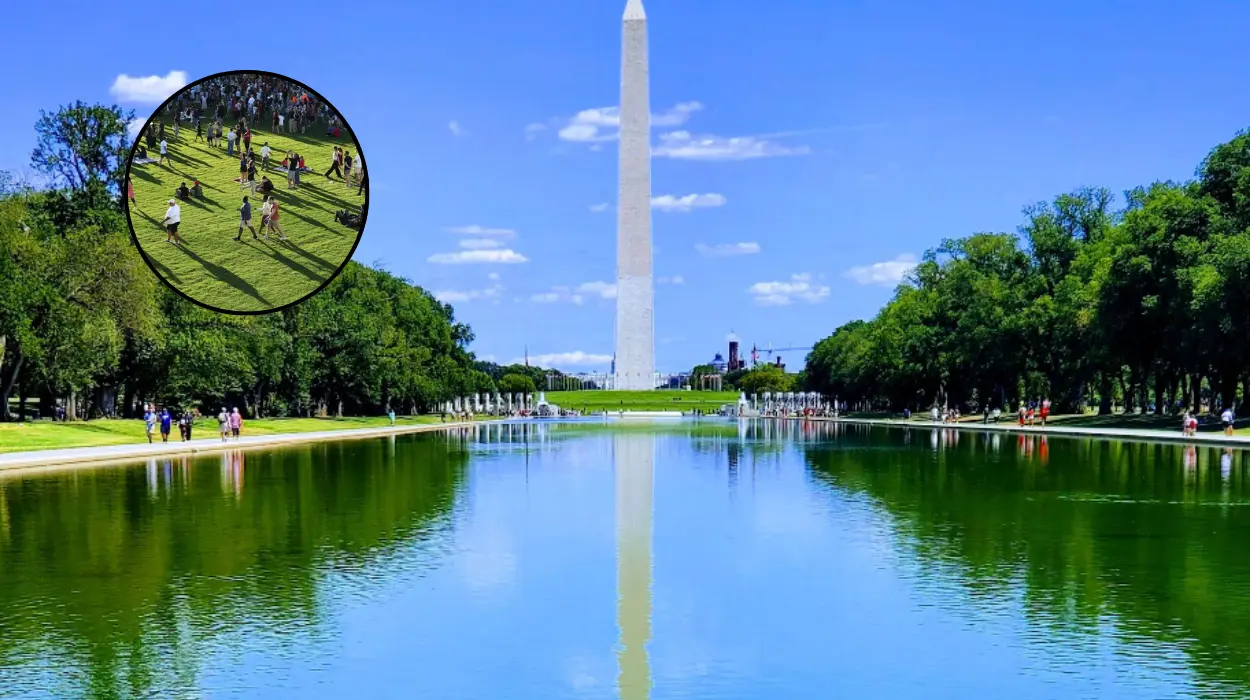
Washington, D.C. (Evening Washington News) July 1, 2026 — A dangerous and potentially record-breaking summer heatwave has descended upon the United States capital just as hundreds of thousands of visitors arrive to celebrate the nation’s 250th birthday. According to reports broadcast by Meteorologist Michael Estime of FOX Weather, Heat Advisories took effect across Washington, D.C. on Wednesday, with humidity levels pushing feels-like temperatures toward an oppressive 110 degrees Fahrenheit. The timing of the extreme weather system presents a critical challenge to municipal planners, public safety personnel, and tourists participating in the high-profile “Freedom 250” and “Salute to America” festivities on the National Mall.
- Key Points
- How Dangerous Is the Heatwave Gripping the Nation’s Capital?
- What Public Safety Measures Are D.C. Officials Implementing?
- How Will the Heat and Security Measures Intersect for Visitors?
- What Transportation and Access Changes Should the Public Expect?
- Background of the America 250 Heatwave Development
- Prediction: How This Development Can Affect Tourists and Event Attendees
How Dangerous Is the Heatwave Gripping the Nation’s Capital?
As detailed in an official press release issued by District of Columbia Mayor Muriel Bowser, daily high temperatures are forecast to exceed 100 degrees Fahrenheit during the first week of July. When combined with the region’s intense humidity, the National Weather Service (NWS) expects the heat index to consistently surpass 105 degrees, climbing as high as 109 to 112 degrees at times. Local emergency protocols mandate that when the heat index exceeds 105 degrees, an Extreme Heat Alert is automatically triggered, prompting the activation of cooling infrastructure and additional public health resources across the District.
Further meteorological data published by the NWS Baltimore-Washington office indicates that an Extreme Heat Watch will remain in effect from Thursday morning through Friday evening, July 3. Forecasters warned that the heat index values could approach a staggering 115 degrees in specific spots near and east of the Interstate 95 corridor, particularly close to larger bodies of water.
Furthermore, overnight temperatures are projected to remain above 75 degrees Fahrenheit, depriving the human body of natural nocturnal cooling and compounding the risk of heat exhaustion and heat stroke.
What Public Safety Measures Are D.C. Officials Implementing?
To combat the life-threatening weather conditions, city leaders have finalized an extensive multi-agency emergency response framework.
Writing for FOX 5 DC, journalists tracking the local preparations reported that municipal authorities are urging all residents and visitors to plan ahead, drink high volumes of water prior to feeling thirsty, and utilize designated air-conditioned spaces.
As part of the protective measures implemented for the Great American State Fair and the Freedom 250 Salute to America events, complimentary bottled water is being distributed inside the secure screening zones on the National Mall. Additionally, the Smithsonian Institution has confirmed that air-conditioned shelter options will be available within its various museums along the Mall, while certain tented pavilions at the state fair have been outfitted with climate-control systems to provide immediate relief from the sun.
District agencies are also focusing heavily on vulnerable populations. According to the executive statement from Mayor Bowser’s office, the city’s specialized “GO Teams” have been deployed directly into local neighborhoods to answer public health questions, distribute information, and direct individuals to designated cooling centers, which officially open their doors whenever ambient temperatures reach 95 degrees Fahrenheit.
How Will the Heat and Security Measures Intersect for Visitors?
The intersection of extreme weather and unprecedented security coordination is expected to create logistical friction for the public.
As reported by the Associated Press, the federal government has designated the upcoming July 4th fireworks display as a National Security Special Event (NSSE) for the first time, granting it the highest level of federal security management.
Consequently, visitors accessing the National Mall must navigate strict security checkpoints featuring magnetometers and identity verification protocols, mimicking airport security screening. Public safety officials warn that these mandatory screenings will result in significant queues and prolonged waiting times under direct sunlight.
As reported by the Associated Press news team, approximately 5,000 National Guard troops alongside thousands of local and federal law enforcement officers are deployed throughout the city. Brig. Gen. Leland Blanchard II, interim commander of the D.C.
National Guard, stated that guard members, including military police officers, are actively assisting with traffic management, crowd control, and emergency incident responses.
The physical demands of navigating these security configurations during a heatwave have prompted DC Fire and EMS to place all personnel on active duty, with supplementary medical units stationed at strategic intervals to treat cases of thermal distress.
What Transportation and Access Changes Should the Public Expect?
Transit systems within the capital are adjusting operations to accommodate both the extreme weather and the anticipated crowds.
According to statements obtained by FOX 5 DC from Metro General Manager Randy Clarke, the Washington Metropolitan Area Transit Authority (WMATA) has verified that all underground stations and train cars are fully air-conditioned to serve as transit-based cooling corridors.
To encourage safe travel and reduce vehicular congestion, Metro services will be completely free of charge from 5:00 PM on July 4 until 2:00 AM on July 5.
Simultaneously, severe access restrictions have been implemented across downtown Washington. Heavy security fencing has been erected around the primary viewing zones at the base of the Washington Monument, which holds a maximum capacity of 150,000 attendees and is expected to fill completely.
Furthermore, vehicular traffic has been barred across wide swaths of the downtown core, and the Memorial Bridge has been entirely closed to both vehicles and pedestrians—a notable departure from previous holiday security layouts.
Background of the America 250 Heatwave Development
The convergence of hazardous summer weather and historical commemoration in Washington, D.C. represents the culmination of years of long-term planning intersecting with shifting climate patterns. The United States Semiquincentennial, branded nationally as “America 250,” was established by congressional mandate to honor the 250th anniversary of the signing of the Declaration of Independence on July 4, 1776.
Planning for this multi-month celebration began years in advance, involving the Smithsonian Institution, the National Park Service, and the Department of Homeland Security to facilitate massive cultural showcases like the Great American State Fair.
However, the execution of these mid-summer outdoor celebrations has increasingly run parallel to severe meteorological disruptions.
Data published by climate scientists at NPR indicates an escalating trend of intense, long-duration heat domes settling over the mid-Atlantic and northeastern United States during late June and early July.
Historical weather analyses show that late-summer extreme heat events have statistically become the deadliest form of severe weather in the United States, outpacing casualties from hurricanes and tornadoes combined.
Consequently, municipal emergency planning that once focused primarily on fireworks logistics, counter-terrorism, and crowd flows must now treat extreme thermal mitigation as a primary threat vector.
Prediction: How This Development Can Affect Tourists and Event Attendees
The ongoing heatwave is expected to alter the behavior, safety profiles, and overall experience of the hundreds of thousands of tourists and event attendees currently in Washington, D.C.
For this specific audience, the presence of a 115-degree heat index combined with mandatory security delays introduces a high probability of elevated medical emergencies, specifically heat exhaustion and heat stroke, among those waiting in unshaded screening lines on 14th Street NW, Constitution Avenue, and Independence Avenue.
As a direct consequence, a significant portion of attendees will likely alter their itineraries, abandoning open-air exhibits at the Great American State Fair during the peak thermal hours of 11:00 AM to 4:00 PM to seek refuge within air-conditioned Smithsonian museums.
This behavioral shift will likely result in severe indoor overcrowding at venues like the National Museum of American History.
Furthermore, families traveling with highly vulnerable demographics—such as young children, older adults, or individuals with pre-existing medical conditions—may choose to opt out of the live National Mall daytime programs entirely.
This segment of the audience will likely pivot toward viewing the record-breaking 40-minute “Freedom 250” fireworks display from distant, air-conditioned hotel rooms, indoor viewing parties, or digital livestreams, ultimately reducing physical foot traffic on the Washington Monument grounds relative to original historical attendance projections.