

Key Points
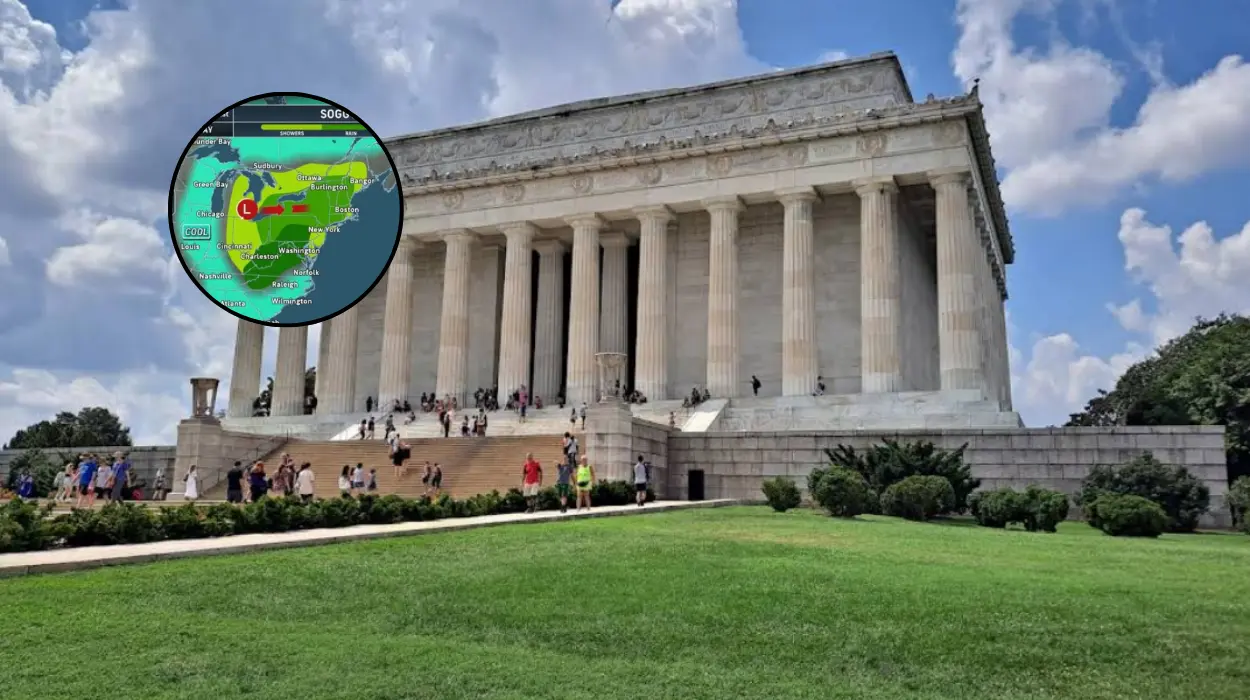
- The Washington DC region received light to moderate rain on Wednesday, 6 May 2026, with more showers expected through Thursday and into the weekend.
- The National Weather Service and local media outlets report that Wednesday’s rain totals are expected to be around a tenth to a quarter‑inch across the city, with total weekly accumulations approaching about half an inch.
- The DC area has experienced a notably dry spring, with just 1.89 inches of rain recorded between 20 March and 5 May 2026, compared with a normal April average of about 3.21 inches.
- The National Integrated Drought Information System and regional weather analysts describe the District of Columbia as being in a drought, with abnormally dry to moderate drought conditions expanding across the broader Mid‑Atlantic.
- A growing portion of the United States, including all of Virginia and about 90 per cent of Maryland, is also experiencing drought, according to the National Integrated Drought Information System and The Daily Record.
- The Washington Post’s Capital Weather Gang notes that the recent rain will offer only limited relief to the drought situation and that the region needs roughly an inch of rain per week to return to near‑normal moisture levels.
Washington DC (Evening Washington News) May 12, 2026 – The Washington DC region received some much‑needed rain on Wednesday, 6 May 2026, with further showers expected through Thursday and into the weekend, offering limited relief to what has been a notably dry spring. The National Weather Service (NWS) forecast office for Baltimore/Washington indicates that Wednesday’s precipitation, while welcomed by residents and local authorities, is unlikely to erase the longer‑term drought conditions that have taken hold across the District and much of the surrounding region.
- Key Points
- How much rain is DC expected to receive this week?
- Was there a drought in Washington DC before this rain?
- How dry has the DC spring been so far?
- What impact is the drought having on the region?
- Why is this week’s rain still considered only partial relief?
- Background: How did DC reach this drought‑like state?
- Prediction: What this development could mean for residents and the region
How much rain is DC expected to receive this week?
According to the National Weather Service, after widespread light showers earlier on Wednesday, residents across the DC area should prepare for additional showers and the possibility of isolated thunderstorms later in the day, with accumulation in the range of a tenth to a quarter‑inch across many parts of the city.
Reporting for WTOP, meteorologists note that the rain, while modest, is “beneficial overall” given the drought‑like conditions that have persisted through the spring.
Capital Weather Gang, the weather‑focused team at The Washington Post, writes that showers may linger into Thursday, with the possibility of more rain returning by the weekend.
By the end of the week, the region could see roughly half an inch of total rainfall, the Post explains, which would still leave the area short of the long‑term seasonal average.
Was there a drought in Washington DC before this rain?
The National Integrated Drought Information System (NIDIS) classifies the entirety of Washington DC as being in a drought state as of early May 2026, citing a drier‑than‑normal start to the year and a string of below‑average precipitation months.
The Capital Weather Gang at The Washington Post notes that Wednesday’s rainfall will provide only a small dent in the region’s drought conditions and will not be enough to restore groundwater, soil moisture, or reservoir levels to normal.
The Daily Record, reporting on drought conditions in Maryland and the District of Columbia, notes that a growing majority of the United States is now experiencing drought, with the entire state of Virginia and approximately 90 per cent of Maryland under some level of drought designation.
The article highlights that the Potomac River basin, which feeds much of the DC region’s water supply, has seen persistently low inflows and elevated temperatures, compounding the stress on local water resources.
How dry has the DC spring been so far?
In the roughly six‑plus‑week period between 20 March and 5 May 2026, the DC area recorded just 1.89 inches of rain, according to NWS climate data for the Washington, DC station.
This figure represents a significant shortfall compared with the historical April average of about 3.21 inches, underscoring how far behind the region has fallen in terms of seasonal rainfall.
The Washington Post’s Capital Weather Gang notes that April 2026 was the 10th month in the last 11 where DC received below‑normal precipitation, a pattern that has contributed to increasingly dry soils and heightened fire risk in surrounding counties.
The Post explains that, to return to near‑normal conditions, the region would need roughly an inch of rain per week over several consecutive weeks, a pace that the current forecast does not appear likely to sustain.
What impact is the drought having on the region?
Officials and water‑management agencies in the District and surrounding jurisdictions have pointed to the ongoing dry spell as a factor in drought watches and voluntary water‑conservation measures. In 2024, the Metropolitan Washington Council of Governments issued a drought watch affecting nearly six million residents, citing low groundwater levels and elevated temperatures, and similar conditions have re‑emerged in parts of the Potomac River basin in 2026.
The Washington Post’s weather team notes that while wildfire risk in the immediate DC urban core remains relatively low, dry fuels in nearby forests and grasslands have increased concern among fire‑management agencies in Maryland and Virginia.
Local authorities have urged residents to limit non‑essential outdoor water use, such as lawn irrigation and car washing, and to report any signs of water‑main stress or unusual low‑pressure conditions.
Why is this week’s rain still considered only partial relief?
NWS and media weather outlets describe the pattern of brief, scattered showers as typical of transitional spring weather, which can bring improvements to short‑term conditions without fully addressing the longer‑term deficit.
The Capital Weather Gang explains that light, intermittent rainfall often runs off quickly from roads and developed surfaces, doing less to recharge deeper soil layers or major reservoirs than a prolonged, steady soaking rain would.
The Washington Post also notes that temperatures in the region have been running above average for several weeks, increasing evaporation and limiting the effectiveness of any one round of rainfall in restoring moisture.
Even with additional showers forecast into the weekend, meteorologists caution that the region remains vulnerable to continued drought stress unless the pattern of dry weather breaks down more substantially over the coming weeks.
Background: How did DC reach this drought‑like state?
The drought‑like conditions in Washington DC have developed over several months of below‑normal precipitation, not from a single dry week or month.
Climate data from the National Weather Service show that, over the past year, DC has seen a string of months where rainfall totals finished below the historical average, with only occasional wet periods interrupting the trend.
The National Integrated Drought Information System and supporting analyses from local and regional agencies have tied the current situation to a combination of high‑pressure systems that have stalled over the eastern United States, deflecting moisture‑bearing storms northward or southward and leaving the Mid‑Atlantic with fewer rain‑producing systems.
This pattern has contributed to low stream flows, reduced groundwater recharge, and increased demand on reservoirs, especially during periods of high temperatures.
Historically, the region has experienced similar drought episodes, including a notable dry spell in 2024 that prompted a formal drought watch and public‑awareness campaigns about water conservation.
The recurrence of dry conditions in 2026 suggests that climate variability, including the influence of larger‑scale patterns such as El Niño and La Niña, can amplify the region’s vulnerability to extended dry periods even within a single winter–spring cycle.
Prediction: What this development could mean for residents and the region
For DC residents, the immediate effect of this week’s rain is likely to be a temporary improvement in lawn and garden moisture and a slight reduction in dust and pollen on roadways, but it is unlikely to lead to a relaxation of existing water‑conservation guidance. Local water‑utility officials and regional agencies may continue to encourage residents to limit outdoor water use, especially on lawns and landscaping, and to report any leaks or unusual water‑pressure issues that could signal stress on the system.