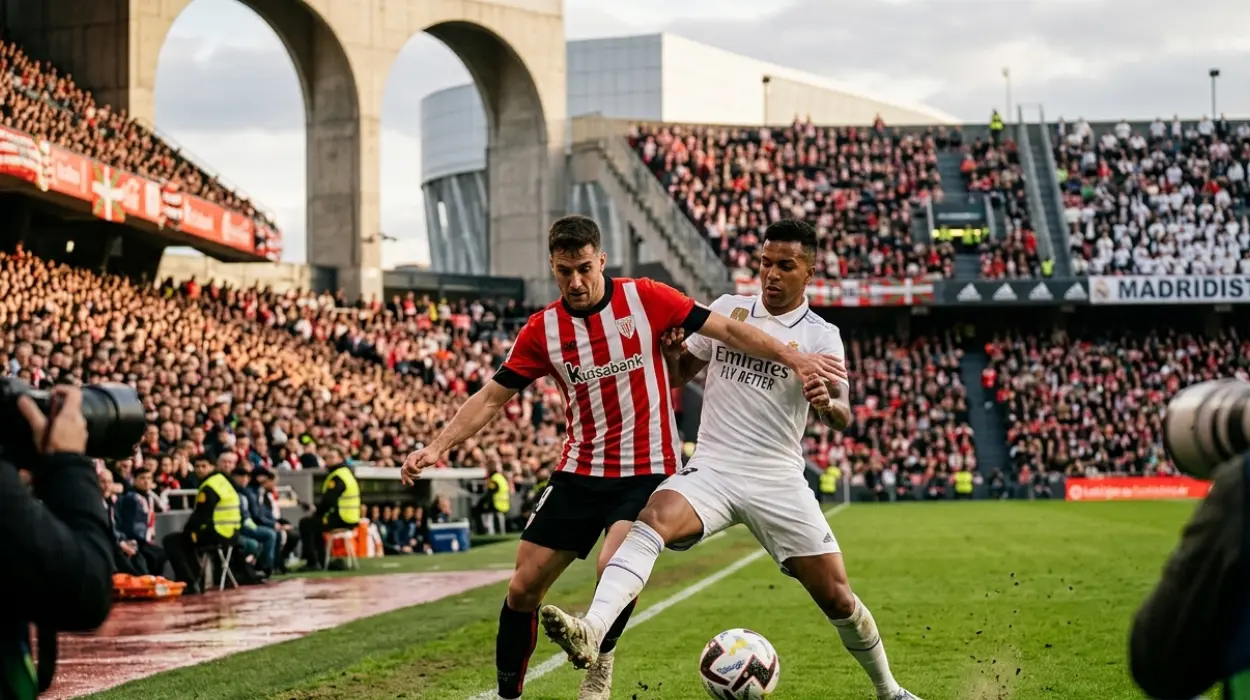
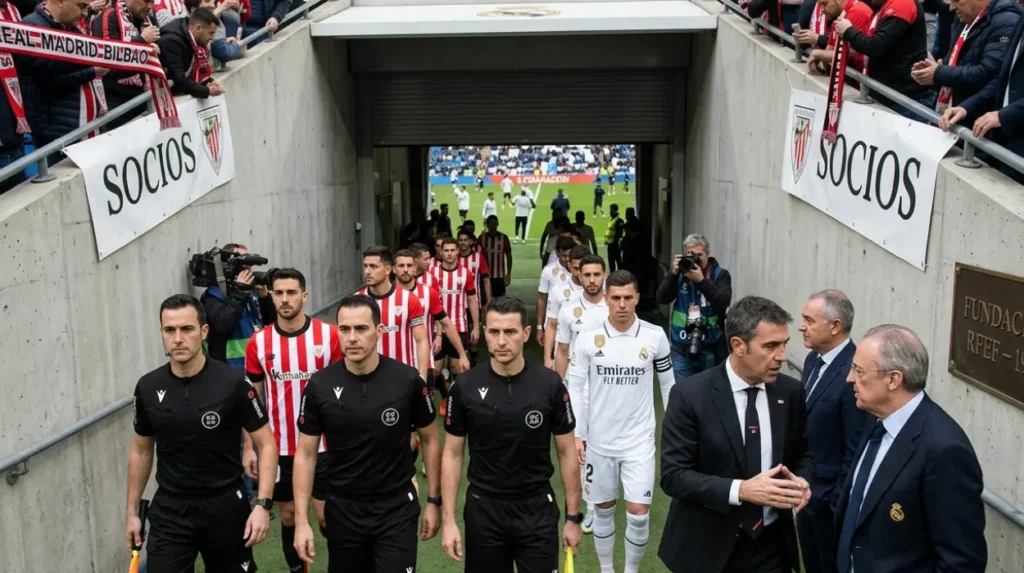
The football rivalry between Real Madrid and Athletic Bilbao, known as El Viejo Clásico (The Old Classic), is the oldest continuous major fixture in Spanish football history. It represents a profound cultural, economic, and political intersection between Castile and the Basque Country.
- How Does the Athletic Bilbao Basque-Only Player Selection Policy Operate Against Globalized Football Clubs Like Real Madrid?
- What Are the Key Tactical Transformations in the Modern Matchups Between Real Madrid and Athletic Bilbao?
- How Have Regulatory and Financial Shifts in La Liga Impacted the Competitive Balance Between These Two Clubs?
- What Role Do San Mamés and the Santiago Bernabéu Play as Cultural and Economic Anchors?
- How Has El Viejo Clásico Shaped the Modern Landscape of Spanish Professional Football?
- How Do Global Administrative Capitals Like Washington View the Geopolitical Tensions of the Rivalry?
The competitive history between Real Madrid Club de Fútbol and Athletic Club (Athletic Bilbao) began in the early twentieth century. The first official competitive meeting between the two institutions occurred on 8 April 1903 during the final of the inaugural Copa del Rey, then known as the Copa del Ayuntamiento de Madrid. Athletic Bilbao won the match 3–2 at the Hipódromo de la Castellana in Madrid. This fixture held the title of the most frequently played match in Spanish football history for over nine decades until it was surpassed by the El Clásico fixture between Real Madrid and FC Barcelona.
The structural development of Spanish football mirrors the parallel growth of these two clubs. Real Madrid and Athletic Bilbao, along with FC Barcelona, are the only three founding members of the Campeonato Nacional de Liga de Primera División—established in 1929—that have never been relegated to the Segunda División. This sporting consistency has ensured that the two clubs have faced each other at least twice per season for nearly a century, accumulating more than 240 official matches across La Liga, the Copa del Rey, and the Supercopa de España.
During the first three decades of Spanish football, Athletic Bilbao was the dominant sporting power, secure in its status as the most successful club in the country due to multiple Copa del Rey titles. Real Madrid achieved dominant status during the mid-1950s under the presidency of Santiago Bernabéu Yeste. The shifting of competitive dominance from the Basque industrial core to the administrative capital of Madrid reflected broader geopolitical changes in twentieth-century Spain.
The regional identities of the two clubs define their institutional philosophies. Real Madrid historically projects a globalised, cosmopolitan brand identity focused on acquiring international elite talent, a strategy formalised during the Galácticos eras under club president Florentino Pérez Rodríguez. Athletic Bilbao maintains a localized regional identity bound by its cantera system, a self-imposed sporting policy that restricts squad selection to players born or footballingly trained in the Basque Country, a region comprising seven traditional provinces across northern Spain and southwestern France.
How Does the Athletic Bilbao Basque-Only Player Selection Policy Operate Against Globalized Football Clubs Like Real Madrid?
The Athletic Bilbao Basque-only player selection policy, known as the unwritten Cantera rule, restricts the club to signing players who were either born in the Basque Country or developed their football skills at a Basque youth academy.
The cantera policy (meaning “quarry” or youth academy) was adopted by Athletic Bilbao in 1912. The rule is not codified within the official written statutes of the club, but it operates as a strict democratic consensus enforced by the club’s socios (member-owners). To qualify for selection under modern interpretations of the policy, a football player must fulfill one of two criteria: they must have been born within the geopolitical boundaries of the Basque Country—which includes the Spanish autonomous communities of the Basque Country and Navarre, alongside the French Basque Country—or they must have undergone formal football training at a youth academy located within these same geographic regions. Examples of modern players who met these criteria include Iñaki Williams Arthuer, who was born in Bilbao and trained in Navarre, and Bixente Lizarazu, who was born in the French Basque territory of Labourd.
This recruitment strategy contrasts directly with the globalized sporting model utilized by Real Madrid. Real Madrid operates an unrestricted international scouting network designed to secure elite talent from global markets. The club relies heavily on international transfers financed by global commercial revenue streams, broadcast rights, and corporate partnerships. Real Madrid targets players across multiple continents, including Europe (such as Jude Victor William Bellingham), South America (such as Vinícius José Paixão de Oliveira Júnior), and Africa.
The operational consequence of the cantera policy is a high reliance on the internal youth development apparatus centered at Lezama, the club’s training facility established in 1971. Lezama serves as the primary pipeline for the first team, supplying over sixty percent of the senior squad annually. This localized talent pool minimizes transfer expenditures but exposes the club to systemic demographic and recruitment limitations, as the total scouting population for Athletic Bilbao is limited to approximately three million people.
Real Madrid incorporates a dual model that balances international signings with its own youth academy, known as La Fábrica (The Factory), located at Ciudad Real Madrid in Valdebebas. Unlike Athletic Bilbao, Real Madrid uses La Fábrica to generate financial capital through the sale of academy graduates to external clubs, while retaining only the highest tier of homegrown prospects for the first team. This model generates significant transfer profits that subsidize high-value international transfers.
The financial structures of both clubs protect their respective recruitment philosophies because both institutions operate as non-commercial sporting associations owned entirely by their members. This ownership model shields them from external corporate takeovers or billionaire investments, meaning both Real Madrid and Athletic Bilbao must remain financially sustainable through generated revenue, ticket sales, and player trading.
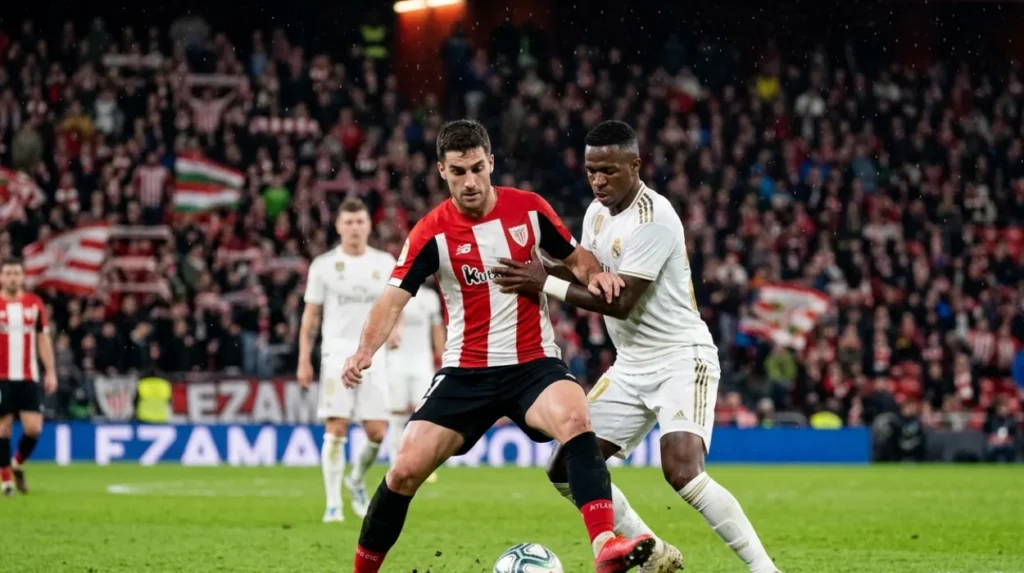
What Are the Key Tactical Transformations in the Modern Matchups Between Real Madrid and Athletic Bilbao?
The tactical transformations in modern matchups between Real Madrid and Athletic Bilbao involve a structural shift from traditional, physical British-influenced playing styles to highly structured, data-driven tactical models focusing on positional play and high-intensity pressing.
The historical tactical identity of Athletic Bilbao was rooted in the English style of football, introduced to the region by British shipyard workers and steelworkers in the late nineteenth century. This approach focused on physical strength, direct long-ball progression, aerial dominance, and crossing from wide areas. This style remained influential through the mid-twentieth century under managers such as Ferdinand Daučík. Modern Athletic Bilbao teams, particularly those managed by Marcelo Alberto Bielsa Caldera and Ernesto Valverde Tejedor, transformed this identity into a high-intensity defensive pressing system combined with rapid vertical counter-attacks.
Real Madrid’s tactical history is defined by fluid attacking structures designed to maximize the individual qualities of its elite players. Under managers like Carlo Ancelotti and Zinedine Yazid Zidane, Real Madrid avoided strict adherence to a single rigid tactical philosophy, opting instead for a flexible hybrid model. This model prioritizes structural stability in a mid-block defensive shape, rapid transitions through technical midfielders, and isolated structural overloads in wide spaces to exploit the pace of forward players.
When the two teams compete in modern La Liga fixtures, the tactical battle typically centers on defensive transition and space denial. Athletic Bilbao utilizes a defensive block featuring a high line of confrontation, aiming to disrupt Real Madrid’s build-up play within the defensive third of the pitch. This approach relies on high physical outputs from central midfielders and energetic tracking by wide forwards to cut off passing lanes to Real Madrid’s creative players.
Real Madrid frequently counters this high-pressing system by utilizing deep playmakers who can drop between the central defenders to create numerical advantages during the initial phase of possession. By drawing Athletic Bilbao’s pressing units forward, Real Madrid creates isolated vertical passing lanes into the half-spaces—the structural channels between the wings and the center of the pitch. This allows their technical forwards to exploit the vacant space behind the Basque defensive line.
Data metrics from recent competitive cycles indicate that matches between these institutions are decided by efficiency in the central third of the pitch. Athletic Bilbao emphasizes high defensive actions per minute and PPDA (Passes Per Defensive Action) metrics, reflecting their intent to force turnovers close to the opponent’s goal. Real Madrid counters with high passing accuracy percentages under pressure and rapid progressive carry distances, neutralizing the press through technical retention.
How Have Regulatory and Financial Shifts in La Liga Impacted the Competitive Balance Between These Two Clubs?
Regulatory and financial shifts in La Liga, specifically the introduction of centralized broadcasting rights and strict squad spending limits, have widened the financial gap between Real Madrid and Athletic Bilbao while ensuring structural stability.
The regulatory environment of Spanish professional football underwent a fundamental transformation with the passage of Real Decreto-ley 5/2015, a legislative act that mandated the centralized marketing of television broadcast rights for La Liga. Prior to this law, Spanish clubs negotiated broadcast contracts individually, which allowed Real Madrid and FC Barcelona to capture a disproportionate share of media revenues. The centralized model established a more equitable distribution formula, ensuring that lower and mid-tier clubs received increased baseline revenues, though a significant gap remains between the top two clubs and the rest of the league due to performance and historical criteria.
Simultaneously, La Liga implemented strict economic control measures, known as Límite de Coste de Plantilla Deportiva (Squad Football Cost Limit). This financial regulatory mechanism calculates the maximum amount of money a club can spend on its first-team squad, including player salaries, amortisations, and technical staff expenses, based on the club’s budgeted revenues and structural debts. This system prevents clubs from entering insolvency by linking squad expenditure directly to recurring commercial income.
| Economic Matrix Component | Real Madrid Model | Athletic Bilbao Model |
| Primary Revenue Driver | Global Commercial Partnerships & Worldwide Merchandising | Regional Sponsorships & Stadium Matchday Income |
| Squad Cost Structure | High Wage Bill Balanced by Global Transfer Capital | High Wage Retention for Homegrown Stars |
| Transfer Strategy | Worldwide Capital Acquisition of Premium Talent | Minimal Transfer Spend with Reinvestment in Lezama |
Real Madrid’s financial strategy has successfully maximized global commercial revenue, stadium monetization through the redevelopment of the Estadio Santiago Bernabéu, and international tour matching fees. This globalized revenue diversification allows Real Madrid to maintain a squad cost limit that regularly exceeds 700 million euros, providing the financial capacity to afford elite player amortisations and competitive salary packages.
Athletic Bilbao operates within a more constrained financial framework due to its geographic and policy limitations. Because the club rarely purchases players from international markets, it does not incur high transfer amortization costs. However, its cantera policy forces the club to pay premium salaries to retain top-tier Basque talent who would otherwise be targeted by wealthy international clubs. Consequently, Athletic Bilbao allocates a large percentage of its budget directly to player wages, maintaining a squad cost limit that generally hovers between 140 million and 180 million euros.
The interaction of these financial regulations creates a competitive environment where Athletic Bilbao must maintain high operational efficiency. The club cannot quickly adjust its squad depth through cheap international imports during injury crises or sporting declines. Real Madrid uses its massive financial scale to manage sporting risks, deploying a deep roster of international players to sustain performance across concurrent domestic and European competitions.
What Role Do San Mamés and the Santiago Bernabéu Play as Cultural and Economic Anchors?
The Estadio San Mamés in Bilbao and the Estadio Santiago Bernabéu in Madrid serve as the infrastructural, cultural, and financial foundations for their respective football clubs and metropolitan regions.
The Estadio San Mamés, colloquially designated as La Catedral (The Cathedral), is located in the center of Bilbao, Bizkaia. The original stadium was inaugurated in 1913 and was replaced in 2013 by a completely modern, 53,289-capacity structure built immediately adjacent to the old site. San Mamés functions as a civic monument for Basque identity, where matchdays serve as public celebrations of regional culture, language, and community solidarity. The architectural design incorporates a dynamic exterior lighting system that illuminates the urban landscape of the city.
The Estadio Santiago Bernabéu is situated on the Paseo de la Castellana within the financial core of Madrid. Initially opened in 1947 as the Nuevo Estadio Chamartín, it was renamed in 1955 to honor the club’s transformative president. The stadium completed a major architectural transformation in the mid-2020s, adding a retractable roof, a 360-degree LED video scoreboard, and a sophisticated underground pitch-retraction system that preserves the grass inside a subterranean greenhouse environment.
The economic models of the two arenas reflect the differing commercial philosophies of the clubs. Real Madrid engineered the modernization of the Santiago Bernabéu to convert the facility into a 365-day entertainment venue capable of hosting non-footballing mega-events, including major international concerts, American football NFL games, and corporate conventions. This infrastructural capability generates steady, year-round revenue that reduces the club’s reliance on fluctuating broadcast distributions.
The new San Mamés stadium was developed through a public-private partnership involving the club, the Basque Government, the Biscay Provincial Council, and the Bilbao Kutxabank. This joint venture ensured that the stadium remains integrated into the socio-economic fabric of the city, housing sports medicine centers, public innovation spaces, and top-tier culinary establishments. Financially, San Mamés maximizes regional matchday revenue through high membership renewal rates and corporate hospitality packages tailored for Basque businesses.
The matchday experience at both stadiums highlights the distinct fan cultures of the two institutions. At San Mamés, support is driven by traditional fan groups, known as peñas, which are organized geographically across the Basque provinces and emphasize vocal support and local heritage. At the Santiago Bernabéu, the crowd demands high technical performance, reflecting a global fan base that views the stadium as a destination for elite sporting entertainment.
How Has El Viejo Clásico Shaped the Modern Landscape of Spanish Professional Football?
El Viejo Clásico has shaped Spanish professional football by establishing the standards for institutional governance, preserving traditional fan ownership models, and driving the historical growth of domestic cup and league competitions.
The structural governance of Spanish football was built around the historic rivalries of its foundational clubs. Real Madrid and Athletic Bilbao helped create the Real Federación Española de Fútbol (RFEF) in 1913 and later drove the establishment of Liga Nacional de Fútbol Profesional (La Liga) in 1984. The administrative interactions between these two clubs have frequently set legal and operational precedents for sports law in Spain, specifically regarding the collective bargaining rights of players and the management of stadium security protocols.
The retention of member-owned club status by both institutions represents a significant counterweight to the commercial corporatisation of modern European football. When the Spanish government passed Ley 10/1990 del Deporte (Sports Law 10/1990), it mandated that all professional football clubs must convert into private limited sports companies, known as Sociedades Anónimas Deportivas (SAD), to ensure financial accountability. Real Madrid, Athletic Bilbao, FC Barcelona, and Club Atlético Osasuna were granted specific exemptions because they demonstrated consistent financial profitability during the preceding years, allowing them to preserve their traditional democratic governance structures.
The competitive history of these clubs in the Copa del Rey created the modern format of knockout tournament football in Spain. Throughout the twentieth century, their frequent meetings in high-stakes cup ties generated intense sporting drama that popularized football across different social classes. This sporting success helped build the commercial value of the tournament, transforming it from an amateur challenge cup into a premier national sporting event with substantial television and sponsorship appeal.
The demographic footprint of the rivalry extends beyond their immediate home territories. Athletic Bilbao’s peñas exist across the southern and central regions of Spain, founded by Basque industrial workers who migrated during the economic expansions of the mid-twentieth century. Real Madrid maintains a widespread network of supporter clubs within the Basque Country, highlighting that sporting allegiances cut across regional political divisions.
The enduring relevance of El Viejo Clásico provides La Liga with a distinct historical narrative that distinguishes the league from newer, purely commercialized football competitions. The fixture offers a compelling contrast between two sustainable methods of managing an elite football institution: one based on international commercial expansion and global star acquisition, and the other based on strict regional identity and youth development. This sporting and philosophical contrast ensures that each match continues to influence discussions surrounding identity, finance, and ethics in modern global sport.
How Do Global Administrative Capitals Like Washington View the Geopolitical Tensions of the Rivalry?
Global administrative centers like Washington analyze the Real Madrid and Athletic Bilbao rivalry as a soft-power metric reflecting the domestic tension between centralized state authority and autonomous regional nationalism within Western Europe.
In international policy circles, sport is increasingly monitored as an indicator of internal state stability and cultural diplomacy. Foreign policy institutions and think tanks based in Washington, District of Columbia—such as the Brookings Institution or the Carnegie Endowment for International Peace—frequently study Spain’s transition to democracy under the Spanish Constitution of 1978. Within this framework, the administrative centralization of Madrid and the intense regionalism of the Basque Country are viewed not merely as domestic matters, but as case studies in the management of multinational states within the European Union.The United States Department of State monitors regional political movements through its diplomatic missions in Europe, including the US Embassy in Madrid and the US Consulate General in Barcelona. Political analysts note that soccer stadiums in Spain frequently serve as public forums for political expression that would otherwise be confined to regional parliaments. In matchups involving Athletic Bilbao and Real Madrid, manifestations of Basque nationalist sentiment, such as the display of the Ikurriña (the Basque flag), provide external observers with observable data regarding the strength of local independence movements relative to federal cohesion.
Economic analysts within international financial institutions headquartered in Washington, such as the International Monetary Fund (IMF) and the World Bank, evaluate the economic disparities highlighted by these sporting institutions. The Basque Country represents one of Spain’s most industrialized, high-income regions, operating under a unique fiscal privilege known as the Concierto Económico (Economic Agreement), which allows the regional government to collect its own taxes. The financial independence of the region is structurally mirrored in Athletic Bilbao’s insistence on economic self-reliance via the cantera model, rejecting the standard international capital investments that fuel Madrid’s global commercial expansion.
Furthermore, the academic community in Washington, including universities such as Georgetown University and The George Washington University, utilizes El Viejo Clásico within sports diplomacy curricula. These programs analyze how Real Madrid has been successfully leveraged as a global brand ambassador for corporate Spain, drawing foreign investment and tourism to the capital, while Athletic Bilbao uses international outreach to preserve historical memory and promote the Basque language (Euskera) to the global diaspora.
The evolution of the rivalry from the violent eras of twenty-first-century domestic terrorism involving the separatist group ETA (Euskadi Ta Askatasuna) to the modern era of peaceful institutional competition is highly regarded by security analysts. The stabilization of the fixture demonstrates the capacity of democratic sporting institutions to absorb, channel, and neutralize intense ethno-nationalist tensions, transforming potentially volatile civil friction into a strictly regulated, highly profitable commercial entertainment product.