Key Points
- Weekend Briefing: The Washington metro area is experiencing a temporary period of calmer weather on Saturday following two consecutive days of destructive thunderstorms.
- Atmospheric Shift: A cold front tracking through the region over Friday night successfully swept away oppressive humidity, introducing lower dew points in the upper 50s to lower 60s.
- Saturday Outlook: Conditions for Saturday feature mostly sunny skies with temperatures peaking in the upper 80s to around 90 degrees Fahrenheit, marking it as the most favorable day of the weekend.
- Incoming Hazards: Meteorologists track a secondary atmospheric disturbance scheduled to arrives on Sunday, bringing a renewed threat of powerful thunderstorms, high winds, and potential weather alerts.
- Public Advice: Local authorities urge residents to utilize the Saturday weather window to clear previous storm debris and secure outdoor property before the next round of destabilisation.
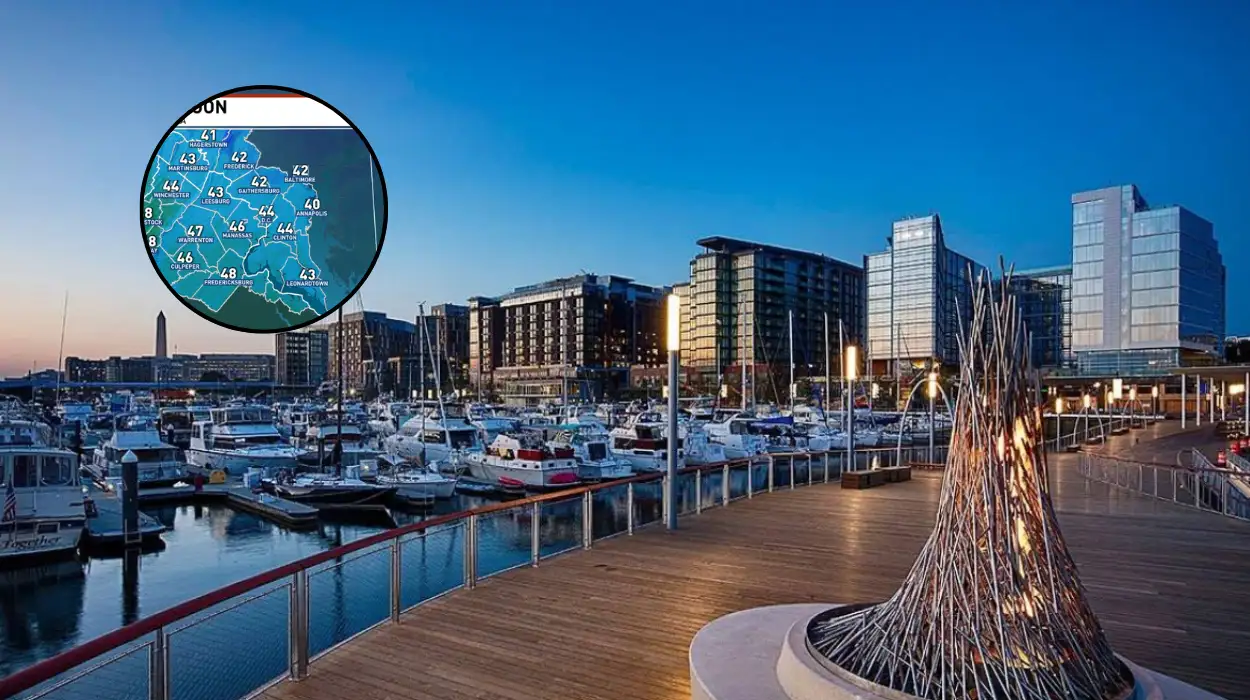
Washington (Evening Washington News) June 13, 2026 — Residents across the Washington metro area are receiving a brief but welcome reprieve from severe weather this Saturday as skies clear and humidity levels drop significantly. The atmospheric stabilization follows a grueling 48-hour period dominated by powerful thunderstorms, damaging wind gusts, and consecutive regional weather alerts that disrupted infrastructure and daily commutes across the District, Maryland, and Virginia (DMV) area. Meteorologists confirm that a cold front passing through the region late Friday night successfully dislodged the tropical air mass responsible for the recent turbulent weather. However, data indicates this tranquil window will remain exceptionally short-lived, with a secondary weather system projected to renew storm risks across the metropolitan area by Sunday afternoon.
- Key Points
- What Are the Current Weather Conditions Across the Washington Metro Area This Saturday?
- How Severe Was the Damage From the Midweek Thunderstorm Cycle?
- Why Is Sunday Expected to Bring a Renewal of Severe Weather?
- Background of the Severe Weather Patterns in the Mid-Atlantic Region
- Prediction and Regional Implications for the Washington Metropolitan Community
- Strain on Municipal Infrastructure and Utilities
- Operational Adjustments for Outdoor Events
What Are the Current Weather Conditions Across the Washington Metro Area This Saturday?
As compiled from local meteorological observations and reported by the tracking team at 7News, Saturday is firmly establishing itself as the premier day of the weekend for outdoor activities and regional recovery efforts.
The cold front that migrated across the state lines on Friday evening functioned as a catalyst for clearing the upper atmosphere. This shift effectively pushed the dense, moisture-laden air mass toward the Atlantic coast, replacing it with a significantly drier continental air volume.
The primary characteristics of Saturday’s weather matrix include:
- Sky Conditions: Predominantly clear, mostly sunny skies with minimal low-level cloud cover throughout the morning and afternoon hours.
- Thermal Readings: Maximum daytime temperatures are tracking linearly into the upper 80s, with urban heat islands potentially touching the 90-degree Fahrenheit threshold.
- Moisture Levels: Dew points have experienced a noticeable decline, settling comfortably into the upper 50s and lower 60s. This specific metric represents a stark departure from the oppressive, sticky conditions that characterized the middle of the workweek.
This temporary atmospheric stabilization is providing critical support to municipal utility crews and emergency services, who have been working continuously to address the fallout from the preceding cycle of severe weather.
How Severe Was the Damage From the Midweek Thunderstorm Cycle?
To fully understand the significance of Saturday’s calm conditions, it is necessary to review the scale of the storms that struck the region on Thursday and Friday.
As reported by senior weather correspondents at 7News, the dual-day storm event unleashed wind gusts exceeding 60 miles per hour in localized corridors, causing widespread vegetative damage and downing critical utility lines.
The impact of the consecutive storm fronts manifested across several key sectors:
Infrastructure and Power Grid Disruption
High winds and lightning strikes forced regional utility providers, including Pepco and Dominion Energy, to deploy emergency response teams to address localized power outages.
Tree limbs weakened by successive saturated soil conditions collapsed onto residential distribution lines, interrupting power supply to thousands of customers at the peak of the storm activity.
Commuter and Transit Delays
Flash flooding and debris accumulation created hazardous driving conditions along major transport arteries, including portions of the Capital Beltway (I-495) and Interstate 66.
Regional transit authorities issued multiple speed restrictions and caution advisories as heavy downpours severely compromised visibility during the evening rush hours.
Emergency Services Influx
Local dispatch centers across Fairfax, Montgomery, and Prince George’s counties recorded a substantial increase in emergency calls.
The vast majority of these incidents involved blocked roadways, minor structural damage from falling debris, and localized property flooding resulting from compromised drainage systems.
Why Is Sunday Expected to Bring a Renewal of Severe Weather?
The primary concern occupying regional meteorologists is the rapid modification of the air mass projected for Sunday. According to analytical models published by the 7News weather team, the continental air mass responsible for Saturday’s low humidity will slide eastward, allowing a warm front to lift northward across the Potomac River.
This transition will re-establish a high-moisture environment, setting the stage for subsequent atmospheric destabilization.
As the daytime heating intensifies on Sunday, the combination of surging dew points and an approaching low-pressure trough from the Midwest will create strong vertical wind shear and high CAPE (Convective Available Potential Energy) values.
This specific thermodynamic profile is highly conducive to the generation of organized convective systems.
The primary hazards identified for the Sunday afternoon window include:
- Damaging Straight-Line Winds: Capable of exacerbating existing damage to trees and structures already weakened by the week’s previous storms.
- Torrential Downpours: Raising the probability of rapid urban flash flooding, particularly in low-lying areas and locations with overwhelmed storm management systems.
- Frequent Cloud-to-Ground Lightning: Presenting a direct hazard to outdoor recreational events, sports fixtures, and transport hubs.
Background of the Severe Weather Patterns in the Mid-Atlantic Region
The current sequence of rapidly alternating weather systems in the Washington metro area is deeply rooted in the unique geography and climatological mechanics of the Mid-Atlantic region during the transition into peak summer.
Historically, the DMV area serves as a primary atmospheric battleground where contrasting air masses frequently collide.
During the month of June, the region regularly experiences the northward migration of the Bermuda High—a large subtropical pressure system located over the Atlantic Ocean. This high-pressure cell acts as a massive atmospheric pump, drawing warm, highly humid air directly from the Gulf of Mexico and the Caribbean Sea straight up into the mid-Atlantic corridor.
When this volatile, moisture-rich air encounters cold, dense troughs moving eastward across the continental United States from Canada or the Midwest, the resulting frontal boundaries generate intense lift.
Furthermore, the topography of the Appalachian Mountains to the west frequently induces a phenomenon known as cold-air damming, or creates localized low-pressure troughs on the leeward side of the range.
These features can stall incoming fronts, forcing storm systems to track repeatedly over the exact same metropolitan areas—a process known as “training.”
When combined with the intense urban heat island effect characteristic of the densely paved Washington-Baltimore concrete corridor, these macro-scale weather features regularly transform standard summer afternoons into zones of severe, organized convective activity.
The current 2026 summer season is following this established historical precedent, exhibiting high dynamic energy in the upper atmosphere that shortens the duration of stable weather windows.
Prediction and Regional Implications for the Washington Metropolitan Community
Based on current predictive modeling and historical precedent, the upcoming Sunday weather development is highly likely to exert direct operational and economic pressure on the residents, commuters, and municipal agencies of the Washington metro area.
The timing of the Sunday storm front—projected for the afternoon and evening hours—directly threatens the peak return window for weekend travelers and regional holiday traffic.
Commuters relying on major corridors like the I-95 corridor, Route 50, and the multi-state bridge networks should anticipate sudden reductions in speed, localized hydroplaning risks, and potential route diversions due to standing water or fallen trees.
Additionally, ground stops and departure delays are highly probable at both Ronald Reagan Washington National Airport (DCA) and Washington Dulles International Airport (IAD) if convective cells park over the primary flight paths.
Strain on Municipal Infrastructure and Utilities
Because the regional soil profile is already heavily saturated from the Thursday and Friday storm cycles, the threshold for structural failures is significantly lower this Sunday.
Trees embedded in loose, wet earth will be far more susceptible to uprooting under moderate wind loads than they would be during dry periods.
Utility Warning: Residents should prepare for the distinct possibility of secondary power outages on Sunday evening, as weakened trees that survived the initial midweek storms may completely fail during this subsequent round.
Operational Adjustments for Outdoor Events
Organizers of community markets, youth sports leagues, and outdoor dining establishments across the District and its suburban rings will face critical safety decisions on Sunday. The rapid onset of convective storms will necessitate early closures or the activation of indoor contingency plans to protect patrons from lightning hazards and sudden gale-force winds.
Residents are strongly advised to utilize the calmer Saturday window to clear household gutters, secure loose patio furniture, and verify that emergency backup systems, such as sump pumps and flashlights, are fully operational before the atmospheric instability returns.