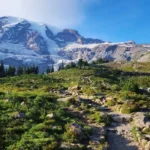

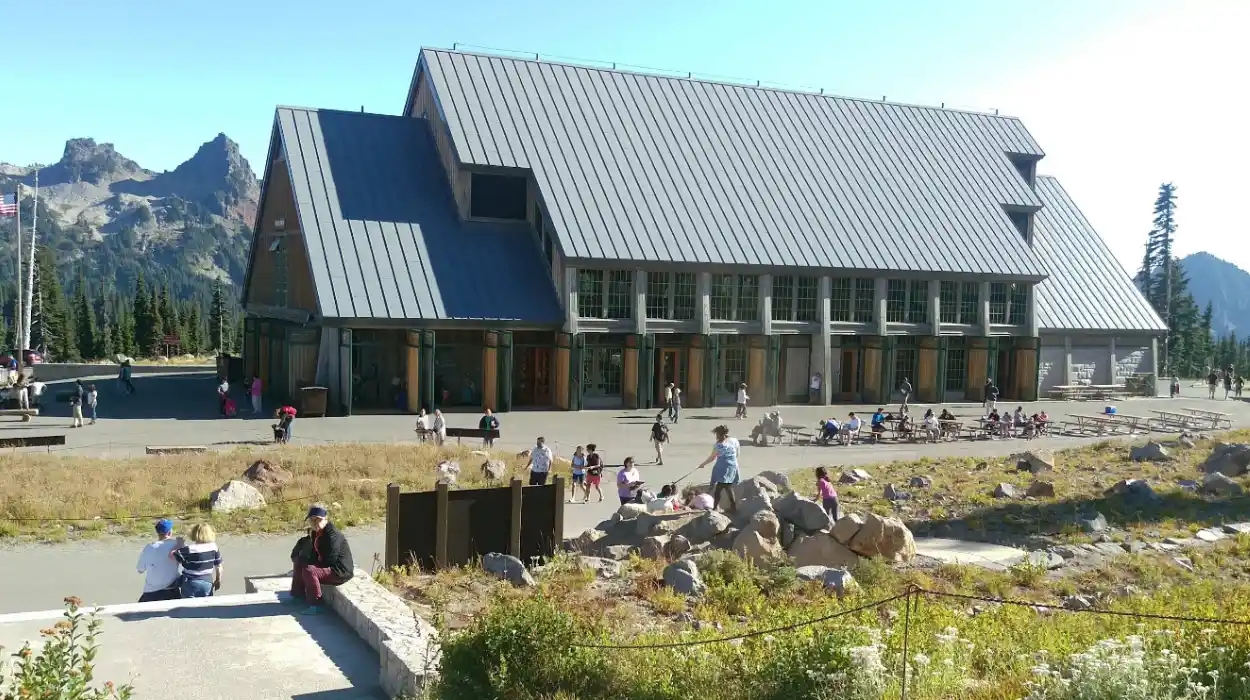
Paradise is the premier destination in Mount Rainier National Park at an elevation of 5,400 feet, offering world-class hiking, historic infrastructure, and the park’s most famous wildflower meadows from mid-July through September. This area serves as the main hub for visitors seeking glacier views, subalpine exploration, and accessible trails near the Henry M. Jackson Visitor Center. Snow persists on trails until July, and the Skyline Trail remains the essential 5.5-mile loop showcasing Mount Rainier, the Tatoosh Range, and multiple glaciers.
- What Is Paradise Area Mount Rainier and Why Is It Famous?
- When Is the Best Time to Visit Paradise for Hiking and Wildflowers?
- Which Hiking Trails Should You Prioritize in the Paradise Area?
- How Do You Navigate Paradise Parking, Roads, and Facilities?
- What Safety Precautions and Gear Do You Need for Paradise Hiking?
- Why Are Paradise Wildflower Meadows Ecologically Important and Fragile?
- How Do You Prepare Physically and Logistically for Paradise Hiking?
- What Historical and Cultural Significance Does Paradise Hold?
- How Does Climate Change Affect Paradise’s Future and Hiking Conditions?
What Is Paradise Area Mount Rainier and Why Is It Famous?
Paradise is a 5,400-foot-elevation subalpine valley in Mount Rainier National Park, Washington, famous for its explosive wildflower meadows, historic Paradise Inn, and direct access to the Skyline Trail with glacier views. The National Park Service designated this area as the park’s primary visitor destination due to its unparalleled combination of accessibility, scenic intensity, and ecological richness.
Mount Rainier stands as an active stratovolcano at 14,411 feet, the highest peak in the Washington Cascades and the most glaciated peak in the Contiguous United States. Paradise sits on the mountain’s south slope, positioned to capture maximum sunlight for wildflower blooms while providing jaw-dropping views of the mountain’s southern face and the Nisqually Glacier.
The Henry M. Jackson Memorial Visitor Center serves as Paradise’s anchor facility, offering year-round interpretive exhibits, ranger programs, and panoramic windows facing Mount Rainier. This visitor centre replaced the original structure damaged by a landslide in 1966 and opened in 1967 with modern facilities designed to withstand heavy snow loads exceeding 50 feet annually.
Paradise receives over 640 inches of snow per year, making it one of the snowiest inhabited places on Earth. This extreme precipitation creates the lush meadow ecosystem that blooms with lupine, paintbrush, glacier lilies, and aster from July through September. The Washington Trails Association documents hundreds of volunteers maintaining these trails annually.
When Is the Best Time to Visit Paradise for Hiking and Wildflowers?
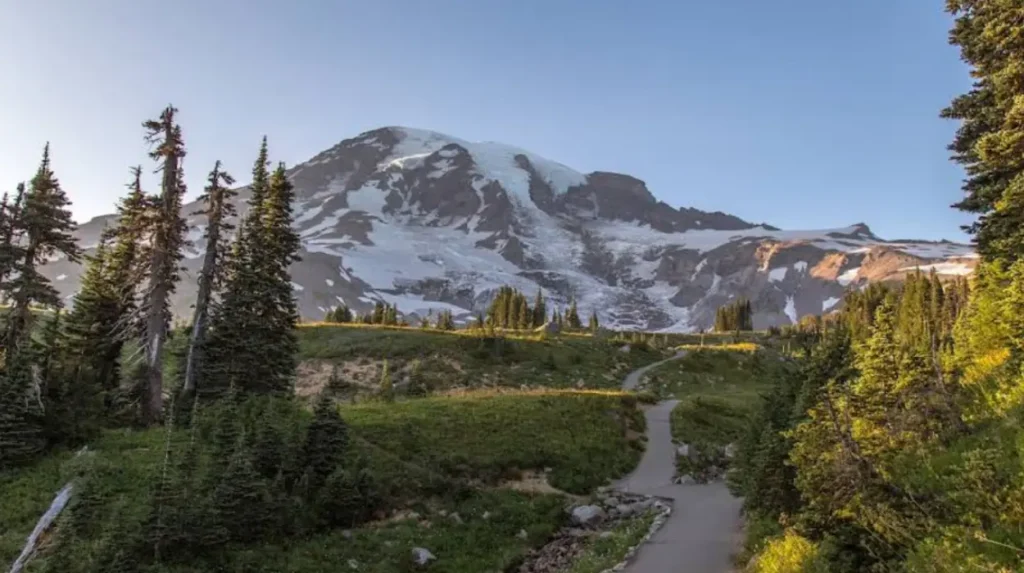
The optimal visiting window for Paradise runs from mid-July through late September, when snow melts from trails, wildflowers peak in late July to mid-August, and all facilities operate at full capacity. July brings snowmelt and early blooms, August delivers peak wildflower density with lupine, paintbrush, and glacier lily, and September offers crystal-clear views with fewer crowds.
Snow lingers on Paradise trails well into June or July, making early-season hiking dangerous without proper gear and experience. The Nisqually Vista Trail often remains snow-covered until early July, while higher-elevation sections of the Skyline Trail may retain snow patches through mid-August. Road access to Paradise typically opens in late April or May and closes by late October due to snow accumulation.
Summer months (July–September) provide the most widespread access to hiking trails and glacier spotting opportunities. During this period, daytime temperatures range from 60°F to 75°F at Paradise elevation, creating comfortable hiking conditions without extreme heat stress.
Wildflower peaks occur between late July and mid-August, when meadows display explosive colour with lupine, monkeyflower, and Indian paintbrush. This bloom window varies annually based on winter snowpack depth and spring temperatures, with heavier snowpacks delaying peak bloom by 1–2 weeks. Winter visitors (November–March) experience Paradise as a snowshoe and cross-country skiing destination, with the visitor centre remaining open and designated snow play areas available.
Which Hiking Trails Should You Prioritize in the Paradise Area?
The Skyline Trail loop (5.5 miles/8.8 km) serves as Paradise’s essential hike, combining subalpine meadows, glacier views, and mountain panoramas, while the Nisqually Vista Trail (1.2 miles) and Skyline Trail to Myrtle Falls (1 mile) offer accessible family-friendly options with major scenic returns. Each trail serves different fitness levels and time constraints while delivering Mount Rainier’s signature sights.
The Skyline Trail loop climbs from the main visitor area through subalpine meadows, offering views of Mount Rainier, glaciers, and the Tatoosh Range with glimpses of Mount Adams and Mount St. Helens on clear days. This trail represents the definitive Paradise hiking experience, traversing 5.5 miles with approximately 1,700 feet of elevation gain. Hikers encounter Myrtle Falls at mile 0.3, Panorama Point at mile 2.5, and Necklace Falls at mile 4.0.
Nisqually Vista Trail measures 1.2 miles (1.9 km) round-trip and provides direct views of the Nisqually Glacier while remaining suitable for families with strollers. This paved loop trail starts near the visitor centre and traverses flat terrain through meadows with engineered stone steps for easy navigation. The trail demonstrates Paradise’s commitment to accessibility while delivering premium glacier views.
Skyline Trail to Myrtle Falls covers 1 mile (1.6 km) as a paved, wheelchair-accessible route (with assistance) featuring the iconic waterfall cascading below Mount Rainier’s face. This out-and-back spur attracts photographers during golden hour when light illuminates the falls against the mountain backdrop. Myrtle Falls drops 60 feet in multiple tiers and remains visible year-round except during severe winter storms.
Alta Vista Trail spans 1.7 miles (2.7 km) and delivers wildflower vistas with sweeping views across the Paradise area toward the mountain. This trail branches off the Skyline Trail and climbs to 5,800 feet elevation for panoramic perspectives. Deadhorse Creek Trail and Moraine Trail combine 2.5 miles (4 km) of glacier and wildflower viewing through forested sections opening into meadows. Bench and Snow Lakes Trail (2.4 miles) accesses two subalpine lakes east of Reflection Lakes along Stevens Canyon Road, with Bench Lake at 0.75 miles and Snow Lake 0.5 miles further.
Pinnacle Peak Trail measures 2.6 miles (4.2 km) starting from Reflection Lakes and hikes into the Tatoosh Range for excellent views of Mount Rainier and Mount Adams. This trail rewards climbers with rocky summit vistas and minimal crowding compared to the Skyline Trail. All Paradise trails require staying on designated paths because meadows remain fragile under heavy visitation pressure.
Explore More Area Guide
Mount Rainier National Park Guide: Best Trails and Views
The Ultimate Guide to the Best Neighborhoods to Explore in Seattle Washington
How Do You Navigate Paradise Parking, Roads, and Facilities?
Paradise parking fills completely by 8:00 AM during summer weekends, requiring early arrival or shuttle use, while the one-way Paradise Valley Road connects upper parking to Stevens Canyon Road through meadow-filled valleys. The National Park Service implements seasonal parking restrictions and recommends arriving before 7:00 AM or after 4:00 PM to secure spots.
Paradise Valley Road operates as a one-way route starting from the east side of the upper Paradise parking lot (below Paradise Inn), travelling through meadow-filled valleys to connect with Stevens Canyon Road. This road provides scenic driving opportunities but experiences significant congestion during peak hours, with vehicles queuing for parking spaces.
The Henry M. Jackson Visitor Centre operates year-round with extended summer hours (daily 9:00 AM–5:00 PM, May–September) and reduced winter hours (weekends only, November–April). Facilities include restrooms, water fountains, a bookshop, interpretive exhibits, a ranger desk, and heated indoor spaces for weather breaks. The visitor centre sits at an elevation of 5,400 feet with paved access from parking areas.
Paradise Inn operates seasonally (typically July–September), offering dining room service, lodge accommodations, and historic architecture dating to 1916. This National Park Service historic landmark features large stone fireplaces, exposed beam ceilings, and floor-to-ceiling windows facing Mount Rainier. Reservations required 6–12 months in advance for lodging during summer peak season.
Restroom facilities exist at the visitor centre, Paradise Inn, and three discrete trailhead locations along the Skyline Trail. Water fountains operate at the visitor centre and Paradise Inn during open seasons only. Cell phone coverage remains unreliable throughout the Paradise area, with intermittent service near the visitor centre and complete blackouts on trails.
What Safety Precautions and Gear Do You Need for Paradise Hiking?
Hikers must bring the Ten Essentials (navigation, headlamp, sun protection, first aid, knife, fire starter, shelter, extra food, extra water, extra clothes) because Paradise trails feature steep terrain, rapidly changing weather, and snow lingering into July at 5,400-foot elevation. The National Park Service explicitly warns that Paradise trails remain steep and strenuous despite short distances.
Altitude sickness affects visitors descending from sea-level Washington cities, with Paradise at 5,400 feet causing breathing difficulty during exertion for unacclimated individuals. Symptoms include headache, nausea, and shortness of breath occurring within 30 minutes of starting hikes. Descending 1,000–2,000 feet resolves most cases within 1–2 hours.
Weather in Paradise changes rapidly, with summer temperatures swinging from 75°F sunshine to 45°F wind-driven rain within hours. Afternoon thunderstorms develop frequently during July and August, bringing lightning threats above treeline on Skyline Trail’s Panorama Point section. Hikers must monitor sky conditions and descend immediately when clouds accumulate.
Sun exposure intensifies at altitude with UV radiation 20–30% stronger than sea level, causing sunburn within 30 minutes without SPF 30+ sunscreen, sunglasses, and protective clothing. Snow fields persist through mid-August on higher trail sections, requiring microspikes or trekking poles for stability even during summer months.
Wildlife encounters require maintaining a 100-yard distance from marmots, pikas, and deer while storing food properly to prevent attracting animals. Pets remain prohibited on all Paradise trails per National Park Service regulations to protect fragile meadow ecosystems. Dogs are allowed only in parking areas and paved roads, but not on any unpaved paths.
Trail conditions deteriorate rapidly after storms with mudslides, washed-out bridges, and obscured path markers. Hikers must check current conditions at the visitor centre ranger desk before departing and carry physical maps independent of smartphone GPS, which fails in canyon settings.
Why Are Paradise Wildflower Meadows Ecologically Important and Fragile?
Paradise Meadows function as fragile subalpine ecosystems supporting over 200 plant species in compact areas, requiring strict trail compliance because foot traffic destroys slow-growing vegetation that takes decades to recover from damage. The National Park Service prohibits walking off designated trails specifically to protect these heavily visited but ecologically sensitive meadows.
Subalpine meadows at Paradise exist in a narrow climatic zone between treeline (approximately 5,800 feet) and permanent snowfields, creating unique conditions where three growing-season constraints limit plant survival: a short 90-day snow-free period, extreme winter snowpack exceeding 50 feet, and thin acidic soils. These constraints favour specialized plants adapted to rapid blooming cycles and deep snow insulation.
Wildflower diversity peaks during late July with lupine, aster, and heather as dominant flowering species. Each guild occupies slightly different soil moisture and slope gradient niches, creating layered colour patterns across meadows. Glacier lilies emerge first in early July, followed by lupine reaching peak density by late July.
Meadow fragility stems from slow root growth rates below ground, measured at 0.5–1 inch per year in subalpine soils. A single footstep crushes vegetation and compacts soil, preventing seedling establishment for 10–20 years. Heavy visitor pressure creates social trails where people shortcut switchbacks, fragmenting meadow habitat and accelerating erosion.
Climate change impacts Paradise Meadows through earlier snowmelt, shifting bloom timing 2–3 weeks earlier over the past 50 years, disrupting pollinator synchronization with flower availability. Warmer temperatures also enable invasive species expansion into meadows, threatening native plant dominance. Research monitoring Paradise Meadows documents changing species composition, with mountain heather declining 15% since 1990.
How Do You Prepare Physically and Logistically for Paradise Hiking?
Physical preparation requires cardiovascular conditioning for steep terrain with 1,700 feet of elevation gain on the Skyline Trail, while logistical preparation demands arriving before 8:00 AM for parking, securing reservations 6–12 months ahead for Paradise Inn, and verifying current trail conditions at the visitor centre before hiking.
Cardiovascular fitness matters crucially because Paradise trails climb sharply with paved sections near the visitor centre, rocky switchbacks through the forest, and an exposed alpine traverse above treeline. Hikers train by hiking local hills with 500–800 feet of elevation gain, carrying 15–20 pound packs, simulating Paradise conditions.
Navigation skills remain essential despite marked trails because whiteout conditions, fog, and snow fields obscure path markers during sudden weather changes. GPS apps fail without signal, making physical topographic maps and compass skills mandatory for safety. Download offline maps before arriving at Paradise, as cell service disappears completely.
Hydration requires carrying 2–3 litres of water per person for full-day hikes because dehydration accelerates altitude sickness and impairs decision-making. Water sources exist along the Skyline Trail but require filtering due to Giardia contamination risk from wildlife. Electrolyte supplements prevent cramping during hot summer hiking.
Gear selection depends on season, with summer requiring trail runners or lightweight hiking boots, a sun hat, sunglasses, sunscreen, a rain jacket, layers for temperature swings, trekking poles for steep descents, and bear spray (optional but recommended). Winter hiking demands snowshoes, crampons, an ice axe, an avalanche beacon, a probe, and a shovel due to deep snow and avalanche terrain.
Timing strategies maximize experience by starting hikes at 7:00 AM to avoid crowds, secure parking, catch morning light for photography, and finish before afternoon thunderstorms develop. Midday hours bring peak traffic congestion on Skyline Trail with hikers queuing on narrow sections above Panorama Point.
What Historical and Cultural Significance Does Paradise Hold?
Paradise’s history began with Native American tribal use for berry gathering and hunting, followed by 1880s tourist discovery, 1903 first hotel construction, and 1916 Paradise Inn completion as a National Park Service historic landmark representing early national park development. The area became Mount Rainier National Park’s primary destination within 20 years of park establishment in 1899.
Native American tribes, including the Puyallup, Nisqually, and Yakama, used Paradise Meadows seasonally for huckleberry harvesting, medicinal plant collection, and hunting mountain goats and marmots. These tribal practices continued uninterrupted until park establishment restricted access, though some ceremonial use persists today with tribal members holding special permits for traditional gathering.
European-American explorers reached Paradise in the 1880s following mining routes, with tourism beginning almost immediately due to dramatic mountain views. The first guest cabin opened in 1895, followed by the Paradise House hotel in 1903, establishing the area as Washington’s premier mountain destination before automobile access existed.
Paradise Inn opened in 1916 as National Park Service concessioner infrastructure, featuring rustic architecture with massive stone chimneys, cedar shake roofing, and hand-hewn timber framing. This building exemplifies the National Park Service Rustic style and remains operational 100+ years later, accommodating visitors seeking authentic historic lodge experiences.
The 1966 landslide destroyed the original visitor centre, prompting construction of the Henry M. Jackson Memorial Visitor Centre, completed in 1967 with modern engineering for extreme snow loads. This facility stands as a testament to mid-century park infrastructure development balancing accessibility with environmental protection.
Mount Rainier National Park itself was established in 1899 as the fifth national park in the United States, with Paradise becoming its flagship destination through strategic road building completed in 1911 and subsequent facility development. The Paradise area exemplifies early 20th-century conservation philosophy prioritizing scenic preservation while providing public access.
How Does Climate Change Affect Paradise’s Future and Hiking Conditions?
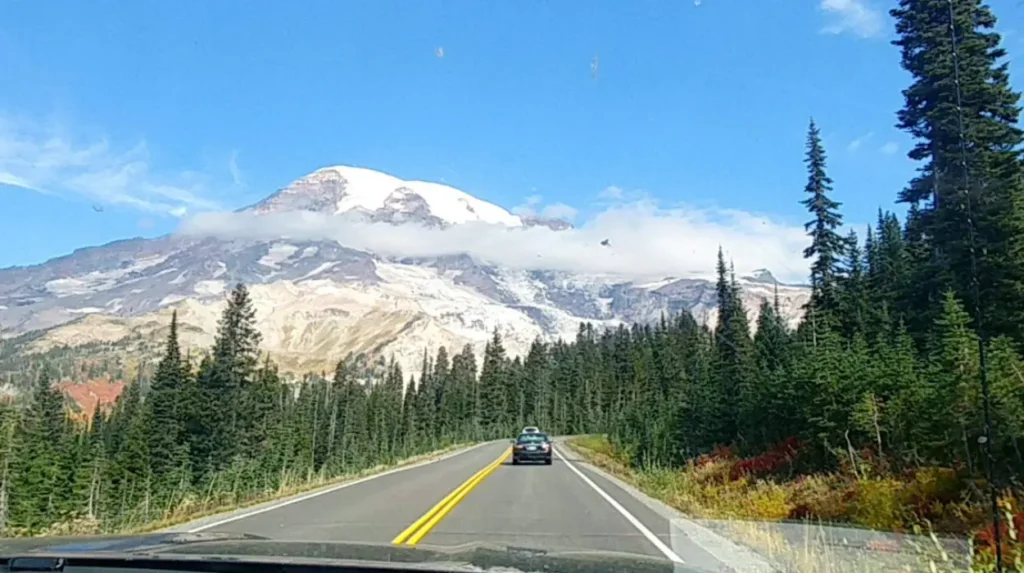
Climate change accelerates snowpack reduction, shifting Paradise’s snow-free season earlier by 2–3 weeks over 50 years, reducing peak wildflower intensity, retreating glaciers, including Nisqually Glacier, and increasing wildfire smoke frequency during summer hiking seasons. Regional climate projections indicate Paradise’s snowpack declining 40–60% by 2050 under high-emission scenarios.
Glacier retreat visibly transforms Paradise’s landscape as Nisqually Glacier recedes upslope away from trail viewpoints, reducing dramatic ice wall visibility within 30 years of observation. Scientific monitoring tracks ice thickness loss averaging 2–3 feet per year at lower glacier elevations, exposing bare rock where ice once dominated.
Wildflower phenology shifts with earlier snowmelt, causing blooms to peak 2–3 weeks earlier than 1970s baselines, disrupting synchronization with pollinator activity windows. This mismatch reduces seed production and threatens long-term plant population viability in Paradise meadows with specialised high-elevation species most vulnerable.
Summer wildfire smoke increasingly obscures Paradise’s signature mountain views during the July–September hiking season, with smoke events rising from 3–5 days annually in the 2000s to 15–20 days in the 2020s. Poor air quality (AQI exceeding 150) forces trail closures and health advisories, limiting outdoor access during prime visiting months.
Temperature increases elevate treeline upslope by 200–300 feet over 50 years, transforming current subalpine meadows into forest and eliminating habitat for alpine specialists. Species like mountain heather and white-top aster face habitat contraction as encroaching subalpine fir trees shade out sunlight-dependent meadow plants.
What is Paradise in Mount Rainier National Park?
Paradise is a 5,400-foot-elevation subalpine valley in Mount Rainier National Park famous for wildflower meadows, glacier views, hiking trails, and the historic Paradise Inn.