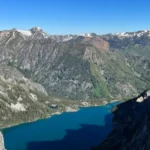
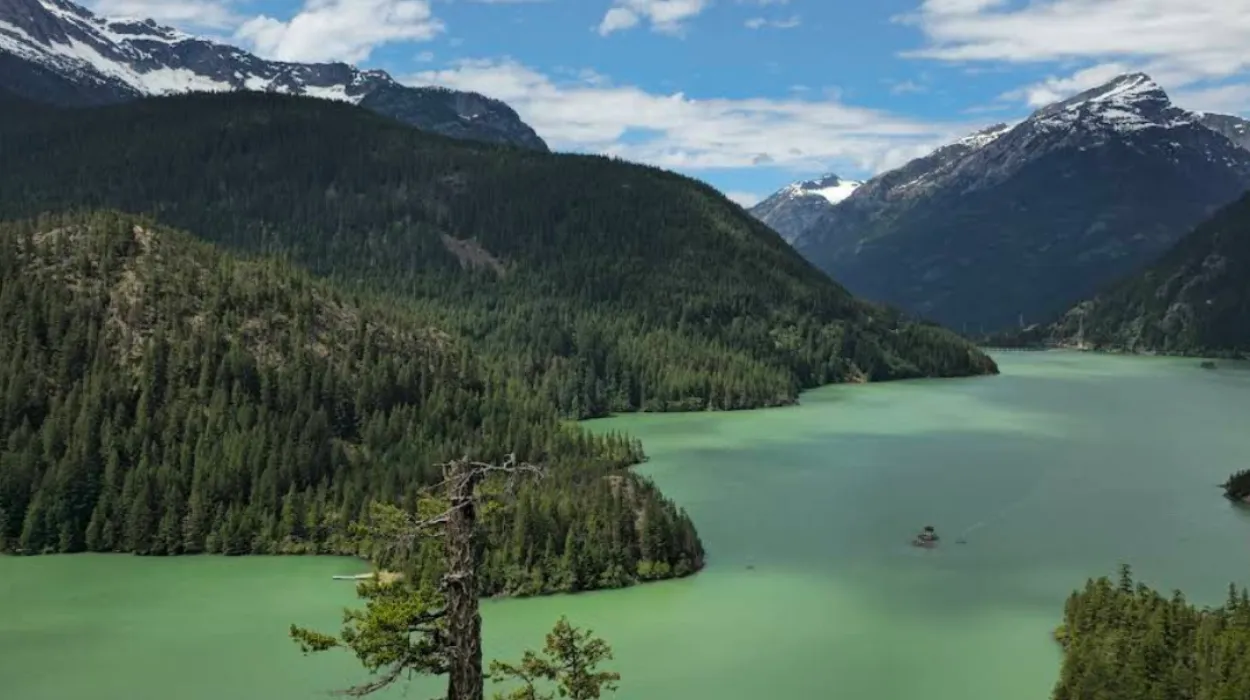
Ross Lake National Recreation Area is a 22,830-acre protected area in Washington’s North Cascades featuring a 23-mile-long reservoir bordered by steep mountain valleys, accessible only by hiking or boat along the Lake Creek Road trail. The recreation area offers hiking, fishing, boating, camping, and paddling opportunities with the floatplane-only Ross Lake Resort as its sole lodging, open mid-June through October 31.
- What is Ross Lake National Recreation Area and where is it located?
- How do you get to Ross Lake National Recreation Area?
- What activities can you do at Ross Lake National Recreation Area?
- Hiking and backpacking
- Fishing
- Boating and paddling
- Camping
- When is the best time to visit Ross Lake National Recreation Area?
- What permits and regulations apply to Ross Lake National Recreation Area?
- How does Ross Lake compare to other North Cascades recreation areas?
- What should you know about safety and wildlife at Ross Lake?
- What lodging options exist near Ross Lake National Recreation Area?
- How has Ross Lake National Recreation Area changed since its establishment?
What is Ross Lake National Recreation Area and where is it located?
Ross Lake National Recreation Area is a 22,830-acre protected reservoir in Washington’s North Cascades, spanning 23 miles long and accessible only by foot or boat from the Lake Creek Road trailhead. The recreation area sits within the North Cascades National Complex at coordinates 48°48′N 121°01′W, positioned between Seattle and Vancouver, British Columbia.
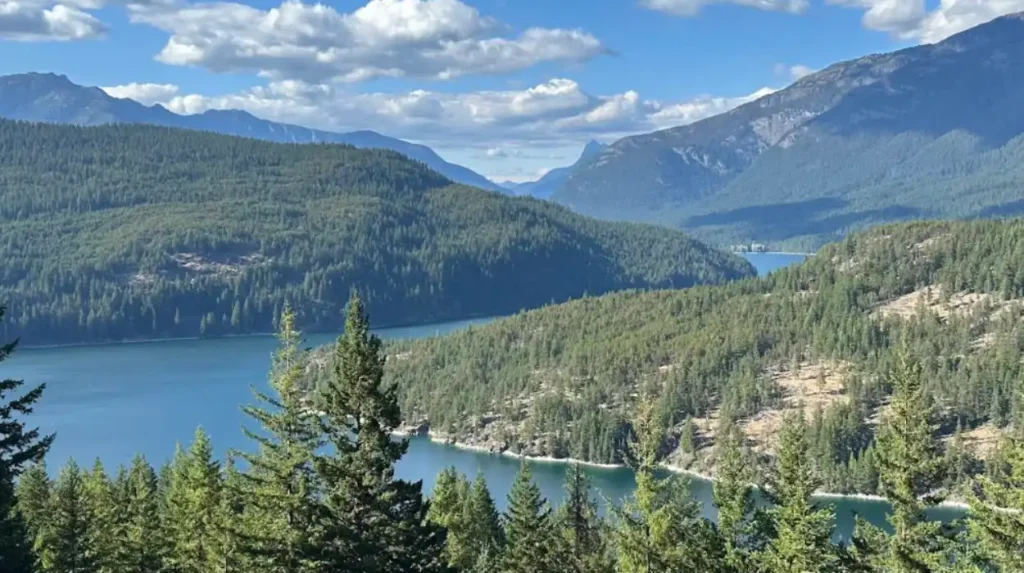
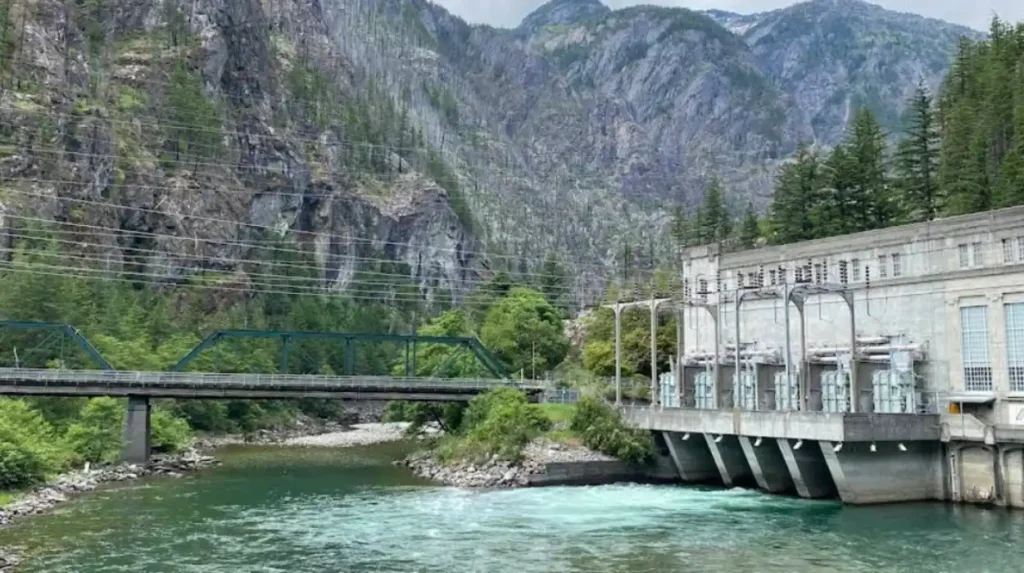
Ross Lake National Recreation Area comprises a man-made reservoir created by the Ross Dam on the Skagit River. The U.S. National Park Service established the recreation area in 1968 as part of the North Cascades National Park Service Complex. This complex includes three units: North Cascades National Park, South Cascades National Park, and Ross Lake National Recreation Area. The reservoir serves dual purposes: hydroelectric power generation for Seattle City Light and public recreation access.
The area borders North Cascades National Park to the north and south, creating a continuous protected corridor of over 500,000 acres. Glacier peaks rise 4,000-7,000 feet above the lake, with Mount Shaks (6,899 feet) and Mount Miwa (6,778 feet) dominating the skyline. The Skagit River flows into the northern end of Ross Lake, while Lake Creek exits at the southern end through Ross Dam.
How do you get to Ross Lake National Recreation Area?
Access to Ross Lake National Recreation Area requires driving 2.5 hours from Seattle to Lake Creek Road trailhead (SR 20 at milepost 45.7), then hiking 2.25 miles or boating 23 miles along the lake with no road access to the shoreline. The trailhead sits at elevation 1,250 feet with parking for 20-25 vehicles.
Drive State Route 20 (Olympic Highway) north from Seattle for approximately 140 miles. Turn right at the signed Lake Creek Road trailhead located at milepost 45.7 on SR 20, near the town of Concrete, Washington. The gravel trailhead parking lot fills quickly on summer weekends between 9 AM and 2 PM. Arrive before 8 AM or after 3 PM to secure parking.
From the trailhead, the 2.25-mile Lake Creek Trail follows the shoreline upstream to Ross Lake Resort. The trail is moderate difficulty with 400 feet of elevation gain, passing through old-growth forest and crossing Lake Creek twice via bridges. Hikers complete this segment in 1-1.5 hours. The trail continues 23 miles north along Ross Lake’s eastern shore to the Canadian border, though most visitors only access the first 5-7 miles.
Boat access requires a permit from Seattle City Light. Launch from Lake Creek Road parking with a canoe, kayak, or small motorboat (10 horsepower maximum). The 23-mile journey to the northern end takes 6-8 hours for experienced paddlers. Motorized boats must comply with Skagit River Basin noise restrictions.
What activities can you do at Ross Lake National Recreation Area?
Visitors engage in four primary activities: hiking the 23-mile shoreline trail, fishing for salmon and trout, boating/kayaking on the reservoir, and camping at designated sites with no developed facilities. The area receives 150,000 annual visitors seeking backcountry recreation without amenities.
Hiking and backpacking
The Lake Creek Trail runs 23 miles along Ross Lake’s eastern shore from Lake Creek Road to the Canadian border. The first 5 miles reach Ross Lake Resort (moderate, 400 feet elevation gain). The next 8 miles continue to Crater Creek (moderate-difficult, 1,200 feet elevation gain). The final 10 miles traverse steep terrain to the border (difficult, 2,500 feet elevation gain).
Day hikers commonly walk 2-4 miles to waterfalls or scenic viewpoints. The trail passes three major waterfalls: Lake Creek Falls (40 feet, 3 miles from trailhead), Crater Creek Falls (60 feet, 11 miles), and Border Falls (80 feet, 21 miles). Each waterfall requires scrambling over rocks and crossing creeks.
Backpackers complete the full 23-mile route in 4-6 days. Establish camps at designated sites: Lake Creek (mile 0.5), Ross Resort (mile 2.25), Crater Creek (mile 11), and Border Camp (mile 21). No caretakers or facilities exist; visitors carry all gear, food, and water treatment equipment.
Fishing
Ross Lake supports six fish species: rainbow trout (average 12-18 inches), cutthroat trout, kokanee salmon, chinook salmon, coho salmon, and mountain whitefish. The lake produces 2,000-3,000 adult chinook annually, making it one of Washington’s premier salmon fisheries.
Fishing season runs year-round except for a January closure on chinook salmon. Use artificial lures or flies only; no bait fishing permitted. The Washington Department of Fish and Wildlife requires a standard fishing license ($30 for residents). Catch-and-release is mandatory for all chinook salmon.
Best fishing locations include the northern end near Skagit River inflow (spring chinook), mid-lake near Crater Creek (kokanee, July-September), and southern end near Ross Dam (rainbow trout, year-round). Fish早晚 hours (6-9 AM, 5-8 PM) when salmon feed actively.
Boating and paddling
The 23-mile reservoir accommodates kayaks, canoes, small motorboats (10 HP max), and floatplanes. Seattle City Light issues free boating permits at Lake Creek Road trailhead. No fuel stations exist; bring all fuel in approved containers.
Kayakers complete the full lake in 3-4 days. Popular routes: Lake Creek Road to Ross Resort (2.25 miles, 1 hour), Ross Resort to Crater Creek (8.5 miles, 3 hours), and Crater Creek to Border Camp (10 miles, 4 hours). Carry water, food, and emergency communication devices.
Motorboaters observe 10 HP maximum and noise restrictions between 8 PM and 8 AM. The Skagit River Basin protects breeding fish; motors disturb spawning grounds. Electric motors are preferred but not required.
Floatplane access serves Ross Lake Resort exclusively. Wheeler Flying Service (Bellingham) and Alfa Air (Vancouver, BC) operate daily flights June-October. Flights cost $150-250 per person and include 30-minute scenic tours over the North Cascades.
Camping
Camping occurs at four designated sites along the 23-mile trail: Lake Creek (mile 0.5, 10 sites), Ross Resort (mile 2.25, 15 sites), Crater Creek (mile 11, 8 sites), and Border Camp (mile 21, 5 sites). No developed facilities exist; sites include cleared tent pads and fire rings.
All camping requires a free permit from Lake Creek Road trailhead. No reservations accepted; permits issued on arrival. Campfires permitted below 5,000 feet elevation (fire rings only). Carry water or treat lake water using filters (0.1 micron) or chemical treatment (iodine/chlorine).
Bear cans are mandatory for food storage. The North Cascades hosts black bears (Ursus americanus); 15-20 bear encounters occur annually. Hang food 10 feet high and 4 feet from trees if bear cans unavailable.
When is the best time to visit Ross Lake National Recreation Area?
The optimal visiting window is mid-June through October 31 when weather is warm (65-80°F), trails are snow-free, and Ross Lake Resort operates; winter visits are impossible due to avalanche danger and road closures. Spring (May-June) offers running water but lingering snow at elevation.
Summer (July-September) provides the most reliable conditions: daytime temperatures 70-80°F, nighttime 45-55°F, minimal rain (0.5-1 inches monthly), and full trail access. This period coincides with peak salmon runs (chinook, August-September) and kokanee fishing (July-September).
Fall (October) delivers crisp air (55-65°F), golden larch trees, and fewer visitors. However, Ross Lake Resort closes October 31, and daylight hours shorten to 10 hours. Rain increases to 3-4 inches monthly.
Winter (November-April) closes the area completely. Heavy snow (150-200 inches annually at elevation) triggers avalanches along Lake Creek Road. SR 20 remains open but trailhead parking closes November 15-April 15.
What permits and regulations apply to Ross Lake National Recreation Area?
Visitors need three permits: free camping permit (Lake Creek Road trailhead), free boating permit (Seattle City Light), and Washington fishing license ($30 residents); all require carrying documentation while in the recreation area. No entrance fee exists.
Camping permits are free, issued on arrival at Lake Creek Road trailhead, valid for 1-7 days. No reservations accepted. Limit: 6 people per group, 14 days maximum stay per year.
Boating permits are free from Seattle City Light at the trailhead. Valid for 1 day to 1 year. Motorboats limited to 10 HP maximum. No fuel dispensing on shore; transfer fuel in approved containers only.
Washington fishing licenses cost $30 for residents, $48 for non-residents. Purchase online at wdfw.wa.gov or at sporting goods stores. Chinook salmon catch-and-release mandatory; retain only 2 salmon per day.
Forest fire permits required for campfires below 5,000 feet. Carry water bucket (5 gallons minimum) and rake fire ring after use. Fires prohibited during dry season (July 15-September 15) when fire danger exceeds “high.”
Bear canisters mandatory for all food storage. Violators face $250 fines. Pack out all trash; no garbage services exist. Human waste must be buried 6 inches deep, 200 feet from water.
Explore More Things to do
Best Hiking Trails in North Cascades National Park
Cascade Loop Road Trip: Scenic Washington Driving Route Guide
How does Ross Lake compare to other North Cascades recreation areas?
Ross Lake differs from North Cascades National Park by offering flat lake access instead of high-elevation peaks, providing boat/hiking access instead of road access, and focusing on reservoir recreation instead glacial wilderness. The recreation area receives 150,000 annual visitors versus 3 million at North Cascades.
North Cascades National Park (500,000 acres) features 7,000+ foot peaks, 300 glaciers, and 50+ mountain lakes. Access requires hiking 5-15 miles from highway trailheads. Ross Lake (22,830 acres) offers a single 23-mile reservoir at 1,250 feet elevation with trail access from one parking lot.
Compared to Lake Chelan (commercial resort, road access), Ross Lake maintains backcountry isolation with no roads, no stores, and no cell service. Unlike Stevens Canyon Road (closed winters), Lake Creek Road trailhead remains accessible year-round (except winter avalanche closures).
Ross Lake’s 23-mile length exceeds most North Cascades lakes (typically 2-5 miles). The reservoir’s narrow width (average 0.5 miles) creates a corridor experience rather than open-water sailing. Wind patterns differ: Ross Lake experiences consistent afternoon winds (10-15 mph) from the north, unlike the variable winds of larger lakes.
What should you know about safety and wildlife at Ross Lake?
Four primary risks exist: bear encounters (15-20 annually), hypothermia from cold lake water (45-55°F), flash floods from Skagit River dam releases, and navigation errors on the unmarked 23-mile trail; carry bear canister, water filter, map, and emergency communication. No cell service exists.
Black bears inhabit the recreation area. Carry bear spray (1 ounce minimum), make noise while hiking, and store food in bear cans. If encountered, stand still, speak calmly, and back away slowly. Never run.
Lake water stays 45-55°F year-round, causing hypothermia within 30 minutes for unprotected swimmers. Wear life jackets when boating; no rescue services exist. Swim only at designated shallow areas near Ross Resort.
Seattle City Light releases water from Ross Dam daily at 6 AM and 6 PM, causing sudden 2-3 foot water level rises downstream. Avoid swimming or camping below dam releases. Check release schedules at lakeresort.com.
The 23-mile trail has no mile markers. Carry a topographic map (North Cascades National Complex, 2023 edition) and GPS device. Trail crossings include three creeks without bridges (Lake Creek, Crater Creek, Border Creek); use caution during high water (May-June).
Rainfall averages 60 inches annually, concentrated October-March. Summer rain occurs 2-3 days monthly. Carry waterproof gear and pack rain days into itineraries.
What lodging options exist near Ross Lake National Recreation Area?
Ross Lake Resort is the only lodging inside the recreation area, operating as a floatplane-only float village June 11-October 31 with 25 cabins; outside the area, camp at Lake Creek Road or drive 2.5 hours to Seattle. No road access exists.
Ross Lake Resort features 25 floating cabins on 2 acres, each with 2 beds, fireplace, and private deck. Rates: $350/night (2 people), $450/night (4 people). Meals included (breakfast, dinner). No Wi-Fi, no cell service. Book 6-12 months ahead for summer.
Floatplane flights cost $150-250 per person from Bellingham (Wheeler Flying) or Vancouver, BC (Alfa Air). Flights depart 7-9 AM, return 4-6 PM. Book flights separately from resort.
Outside the recreation area, camp at Lake Creek Road trailhead parking (free, 20-25 vehicles). No amenities; carry water, food, and firewood. Alternative: drive 2.5 hours to Seattle for hotels ($100-200/night).
Nearby towns include Concrete (15 miles, 20 minutes) with basic supplies, and Stehekin (35 miles, 1 hour via boat) with lodge and restaurant. Neither town has gas stations; fill fuel before departure.
How has Ross Lake National Recreation Area changed since its establishment?
Ross Lake transformed from an unregulated Skagit River valley (pre-1940s) to a hydroelectric reservoir (1949-1968) to a protected recreation area (1968-present), with dam height increasing from 425 to 550 feet and recreation access expanding from 0 to 150,000 annual visitors. Seattle City Light owns the reservoir; National Park Service manages recreation.
Construction began 1949 with original Ross Dam (425 feet tall). The dam produced 1,200 megawatts annually for Seattle. In 1956, Seattle City Light raised the dam to 550 feet, increasing capacity to 1,800 megawatts and creating the 23-mile reservoir.
The National Park Service designated Ross Lake National Recreation Area in 1968 under the Wilderness Act of 1964. This created the North Cascades National Park Service Complex, protecting 500,000 acres total.
Recreation access expanded steadily: 1970s (10,000 visitors annually), 1990s (50,000 visitors), 2010s (120,000 visitors), 2020s (150,000 visitors). Trail improvements included bridge replacements (2015-2020) and fire ring installations (2018).
Current management focuses on balancing hydroelectric production with recreation. Seattle City Light plans dam renovation 2027-2030, potentially reducing water levels by 10 feet temporarily.
Ross Lake National Recreation Area remains Washington’s most accessible backcountry lake destination, combining hydroelectric infrastructure with pristine wilderness recreation for 150,000 annual visitors seeking hiking, fishing, boating, and camping without developed facilities.
What is Ross Lake National Recreation Area?
Ross Lake National Recreation Area is a protected 22,830-acre recreation area in Washington’s North Cascades. It features the 23-mile-long Ross Lake reservoir and offers opportunities for hiking, boating, fishing, paddling, camping, and wildlife viewing.