
Key Points
- Little Free Pantries, also known as micropantries, began appearing in Seattle during the Covid‑19 pandemic shutdowns and have continued operating in many neighbourhoods.
- A group of researchers at the University of Washington has set up PantryMap.org, an interactive map that tracks these micropantries and lets users leave notes about what has been donated or what is needed.
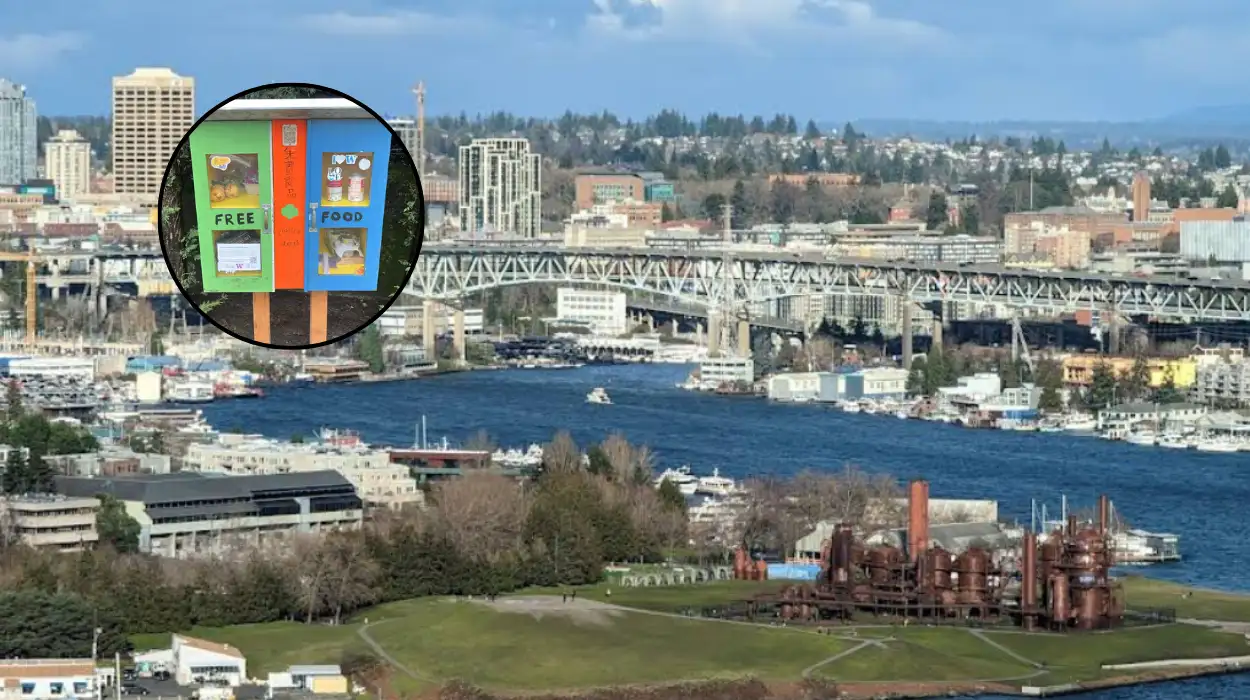
- Giacomo Dalla Chiara, a senior research scientist at UW, described the pantries as very small, often unattended boxes, some of which are refrigerated, with varying degrees of organisation and maintenance.
- The concept of Little Free Pantries is not new; they exist across Seattle, Western Washington and the United States, and other online maps already help people locate them.
- What distinguishes the UW map from others is that it aims both to document the scale and diversity of micropantries and to function as a communication tool for users and managers.
Seattle (Evening Washington News) May 19, 2026 – Little Free Pantries, the tiny community‑run food boxes that sprouted up across Seattle during the Covid‑19 lockdowns, have become an enduring feature of many neighbourhood streets, and researchers at the University of Washington are now documenting how they work and how people use them. Giacomo Dalla Chiara, a senior research scientist at UW, explained that the pantries are “very small, literally little boxes, some of them are refrigerated,” and that most are unattended, ranging from casual weekend projects by households to more formally managed sites run by local organisations.
- Key Points
- What is PantryMap.org trying to achieve?
- How do Little Free Pantries fit into wider food‑insecurity efforts?
- How does the UW project differ from other pantry‑mapping efforts?
- Who is using Little Free Pantries and how?
- Background: How did Little Free Pantries come about?
- Prediction: How might this development affect local communities?
As reported by a journalist at Seattle Now, Dalla Chiara added that the variety of formats is striking:
“Some are households that decided to a weekend project … and they kind of leave them be. Others are more well‑managed and run by organizations that maintain them, clean them, restock them. So, there is a huge variety of forms.”
The project builds on a broader Little Free Pantry movement, which has long promoted the idea of neighbour‑to‑neighbour food sharing through small, accessible containers placed in public spaces.
What is PantryMap.org trying to achieve?
The UW‑led project, centred on the website PantryMap.org, functions both as a research tool and as a community resource.
According to the same Seattle Now report, the map is designed to catalogue where Little Free Pantries are located, how frequently they are restocked, and what kinds of items are being left or requested.
This dual role allows the research team to study how grassroots food‑sharing networks operate while also giving users a way to coordinate donations and needs in real time.
Media coverage of the initiative notes that the platform lets people drop notes about what has been donated or what is missing, essentially turning each pantry into a small node in a larger, informal food‑sharing network.
The researchers’ aim, as described in the coverage, is not simply to count boxes but to understand patterns of use, distribution gaps, and how these micropantries complement or differ from formal food‑bank systems.
How do Little Free Pantries fit into wider food‑insecurity efforts?
Journalists covering the story have also highlighted that Little Free Pantries are not a new phenomenon. Regional and national outlets have previously reported on similar networks, including Seattle‑based food‑assistance and meal‑program services that have seen increased demand following recent cuts to federal nutrition programmes such as the Supplemental Nutrition Assistance Program (SNAP).
Coverage in outlets such as KUOW has documented how food‑bank and meal‑program visits in Seattle have soared after those cuts, underscoring the broader context of rising food insecurity.
In that light, the UW researchers’ work is framed as an effort to see how informal, community‑based pantries fit into the wider ecosystem of food‑assistance options.
The map does not replace formal food‑bank services, reporting suggests, but instead offers a way to visualise where and how spontaneous, low‑barrier food sharing is occurring.
This includes noting which neighbourhoods have dense clusters of pantries and which may have only isolated boxes, potentially revealing geographic gaps in coverage.
How does the UW project differ from other pantry‑mapping efforts?
Several media reports point out that other online maps already exist to help people locate Little Free Pantries. For example, initiatives such as the map hosted at mapping.littlefreepantry.org have long aimed to connect donors and users with pantries in their area.
However, as reported by Seattle Now, the UW‑developed PantryMap.org is described as going “a little further” than those earlier tools.
The distinction, according to the reporting, lies in the project’s emphasis on both data collection and interactive communication. Where other maps may simply list locations, the UW‑led site allows users to leave remarks about what has been dropped off or what is needed, effectively turning each pantry listing into a mini‑bulletin board.
This approach, as described in the coverage, enables the research team to gather information about usage patterns—such as which items are most frequently requested or which pantries are maintained more consistently—while still serving the practical need of helping people find nearby food‑sharing points.
Who is using Little Free Pantries and how?
Journalistic accounts describe the pantries as serving a mix of regular users and occasional visitors. Household‑run pantries, often placed in front yards or on sidewalks, tend to be more ad hoc, with whatever food someone feels like donating that day.
In contrast, those managed by organisations or neighbourhood groups may be restocked more systematically, sometimes with input from local businesses or community‑service groups.
The reports do not present the UW project as a formal evaluation of effectiveness or impact but rather as an observational effort to see how these boxes function in practice.
By mapping locations and noting user comments, the researchers and the media coverage emphasise that they are trying to understand how people interact with these micropantries, what kinds of items circulate, and how communities adapt them over time.
Background: How did Little Free Pantries come about?
Little Free Pantries grew out of the broader “Little Free Library” movement, which encourages small, self‑service book exchanges in public spaces.
The pantry variant adapted the same do‑it‑yourself model to food‑sharing, with communities building small boxes or cabinets where people could leave surplus food for neighbours in need.
During the Covid‑19 pandemic, when many people faced sudden job losses, school closures, and reduced access to formal services, these micropantries proliferated in cities such as Seattle as a quick, low‑cost way to share food.
Even as broader conditions have shifted, many of these pantries have remained in place, suggesting that they filled a persistent, if informal, gap in local support networks.
The UW‑led PantryMap.org project effectively takes a snapshot of that post‑pandemic legacy, documenting where the pantries endure, how they are maintained, and how people continue to use them.
Explore More Seattle News
AG Sues Providence Over Pregnancy Accommodations — Seattle 2026
Seattle Democrat Dismisses Wealth Exodus Over New Millionaire Tax Seattle 2026
Prediction: How might this development affect local communities?
For Seattle residents and other users of informal food‑sharing networks, the UW pantry‑mapping effort could make it easier to discover and participate in local micropantries. By centralising information and allowing users to mark what is needed or what has been donated, the map may help reduce duplication—such as multiple donors bringing the same type of food to the same box—while highlighting items that are in short supply.
For community‑organised groups and local‑food advocates, the project could provide a clearer picture of which neighbourhoods already have dense pantry coverage and which remain underserved. This information might inform decisions about where to place new boxes, how to coordinate with existing food‑banks, or how to design local campaigns that encourage ongoing maintenance and hygiene practices.
For researchers and policymakers interested in food‑insecurity strategies, the UW pantry‑mapping initiative offers a case study of how bottom‑up, community‑driven solutions interact with formal safety‑net systems. If the data show that certain areas rely heavily on these micropantries while formal services are thin, it could prompt further analysis of where public or institutional support might be needed to strengthen or complement the informal network.