
Key points
- The National Memorial Day Parade, branded as the Freedom 250 National Memorial Day Parade, took place along Constitution Avenue in Washington, DC, on Monday, 25 May 2026.
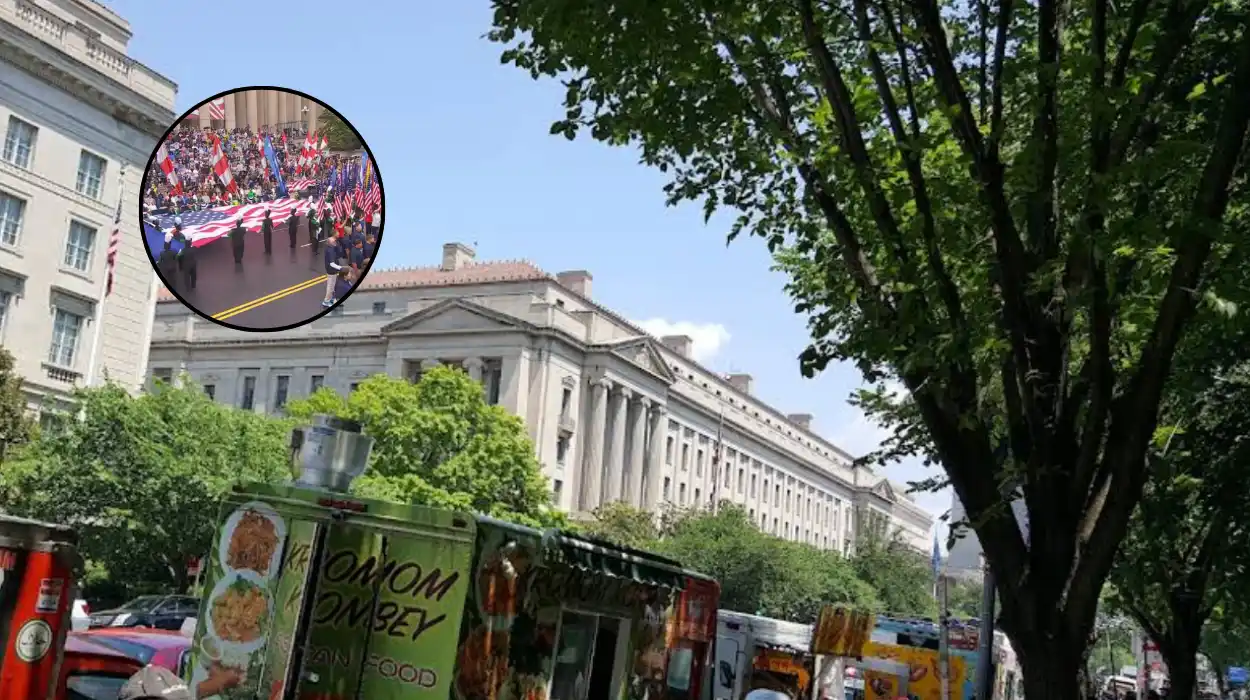
- The event began at 10:00 a.m., with pre‑parade ceremonies and performances starting around 9:00 a.m. along Constitution Avenue between 7th and 17th Streets NW, from the National Archives to just past the White House.
- Organised by the American Veterans Center, the parade is described as the nation’s largest Memorial Day event and a “moving timeline of American history”, highlighting 250 years of service and sacrifice under the America 250 umbrella.
- The procession included veterans, active‑duty military members, historical re‑enactors, marching bands, colour guards, floats and honoured families of the fallen, alongside celebrities and uniformed service groups.
- The parade route along Constitution Avenue drew thousands of spectators, many of whom gathered along the sidewalks and in front of national landmarks, with live coverage provided by local television stations and online livestreams.
- The event was framed as part of wider America 250 celebrations, linking Memorial Day remembrance to the 250th anniversary of the United States and the broader 2026 commemorative programme.
Washington (Evening Washington News) May 25, 2026 – The National Memorial Day Parade, branded in 2026 as the Freedom 250 National Memorial Day Parade, wound its way along Constitution Avenue in Washington, DC, on Monday, 25 May 2026, marking the beginning of the nation’s Memorial Day commemorations and tying into the America 250 anniversary programme.
The parade set off at 10:00 a.m., following opening ceremonies and performances around 9:00 a.m., as spectators filled the sidewalks between 7th and 17th Streets NW, from the National Archives to just past the White House.
According to America250, the organisers designate the event as “an annual tradition and the nation’s largest Memorial Day event”, designed both as a public tribute and a living narrative of American military history across 250 years.
Who took part in the parade and why was it expanded?
The 2026 edition featured veterans, active‑duty service members, colour guards, marching bands, historical re‑enactors, floats, and families of the fallen, alongside celebrities and other public figures invited to lend prominence to the remembrance.
As reported by America250, the parade is described as a
“moving timeline of American history”,
structured so that each contingent and performance reflects a different era of service, from the Revolutionary War period through conflicts in the 21st century. The American Veterans Center, which hosts and coordinates the event, emphasised that the 2026 route was specifically aligned with the America 250 initiative, using the 250th anniversary to deepen the historical framing of the day’s ceremonies.
Tim Holbert, president of the American Veterans Center, told live‑stream coverage partners that the true heart of the event lay with the attendees: the families, veterans and onlookers who gathered to honour those who died in service and to support living veterans.
How were the parade and the location described by media outlets?
Local coverage by 7News (WJLA‑TV) in Washington, DC, highlighted that the National Memorial Day Parade was held in the nation’s capital on 25 May 2026, with photographs and short video clips underscoring the size of the crowds and the breadth of contingents moving along Constitution Avenue. The station’s item was presented as a text and photo gallery, focusing on the visual and ceremonial aspects of the march rather than on political commentary.
Event‑listing and tourism‑oriented outlets such as Washington.org and Arlo Hotels described the 2026 parade as the main event of the Memorial Day weekend in Washington, noting that it typically brings in large crowds and functions as a walking timeline of American military history, blending patriotic music, military units, and veterans’ groups into a public spectacle. Both note that the Constitution Avenue route remains consistent, reinforcing its role as a central civic artery for national commemorations.
Local‑interest guides, including Dulles Moms, added that spectators should expect marching bands, colour guards, floats and military units, with the parade acting as a day‑long family‑friendly event that also supports tourism and hotel occupancy over the long weekend.
Background of the development
The National Memorial Day Parade has grown over the past two decades into one of the largest annual Memorial Day events in the United States, with its roots in earlier smaller parades and memorial observances in Washington, DC.
Organised by the American Veterans Center, the parade was conceived to provide a high‑visibility, non‑political platform for honouring the fallen and expressing gratitude to veterans, while leaving the Arlington National Cemetery ceremonies and the National Memorial Day Concert on the West Lawn of the U.S. Capitol to handle more formal and televised elements of the holiday.
In 2026, the parade was explicitly folded into the America 250 framework, which marks the 250th anniversary of the United States with a multi‑year series of commemorative events.
This alignment allowed organisers to frame the route and programming as a “moving timeline” of American military service, threading together historical re‑enactors, veterans’ groups from multiple eras, and contemporary active‑duty units to show continuity across the nation’s first 250 years.
The choice of Constitution Avenue in Washington also matters symbolically: the street runs through the National Mall, linking the National Archives, the White House and other federal institutions, and has long been a route for major national parades and protests.
By clustering the start of Memorial Day observances there, civic organisers and tourism‑board partners effectively position the event as both a local DC attraction and a national television‑friendly spectacle, often broadcast across ABC, CBS, NBC, Fox and CW stations as a special presentation.
Prediction: How this development may affect audiences
For Washington‑area residents and visitors, the inclusion of the 2026 National Memorial Day Parade within the America 250 celebrations is likely to boost attendance at Memorial Day‑weekend events and increase hotel bookings and spending in the downtown corridor, as tourism‑sector briefings and local guides suggest that the parade remains the main anchor of the weekend.
Families and school‑age children may see the historical re‑enactors and band performances as both educational and entertaining, reinforcing Memorial Day less as an abstract holiday and more as a tangible, visual history lesson.
For veterans and military families, the integration of the parade into the America 250 narrative may strengthen the sense that their service is being recognised within a long national arc, rather than as a single‑day observance.
At the same time, the continued emphasis on non‑political, ceremony‑focused coverage by outlets such as 7News and the America250 organisers suggests that the event will remain attractive to broad audiences, including those who tune in primarily for musical and visual spectacle rather than for policy‑driven commentary.
For media and travel‑sector stakeholders, the decision to brand 2026 as the Freedom 250 National Memorial Day Parade may encourage more national‑level coverage and syndication, potentially expanding the audience for live‑stream partners and local‑TV specials.
This could, in turn, influence how future Memorial Day parades are marketed, with organisers in other cities looking to mirror the television‑friendly, historically‑framed format that Washington has refined over the past several years.