Key Points
- The U.S. Attorney’s Offices for the Western and Eastern Districts of Washington have requested that state officials set aside ballots linked to 405 people alleged to be non-citizens.
- Federal officials state that the identified individuals have cast more than 1,500 ballots in previous Washington elections while holding lawful permanent resident status (green cards) rather than full U.S. citizenship.
- Washington Secretary of State Steve Hobbs strongly disputes the reliability of the federal dataset, warning that the late request could disenfranchise legitimate voters just days before the 3 November general election.
- Federal authorities suggested that some green card holders may have been erroneously enrolled on voter rolls via the state’s Motor Voter program without realizing they were ineligible.
- The dispute highlights the real-world legal and human consequences of voter eligibility investigations, as demonstrated by the recent death of Point Roberts resident Paige Adamson following federal questioning over her voting record.
- State election officials noted that out of 113.5 million ballots counted in Washington since 1994, federal data going back to that year identified only around 400 disputed records.
Seattle, Washington (Evening Washington News) October 27, 2026 – Executive Summary: Washington state has emerged as the latest arena in a nationwide federal initiative to investigate alleged voter fraud, after federal prosecutors requested that officials set aside ballots linked to 405 residents whose citizenship status is in question. The federal intervention, coming just one week before the 3 November general election, claims these individuals cast more than 1,500 ballots in past elections despite lacking full U.S. citizenship. Washington Secretary of State Steve Hobbs has forcefully challenged the accuracy and timing of the federal claims, arguing that the database is prone to errors and threatens eligible voters’ rights. The unfolding legal standoff coincides with heightened public scrutiny following the death of a Canadian green card holder in Point Roberts who feared border detention after federal questioning over her voter registration.
- Key Points
- What Are Federal Prosecutors Alleging Regarding Non-Citizen Voting in Washington?
- How Has Washington Secretary of State Steve Hobbs Responded to the Federal Claims?
- What Does the Case of Paige Adamson Reveal About the Local Stakes?
- Background of the Particular Development
- Prediction: How Will This Development Affect Non-Citizens, Voters, and Election Administration?
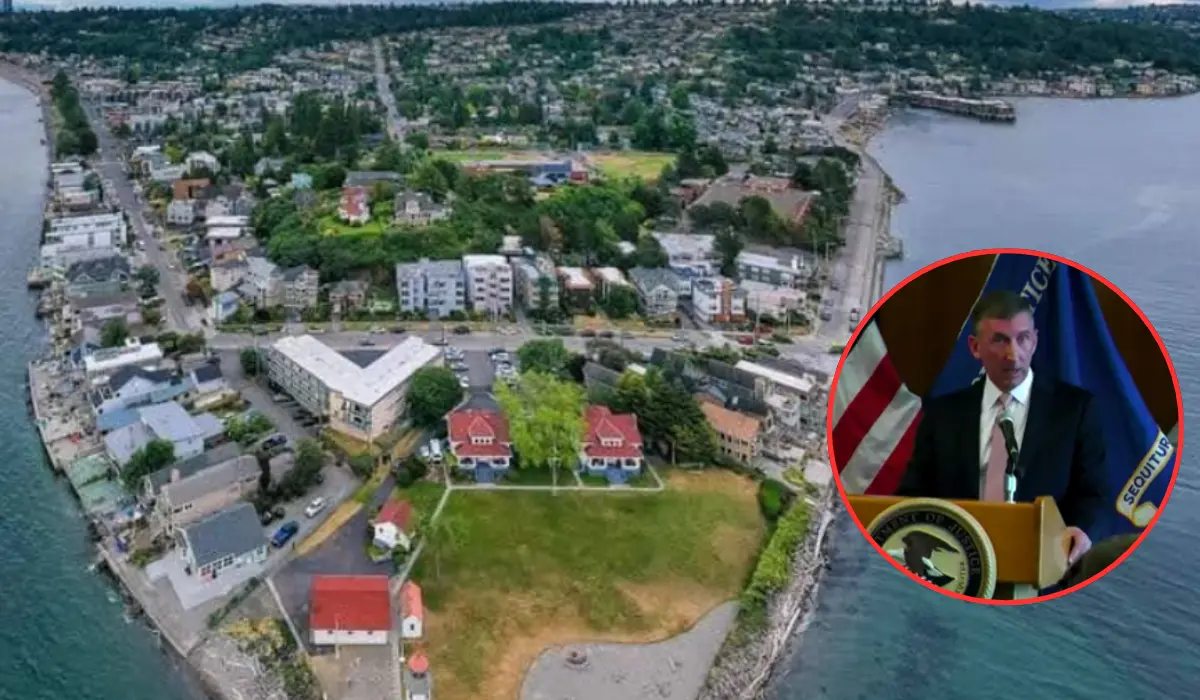
As reported by journalists covering the U.S. Attorney’s Offices for the Western and Eastern Districts of Washington, federal prosecutors announced on 26 October that investigators had identified 405 people who allegedly registered and voted in Washington state elections without meeting statutory citizenship requirements.
What Are Federal Prosecutors Alleging Regarding Non-Citizen Voting in Washington?
As reported by local media outlets covering the federal announcement, the U.S. Attorney’s Offices for Western and Eastern Washington stated that an extensive investigation identified over 400 individuals who hold lawful permanent resident status—commonly known as green cards—yet appear on Washington voter rolls.
Federal prosecutors emphasized that while permanent residents are legally permitted to live and work in the United States, they are strictly prohibited from casting ballots in federal, state, and most local elections. According to the federal law enforcement disclosure, the 405 individuals flagged in the investigation have collectively cast more than 1,500 ballots across multiple previous election cycles.
Explaining the scope of the federal investigation, Acting U.S. Attorney Neil Floyd stated: “For years Washington State has had a mantra: our elections are ‘free, fair, and devoid of fraud.’ But our investigation shows not all of that is true – people who are non-citizens are registered to vote and are voting in our state. We have identified over 400 non-citizens who are registered to vote and have voted in multiple elections. This is only the tip of the iceberg. We will continue to investigate and identify those who are committing crimes by voting illegally.”
Adding to the federal position, First Assistant U.S. Attorney for the Eastern District of Washington Pete Serrano highlighted the protective intent of the filing. As reported by news outlets, Pete Serrano stated: “Free and fair elections should be the concern of every United States citizen. Our purpose in sharing this data with the Secretary of State is to protect the sanctity of each citizen’s vote. Our goal in sharing this information with the State of Washington is to ensure that a Washington citizens’ votes are protected in this and future elections.”
Federal officials acknowledged that a portion of the green card holders on the list may have been automatically registered through Washington’s Motor Voter program when applying for or renewing their driver’s licenses, without fully understanding that registration did not confer legal voting eligibility. Importantly, the federal announcement does not formally establish that every flagged individual knowingly or intentionally committed a criminal act.
How Has Washington Secretary of State Steve Hobbs Responded to the Federal Claims?
As reported by PNW Daily, Washington Secretary of State Steve Hobbs confirmed that his office received a formal letter from the U.S. Department of Justice requesting detailed records on the flagged voter registrations. Hobbs stated that his legal team is carefully reviewing the request and evaluating state statutory obligations before providing an official response.
Secretary Steve Hobbs voiced strong opposition to both the timing and the substance of the federal request. As reported by PNW Daily, Steve Hobbs stated: “The timing of this request, one week before the General Election, is no doubt intended to cast unfounded suspicion on the results. At the same time, thousands of voters were recently disenfranchised in our August Primary due to delayed postmarks.”
Hobbs also challenged the technical reliability of the federal database system, noting that federal data frequently misidentifies naturalized U.S. citizens as non-citizens due to outdated records, creating a substantial risk that eligible voters could be wrongfully targeted. His office pointed out that one of the disputed records cited in the federal letter dates back to 1994—a period during which Washington election authorities have processed and counted over 113.5 million primary and general election ballots.
Emphasizing voter privacy and legal protocol, Steve Hobbs added: “We take our responsibility to protect voter information seriously and will only respond to requests that follow due process. We saw what happened in California and don’t want Washingtonians to be harassed.”
The Secretary of State’s office stressed that local election boards already maintain robust protocols for investigating potential voter fraud and regularly refer substantiated cases to county sheriffs and local prosecutors for formal review. Furthermore, all Washington voters are legally required to sign an oath attesting to their eligibility on their ballot return envelopes.
What Does the Case of Paige Adamson Reveal About the Local Stakes?
As reported by CBC News and Cascadia Daily News, the broader debate over voter eligibility rolls has carried profound personal consequences for lawful permanent residents living near the border, as illustrated by the recent death of 61-year-old Canadian citizen Paige Adamson.
Adamson, a U.S. permanent resident who had resided in the border town of Point Roberts for approximately 14 years, was detained by U.S. Customs and Border Protection agents on 15 September. As reported by CBC News, border agents interrogated Adamson for nearly six hours regarding allegations that she had registered and voted in U.S. elections. She was subsequently released with a formal notice to appear at an immigration removal hearing scheduled for November.
While Adamson told CBC News that she had no memory of casting a ballot and denied participating in federal contests, public records maintained by Washington election authorities indicated that her voter profile registered participation in past elections, including the 2020 presidential primary.
As reported by Cascadia Daily News, Adamson became severely ill and suffered a fall at her home in the days prior to her death. Friends reported that she experienced intense anxiety about crossing the international border to seek emergency medical treatment in Bellingham, fearing that border officers would detain her or deny her re-entry into Point Roberts while removal proceedings were pending. Leaving the country under active immigration proceedings carries severe risks, including an in absentia deportation order and the loss of permanent residency status.
According to the Whatcom County Medical Examiner, Adamson died on 18 October from acute blood loss resulting from a fractured femur sustained during the ground-level fall.
Although there is no public confirmation linking Paige Adamson to the federal list of 405 names, civil rights monitors and legal scholars emphasize that her tragic case underlines the critical distinction between administrative database flags, unproven allegations of ineligible voting, and confirmed criminal wrongdoing.
Background of the Particular Development
The federal request directed at Washington state forms part of a broader, nationwide effort by the federal administration to audit state voter registration rolls and challenge non-citizen participation ahead of the November general election. Similar legal challenges and data requests have been launched in California and several other states, where federal justice officials have sought access to state voter databases to cross-reference against federal immigration files.
In Washington state, voter registration is integrated with state Department of Licensing processes through Motor Voter legislation designed to streamline civic participation. While the system requires applicants to affirm U.S. citizenship, critics contend that automatic prompts can lead to non-citizens mistakenly completing registration paperwork without fraudulent intent.
Simultaneously, election administrators in Washington are managing internal procedural hurdles. During the August 2026 primary election, Washington county officials rejected just over 20,000 ballots out of approximately 1.9 million returned due to delayed postal service postmarks. This marked a sharp 300% to 500% increase in postmark rejections in certain counties compared to the 2024 general election, where only 4,600 out of 4 million ballots were disqualified on similar grounds. Secretary Hobbs cited these figures to emphasize that state officials must focus on ensuring legitimate votes are properly processed rather than managing late federal database challenges.
Prediction: How Will This Development Affect Non-Citizens, Voters, and Election Administration?
The ongoing legal dispute between federal prosecutors and Washington election officials will directly impact voters, immigrant communities, and election workers leading into the November election and its aftermath.
For lawful permanent residents (green card holders), the heightened federal scrutiny and public attention create significant legal and personal anxiety. Immigrant advocacy groups warn that green card holders who inadvertently registered through Motor Voter programs may now face severe immigration enforcement, potential deportation proceedings, or loss of naturalization pathways—even in the absence of criminal intent to commit voter fraud. The tragedy surrounding Paige Adamson may deter eligible permanent residents from seeking medical, legal, or administrative assistance near border zones due to fear of federal enforcement.
For registered voters in Washington, the federal request to set aside 405 ballots introduces potential delays and legal uncertainty during ballot processing. If any of the flagged individuals are confirmed to be naturalized U.S. citizens whose immigration status records were simply out of date, those voters face administrative hurdles or temporary disenfranchisement while attempting to cure their ballots.
For election administrators and state legal authorities, the immediate future will involve intensive legal maneuvering. Secretary of State Steve Hobbs is expected to resist broad federal demands that lack individualized court orders or due process protections. As a result, the dispute may move to federal court, joining ongoing national litigation surrounding state sovereignty over election administration, data privacy rights, and the boundaries of federal oversight in state-run elections.