
Key Points
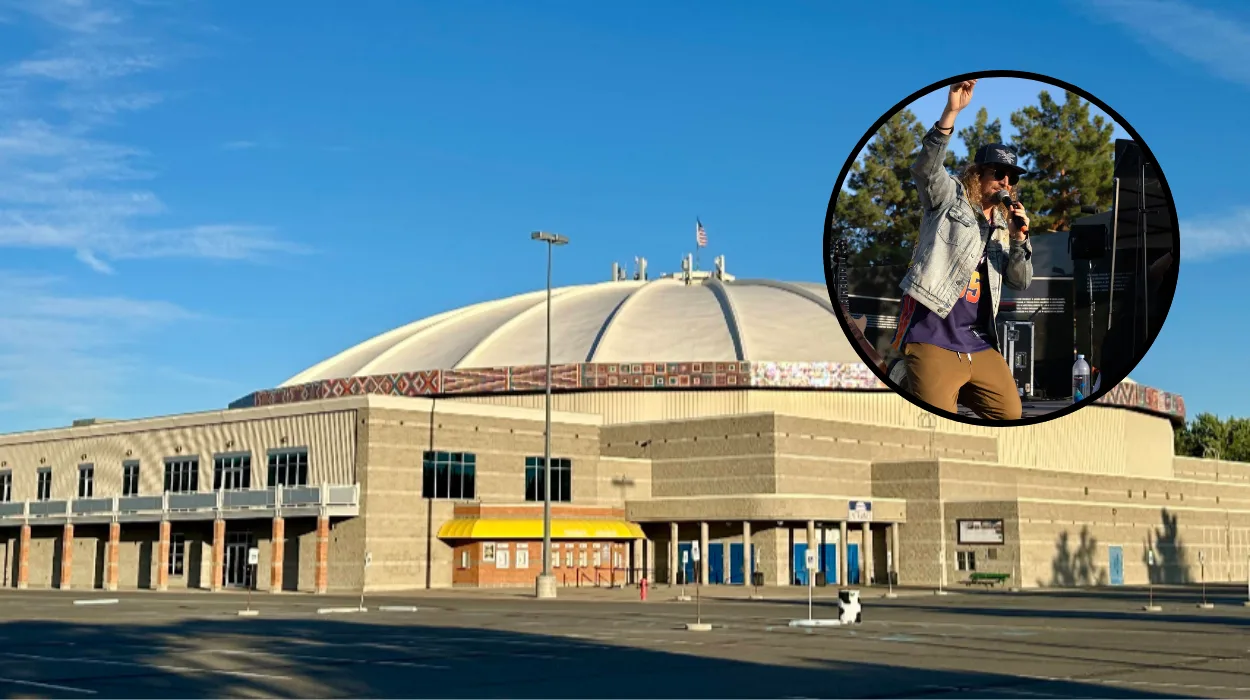
- According to FāVS News reporter Dominick Bonny, Christian nationalist singer and activist Sean Feucht justified his musical performance as spiritual warfare in an event held at State Fair Park in Yakima, Washington, declaring worship to be war and politics to be the battleground.
- “We are the most oppressed historically of any group in the history of the church,” Sean Feucht claimed to the audience in Yakima.
- Feucht’s events have been described by FāVS News reporter Bonny as being a mixture of a rock show, a tent revival, and a professional wrestling pep rally, all with their own “heels,” such as the media, LGBTQ people, drag queens, immigrants, Muslims, liberals, and Satan.
- Feucht revealed the religious goal behind his events to the Yakima crowd by saying, “The spiritual work, the prophetic work we are doing, is that we are un-throning every lie of the devil.
- The media says this, the critics say this, the devil says this – but God says yes! And His word overrules every other word!” Not only through music performances, but also through investigative reports and outside analysis like those pointed out by the Global Project Against Hate and Extremism (GPAHE) and media watchdogs, there is evidence of Feucht’s connection to the NAR movement and his business growth to multimillion-dollar real estate ventures.
Yakima (Evening Washington News) September 1, 2026 — Conflating religious performance with aggressive geopolitical strategy, conservative activist and musician Sean Feucht told a gathered crowd that modern American Christians face unprecedented levels of marginalization, positioning his nationwide events as frontline engagements in a larger cultural war.
As documented by Dominck Bonny in an analysis for FāVS News, Feucht’s rallies operate less like traditional church services and more like high-octane political spectacles designed to rally conservative religious voters against perceived societal enemies.
Speaking before an audience at State Fair Park in Yakima, Washington, Feucht asserted that believers in the United States endure historic levels of hostility, a claim that social researchers and historians frequently challenge as a distortion of genuine religious persecution.
How Does Sean Feucht Blend Worship With Combat Rhetoric?
According to Dominick Bonny of FāVS News, the structure of Feucht’s gatherings mirrors the theatrical presentation of professional wrestling, where the atmosphere relies heavily on establishing a clear antagonist or “heel” to galvanise audience emotions. Bonny reported that Feucht directs his followers’ grievances toward a broad roster of perceived opponents, ranging from mainstream media outlets and the LGBTQ+ community to drag queens, undocumented immigrants, Muslims, liberal lawmakers, and spiritual forces.
In his address to the Yakima assembly, Feucht explicitly mapped out this adversarial worldview, describing his musical ministry as an instrument of heavy military engagement. As quoted by FāVS News, Feucht stated to the crowd:
“What we’re actually doing spiritually, prophetically, is we’re dethroning every lie of the enemy. The media says this, the critics say this, the devil says this — but God says yes! And his word supersedes every other word”.
This rhetoric forms the core of what external watchdogs identify as a broader movement to merge conservative religious identity with hardline political nationalism.
Explore More Politics News
Gluesenkamp Perez Blames Braun for Budget in Seattle 2026
Stopgap funding bill, US Congress, Washington, 2026
What Ties Does Feucht Have to the New Apostolic Reformation?
Journalistic investigations and religious studies scholars, including historian Matthew D. Taylor and reports published by the Global Project Against Hate and Extremism (GPAHE), trace Feucht’s theological framework directly to the New Apostolic Reformation (NAR). The NAR is an informal network of charismatic leaders who advocate for Christian dominion over societal and governmental institutions, viewing cultural and political structures as territories that must be reclaimed for religious governance.
As detailed in GPAHE’s extensive profiles on American Christian nationalism, Feucht rose to national prominence during the 2020 COVID-19 pandemic by staging large, unpermitted worship rallies in defiance of public health restrictions. These events quickly evolved into a multi-state touring enterprise, such as the “Let Us Worship” and “Kingdom to the Capitol” tours, which frequently feature partnerships with high-profile conservative politicians. Observers note that these rallies systematically blur the line between partisan political campaigning and religious expression, drawing sharp criticism from civil liberties groups and local community leaders alike.
What Financial and Internal Controversies Surround His Ministry?
Beyond the ideological debates sparked by his public appearances, Feucht’s operations have faced severe scrutiny regarding their financial transparency and internal governance. Research compiled by GPAHE and reporting by the Associated Press reveal that revenue for Feucht’s flagship nonprofit organization surged exponentially during the pandemic, shifting from modest annual totals to millions of dollars. Following structural re-organizations that exempted his primary entity from standard public financial disclosures by reclassifying it under church status, questions regarding the handling of donor funds intensified.
According to investigative findings, multiple former leaders and close associates who helped build Feucht’s network came forward to lodge formal internal accusations, citing concerns over financial transparency, the management of restricted donations, and administrative control. Critics and former insiders have continually pressed for independent forensic audits of the millions amassed through his real estate acquisitions and touring ventures, though Feucht and his core team have consistently defended their stewardship of ministry resources.
As Feucht continues his public tours across North America, his dual emphasis on spiritual warfare and electoral politics remains a polarizing focal point in discussions surrounding the intersection of religion, civil liberties, and modern democratic norms.