Key Points
- U.S. District Judge Ana Reyes issued a preliminary injunction extending a court-ordered block on the Trump administration’s redevelopment plans for the 106-year-old East Potomac Golf Course in Washington, D.C.
- The preliminary injunction temporarily prohibits the federal government from removing, damaging, or felling any additional trees on the public park and course premises.
- Under the binding court order, the federal government must provide a minimum of 10 days’ written notice before executing any “irreparable modification” to any “forms or features” of the public facility while the active lawsuit proceeds.
- The legal challenge was brought by a advocacy coalition comprising the DC Preservation League, the Cultural Landscape Foundation, a D.C. resident, and two local golfers, represented by co-counsel Democracy Forward.
- Judge Reyes expressed astonishment at the legal strategy of Senior Department of Justice attorneys, noting that the government asked her “not to believe the sitting President” and to disregard President Donald J. Trump’s public declarations regarding the immediate execution of the overhaul.
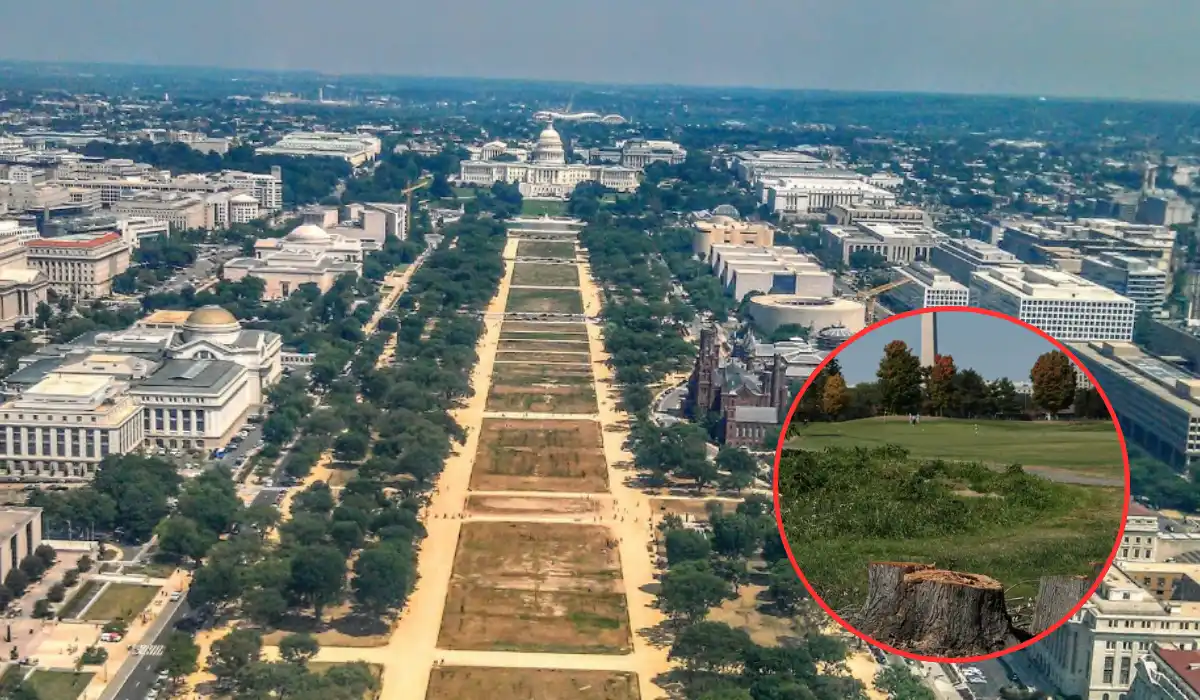
- The court previously revealed that government workers cut down at least 400 trees over a single holiday weekend with little notice, prompting severe judicial criticism of the government’s conduct.
- President Trump publicly rejected the court’s intervention upon returning to Joint Base Andrews in Maryland, mockingly referring to Judge Reyes as an “architectural critic” and confirming that the administration will appeal the decision while proceeding with plans to close the site on November 15 for a 15-month redevelopment.
- Judge Reyes formally rejected a motion filed by the Department of Justice requesting her recusal from the proceedings, in which federal attorneys accused her of “egregious” judicial conduct during prior emergency hearings.
Washington (Evening Washington News) October 27, 2026 – A federal judge in Washington, D.C., has granted a preliminary injunction that extends a court-ordered block on the Trump administration’s plans to overhaul the historic East Potomac Golf Course. U.S. District Judge Ana Reyes issued the ruling on Monday, temporarily barring the federal government from felling additional trees or carrying out structural modifications on the 106-year-old municipal site without providing 10 days’ advance written notice. The legal decision follows an emergency lawsuit filed by historic preservation groups and local golfers who allege the unapproved redevelopment causes irreversible environmental and cultural damage. President Donald J. Trump has vowed to appeal the injunction, insisting the 15-month closure scheduled for November 15 will proceed as planned.
- Key Points
- Why Did Judge Ana Reyes Issue a Preliminary Injunction Against the Federal Government?
- How Has President Donald Trump and the Administration Responded to the Court Order?
- Who Are the Plaintiffs Challenging the East Potomac Park Redevelopment?
- Background of the Particular Development
- Prediction: How This Development Can Affect Washington Residents, Golfers, and Historic Preservation Movements
Why Did Judge Ana Reyes Issue a Preliminary Injunction Against the Federal Government?
As reported by legal affairs journalists for national media outlets covering the U.S. District Court for the District of Columbia, U.S. District Judge Ana Reyes granted the preliminary injunction to prevent immediate and unrecoverable physical alteration of the East Potomac Golf Course while the underlying civil suit is litigated.
The court order explicitly mandates that the Trump administration is prohibited from cutting, damaging, or removing any trees across the site. Furthermore, the administration is legally bound to provide 10 days’ written notice to the court and plaintiffs prior to initiating any “irreparable modification” to any “forms or features” of the municipal course.
In her written opinion, Judge Reyes—who was nominated to the federal bench by Democratic President Joe Biden—expressed profound concern over the legal positions advanced by Department of Justice counsel. Specifically, Judge Reyes highlighted the fundamental disconnect between official courtroom testimony and the public declarations made by the President of the United States.
As reported by media titles covering the ruling, Judge Ana Reyes stated in her decision: “This started as a case about golf. That good walk spoiled. But it has become much more. It now forces the Court to reconcile assertions by President Donald J. Trump with the sworn testimony of multiple government employees and the argument of senior Department of Justice attorneys.”
Judge Reyes expressed astonishment that federal prosecutors asked the bench “not to believe the sitting President” when assessing the immediacy and scope of the administration’s construction timelines.
Addressing the procedural nature of her injunction, Judge Reyes invoked legal precedent and classic literature to contextualise the court’s stance. As noted in court records, Reyes referenced a golf-related opinion authored by the late conservative Supreme Court Justice Antonin Scalia.
As reported in court filings, Judge Ana Reyes wrote: “The Court would much prefer not to have to resolve Lorax v. Once‑ler redux. Indeed, for months, the Court declined to intervene.”
Judge Reyes explained that the government’s abrupt physical actions forced judicial intervention after contractors bulldozed hundreds of mature trees over a holiday weekend with minimal notice to the plaintiffs, doing “what it assured all it would not do.”
As reported from the ruling, Judge Ana Reyes wrote: “Here, golf and government have again clashed. By issuing this preliminary injunction, the Court does not end the round: it simply marks the ball until the parties can fully and fairly litigate this case.”
How Has President Donald Trump and the Administration Responded to the Court Order?
President Donald J. Trump publicly addressed the court’s preliminary injunction late Monday evening upon arriving at Joint Base Andrews in Maryland following a campaign rally in Mississippi. Speaking to reporters on the tarmac, President Trump confirmed his intention to challenge the judicial ruling in higher appellate courts while asserting that the redevelopment project remains on track.
As reported by journalists present at Joint Base Andrews, President Donald J. Trump stated: “It has the go-ahead. The judge feels that she would like to approve it as it goes along. And I didn’t know she was an architectural critic of golf courses.”
President Trump continued his remarks regarding Judge Reyes, stating: “She knows nothing about that, so we’ll appeal that.”
He defended the multi-million-dollar transformation, characterizing the overhaul as a “beautiful project for Washington, D.C.”
President Trump subsequently reaffirmed his timeline in a public statement released on social media, reiterating his previous announcement from October 18 that the public facility would close to the public for more than a year.
As reported from his social media statement, President Donald J. Trump posted: “We are closing the East Potomac Golf Course Site as scheduled on November 15th in order to renovate and rebuild for Competitive (with other such projects!), Safety, Modernization, and Aesthetic reasons.”
The administration’s legal team had previously attempted to remove Judge Reyes from the case entirely. Department of Justice attorneys filed a formal motion requesting her recusal, alleging that she demonstrated bias and engaged in “egregious” behavior from the bench during an emergency hearing. Judge Reyes formally denied the recusal motion in Monday’s order, concluding that the government’s claims of partiality were legally unfounded.
Who Are the Plaintiffs Challenging the East Potomac Park Redevelopment?
The legal action challenging the federal government’s construction activities was filed by a coalition of civic, historic, and environmental advocacy organizations alongside local residents. The core plaintiffs include the DC Preservation League, the Cultural Landscape Foundation, a local District resident, and two avid D.C. golfers who regularly utilize the public course.
The advocacy coalition is represented in federal court by co-counsel Democracy Forward. Following the issuance of the preliminary injunction, executive leadership from the legal organization commended the court’s intervention to halt ongoing site destruction.
As reported in an official statement, Democracy Forward President & CEO Skye Perryman stated that the ruling represents “a big win that will rightly protect East Potomac Park from further irreparable harm.”
Skye Perryman added via email that the preliminary injunction successfully halts all clearance activities “while the case continues, and we are eager to argue the case in court.”
The plaintiffs contend that the administration’s rapid deployment of heavy machinery—which resulted in the felling of at least 400 trees over a single holiday weekend—inflicts permanent environmental degradation on a publicly owned cultural asset without adherence to mandatory federal historical preservation reviews or environmental impact studies.
Background of the Particular Development
East Potomac Park occupies a human-made island situated in the Potomac River, just south of the National Mall in Washington, D.C. Established by an Act of Congress in 1910 as a public recreational park, the site features the 106-year-old East Potomac Golf Course, which opened in 1920 and stands as one of the oldest continuously operated public golf facilities in the United States. Renowned for its historic layout, accessible public pricing, and iconic views of city landmarks, the park is listed on the National Register of Historic Places.
The dispute over East Potomac Park forms part of a broader, highly controversial campaign by President Donald J. Trump to execute major structural and aesthetic alterations across the nation’s capital. The administration’s architectural initiatives in Washington include:
- Construction of a massive new state ballroom on the White House grounds.
- Plans for a monumental triumphal arch within the District.
- The creation of a “National Garden of American Heroes” in neighboring West Potomac Park.
- Renaming initiatives targeting prominent cultural venues, including proposals affecting the John F. Kennedy Center for the Performing Arts.
The lawsuit filed by the DC Preservation League and Democracy Forward argues that federal agencies under executive direction failed to comply with statutory requirements under the National Environmental Policy Act (NEPA) and the National Historic Preservation Act (NHPA). These federal statutes mandate public consultation, environmental impact assessments, and historic impact evaluations before major federal alterations can be made to registered historic landmarks.
Prediction: How This Development Can Affect Washington Residents, Golfers, and Historic Preservation Movements
The preliminary injunction issued by the federal court will have direct operational, legal, and environmental impacts across multiple stakeholder groups:
- Local Golfers and District Residents: Public recreational access to the East Potomac Golf Course will remain preserved in the immediate term. Should the preliminary injunction hold through the November 15 target closure date, thousands of local golfers and community members will retain access to the public park, delaying the administration’s proposed 15-month operational shutdown until full judicial reviews are completed.
- Historic Preservationists and Environmental Advocates: The ruling provides a legal precedent for historic preservation coalitions seeking to restrain executive branch alterations to federal parks and public lands. By enforcing strict 10-day notice requirements before any physical alterations occur, preservation groups gain crucial procedural oversight to challenge unauthorized site clearances nationwide.
- The Department of Justice and Executive Branch Authorities: The federal government faces an immediate appellate burden as it prepares to appeal Judge Reyes’ order to the U.S. Court of Appeals for the D.C. Circuit. Federal prosecutors will be forced to reconcile internal agency testimony with executive policy statements, potentially constraining how executive orders regarding federal property redevelopment are implemented during ongoing civil litigation.