
Washington State is one of the best spring destinations in the Pacific Northwest for cherry blossom viewing. The strongest bloom season usually runs from late March through early April, and the best-known viewing areas are in Seattle, Tacoma, and Olympia.
- When do cherry blossoms bloom in Washington State?
- Where are the best cherry blossom spots in Seattle?
- Why is the University of Washington Quad so famous?
- What should visitors know about Tacoma and Olympia?
- How does cherry blossom season connect to Japanese heritage in Washington?
- What is the best route for a spring cherry blossom trip?
- What makes Washington State a strong spring travel destination?
- How should visitors plan for peak bloom?
When do cherry blossoms bloom in Washington State?
Cherry blossoms in Washington State bloom in late March and early April. Peak bloom changes each year because temperature, rainfall, and tree variety affect opening speed.
Bloom season is short. The trees open quickly, then petals fall within days or weeks. A warm spring pushes bloom earlier. A cooler spring delays it. That is why flexible travel dates work better than fixed dates.
Different cherry tree varieties bloom at different times. Yoshino cherries usually bloom first. Kwanzan cherries bloom later in spring. This creates a longer viewing season across the state when multiple sites are included in one trip.
For travel planning, the safest window is usually the last week of March through the second week of April. That period covers the most common statewide bloom timing.
Where are the best cherry blossom spots in Seattle?
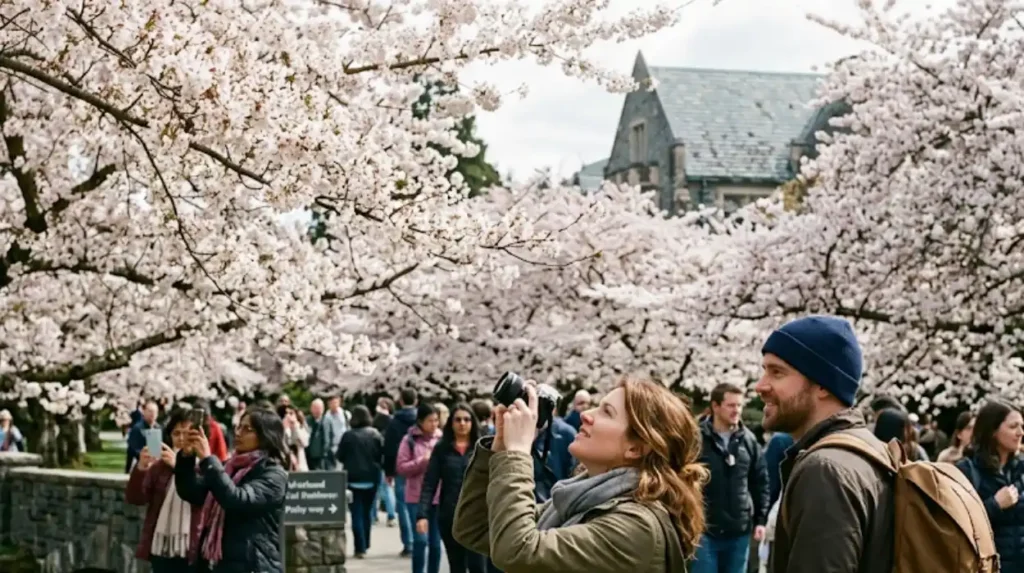
Seattle has the most famous cherry blossom locations in Washington State. The top spots are the University of Washington Quad, Seattle Center, Washington Park Arboretum, Seattle Japanese Garden, and Seward Park.
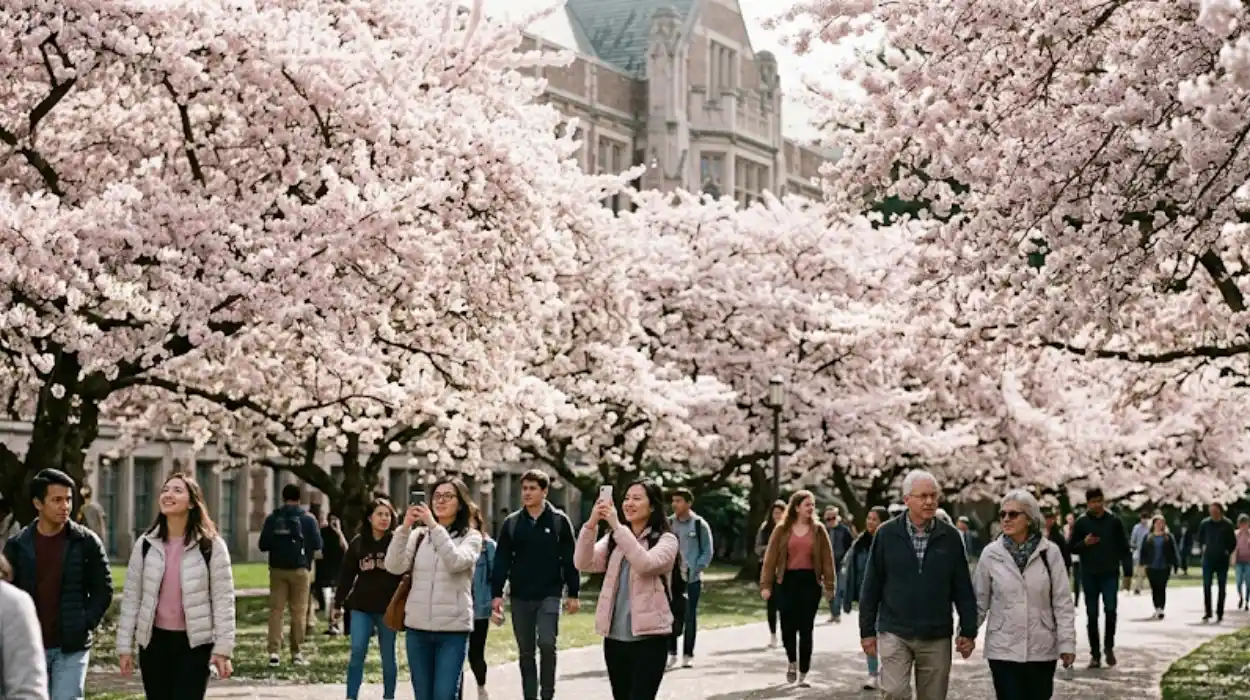
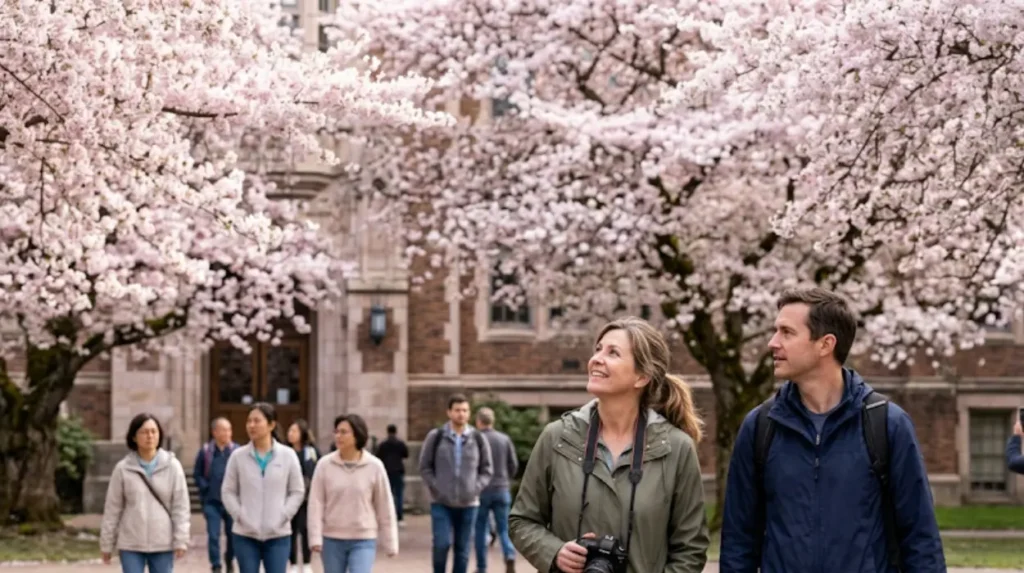
The University of Washington Quad is the state’s signature blossom site. Its central grove of cherry trees creates a dense spring display that draws large crowds every year. It is the most recognizable cherry blossom destination in Washington.
Seattle Center is another important spring stop. It combines blossom viewing with open public space and cultural programming. This area works well for travelers who want flowers and events in the same visit.
Washington Park Arboretum offers a broader natural setting with many spring blooms, not only cherries. The Seattle Japanese Garden, located inside the Arboretum, adds a quieter and more formal garden experience.
Seward Park and Lake Washington Boulevard provide more relaxed viewing areas. These locations suit visitors who want a less crowded walk and a more casual spring outing.
Why is the University of Washington Quad so famous?
The University of Washington Quad is famous because it combines mature cherry trees, a compact viewing area, and a long spring tradition. It is the most photographed cherry blossom spot in the state.
The trees are clustered in one central campus location, which creates a strong visual effect when they bloom together. That makes the Quad especially attractive for photography, short visits, and seasonal walking tours.
The site is also well known because the trees are longstanding campus landmarks. Their age and placement give the area a strong sense of history. Visitors return each year because the setting feels both iconic and easy to recognize.
The Quad’s popularity also comes from its accessibility. It sits in a major urban campus, so it fits naturally into a Seattle day trip. That makes it one of the most efficient blossom-viewing stops in Washington.
What should visitors know about Tacoma and Olympia?
Tacoma and Olympia add important cherry blossom stops outside Seattle. Tacoma offers park and street viewing, while Olympia offers a civic campus setting with historic flowering trees.
Tacoma’s Point Defiance Park is one of the strongest South Sound blossom destinations. Its gardens and parkland create a scenic spring atmosphere that works well for walking and photography. The city also has streets and neighborhood areas where cherry trees line spring routes.
Olympia’s Washington State Capitol Campus is another major destination. The campus includes Yoshino and Kwanzan cherry trees, so bloom timing extends across more than one variety. That makes it useful for travelers who miss the earliest Seattle bloom window.
These South Sound locations are valuable because they widen the spring travel season. A visitor who sees the trees in Seattle can often continue south and find fresh blooms a little later. That gives the region a longer and more flexible cherry blossom itinerary.
How does cherry blossom season connect to Japanese heritage in Washington?
Cherry blossom viewing in Washington State is closely tied to Japanese and Japanese American heritage. Public gardens, cultural festivals, and donated trees connect the bloom season to community history.
Seattle’s cherry blossom season is linked with Japanese cultural celebration. The flowers are not only decorative. They also represent long-term cultural exchange and public memory. That gives the season deeper meaning than a simple spring photo opportunity.
Donated trees reinforce that connection. Some major cherry blossom sites in Washington were shaped by gifts from Japanese institutions and community groups. Those plantings created lasting public landscapes that still define spring travel in the state.
The Seattle Cherry Blossom & Japanese Cultural Festival strengthens this relationship further. It combines blossoms with performances, food, and traditional arts. That makes cherry blossom season both a visual event and a cultural one.
What is the best route for a spring cherry blossom trip?
The best route starts in Seattle and extends to Tacoma or Olympia depending on your time. A two-day trip can cover the most important blossom sites without rushing.
Start with the University of Washington Quad in the morning. That gives you the most famous cherry blossom scene in the state and usually the best light for photos. Then move to Seattle Center or the Arboretum for a second bloom location.
If you have more time, add the Seattle Japanese Garden for a quieter, more formal setting. That creates a strong mix of public campus, garden, and cultural space in one city.
For a South Sound route, begin in Tacoma’s Point Defiance Park and continue to Olympia’s Capitol Campus. That route gives you park scenery, civic architecture, and multiple cherry tree varieties. It works especially well for a weekend drive.
What makes Washington State a strong spring travel destination?
Washington State is strong for spring travel because it offers several cherry blossom destinations in one region. Visitors can choose between urban campuses, botanical gardens, cultural spaces, and park landscapes.
The state’s blossom sites are spread across Seattle, Tacoma, and Olympia. That geographic spread gives travelers options when bloom timing changes. If one site is early or late, another may still be near peak.
The destinations also fit different travel styles. Some visitors want a quick photo stop. Others want a long walk, a garden visit, or a festival day. Washington supports all of those trip types during the same season.
This variety makes the topic evergreen. Every spring brings a similar travel pattern, but the exact dates change. That keeps the state relevant every year for local trips, weekend outings, and photography-focused visits.
How should visitors plan for peak bloom?
Visitors should plan a flexible late-March to early-April trip and choose more than one blossom location. That gives the best chance of catching peak bloom even when weather shifts the timing.
Peak bloom is brief. Cherry blossoms open fast and fade fast. A single exact date is risky, so a date range works better. Travelers should expect variation from one year to the next.
A good plan includes one primary stop and one backup stop. Seattle gives the densest cluster of choices, while Tacoma and Olympia add additional options if bloom timing differs. That makes the trip easier to adapt.
Visitors should also expect crowds at the most famous sites. Early arrival helps. So does combining a top-tier location with a quieter second stop. That creates a better spring itinerary and a more complete cherry blossom experience.
When do cherry blossoms bloom in Washington State?
Cherry blossoms in Washington State usually bloom from late March through early April. Peak bloom varies each year depending on spring temperatures, rainfall, and the type of cherry tree. Yoshino cherry trees generally bloom first, followed by Kwanzan cherry trees later in April.