
Key Points
- Dr Ali Mamouri of the Next Century Foundation argues that Iraq’s new prime minister is facing a major foreign-policy test ahead of a crucial Washington visit.
- The central issue is how Iraq can respond to pressure from the United States to curb Iranian influence while keeping its relationship with Tehran intact.
- Mamouri says this balance is not just a diplomatic preference but a geopolitical necessity for Iraq.
- Recent reporting also shows the wider context of the visit, including tensions involving Iran-backed militias, Baghdad’s diplomatic outreach, and Washington’s growing focus on Iraq’s regional role.shafaq+1
- Other reports indicate that the Iraqi leadership is trying to preserve ties with both Washington and Tehran while navigating competing security and political demands.
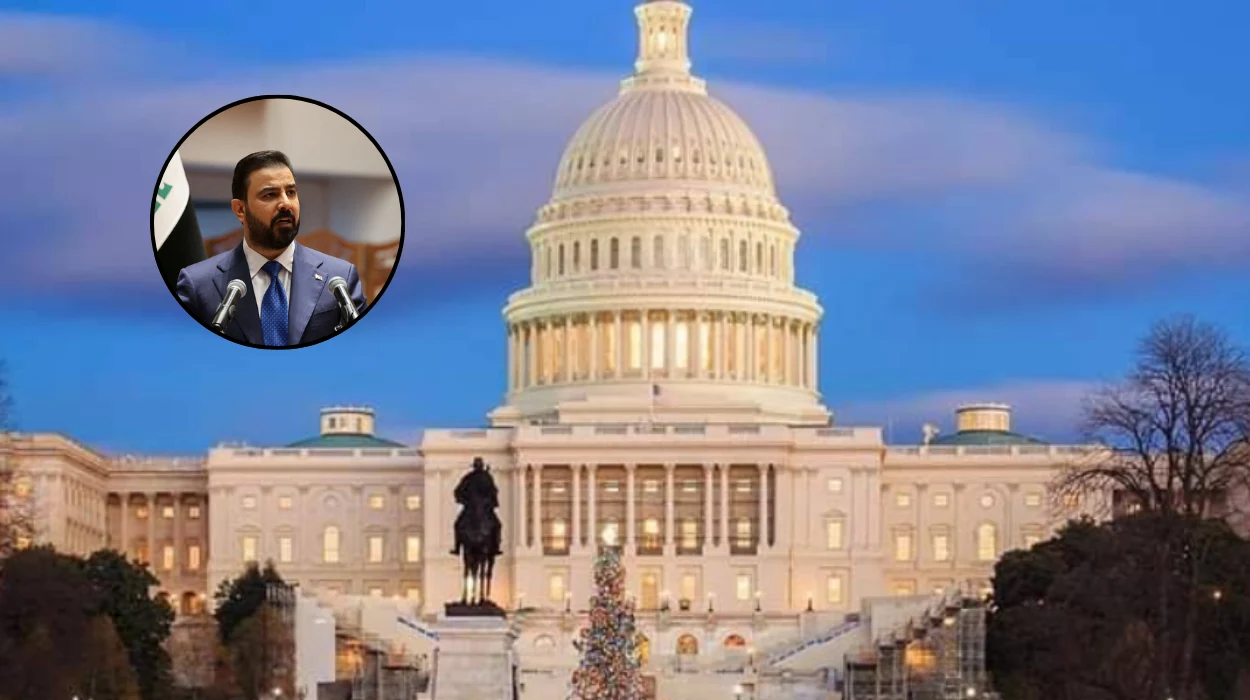
Washington (Evening Washington News) July 21, 2026 – Iraq’s new prime minister is heading into a high-stakes diplomatic moment in Washington, where the central question is how far Baghdad can align with the United States without provoking Iran or destabilising Iraq’s own political balance. Dr Ali Mamouri, writing for Amwaj.media and cited by the Next Century Foundation, describes this as an “Iran test” for the new government.
Mamouri says the government must manage pressure from Washington to reduce Iranian influence in Iraq while still maintaining a workable relationship with Tehran.
That balancing act is presented not as a matter of choice, but as something Iraq needs in order to protect its national interests. The article frames the visit as a test of whether the new prime minister can avoid being pulled too far in either direction.
Why does this visit matter for Iraq’s foreign policy?
As reported by Dr Ali Mamouri of Amwaj.media, Iraq’s position sits at the intersection of American security expectations and Iranian regional influence.
The Washington visit comes at a time when the United States wants clearer action on curbing Tehran’s reach, while Iraq continues to depend on practical ties with its neighbour.
Recent coverage from AP said President Donald Trump welcomed Iraq’s new prime minister at the White House and promoted the relationship as one with “tremendous chemistry”.
Other reports said the visit was intended to deepen economic ties, even as Iraq-based allies of Iran were threatening confrontation with the US.
That combination shows why the trip is being watched closely: it is about more than one meeting, and more about the direction of Iraq’s wider diplomatic posture.
What are the wider regional pressures?
Reporting from Shafaq News said Iraqi Prime Minister Ali Falih al-Zaidi was due to travel to Tehran carrying a proposal to host US-Iranian talks in Baghdad.
The Arab Weekly also reported that the Tehran mission would be followed by visits to Qatar, Saudi Arabia, Turkey and Syria as Iraq seeks to reinforce its regional diplomatic role.
These developments suggest Baghdad is trying to present itself not only as a state under pressure, but as a possible mediator.
Alhurra reported that Iran reacted with concern after al-Zaidi’s Washington trip, while another Alhurra report said Iran is facing challenges in Iraq that it has not encountered in years.
JPost similarly said Iraq’s prime minister arrived in Washington with US ties and Iran-backed militias at stake. Taken together, these reports show a broader struggle over Iraq’s strategic direction rather than a single bilateral issue.
How are analysts describing Iraq’s position?
Mamouri’s analysis, published through the Next Century Foundation, argues that Iraq’s government cannot afford to sever either relationship because both Washington and Tehran shape Iraq’s political and security environment. He presents the balancing act as a geopolitical necessity, not a symbolic gesture.
Coverage from 19FortyFive also suggested that Washington is beginning to treat Syria and Iraq within a connected policy framework, which raises the stakes for Baghdad’s choices.
That means Iraq’s options are narrowing as regional crises overlap, especially where security, militia influence and cross-border diplomacy are concerned. For Baghdad, this creates a narrow path between cooperation with the US and accommodation of Iran.
What did the reports say about the US visit itself?
AP reported that Trump gave the Iraqi prime minister an effusive welcome at the White House on Tuesday, signalling a warm public tone despite the underlying strategic tensions.
JPost reported that the visit was linked to efforts to strengthen US ties while addressing the issue of Iran-backed militias. These reports indicate that the visit had both symbolic and practical dimensions.
The published snippets also show that the Iraqi leadership is trying to widen its diplomatic channel beyond Washington and Tehran alone.
By moving between regional capitals, Baghdad appears to be seeking political room to manoeuvre. That approach could help Iraq reduce pressure from any single bloc, but it also makes the government’s balancing act more exposed.
Background of the development
Iraq has long been pulled between the influence of the United States and the influence of Iran, and that tension has shaped Iraqi politics for years.
The current development follows a period of increased attention on Iraq’s regional role, especially as Washington looks for stronger constraints on Iran-linked networks.
The immediate context includes the Iraqi prime minister’s Washington visit, reports of proposals for US-Iran talks hosted in Baghdad, and concern in Tehran about Iraq’s diplomatic direction.
The broader backdrop is a region where Iraq is trying to preserve stability while dealing with military, economic and political pressure from multiple directions.
Mamouri’s article places that reality at the centre of the story, arguing that the government’s success will depend on whether it can keep both channels open without appearing to choose one camp over the other.
Prediction
For Iraqi policymakers, this development is likely to increase pressure to show they can manage relations with both Washington and Tehran without triggering a backlash from either side.
If the government succeeds, Iraq could strengthen its role as a regional mediator and improve its standing with international partners.
For the Iraqi public, the main effect will be on political stability, security policy and economic diplomacy, since the outcome may shape how much room the government has to act on militias, foreign investment and regional talks.
For audiences following Middle East policy, the story suggests that Iraq will remain a key test case for whether a state can balance rival powers while protecting its own interests.