Key Points
- High-Level Dialogue in Washington: Federal Minister for Finance and Revenue, Senator Muhammad Aurangzeb, held official talks with a senior delegation from US-based Honeywell Technologies in Washington, D.C.
- Focus on Downstream Expansion: Discussions centered on a proposed plan to modernise and upgrade Pakistan’s oil refining sector to increase domestic capacity and improve fuel quality.
- Leadership Representation: The Honeywell delegation was led by Vice President and General Manager Barry Glickman.
- Strategic Energy Goals: The initiative aims to enhance domestic refining capabilities, reduce reliance on expensive imported refined petroleum products, and advance Euro-V emissions standards.
- Multi-Lateral Financing Framework: The meeting explored technical and financing solutions involving the Export-Import Bank of the United States (US EXIM Bank), the US International Development Finance Corporation (DFC), export credit agencies, and leading international financial institutions.
- Bilateral Economic Agenda: The meeting took place during Minister Aurangzeb’s three-day official visit to the United States to engage with trade officials, international financial institutions, and US development agencies.
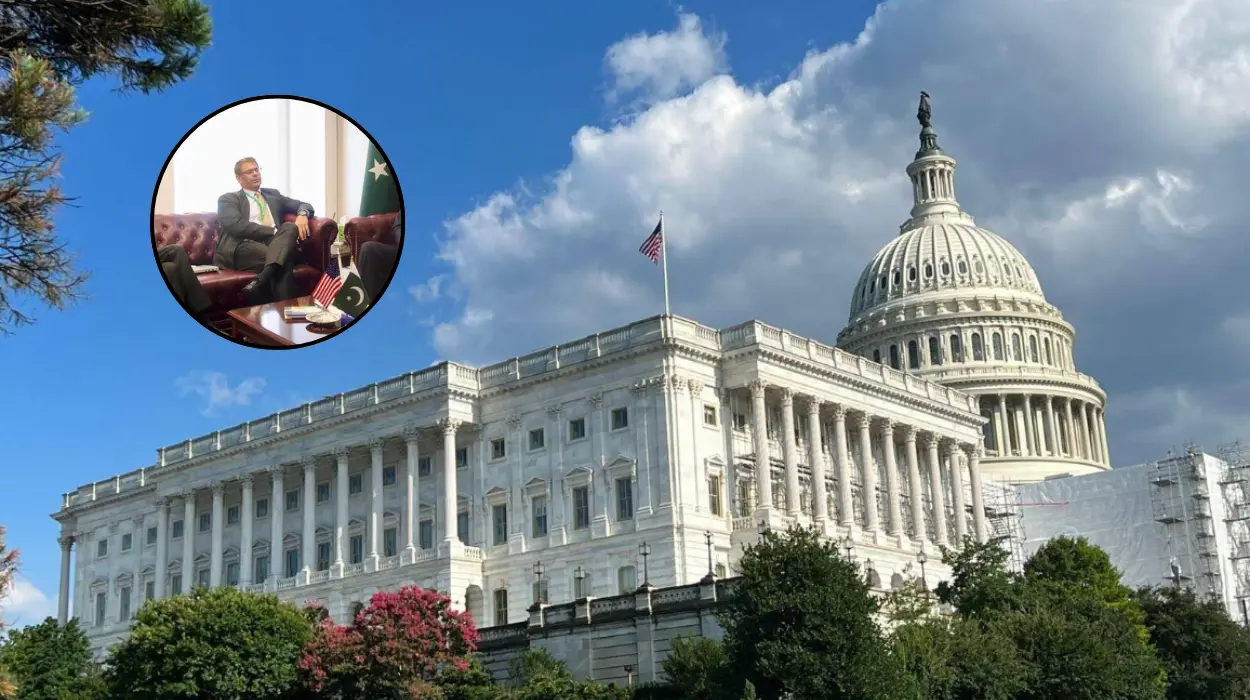
Washington, D.C. (Evening Washington News) July 21, 2026 – Pakistan is actively evaluating a comprehensive proposal from United States-based technology firm Honeywell Technologies to modernise and expand the country’s downstream oil refining sector. The initiative aims to significantly increase domestic refining capacity, upgrade fuel quality standards, and curb the nation’s heavy dependence on imported refined petroleum products. The official bilateral discussions took place during a high-level meeting in Washington, D.C., between Federal Minister for Finance and Revenue, Senator Muhammad Aurangzeb, and a Honeywell delegation headed by Vice President and General Manager Barry Glickman.
- Key Points
- What Was Discussed During the Finance Minister’s Meeting With Honeywell?
- How Does This Meeting Fit Into Pakistan’s Broader Economic Strategy in Washington?
- What Is the Background to Pakistan’s Refinery Modernisation Initiatives?
- What Is the Prediction for How This Development Will Affect Key Stakeholders?
What Was Discussed During the Finance Minister’s Meeting With Honeywell?
According to an official statement issued by the Press Information Department (PID) and the Ministry of Finance, Minister Aurangzeb formally welcomed Honeywell’s strategic proposal, highlighting its potential to strengthen Pakistan’s downstream energy security.
As reported in Dawn, official sources confirmed that the delegation from Honeywell Technologies presented technology and equipment solutions tailored to upgrade Pakistan’s existing brownfield refining infrastructure.
As reported by the news desk of The Express Tribune, the Ministry of Finance stated that the finance minister welcomed the proposal, noting its potential to “enhance the country’s domestic refining capacity and reduce reliance on imported petroleum products”.
The bilateral dialogue addressed both technological delivery and financial execution frameworks. As detailed by official finance ministry sources, discussions encompassed technical specifications for refinery upgrades alongside potential funding mechanisms involving:
- The Export-Import Bank of the United States (US EXIM Bank)
- The US International Development Finance Corporation (DFC)
- Global export credit agencies
- Leading international commercial and development banks
As reported by Dawn, the Ministry of Finance stated: “The finance minister emphasised that the proposed initiative would support Pakistan’s energy security, industrial development, and sustainable economic growth”.
How Does This Meeting Fit Into Pakistan’s Broader Economic Strategy in Washington?
The engagement with Honeywell formed a key component of Minister Aurangzeb’s three-day official visit to Washington, D.C., where he conducted talks with senior US officials, multilateral lenders, and export financing bodies.
According to reporting by Dawn, Pakistan and the United States resumed discussions on a broader bilateral economic partnership during the same week.
These high-level deliberations focused on expanding bilateral trade, addressing export tariff structures, improving market access, and facilitating foreign direct investment across energy and infrastructure sectors.
During his stay in the US capital, Minister Aurangzeb’s schedule included engagements with:
- Representatives from the Office of the United States Trade Representative (USTR).
- Executives from the US EXIM Bank and the DFC.
- Officials from the International Monetary Fund (IMF).
What Is the Background to Pakistan’s Refinery Modernisation Initiatives?
Pakistan’s oil refining industry consists of five major operating entities: Pakistan Arab Refinery Company (PARCO), Attock Refinery Limited (ATRL), National Refinery Limited (NRL), Pakistan Refinery Limited (PRL), and Cnergyico.
As documented by industry reports published in Energy Update, the sector faces deep structural and technological bottlenecks:
- Outdated Technology: Most domestic plants rely on ageing hydro-skimming processes, which yield high volumes of furnace oil—a heavy fuel for which domestic industrial and power demand has dropped significantly due to a shift towards alternative energy sources.
- Import Reliance: Due to limited conversion capabilities for producing lighter, high-value fuels (such as Euro-V compliant motor gasoline and high-speed diesel), Pakistan relies heavily on finished fuel imports, consuming significant foreign exchange reserves.
- Fiscal and Tax Challenges: In previous engagements with domestic refinery CEOs reported by Digital Pakistan, industry heads highlighted that changes in the domestic sales tax framework—transitioning petroleum products from zero-rated to exempt supplies—increased operational and capital expenditures, impacting project feasibility.
To address these challenges, the Government of Pakistan introduced the Policy for Modernisation of Brownfield Refineries.
This policy framework offers fiscal incentives to encourage refineries to undertake multi-billion-dollar upgrades aimed at upgrading output to Euro-V standards and converting heavy furnace oil into petrol and diesel.
What Is the Prediction for How This Development Will Affect Key Stakeholders?
If the proposal by Honeywell Technologies transitions into concrete engineering, procurement, and financing agreements, its impact will filter through several key sectors of the Pakistani economy:
Upgrading local refining facilities to process heavy crude into high-value motor spirit and diesel can reduce finished fuel imports.
According to industry projections from refinery heads, full-scale modernisations across domestic facilities could save nearly $1 billion annually in foreign exchange reserves, strengthening the country’s balance of payments position and external stability.
For operating refineries—PARCO, ATRL, NRL, PRL, and Cnergyico—access to Honeywell’s processing technologies and US EXIM/DFC credit facilities provides a pathway to modernize aging plants.
Transitioning away from low-margin furnace oil toward Euro-V compliant fuels will improve refining margins, commercial viability, and alignment with environmental standards.
For commercial and private fuel consumers, local production of Euro-V petrol and diesel ensures a cleaner, more reliable domestic fuel supply.
Reduced reliance on volatile international spot markets for finished petroleum products helps cushion the domestic market against external supply chain disruptions and sudden import price fluctuations.