

Key Points
- House Republicans are meeting on Capitol Hill in Washington, D.C., on July 14, 2026, as leadership tries to move the party forward after a prolonged floor blockade.
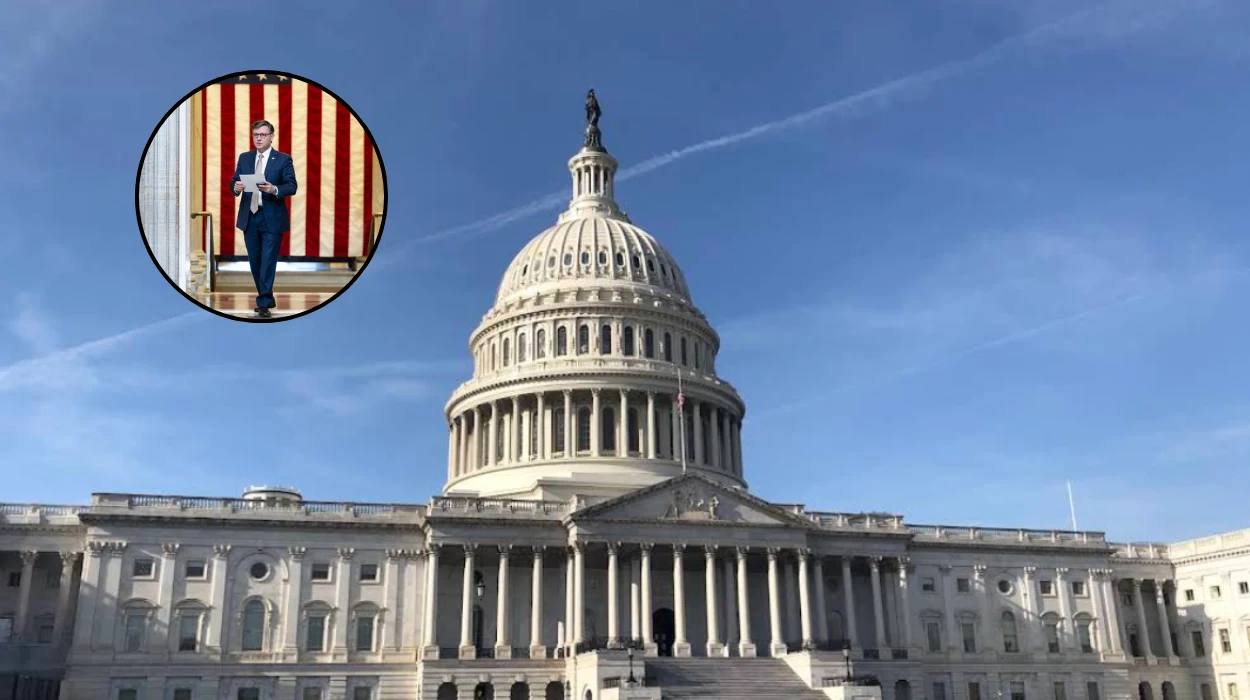
- Reuters’ photo caption identifies House Majority Leader Steve Scalise as arriving for the conference meeting, underlining the leadership presence at the gathering.
- Coverage on July 14 says GOP leaders are racing to end a conservative revolt that has paralysed the House floor for nearly a month.
- Reports also say Speaker Mike Johnson is working to flip holdouts, with signs that the blockade may be starting to thaw.
- The broader legislative push includes an effort to advance a third reconciliation bill tied to Pentagon funding and voting restrictions before the August recess.
- House Republicans have been under pressure to restore order after internal divisions disrupted the chamber’s work and stalled the agenda.
Washington (Evening Washington News) July 14, 2026 – House Republicans are meeting on Capitol Hill in Washington, D.C., on Tuesday as party leaders attempt to end a damaging internal standoff that has frozen work on the House floor and slowed the chamber’s legislative agenda.
Why are House Republicans meeting now?
The meeting comes after weeks of paralysis in the House, with Republican leaders struggling to resolve a conservative revolt that has left floor business at a standstill for nearly a month.
Reuters’ image caption places House Majority Leader Steve Scalise among those arriving for the conference meeting, showing that senior leadership is directly involved in the effort to reset the party’s direction.
As reported by a Washington Examiner article, Republicans are meeting as a conference for the first time since leaving Washington last month after a GOP blockade froze the floor.
That timing matters because the House is approaching the August recess, which has increased pressure on leaders to clear disputes and restore legislative momentum.
What is the blockade about?
The reports do not describe a single narrow dispute; instead, they point to a broader conservative revolt that has exposed deep divisions inside the House Republican Conference.
Those divisions have been serious enough to stop regular floor business and force leadership to spend time negotiating with holdouts rather than advancing bills.
House leadership is now trying to stabilise the situation and regain enough support to move legislation again.
The Washington Post report says leaders are scrambling to assemble a third reconciliation bill that would advance two major Trump priorities before the recess, which adds urgency to the talks.
What legislation is at stake?
One of the main items under discussion is a party-line bill that would fund the Pentagon and encourage voting restrictions, according to the Washington Post report.
That report says House leaders are racing to get the measure moving before members leave for August recess.
The wider context is that House Republicans have struggled for months to get their agenda back on track after a series of internal disputes and disruptive weeks.
The party’s ability to pass major legislation now depends not only on public messaging but also on whether leaders can hold enough of their own members together for procedural votes.
What are leaders saying and doing?
The Washington Examiner says Speaker Mike Johnson is working to flip GOP holdouts and that the blockade is showing signs of thawing.
That suggests leadership is focusing on private negotiations rather than public confrontation, at least for now.
The broader reporting indicates that House Republicans are trying to project unity after a difficult stretch in which the floor was repeatedly stalled.
The presence of senior figures such as Scalise at the conference meeting also suggests the leadership team is treating the situation as a priority.
How does this fit into the wider political picture?
House Republicans began 2026 with hopes of advancing a clear legislative agenda, but multiple reports have shown internal divisions interfering with that plan.
The current standoff is part of that wider pattern, with leadership now under pressure to demonstrate control and deliver on priorities tied to President Trump’s agenda.
The urgency is heightened by the legislative calendar. With the recess approaching, the party has less time to settle disputes, move bills, and show voters that it can govern effectively. If the impasse continues, it could weaken confidence in the House GOP’s ability to function as a unified majority.
Background of the development
House Republican tensions did not begin with the July 14 meeting. Earlier reports in late June and early July described a chaotic week for the Republican-led House, with leadership trying to get the chamber back on track after repeated setbacks.
A July 1 report said a “testy” meeting ended without progress, which illustrates how difficult it has been for Johnson and other leaders to find a path forward.
The political backdrop also includes the party’s broader legislative goals for 2026, which were being shaped around President Trump’s priorities and the approaching midterm environment.
That combination of internal division, time pressure, and major policy ambitions has made the conference meeting more than a routine gathering; it is part of a larger effort to restore authority inside the House Republican Conference.
What is the prediction for House Republicans?
For House Republicans, the most immediate effect is likely to be on their ability to pass legislation and present a united front to voters.
If leadership can end the revolt, the party may regain enough momentum to push its spending and policy priorities before the recess.
If the dispute continues, Republicans could face further delays, a weaker public image, and more difficulty advancing the broader Trump-backed agenda.
For the audience watching this closely, the main consequence is political rather than personal: the meeting may determine whether the House GOP can function as a governing majority or remains stuck in internal conflict.