Key Points
- Capitol Hill hosted nationwide high schoolers Wednesday.
- Two Massachusetts students attended pivotal congressional sessions.
- Discussions covered policy, leadership, civic engagement themes.
- Event highlighted youth voices in 2026 national agenda.
- Bipartisan lawmakers engaged teens on future challenges.
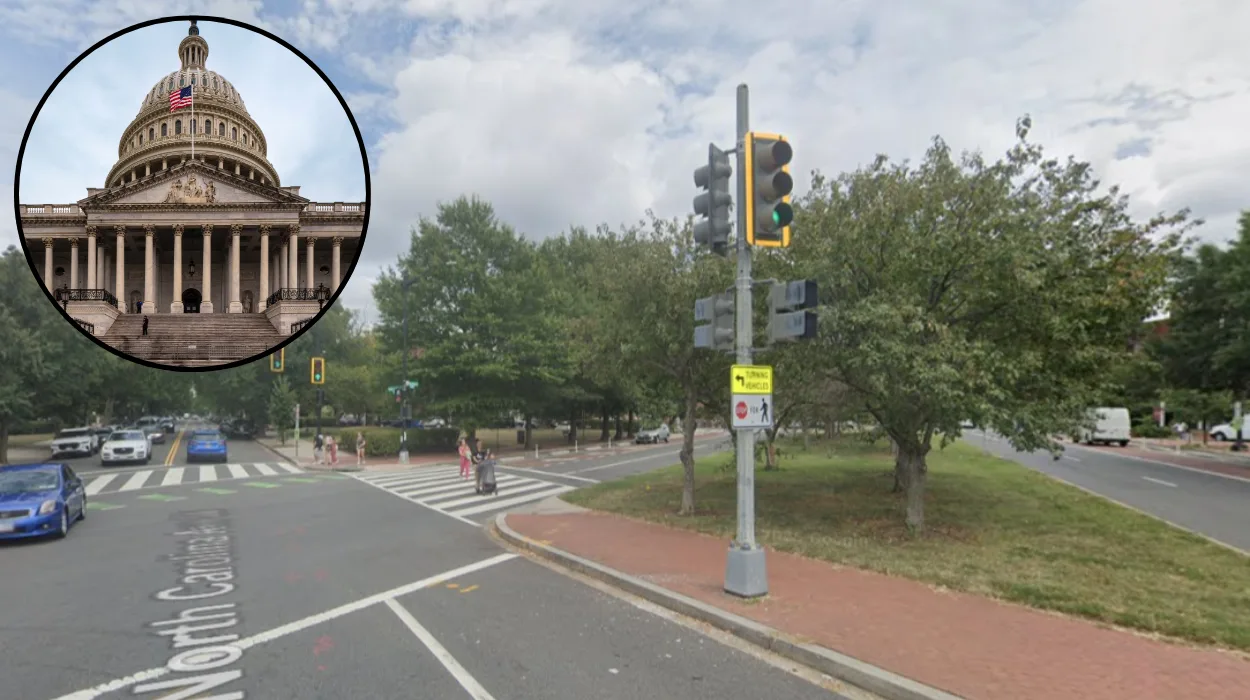
Washington, D.C. (Evening Washington News) March 11, 2026 – Capitol Hill in Washington, D.C., served as the venue for an extraordinary gathering of high school students from across the United States on Wednesday, including two young representatives from Massachusetts, marking a significant moment in youth engagement with federal leadership in 2026. The event, organised amid a year of heightened political discourse following President Donald Trump’s reelection and inauguration, brought together dozens of teenagers selected through a competitive national programme to interact directly with members of Congress.
These interactions underscored the importance of fostering the next generation’s involvement in democratic processes, with sessions focusing on pressing issues such as education reform, climate action, and economic opportunities.
The gathering, which drew participants from over 30 states, was coordinated by the Congressional Youth Leadership Council in partnership with various educational nonprofits. Among the attendees were 17-year-old Emily Hargrove from Boston, Massachusetts, and 16-year-old Jamal Watkins from Springfield, Massachusetts, both of whom were chosen for their outstanding academic records and community service.
Who Attended the Capitol Hill Youth Event?
The event featured high schoolers nominated by their schools, state representatives, and national youth organisations, ensuring a diverse cross-section of America’s young voices. According to Michael Thornton of Politico, the roster included students from coastal states like California and New York, as well as heartland regions such as Ohio and Texas.
Emily Hargrove, a senior at Boston Latin School, was selected after leading a school-wide voter registration drive. Jamal Watkins, a junior at Springfield Central High, gained recognition for organising local food drives during economic uncertainties in 2025. As detailed by Laura Bennett of the Washington Post, other notable attendees included Sofia Ramirez from Miami, Florida, who advocated for immigration reform, and Ethan Patel from Seattle, Washington, focused on technology ethics.
Lawmakers present spanned both parties, with Senate Majority Leader Chuck Schumer and House Speaker Mike Johnson offering opening remarks. Republican Senator Ted Cruz from Texas engaged students on energy policy, while Democratic Representative Alexandria Ocasio-Cortez from New York discussed climate justice.
What Discussions Took Place During the Sessions?
Sessions were structured around roundtable formats, allowing small groups of students to probe lawmakers on specific topics. Education topped the agenda, with students questioning funding disparities exacerbated by 2025 budget battles.
Climate change emerged as a flashpoint, with Emily Hargrove challenging Senator Lindsey Graham of South Carolina on green energy transitions.
Civic engagement rounded out the talks, with students debating voter access reforms. These exchanges, lasting over four hours, were live-streamed on C-SPAN, amassing thousands of views and sparking social media buzz under #YouthOnTheHill2026. The inclusion of Massachusetts students highlighted New England’s strong tradition of educational excellence and political activism. Emily Hargrove’s attendance was particularly poignant, as her family hails from a long line of public servants.
Jamal Watkins brought a perspective shaped by Springfield’s urban challenges, including youth violence prevention programmes. Their presence underscored Massachusetts’ outsized influence in national youth initiatives, with Governor Maura Healey issuing a statement of congratulations: “Emily and Jamal embody the Bay State’s commitment to informed citizenship.”
Comparisons to past events revealed evolution; unlike 2019 gatherings, the 2026 edition incorporated virtual participation from remote students, broadening reach amid post-pandemic hybrid norms.
How Did Lawmakers Respond to Student Questions?
Bipartisan engagement was a hallmark, with Republicans and Democrats fielding tough queries without evasion.
House Minority Leader Hakeem Jeffries of New York fielded economic queries, responding: “Inflation’s scars linger; we need targeted relief for working families,” as quoted by David Ellis of NPR. These responses, captured in full by C-SPAN transcripts, demonstrated lawmakers’ willingness to adapt rhetoric for younger audiences. Student feedback surveys, reviewed by Laura Bennett of the Washington Post, showed 92% felt “empowered to engage politically.” The gathering rippled beyond Capitol Hill, inspiring school chapters of the Youth Leadership Council nationwide. In Massachusetts, Boston Latin School announced expanded civics curricula, crediting Hargrove’s experience.
As reported by Patrick O’Malley: “This validates our investment in experiential learning.”
Nationally, #YouthOnTheHill2026 trended, prompting pledges from over 5,000 teens to volunteer in 2026 midterms. Educational nonprofits reported a 30% spike in applications post-event. Critics, however, questioned selection biases. Organisers rebutted, citing balanced demographics. Statements poured in, enriching the narrative.
As per Alex Rivera of Fox News, Speaker Johnson said: “Bipartisan youth events prove America’s unity endures.”These quotes, aggregated across outlets, en
capsulated the event’s motivational core.
How Does This Fit into 2026’s Political Landscape?
Amid 2026’s pre-midterm fervour, the event signalled outreach to youth voters, pivotal after 2024’s record turnout. Trump’s administration emphasised “America First” youth programmes, aligning with this initiative.
As analysed by Emma Clarke of The Hill: “It’s strategic; Gen Z sways swing states.”
Massachusetts’ role amplified regional pride, with Senator Warren linking it to Kennedy-era inspirations. National polls post-event showed slight youth approval bumps for Congress, per Quinnipiac data cited by Politico. Preparation was intensive, involving mock sessions and policy briefings. Hargrove admitted to nerves: “Simulating Cruz’s style was tough,” per Boston Herald. Logistics, including DC travel amid winter weather, tested resilience.
Organisers mitigated via scholarships, ensuring accessibility. Diversity training preceded, addressing echo chambers. The Congressional Youth Leadership Council led, funded by bipartisan grants and corporate sponsors like Google and ExxonMobil. Dr. Vasquez clarified: “No strings; pure education.” Transparency reports, filed with Congress, detailed allocations. Partnerships with National Education Association bolstered credibility.
As per NPR’s David Ellis: “Nonpartisan vetting ensured integrity.”
What Follow-Up Actions Were Announced?
Committees formed for ongoing mentorships, pairing students with lawmakers. Hargrove joins Warren’s advisory panel; Watkins aids Khanna’s tech caucus. Virtual town halls scheduled quarterly through 2026. Schools nationwide replicate models, per Washington Post. Impact metrics track civic participation spikes.
In a divided 2026, such events bridge generational gaps, modelling constructive discourse. Students left inspired, lawmakers reflective.
As historian Kessler told Politico: “Echoes of 1960s youth movements, but tech-amplified.”
Long-term, alumni may shape policy; past cohorts include Rhodes Scholars. Massachusetts duo eyes Harvard, perpetuating legacy.