Key Points
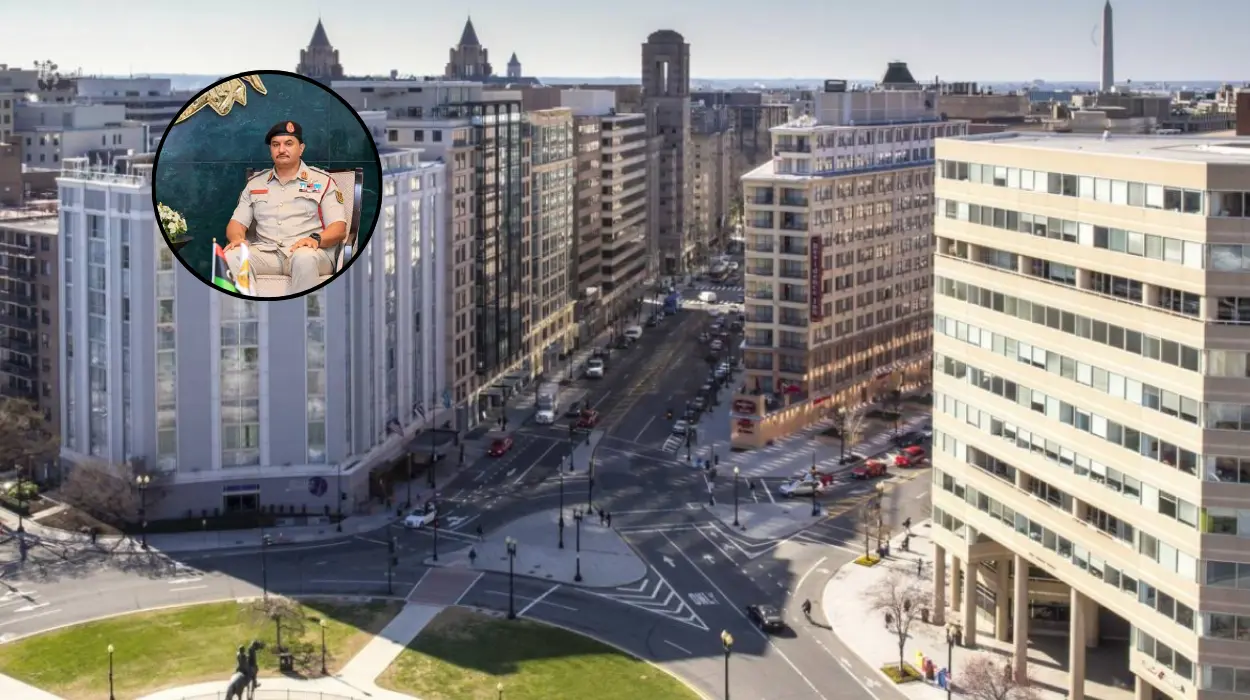
- Lt Gen Saddam Haftar is scheduled to meet US Secretary of State Marco Rubio in Washington on Monday, according to the State Department.
- Rubio is also expected to meet representatives from Libya’s eastern authorities and the Tripoli-based Government of National Unity.
- The talks come as Washington steps up efforts around a long-discussed plan to unify Libya’s rival eastern and western administrations.
- The US approach has been linked to Massad Boulos, senior White House adviser on Arab and African affairs, who has been engaging Libyan actors across the political divide.
- The proposal explores a transitional arrangement that could keep Prime Minister Abdul Hamid Dbeibah in office while giving Lt Gen Haftar a senior national executive role.
- Boulos has said the initiative is intended to be inclusive and complementary to the UN-backed political road map.
- The plan has drawn attention because Libya’s political process remains fragile despite renewed UN momentum and ongoing dialogue efforts.
Washington (Evening Washington News) June 29, 2026 – Lt Gen Saddam Haftar is set to meet US Secretary of State Marco Rubio in Washington as the United States intensifies diplomatic efforts to advance a Libya unification plan, according to reporting by The National News.
As reported by The National News, the meeting is part of a wider round of discussions in which Rubio is also expected to meet representatives from both Libya’s eastern administration and the Tripoli-based Government of National Unity.
The meetings come at a time when US officials are trying to build support for a framework meant to reduce Libya’s long-running institutional split.
According to the report, the American effort is aimed at encouraging a transitional settlement that could bring Libya’s rival political and governing structures under one umbrella.
That effort has become more visible in recent diplomatic activity led by Massad Boulos, the senior White House adviser on Arab and African affairs.
What does the US unification proposal involve?
The National News said the emerging US approach has been associated with Massad Boulos, who has recently led diplomatic engagement with Libyan actors from both sides of the divide.
The proposal reportedly envisions a transitional arrangement under which Mr Dbeibah would remain in office while Lt Gen Haftar would take on a senior national executive position.
The report added that the wider idea could lead towards a unified presidential structure, although the exact shape of any settlement has not been finalised.
Boulos has said the plan is meant to be inclusive and to reflect balanced representation across Libya’s regions and cities.
As quoted in The National News, Mr Boulos said on Saudi broadcaster Al Hadath that the initiative was
“designed to be inclusive, ensuring balanced representation for all stakeholders, regions and cities”.
He also wrote on social media that decisions on the details of any unification agreement should be made by Libyans themselves and that the US effort is intended to complement the UN road map.
How does this fit with UN efforts in Libya?
The UN has also been pushing for progress in Libya, with a recent briefing saying the political process had regained momentum even though the window for action is narrowing.
UN Special Representative Hanna Tetteh has described the UNSMIL road map as a route covering elections, institutional unification, security, economic reform and national reconciliation.
UN News reported that UNSMIL has been facilitating direct talks between the Government of National Unity and the LNA General Command, while both rival parliamentary chambers have also been taking part.
The report said those discussions have been constructive, including agreement in principle on reconstituting the electoral commission and negotiations on electoral laws.
The National News also said Boulos has highlighted the role of international partners, including the UAE, Turkey, Egypt, Italy, France, Jordan and Qatar.
That suggests the US is trying to place its initiative within a broader diplomatic effort rather than acting alone.
Why does this matter for Libya’s political divide?
Libya has remained split between rival eastern and western power centres since the upheaval that followed the fall of Muammar Qaddafi in 2011.
The report said the country descended into civil war after Qaddafi’s fall, with Field Marshal Khalifa Haftar gradually consolidating control over much of the east.
The National News noted that Saddam Haftar was appointed as his father’s second-in-command last year, a move presented at the time as a way to strengthen the LNA’s command structure.
That background helps explain why his meeting with Rubio is being closely watched by observers of Libya’s military and political landscape.
There is also a broader institutional backdrop. UN reporting in recent months has described Libya’s political and security environment as fragile, with repeated concern that progress could stall if parties do not make sustained compromises.
The latest US initiative therefore enters a process that has already seen multiple attempts at reconciliation, many of which have struggled to produce lasting results.press.un+2
What are the immediate diplomatic signals?
The strongest immediate signal is that Washington is trying to bring key Libyan actors into the same diplomatic conversation at once.
The National News reported that Rubio’s meetings are expected to include both eastern and western representatives, showing that the US is not treating the issue as a one-sided channel.
Another signal is that the US is presenting the plan as complementary to the UN process rather than a replacement for it.
That framing matters because any durable agreement in Libya is more likely to gain traction if it can fit alongside the UN’s existing political roadmap.news.un+1
The article also said the eastern-based House of Representatives and forces linked to Field Marshal Haftar have already shown support for the US proposal.
If that support holds, it could make the Washington talks a more serious diplomatic opening than previous external mediation efforts.
Background of the development
Libya’s political crisis began after the 2011 uprising that removed Muammar Qaddafi and left the country without a stable central authority.
Over time, power split between eastern and western institutions, producing parallel governments, competing armed structures and repeated failure to unify state institutions.
The UN has remained heavily involved, most recently through UNSMIL’s mandate extension and a renewed road map focused on elections, institutional unification and national reconciliation. In parallel, US diplomacy has become more visible through Massad Boulos’s outreach to Libyan actors and the proposal for a transitional framework.
This latest development therefore sits within a long-running international effort to move Libya from division towards a single political and institutional structure.
Explore More Local News
Supreme Court Prepares Major Rulings on Trump Cases Washington D.C. 2026
Institutional Investors, Housing Prices And Congress Law Washington 2026
Prediction: what could happen next?
For Libyans, the immediate effect may be another round of high-level talks that tests whether eastern and western leaders are ready for practical compromise.
If the talks produce even a limited understanding on executive power, elections or institutional reform, that could create momentum for broader negotiations.
For people in Libya who want stability, the most likely benefit would be clearer coordination between state institutions and a stronger path towards elections.
For those who are sceptical, the risk is that the proposal could add another diplomatic layer without resolving the deeper political and security divisions that have resisted earlier peace efforts.
The next stage will depend on whether Washington can turn diplomatic contact into a workable agreement that both rival sides can accept. If not, the plan may join the list of external initiatives that generated attention but limited practical change.