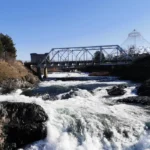

Spokane, Washington, known as the Lilac City, offers tourists 12+ major attractions including Riverfront Park, Spokane Falls (the largest urban waterfall in the US at 146 feet), Riverside State Park (9,194 acres), and Mount Spokane State Park (summit at 5,889 feet). Tourists can explore 37 miles of the Centennial Trail, visit Gonzaga University (founded 1887 on 131 acres), enjoy the historic Davenport Hotel (built 1914), and experience the Mobius Science Center (65 hands-on exhibits).
- What are the best things to do in Spokane Washington for tourists?
- Where can tourists experience Spokane’s outdoor activities and natural attractions?
- What historical sites and cultural attractions should tourists visit in Spokane?
- What family-friendly activities and indoor attractions exist in Spokane?
- How do Spokane’s parks and gardens compare for tourist visits?
- What unique Spokane attractions and local experiences define the city?
What are the best things to do in Spokane Washington for tourists?
Riverfront Park (100 acres) and Spokane Falls are the top attractions, featuring the Numerica SkyRide gondola, 1909 Looff Carrousel, and Great Northern Clock Tower. Riverside State Park offers 55 miles of hiking trails on 9,194 acres. Manito Park showcases 20 acres of botanical gardens within 78 total acres. Mount Spokane provides skiing with 2,071 feet vertical drop and hiking to 5,889-foot summit.
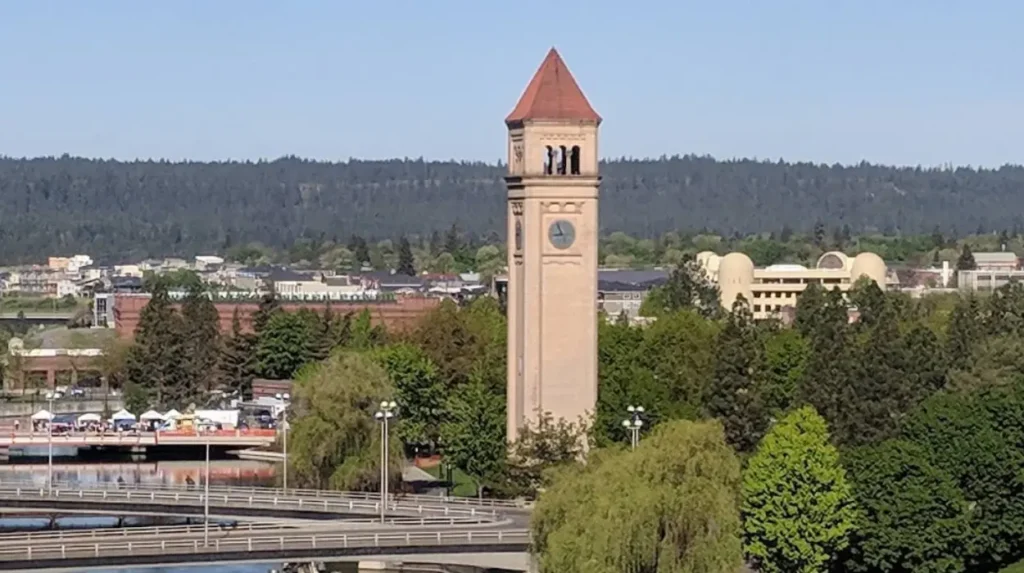
Spokane’s centerpiece is Riverfront Park, created from the 1974 Expo ’74 World’s Fair on former railroad yards. The park spans 100 acres along the Spokane River and includes the Numerica SkyRide, voted one of North America’s best gondola rides, offering views of Spokane Falls. The Looff Carrousel, a National Historic Landmark from 1909, features hand-carved horses and original chariots. The Great Northern Clock Tower stands as an Expo ’74 remnant.
Spokane Falls combines Upper and Lower Falls for 146 feet of total height, making it the largest urban waterfall in the United States. The falls powered Spokane’s early industries and remain visible from multiple park locations. Spring brings maximum water power.
Riverside State Park, located 6 miles northwest of downtown, protects 9,194 acres of Okanagan dry forest along the Spokane and Little Spokane rivers. Activities include camping, fishing, swimming, picnicking, boating, canoeing, kayaking, bird watching, wildlife viewing, ATV riding, horseback riding, biking, hiking, and rock climbing. The park features 55 miles of hiking trails, 25 miles of horse trails, and 600 acres of ORV special terrain. Basalt rock formations create the “Bowl and Pitcher” geological feature.
Manito Park contains 78 acres of native and cultivated landscape plus 20 acres of world-class botanical gardens, totaling 98 acres. Five theme gardens include the famed Duncan Gardens, Joel E. Ferris Perennial Garden, and Joel E. Ferris Rose Garden. Mirror Pond serves as a favorite photography spot. The park is less than 10 minutes from downtown Spokane.
Mount Spokane State Park offers the summit at 5,889 feet with a 4-mile roundtrip snowshoe route from Bald Knob Campground gaining 1,328 feet. The Mount Spokane Ski and Snowboard Park has a base elevation of 3,818 feet and vertical drop of 2,071 feet. Summer brings hiking trails through dense forest to a stone Vista House.
Where can tourists experience Spokane’s outdoor activities and natural attractions?
The 37-mile paved Centennial Trail runs from Nine Mile Falls to the Idaho state line for hiking and biking. Riverside State Park offers 55 miles of hiking trails. Mount Spokane provides summit hiking (4 miles roundtrip) and winter skiing. John A. Finch Arboretum features 65 acres with 2,000+ labeled trees and 1.3-mile South Loop Trail. Whitewater rafting available on Spokane River through Wiley E. Waters and Flow Adventures.
The Spokane River Centennial Trail is a 37-mile paved recreational trail for pedestrians and non-motorized vehicles, stretching from Sontag Park in Nine Mile Falls, Washington to the Washington/Idaho state line. The trail continues another 24 miles into Idaho as the North Idaho Centennial Trail through Post Falls and into Coeur d’Alene, creating a total 61-mile route. The metropolitan center section through downtown Spokane is one of the city’s top running spots. The trail can be accessed from nearly any point along the Spokane River, with favorite spots including Riverfront Park and Riverside State Park.
John A. Finch Arboretum is a 65-acre park open to the public since 1949, located minutes southwest of downtown Spokane. The site contains more than 2,000 labeled ornamental trees, shrubs, and flowers. The South Loop Trail is 1.3 miles long and passes through the most beautiful parts. The Finch Arboretum Trail is a 2.3-mile loop through wetlands and forests. Gardens include the Lilac Garden, Ornamental Grass Garden, and Conifer Garden. Garden Springs Creek runs along the property.
Whitewater rafting on the Spokane River operates through multiple companies. Wiley E. Waters Whitewater Rafting offers Spokane River trips. Flow Adventures provides Spokane River raft experiences. Coeur d’Alene Adventures also runs Spokane River trips. These companies provide equipment and guided experiences for various skill levels.
Mount Spokane State Park’s summit route is 4.0 miles roundtrip with 1,328 feet elevation gain, highest point at 5,883 feet. The winter-only route is a straight shot from Bald Knob Campground. Summer hiking includes a 5.7-mile trail with 1,339 feet elevation gain to the stone Vista House. The ski area operates with 2,071 feet vertical drop from 5,889-foot peak to 3,818-foot base.
What historical sites and cultural attractions should tourists visit in Spokane?
Gonzaga University (founded 1887, 131-acre campus) offers historic Jesuit campus tours and is the largest private learning institute in the inland Northwest. The Northwest Museum of Arts and Culture features 3,000+ art items and over 10,000 photographic images of Plateau Indian culture. The Historic Davenport Hotel (built 1914) was the first US hotel with air conditioning and offers Wednesday 6 PM Time Portal tours. Cathedral of St. John the Evangelist showcases 1908 Gothic Revival architecture.
Gonzaga University traces its origins to 1881 when Father Joseph M. Cataldo purchased 320 acres along the north bank of the Spokane River. In 1887, the university emerged on that foundation as a Jesuit priests, teachers, and students community. Originally founded for young men seeking to become priests, the school was named for St. Aloysius Gonzaga, a 16th-century Italian Jesuit saint and patron of youth. The campus covers 131 acres with 105 buildings and is only a short walk to downtown Spokane. Gonzaga is the largest institute of private learning in the inland Northwest and has become a national brand in college basketball over the last 20 years.
The Northwest Museum of Arts and Culture (MAC) is dedicated to Spokane’s history and features five galleries. The art collection comprises over 3,000 items showcasing works by Northwest artists from the 19th to 21st century. The museum is best known for its preeminent collection of American Indian artifacts, including works by living American Indian artists. The American Indian collection includes over 10,000 photographic images depicting Plateau Indian culture. The Regional History Collection exhibits textiles and clothing from the mid-19th century to present. Recent exhibits include “America at 250” (May 23, 2026 to Feb 14, 2027), “An Eye for Detail” featuring 19 European oil paintings from 1500 to 1900, and “The Mountains Are Calling” centered on the Inland Northwest’s outdoor history.
The Historic Davenport Hotel was built by Louis Davenport in 1914 and celebrates its 110th anniversary in 2024. It was the first hotel in the United States with air conditioning. The exterior mirrors Spanish Mission Revival architecture with terra cotta tiles, domed entryways, and sandstone quarried from Boise, Idaho. Visitors can participate in guided Time Portal tours exploring historic touchpoints throughout the property, held every Wednesday at 6 PM. The hotel features the Palm Court Grill Café for lunch and the Peacock Lounge for drinks.
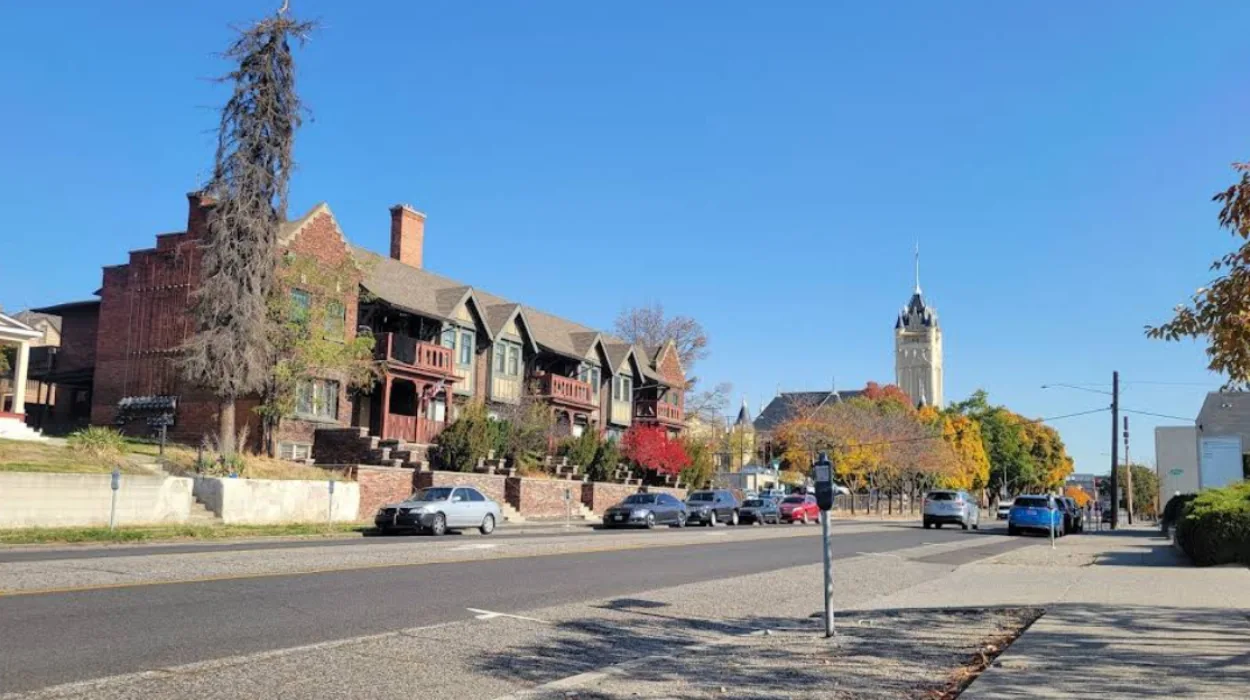
The Cathedral of St. John the Evangelist showcases 1908 Gothic Revival architecture and stands as a prominent landmark in Spokane. The Cathedral of St. John serves as an active religious site and architectural attraction.
What family-friendly activities and indoor attractions exist in Spokane?
Mobius Science Center opened February 28, 2026, with 65 hands-on exhibits for kids covering aerodynamics, electricity, recycling, friction, and velocity. The 26,000 square foot facility is located at 811 West Main Post Street across from Riverfront Park. Avista Stadium (6,803 capacity) hosts Spokane Indians baseball games since 1958. Spokane Children’s Museum offers interactive displays. The Childhood Express train rides in Riverfront Park suit young children.
Mobius Science Center represents a major new addition to Spokane’s family attractions, opening its doors to the public on Friday, February 28, 2026. The center features 65 exhibits for kids to look at and play with, most being very hands-on. Displays teach children about friction, velocity, electricity, and recycling through interactive experiences. The aerodynamics challenge and bottle rocket launcher race provide active learning. The facility includes an amazing 3D look at the human body allowing visitors to take slices. The Bubbleology activity uses bubble solution combined with glycerin and corn syrup to create huge bubbles. The center is located at 811 West Main Post Street, across the street from Riverfront Park. Hours are Tuesday through Saturday 10 AM to 6 PM, Sundays 11 AM to 6 PM, closed Mondays. Admission is $7 for kids 14 to 17 years old, $10 for ages 18 and older, and children 3 and under are free.
Avista Stadium opened in 1958 at the Interstate Fairgrounds, built in less than four months. The stadium has a seating capacity of 6,803, which is large for a Class A ballpark. It serves as home to the Spokane Indians baseball team in the Major League Baseball system. The stadium offers family-friendly baseball competitions and atmosphere.
The Childhood Express is a train ride attraction located in Riverfront Park that suits young children. This miniature train provides entertainment for families visiting the park.
How do Spokane’s parks and gardens compare for tourist visits?
Manito Park offers 20 acres of botanical gardens within 78 acres total, featuring five theme gardens including Duncan Gardens. John A. Finch Arboretum provides 65 acres with 2,000+ labeled trees and multiple trails. Riverfront Park spans 100 acres with Spokane Falls views and the Butterfly & Pollinator Garden. Riverside State Park contains 9,194 acres with 55 miles of hiking trails and basalt rock formations.
Manito Park maintains 78 acres of native and cultivated landscape plus 20 acres of world-class botanical gardens, totaling 98 acres. The park features five theme gardens: the famed Duncan Gardens, Joel E. Ferris Perennial Garden, Joel E. Ferris Rose Garden, Gaiser Conservatory, and Ornamental Grass Garden. Mirror Pond serves as a favorite photography location. The park includes spacious lawns, groves of trees, walking and bicycle paths, and historic buildings. Manito Park is less than 10 minutes by drive from The Davenport Hotel in downtown Spokane.
John A. Finch Arboretum spans 65 acres and contains more than 2,000 labeled ornamental trees, shrubs, and flowers, many rare and unique to the region. The site functions as an extensive botanical and tree garden. Winding trails meander through lush gardens, vibrant flower beds, and serene water features. The South Loop Trail is 1.3 miles long and passes through the most beautiful sections. The Finch Arboretum Trail is a 2.3-mile loop through wetlands and forests. A self-guided walking tour along the perimeter is roughly 1.25 miles. Gardens include the Lilac Garden, Ornamental Grass Garden, and Conifer Garden. Garden Springs Creek runs along the property. The arboretum is open Monday through Saturday from 6 AM to 10 PM.
Riverfront Park covers 100 acres (40.5 hectares) on an island in the Spokane River. The site was once the fishing grounds of the Spokane Tribe (who translate to “salmon people”) and was subsequently used by the railroad industry. Havermale Island was renamed by the Spokane Tribe in 2017 and now tells the story of the tribe’s evolving culture. The park includes the Butterfly & Pollinator Garden providing up-close looks at local flora and fauna emphasizing conservation and biodiversity. The park hosts the Gathering at the Falls Pow Wow, an annual celebration of Native American arts and culture.
Riverside State Park protects 9,194 acres (3,721 hectares) of Okanagan dry forest along the Spokane and Little Spokane rivers. The park offers 55 miles of hiking trails, 25 miles of horse trails, and 600 acres of ORV special terrain. Towering basalt rock formations create the “Bowl and Pitcher” geological feature. Activities include camping, fishing, swimming, picnicking, boating, canoeing, kayaking, bird watching, wildlife viewing, ATV riding, horseback riding, biking, hiking, and rock climbing. The park is located 6 miles northwest of downtown Spokane.
What unique Spokane attractions and local experiences define the city?
The Numerica SkyRide offers spectacular accessible upfront views of the Spokane River and Spokane Falls. The Garbage Goat is a kinetic sculpture that “eats” trash promoting eco-friendly practices. The Red Wagon serves as a food vendor. Local breweries offer craft brew sampling. Bing Crosby & Martin Woldson Theater hosts performances. The Davenport Hotel represents turn-of-the-century elegance.
The Numerica SkyRide offers spectacular and accessible upfront views of the Spokane River and Spokane Falls that run through downtown Spokane. Voted one of the best gondola rides in North America, this experience provides breathtaking views of Spokane Falls, especially during spring when the falls are at their most powerful. The SkyRide Over the Falls is one of the park’s natural highlights.
The Garbage Goat is a kinetic sculpture located in Riverfront Park that “eats” trash, promoting eco-friendly practices. This unique installation serves both as art and as an environmental message encouraging visitors to dispose of waste properly.
The Red Wagon serves as a food vendor in Spokane, offering local dining options to tourists.
Local breweries provide craft brew sampling opportunities throughout Spokane. Visitors can bike between urban wineries and sample local craft brews as part of the city’s food and beverage experiences. Cochinito Taqueria represents local food options.
The Bing Crosby & Martin Woldson Theater hosts performances in Spokane. This venue contributes to the city’s cultural programming.
The Historic Davenport Hotel represents turn-of-the-century elegance in Spokane, Washington. Built in 1914 by Louis Davenport, a bronze sculpture by artist Vincent De Felice immortalizes the visionary developer at the hotel’s east entrance. The hotel serves as a western landmark and testament to the city’s architectural heritage.
What is Spokane, Washington best known for?
Spokane is known for Spokane Falls, the largest urban waterfall in the United States, as well as Riverfront Park, the historic Davenport Hotel, outdoor recreation, and its nickname, the “Lilac City.”