
Blue Origin is a private American aerospace manufacturer and spaceflight services company founded by Amazon CEO Jeff Bezos on September 8, 2000, and headquartered in Kent, Washington. The company builds reusable rockets like New Shepard and New Glenn to make space access affordable, operates space tourism flights to the edge of space, and develops the Blue Moon lunar lander for NASA’s Artemis program.
- What Is Blue Origin and Where Is It Headquartered in Washington?
- Who Founded Blue Origin and What Is Jeff Bezos’ Vision for Space?
- When Did Blue Origin Start and What Are Its Major Historical Milestones?
- How Does Blue Origin’s New Shepard Rocket Work for Space Tourism?
- What Is the New Glenn Rocket and When Will It Launch Orbitally?
- What Is the Blue Moon Lander and How Will It Support NASA’s Artemis Program?
- Why Does Blue Origin Matter to Washington State’s Economy and Workforce?
- What Are Blue Origin’s Current Projects and Future Plans Through 2025–2030?
- How Does Blue Origin Compare to SpaceX and Other Competitors in the Space Industry?
- What Is the Science Behind Reusable Rockets and Why Does Reusability Matter?
- What Impact Does Blue Origin Have on the Future of Space Exploration and Humanity?
What Is Blue Origin and Where Is It Headquartered in Washington?
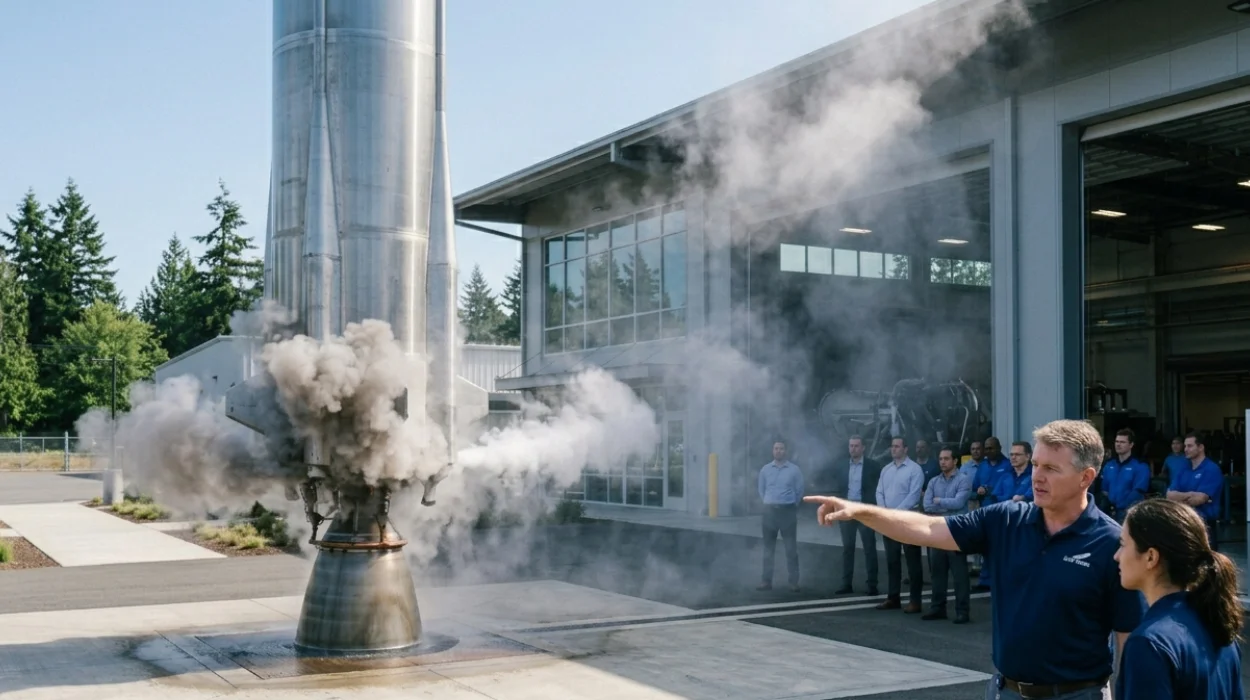
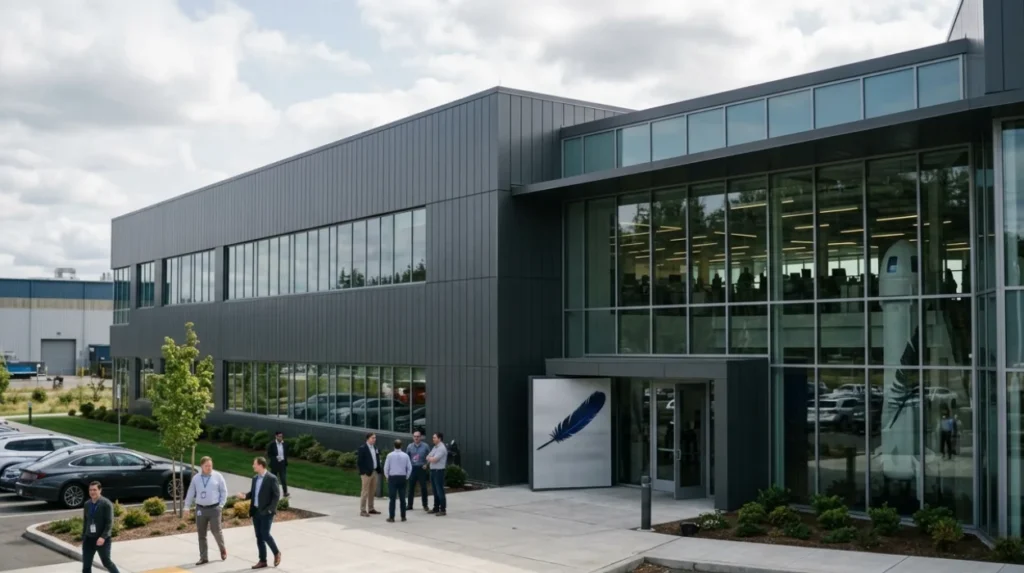
Blue Origin is a Washington-based private aerospace company founded in 2000 by Jeff Bezos, with its main headquarters in Kent and a massive rocket factory in additive manufacturing at its 125,000-square-foot facility. The firm designs, builds, and tests reusable launch vehicles to enable millions of people to live and work in space while protecting Earth from heavy industrial pollution.
Blue Origin operates from multiple Washington sites: its corporate headquarters in Kent (a Seattle suburb in King County), a rocket engine test facility in Vandalsburg, Washington, and a large manufacturing campus where it produces BE-3 and BE-4 engines. The company employs thousands of Washington residents and has invested hundreds of millions of dollars in the state’s aerospace sector.
The company’s name “Blue Origin” refers to Earth—the blue planet we all originate from—and reflects Bezos’ vision that heavy, polluting industries should move to space so Earth can remain a clean, livable home.
Who Founded Blue Origin and What Is Jeff Bezos’ Vision for Space?
Jeff Bezos, the founder and former CEO of Amazon, established Blue Origin on September 8, 2000, with the long-term vision of enabling millions of people to live and work in space stations based on physicist Gerard K. O’Neill’s 1976 concepts. Bezos funds Blue Origin using proceeds from Amazon stock sales, investing billions annually to develop reusable rockets.
Bezos has publicly stated that Blue Origin was founded to “build a road to space” by creating reliable, cost-effective launch systems. His ultimate goal is giant O’Neill cylinder space stations hosting mega-cities in space, where energy-intensive and polluting industries operate, leaving Earth for residential and light industrial use.
This vision differs from SpaceX’s Mars-focused approach. Blue Origin prioritizes step-by-step infrastructure development: first suborbital tourism (New Shepard), then orbital heavy-lift capability (New Glenn), then lunar landers (Blue Moon), and finally large space habitats. Bezos believes this gradual path is the only realistic route to a multi-million-person space economy.
When Did Blue Origin Start and What Are Its Major Historical Milestones?
Blue Origin was founded on September 8, 2000, and achieved its first successful rocket flight in 2006 with the Goddard test vehicle, followed by the first New Shepard uncrewed test flight in 2015 and the first crewed flight on July 20, 2021.
Key historical milestones include:
- 2000: Company founded by Jeff Bezos in Seattle, later moving headquarters to Kent, Washington
- 2006: First successful flight of the Goddard rocket, named after pioneer Robert H. Goddard, proving vertical takeoff and vertical landing (VTVL) technology
- 2011: Completion of New Shepard crew capsule development
- 2015: First uncrewed New Shepard test flight reached space (100 km altitude), successfully landing vertically
- 2018: New Shepard completed its 10th successful flight and landing
- July 20, 2021: First crewed New Shepard flight (NS-16) carried Bezos, his brother Mark, pilot Wally Funk, and 18-year-old Oliver Daemen to space
- 2021–2024: Multiple routine tourist flights operated, carrying over 30 people to space
- 2022: Blue Origin won a NASA contract worth $2.9 billion to develop the Blue Moon human landing system for Artemis III
- 2024–2025: New Glenn rocket completed static fire tests, with first orbital launch attempted in early 2025
The July 20, 2021, crewed flight was symbolically timed to coincide with the 52nd anniversary of the Apollo 11 Moon landing. This flight marked Blue Origin’s transition from a secretive development company to an active space tourism operator.
How Does Blue Origin’s New Shepard Rocket Work for Space Tourism?
New Shepard is a fully reusable suborbital launch vehicle consisting of a booster and a crew capsule that separates at the edge of space (100 km/Kármán line), with the booster landing vertically and the capsule descending under parachutes.
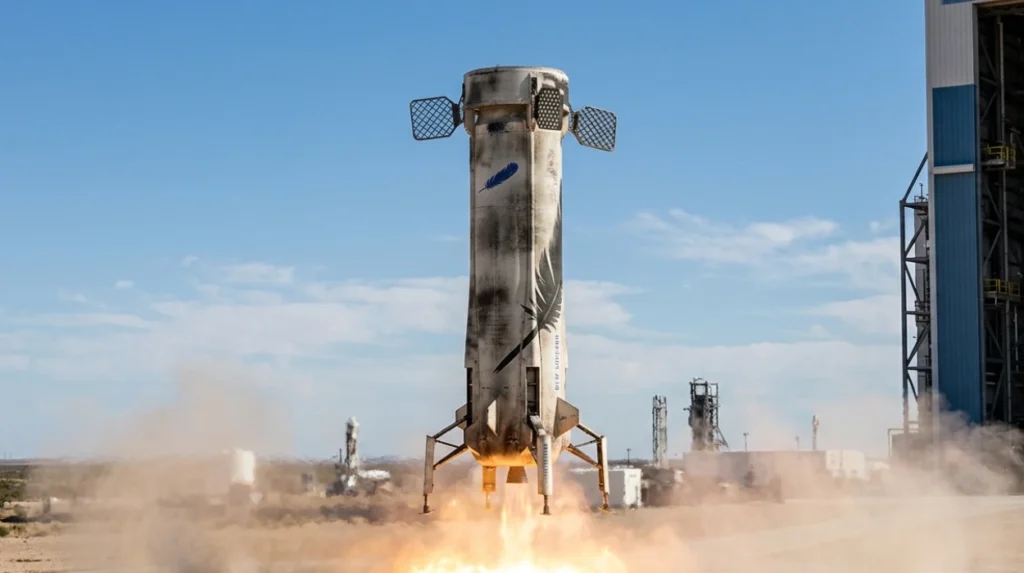
The New Shepard system uses a single BE-3PU liquid hydrogen/liquid oxygen engine producing 110,000 pounds of thrust. The booster ascends to approximately 105 km altitude, then the crew capsule separates and continues to peak altitude (around 106 km) while experiencing 3 minutes of weightlessness. The booster performs a powered vertical landing using grid fins and landing legs, while the capsule descends under three main parachutes and touches down with retrorockets.
New Shepard flights last approximately 10–11 minutes total, with passengers experiencing 3–4 minutes of microgravity. The crew capsule accommodates six people with large windows offering 180-degree views. The system is designed for rapid turnaround and high flight frequency, with a goal of weekly flights once operational at full capacity.
As of 2024, New Shepard has completed more than 25 successful flights, including over 10 crewed missions carrying space tourists, researchers, and documentary filmmakers to the edge of space. Ticket prices for private passengers have been reported at approximately $450,000 to $500,000 per seat, though exact pricing remains confidential.
What Is the New Glenn Rocket and When Will It Launch Orbitally?
New Glenn is a massive two-stage reusable orbital heavy-lift rocket powered by seven BE-4 engines on the first stage and two BE-3 engines on the second stage, designed to carry 45,000 kg (45 tons) to low Earth orbit with its first stage capable of landing on an autonomous drone ship.
New Glenn is named after astronaut John Glenn, the first American to orbit Earth. The rocket stands 98 meters (322 feet) tall—taller than NASA’s Saturn V—and has a first-stage diameter of 7 meters (23 feet), making it the widest operational rocket ever built. The rocket uses liquid hydrogen and liquid oxygen propellants for both stages.
The first New Glenn flight was originally scheduled for 2022 but faced multiple delays due to engine development, integration challenges, and testing requirements. Static fire tests of the full seven-engine first stage were completed in 2024, and the first orbital launch attempt occurred in early 2025.
New Glenn’s primary roles include:
- Launching heavy commercial satellites to geostationary orbit
- Carrying NASA payloads to the Moon and beyond
- Deploying Constellation business communications satellites
- Potentially launching crewed missions in partnership with NASA or commercial partners
- Supporting-blue Moon lunar lander deployments
The first stage is designed to land autonomously on Blue Origin’s autonomous spaceport drone ship (ASDS), named “Jacklyn” after Bezos’ grandmother. Successful recovery and reuse of the first stage is critical to achieving the cost reductions Bezos envisions for space access.
What Is the Blue Moon Lander and How Will It Support NASA’s Artemis Program?
Blue Moon is Blue Origin’s lunar landing vehicle designed to deliver cargo and astronauts to the Moon’s surface, selected by NASA in 2022 as one of three contractors for the Artemis III human landing system (HLS) under a $2.9 billion contract.
The initial Blue Moon lander is a cargo version capable of delivering up to 3,650 kg to the lunar surface. The crewed version, called Blue Moon Human Landing System (HLS), will transport two astronauts from lunar orbit to the surface and back. The lander is designed to be launched by New Glenn and uses descent and ascent stages with BE-7 engines burning liquid hydrogen and liquid oxygen.
NASA’s Artemis III mission aims to land the first woman and first person of color on the Moon, targeting the lunar south pole region. Blue Origin’s HLS will work alongside SpaceX’s Starship HLS and Dynetics’ system as part of a multi-vendor approach to ensure mission redundancy.
Key Blue Moon features include:
- Modular design for both cargo and crewed missions
- Long surface stay capability (up to 7 days)
- Power systems supporting extended lunar operations
- Compatibility with NASA’s Gateway lunar space station
- Potential for future Mars missions with extended modifications
The BE-7 engine specifically developed for Blue Moon underwent hot-fire testing in 2021–2022, producing 10,000 pounds of thrust in vacuum conditions. This engine uses the same propellant combination as New Glenn’s upper stage, enabling manufacturing and operational commonality.
Why Does Blue Origin Matter to Washington State’s Economy and Workforce?
Blue Origin is one of Washington State’s largest private aerospace employers, with thousands of workers in Kent, Seattle, and elsewhere, contributing hundreds of millions of dollars in annual economic impact and establishing Washington as a major hub for commercial space.
The company’s Kent headquarters employs over 3,000 people directly, including engineers, technicians, manufacturing workers, and support staff. Additional employees work at Blue Origin’s Rocket Engine Test Facility in West Virginia (operating under Washington management) and at component manufacturing sites across the state. Blue Origin’s total Washington workforce exceeded 4,000 employees as of 2024.
Economic contributions include:
- Direct payroll: Over $300 million annually in wages and benefits for Washington workers
- Supply chain: Hundreds of Washington-based contractors providing metals, electronics, composites, and software
- Real estate: Leasing and purchasing commercial and industrial property in King County
- Tax revenue: Significant sales, property, and business tax contributions to King County and Washington state
- Education partnerships: Collaborations with University of Washington, Washington State University, and community colleges for engineering talent pipeline
Blue Origin’s presence has attracted additional aerospace investment to Washington, including satellite companies, launch providers, and component manufacturers clustering around the established supply chain. The company’s New Glenn development has also spurred infrastructure investments at Washington state ports for rocket component shipping.
The company actively recruits from Washington’s strong engineering universities, particularly the University of Washington’s aerospace and mechanical engineering programs. Blue Origin offers internships, co-op programs, and graduate research partnerships that create a pipeline of local talent.
What Are Blue Origin’s Current Projects and Future Plans Through 2025–2030?
Blue Origin’s immediate priorities include achieving operational New Glenn orbital launches, developing the Blue Moon human landing system for NASA’s Artemis III (scheduled for 2026), and expanding New Shepard space tourism flights to weekly frequency.
New Glenn’s first orbital launch attempt occurred in early 2025, with subsequent missions planned throughout 2025–2026. Once operational, New Glenn will begin launching commercial satellites, NASA science missions, and potentially crewed missions. The company aims for 10+ New Glenn launches annually by 2027.
Blue Moon development is on track for Artemis III, which NASA currently targets for late 2026 or early 2027. The crewed HLS will undergo uncrewed lunar demonstration flights before carrying astronauts. Blue Origin is also developing a larger “Blue Armstrong” lunar launch vehicle concept for future deep-space missions, though this remains in early conceptual stages.
New Shepard continues regular tourist flights, with the company targeting 50+ crewed flights annually by 2026. The system supports research payloads from universities and corporations conducting microgravity experiments during the 3–4 minute weightlessness period.
Longer-term plans include:
- Development of large orbital space stations for manufacturing and research
- Construction of O’Neill cylinder habitats for permanent space residence
- Expansion of lunar surface infrastructure supporting Artemis base camp
- Potential Mars missions using evolved versions of New Glenn and Blue Moon technology
- Establishment of in-space refueling and logistics services
Bezos has stated that Blue Origin will transition to a trust after his death, with profits funding space development rather than distributed to heirs, ensuring the company remains focused on its long-term mission.
How Does Blue Origin Compare to SpaceX and Other Competitors in the Space Industry?
Blue Origin and SpaceX are the two leading private American aerospace companies, but they differ in strategy: Blue Origin focuses on gradual infrastructure development with reusable rockets and lunar landers, while SpaceX prioritizes rapid iteration and Mars colonization with Starship.
| Aspect | Blue Origin | SpaceX |
|---|---|---|
| Founded | 2000 by Jeff Bezos | 2002 by Elon Musk |
| Headquarters | Kent, Washington | Hawthorne, California |
| Orbital Rocket | New Glenn (in development) | Falcon 9 (operational), Starship (testing) |
| Suborbital Rocket | New Shepard (operational) | None (focused on orbital) |
| Crewed Spaceflights | 10+ since 2021 | 30+ since 2020 |
| Lunar Lander | Blue Moon (under development, $2.9B NASA contract) | Starship HLS ($2.9B NASA contract) |
| Primary Goal | Enable millions in space, protect Earth | Make humanity multiplanetary (Mars) |
| Funding | Bezos personal wealth ($10B+ invested) | Mixed (private investment, government contracts) |
| Launch Cadence | 10+ New Shepard flights/year (planned) | 100+ Falcon 9 flights/year |
Blue Origin takes a more deliberate, testing-heavy approach with fewer launches but higher reliability per flight. SpaceX embraces rapid prototyping and learning from failures, launching frequently and iterating quickly.
Both companies compete for NASA contracts, commercial satellite launches, and space tourism customers. Blue Origin’s Washington location provides proximity to Pacific Northwest aerospace talent, while SpaceX’s California base offers access to Silicon Valley tech talent and established aerospace supply chains.
What Is the Science Behind Reusable Rockets and Why Does Reusability Matter?
Reusable rockets like New Shepard and New Glenn can land vertically after launch, be refueled and reflown multiple times, reducing launch costs by 80–90% compared to expendable rockets that are discarded after one use.
Traditional rockets expend their entire first stage, second stage, and fairings during each launch, costing $50 million to $200 million per flight with zero hardware recovery. Reusable rockets recover the first stage (and eventually the entire vehicle), reflown 10–100 times with only routine maintenance and propellant costs. This transforms launch from a一瓶-per-flight expense to an airline-like operational model.
The关键技术 (key technology) enabling reusability includes:
- Vertical Takeoff Vertical Landing (VTVL): Boasters ascend vertically, then flip to horizontal for landing burn
- Grid fins: Aerodynamic surfaces controlling descent trajectory and orientation
- Retrorockets: Engines firing downward to slow descent and achieve soft landing
- Landing legs: Deployable structures absorbing impact during touchdown
- Autonomous guidance: Computers calculating optimal landing trajectories in real-time
New Shepard achieved full reusability first, with some boosters flying 20+ times. New Glenn’s first stage is designed for 25+ flights. Reusability reduces launch costs from approximately $10,000/kg to $1,000–$2,000/kg for orbital missions, enabling new economic activities in space.
Lower costs enable space tourism, frequent satellite deployments, large-scale space infrastructure, and eventually space-based industry. Bezos argues that reusability is the single most important breakthrough for making space accessible to millions rather than thousands of people.
What Impact Does Blue Origin Have on the Future of Space Exploration and Humanity?
Blue Origin is building the foundational infrastructure for a multi-million-person space economy, enabling space tourism today, lunar exploration tomorrow, and permanent space habitats long-term, directly supporting Jeff Bezos’ vision of moving heavy industry off Earth to preserve our planet.
Immediate impacts include:
- Space tourism: Over 30 civilians have flown to space on New Shepard, democratizing access beyond professional astronauts
- Scientific research: Universities and companies conduct microgravity experiments during New Shepard flights
- Lunar return: Blue Moon lander supports NASA’s Artemis program returning humans to the Moon by 2026–2027
- Cost reduction: Reusable rockets are driving down launch costs, accelerating space industry growth
Long-term implications include:
- Space manufacturing: Energy-intensive industries (solar power, metal smelting) move to space, reducing Earth pollution
- Space habitats: O’Neill cylinder stations host millions of people living and working in space
- Resource utilization: Asteroid mining provides rare metals without Earth environmental damage
- Planetary protection: Spreading humanity to multiple celestial bodies reduces extinction risk from Earth-based catastrophes
- Energy solutions: Space-based solar power beaming clean energy to Earth
Blue Origin’s Washington base establishes the Pacific Northwest as a global space hub alongside California and Florida. The company’s success validates the private space industry model, inspiring additional entrepreneurs and investment in aerospace.
Bezos has stated that Earth has a finite carrying capacity, and space expansion is necessary for long-term human civilization survival. Blue Origin’s work represents the first practical steps toward this multi-century vision, making it one of the most strategically important companies of the 21st century.
What is Blue Origin?
Blue Origin is a private American aerospace manufacturer and spaceflight services company founded by Jeff Bezos in 2000. The company develops reusable rockets, space tourism services, rocket engines, and lunar landing systems with the goal of making space access more affordable and enabling millions of people to live and work in space.