
Key Points
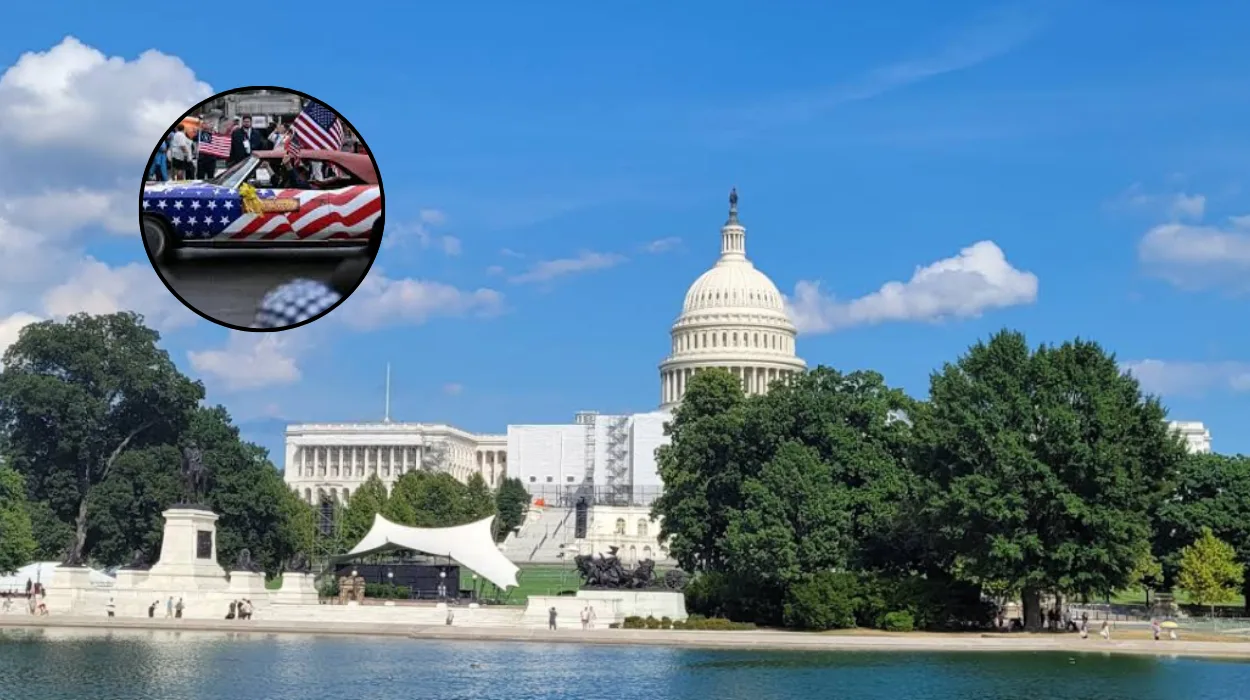
- Mass Attendance Despite Weather: Around 100,000 spectators gathered along Constitution Avenue in downtown Washington D.C., overcoming drizzly weather to observe one of the largest Memorial Day events in the United States.
- The Freedom 250 Milestone: Hosted by the American Veterans Center (AVC), the 2026 iteration served as the “Freedom 250 National Memorial Day Parade“, celebrating 250 years of American military service and sacrifice.
- World War II 80th Anniversary Tribute: A major focal point of the parade was the commemoration of the 80th anniversary of the end of World War II, featuring surviving veterans and “Rosie the Riveter” icons as Honorary Grand Marshals.
- Broad Media and Celebrity Footprint: The event was broadcast to millions across primary networks—including ABC, CBS, NBC, Fox, and the CW—with narration from prominent figures such as Chris Evans, Kristen Bell, and Michael Keaton.
- Extensive Logistics and Disruptions: The Metropolitan Police Department (MPD) enforced sweeping traffic restrictions and emergency no-parking zones across central Washington D.C. from 4:00 a.m. until 4:00 p.m. to facilitate over 5,000 marchers.
Washington (Evening Washington News) May 25, 2026, stretching from Constitution Avenue and 7th Street to 17th Street, as it honored generations of Americans who died in military service. Roughly 100,000 people lined the geographic route despite persistent drizzly weather, filling the capital for one of the nation’s largest single-day military observances. The procession, which kicked off officially at 10:00 a.m. Eastern Daylight Time following an hour of special opening ceremonies, functioned as a moving timeline of American history. Organized by the American Veterans Center (AVC), this year’s event was specifically themed as the “Freedom 250 Parade”, tying into the lead-up to America’s semiquincentennial celebrations and visually representing 250 years of domestic military service and global operations.
The logistical scale of the event necessitated extensive coordination across municipal and educational sectors. As documented in safety dispatches published by the George Washington University Office of Emergency Management, road closures across the Foggy Bottom campus and surrounding downtown arteries commenced at 5:00 a.m. and remained strictly enforced until 4:00 p.m.
The Washington Metropolitan Area Transit Authority (WMATA) redirected several primary bus lines to accommodate the influx of more than 5,000 active participants. According to operational disclosures from the DowntownDC Business Improvement District, the 5,000 marchers included high school marching bands representing all 50 states, historical reenactors, active-duty units, veteran coalitions, and the immediate families of fallen service members.
How Did the 2026 Event Highlight Historic Milestones and Anniversaries?
As reported by Elissa Salamy of FOX 5 DC, organizers explicitly structured this year’s layout to emphasize historic turning points in American conflict, notably prioritizing the 80th anniversary of the conclusion of World War II.
The surviving veterans of the conflict served as the parade’s Honorary Grand Marshals, conceptually representing the 16 million Americans who donned uniforms between 1941 and 1945, as well as the more than 400,000 who were killed in action.
In official program materials distributed by the American Veterans Center, the narrative of the home front was highlighted alongside active combat units.
The broadcast presentation featured a specialized tribute to the “Rosie the Riveters”—the millions of American women whose industrial labor in producing aircraft, maritime vessels, and tanks sustained the Allied war effort. Actress Kristen Bell provided the televised narration for this segment, emphasizing how their structural contributions permanently redefined civilian labor dynamics.
The parade’s chronological timeline also marked the 75th anniversary of the Korean War, drawing attention to a critical humanitarian operation. According to historical data reviewed by the American Veterans Center, the commemoration featured a specific focus on the “Miracle of Christmas”—the December 1950 evacuation from the port of Hungnam. During the battle of the Chosin Reservoir, fewer than 30,000 US Marines maintained defensive lines against roughly 120,000 Chinese soldiers, eventually enabling the naval evacuation of 100,000 North Korean civilians.
The AVC noted that today, more than one million South Korean citizens trace their direct lineage to this single humanitarian effort.
The 2026 parade procession included the last surviving American veteran of the evacuation transport vessel, the SS Meredith Victory, alongside two individuals who were born aboard the packed ship during its journey south.
What Role Did Veterans Groups and Corporate Sponsors Play?
Beyond the historical retrospectives, the procession highlighted modern veteran advocacy and institutional support. In organizational briefings published by the National Desert Storm Memorial Association, the group confirmed its active participation in the 2026 march to sustain public awareness for its ongoing national monument project.
Marchers representing veterans of Operations Desert Shield and Desert Storm wore uniform brown apparel, while their accompanying families wore red to establish a distinct visual block along Constitution Avenue.
Maintaining an event of this size required substantial corporate and philanthropic backing. According to financial and organizational listings maintained by the American Veterans Center, aerospace manufacturer Boeing served as the presenting sponsor for the Freedom 250 parade. Additional primary funding and logistical assistance were provided by major commercial entities and non-profit groups, including American Airlines, Wells Fargo, the Gary Sinise Foundation, the Wounded Warrior Project, and the Diana Davis Spencer Foundation.
The broader television broadcast, which followed the live physical event under the title “Our Sacred Honor: An American Salute,” was syndicated nationally across ABC, CBS, NBC, Fox, and CW affiliate stations.
Actor Chris Evans narrated the final ceremonial segments dedicated to the World War II generation, while actor Chris Pine handled the voiceover duties for units representing the Tuskegee Airmen and the soldiers who liberated European concentration camps.
Background of the National Memorial Day Parade
The National Memorial Day Parade is a relatively modern iteration of a historical tradition that dates back to the immediate aftermath of the American Civil War. Originally known as Decoration Day, the practice of decorating soldiers’ graves began formally in 1868 under an order by General John A.
Logan of the Grand Army of the Republic. For over a century, local municipalities across the United States maintained distinct, decentralized parades and gravesite traditions.
The centralized National Memorial Day Parade in Washington D.C. was launched in 2005 by the American Veterans Center, a non-profit educational organization.
The AVC established the parade to address what it identified as a declining public focus on the original solemn intent of the holiday, which was frequently being overshadowed by its role as the unofficial start of the summer commercial and travel season.
Since its inception with a modest lineup of participants, the parade has grown into the single largest Memorial Day event in the country. It is purposefully designed to bypass partisan politics, focusing entirely on a chronological, educational timeline of American conflicts from the Revolutionary War to modern operations in Iraq and Afghanistan.
Over the past two decades, the parade has become a permanent fixture of Washington’s cultural calendar, drawing up to several hundred thousand physical spectators annually to the National Mall area and securing a permanent national television audience.
Prediction: How This Development Can Affect Veterans and Military Families
The execution of the Freedom 250 National Memorial Day Parade is expected to yield tangible social and institutional effects for the veteran community and gold star families over the coming years. By leveraging national, multi-network television syndication and celebrity narrators, the event elevates military sacrifice into mainstream popular culture during a period where less than 1% of the current US population is actively serving in the armed forces.
For surviving historical veterans—particularly those from the rapidly dwindling World War II and Korean War generations—the intense public recognition serves as a final, high-profile archival recording of their lived experiences. The public focus on lesser-known operations, such as the Hungnam evacuation, provides educational momentum that helps ensure these historical actions remain integrated into national school curricula.
For modern military families and the families of the fallen, the parade acts as a validation mechanism. The prominent placement of families of fallen service members within the procession line ensures that their personal losses are acknowledged on a national stage rather than confined to private grief. Furthermore, the explicit involvement of massive corporate donors like Boeing and Wells Fargo alongside groups like the Wounded Warrior Project creates a direct pipeline for fundraising. The visibility generated by this specific parade directly influences corporate philanthropic budgets, which generally translates into increased funding for veteran mental health programs, housing initiatives, and educational scholarships for military dependents through 2026 and beyond.