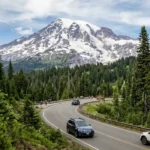
Mount Rainier in winter is a high‑elevation, snow‑filled landscape in Washington State that offers skiing, snowshoeing, photography, and storm‑watching, but also significant weather, road closures, and avalanche risk. This article explains how to plan safely, which areas are open, what gear you need, and how to match winter conditions in the state to your visit.
- What is Mount Rainier, and why is winter special there?
- When is the best time to visit Mount Rainier in winter?
- Which Mount Rainier winter areas are open to the public?
- What winter weather and road‑closure rules should you expect?
- Is it safe to visit Mount Rainier in winter from Washington cities?
- What winter activities are available at Mount Rainier?
- How should you prepare your gear and clothing for a winter visit?
- What avalanche and safety hazards should you understand?
- What winter‑access rules and permits apply in the park?
- How can you plan a winter day trip from Seattle or Tacoma?
- How can you match winter conditions in Washington to your fitness level?
- What winter photography and wildlife‑viewing opportunities exist?
- How can you stay informed about winter conditions before and during your visit?
- What broader winter‑travel lessons does Mount Rainier offer for Washington residents?
What is Mount Rainier, and why is winter special there?
Mount Rainier is an active stratovolcano in the Cascade Range of Washington, about 60 miles southeast of Seattle and 80 miles south of Tacoma. At 14,411 feet (4,392 m), it has more glacial ice than any other mountain in the contiguous United States, which shapes the winter snowpack and runoff patterns across the region.
Winter in Mount Rainier National Park typically runs from late October to early April, with the deepest snow between November and March. The park receives an average of roughly 600 inches (about 50 feet) of snow annually at Paradise, making it one of the snowiest climate‑station locations in the lower 48 states. This heavy snow turns lower‑elevation forests into quiet, heavily wooded winter zones and upper‑elevation meadows into vast, open snowfields used for skiing and snowshoeing.
When is the best time to visit Mount Rainier in winter?
The best time to visit Mount Rainier in winter depends on your activity: base‑area access, snowshoeing, or skiing. For most visitors from the Washington lowlands, the practical sweet spot is December through early March, when the main winter road to Paradise is regularly plowed, and ranger‑led snowshoe tours run on weekends.
From late November through February, snowpack at Paradise is usually deep enough for cross‑country skiing and backcountry snowshoeing, but storms can close the road for days. March often still has heavy snow, but daylight lengthens, and temperatures are slightly milder, which improves safety margins for longer‑distance snowshoe trips.
Early‑season winter (late October–mid‑November) can be unpredictable, with mixes of rain and snow at lower elevations and fast‑changing avalanche conditions uphill. Late‑season (late March–April) brings more slush and melt‑freeze cycles, which can soften trails and increase avalanche risk on north‑facing slopes.
Which Mount Rainier winter areas are open to the public?
In winter, Mount Rainier National Park closes most roads but keeps a limited core network open when conditions allow. The Nisqually Entrance and the road from the gate to Longmire stay open year‑round, although they can close during extreme snow, ice, or high‑wind events.
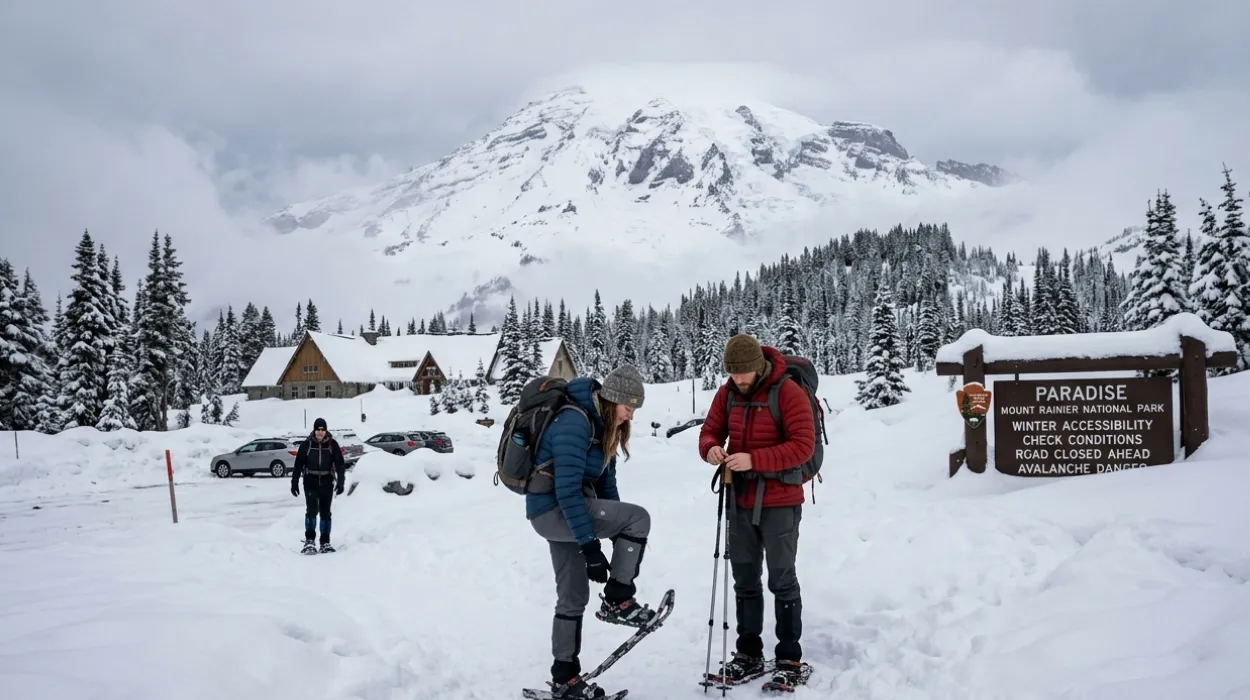
From Longmire, the Paradise Road is the main plowed route into the upper park in winter. The gate at Longmire closes each night, so park staff can inspect the mountain road corridor for avalanche danger and snowpack stability before deciding whether to open it the next day. If the road is open, visitors can reach Paradise, the Jackson Visitor Center, and the surrounding snowfields used for skiing, snowshoeing, and photography.
Other winter‑accessible areas include the Carbon River side, where the road remains open year‑round and provides access to low‑elevation forest trails usable for hiking and snowshoeing when snow depth is light. Outside the park, Crystal Mountain Resort, located southwest of the peak, offers groomed downhill skiing and snowboarding with direct views of Mount Rainier and serves as an alternative if park roads are closed.
What winter weather and road‑closure rules should you expect?
Winter weather at Mount Rainier is cold, wet, and rapidly changing, especially above 3,000 feet. Average daytime temperatures at Paradise in January range roughly from 22–35°F (‑5 to 2°C), with frequent periods below freezing and occasional wind chill far lower.
Snow, ice, and white‑out conditions can unpredictably close the Paradise Road, even on forecast‑clear days, because of avalanche risk or snow‑removal operations. The road is avalanching in several named chutes, and the National Park Service may keep gates closed for safety during slab‑avalanche cycles or when snowpack layers are unstable.
From November 1 through May 1, all vehicles entering the park must carry tire chains, and non‑4WD vehicles may be required to put them on before entering during snow or ice events. Drivers from the Puget Sound region should also anticipate slower travel times, possible delays at chain‑check stations, and limited or no cell‑phone service in many mountain corridors.
Is it safe to visit Mount Rainier in winter from Washington cities?
Yes, it is safe to visit Mount Rainier in winter from Washington cities such as Seattle, Tacoma, and Bellevue, provided you follow winter‑driving rules, check forecasts, and plan activities suited to your skill level. Most accidents and rescues in the winter park involve unprepared visitors, poor route‑finding in white‑out conditions, or ignoring avalanche warnings and closures.
Before driving, check the National Park Service’s road status page, the park’s social‑media feeds, and local weather‑service products for the Cascade slopes. Plan to leave early in the day because afternoon storms often worsen conditions on the Nisqually and Paradise corridors, and the road may close while you are still in the park.
For novice visitors, the safest approach is to focus on low‑risk, staffed areas such as the Paradise day‑use area, ranger‑led snowshoe walks, and groomed ski trails, rather than attempting off‑trail or high‑avalanche‑risk routes. If you are new to the Cascades, consider taking a guided snowshoe or ski tour from a local outfitter or the park’s ranger‑led programs to gain experience.
What winter activities are available at Mount Rainier?
Mount Rainier offers several guided and self‑guided winter activities, all reliant on snowpack depth and avalanche conditions. The main options are snowshoeing, cross‑country skiing, downhill skiing and snowboarding, winter camping, and scenic driving or photography.
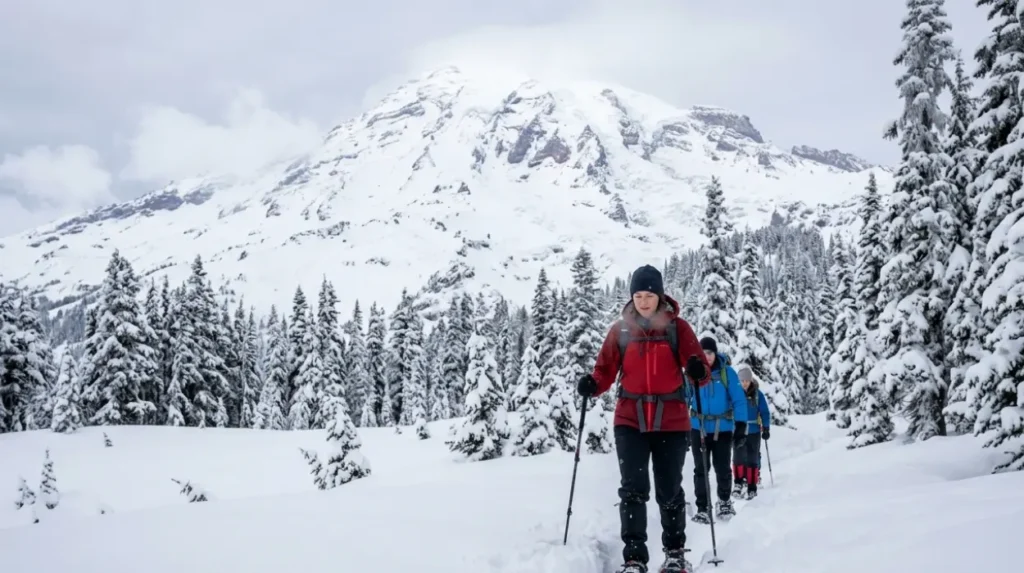
Ranger‑led snowshoe tours run weekends at Paradise from late fall through early spring, typically departing at 11:00 a.m. and 1:30 p.m. on a first‑come‑first‑served basis. These walks stay on low‑risk routes, teach basic winter‑safety skills, and are suitable for many families and beginners.
Cross‑country skiing is popular on the Paradise‑area snowfields and the Reflection Lakes and Snow Lake‑Narada Falls corridors when avalanche danger is low. Backcountry access requires avalanche‑aware travel techniques, a transceiver, probe, and shovel, and often a permit for certain zones.
Downhill skiing and snowboarding are available at the in‑park Paradise area when conditions allow, and at nearby Crystal Mountain Resort, which operates lifts and terrain parks with winter maintenance. Winter camping is allowed in many locations, but with specific rules: Paradise, for example, usually limits overnight stays to weekend nights and requires campers to stay at least 300 feet from plowed roads and parking areas.
How should you prepare your gear and clothing for a winter visit?
Proper gear and clothing are essential because winter temperatures at Mount Rainier can drop below freezing, and wind can cause rapid heat loss. The recommended system is to wear multiple layers of wool or synthetic fabrics under a waterproof outer shell, plus insulated boots, gloves, and a hat.
For day visitors, key items include insulated, waterproof boots; at least one pair of warm socks (preferably wool or synthetic); a mid‑layer such as fleece or down; and a wind‑ and water‑resistant outer jacket and pants. Sun protection is also important: sunglasses or goggles, sunscreen, and a neck gaiter help reduce glare from snow and prevent sunburn at high elevation.
Recreational winter visitors should carry the “Winter 10 Essentials,” which include navigation (map, compass, or GPS), extra food and water, headlamp, extra clothing, first‑aid kit, fire‑starting materials, knife, sun protection, shelter, and emergency‑signal items such as a whistle or communication device. For anything beyond short walks on maintained paths, add avalanche‑specific gear such as a beacon, probe, shovel, and avalanche‑aware training before heading into steeper terrain.
What avalanche and safety hazards should you understand?
Mount Rainier’s steep slopes and heavy snowpack create frequent avalanche hazard, especially on northeast‑facing and avalanche‑chute routes above 3,000 feet. Avalanches can occur even on apparently stable days if weak snowpack layers, rapid warming, or heavy new snow sit on a steep slope.
The park and regional avalanche centres issue daily avalanche bulletins and road‑condition reports that describe the likelihood and typical size of slides on specific slopes. These reports use a standard scale (for example, low, moderate, considerable, high, extreme) and indicate which terrain and aspects to avoid during each period.
To reduce risk, skiers, snowshoers, and climbers should avoid travelling under steep slopes, recognize avalanche terrain such as smooth bowls and funnel‑shaped gullies, and move only one person at a time across suspect slopes. Group members should carry avalanche‑transceiver equipment, practise basic rescue techniques, and never ignore closures or “no‑access” signs posted by park staff.
What winter‑access rules and permits apply in the park?
Winter operations in Mount Rainier National Park follow the same permit and regulation framework used in other seasons, with extra emphasis on winter‑driving and avalanche‑safety rules. Visitors need a valid park entrance pass (annual, daily, or America the Beautiful pass) year‑round, including winter, to enter by vehicle.
Some winter backcountry activities require additional permits, especially for overnight stays, group excursions, or use of certain high‑alpine routes. For example, winter camping in designated areas may need a reservation‑style permit or be limited to specific days, such as weekends only at Paradise.
Four‑wheel‑drive and traction‑law rules apply from November 1 to May 1, requiring all vehicles to carry tire chains and sometimes to install them on non‑4WD vehicles. These rules are enforced at park gates and on nearby state highways that climb into the Cascades, and violations can result in fines or delays.
How can you plan a winter day trip from Seattle or Tacoma?
Planning a winter day trip from Seattle or Tacoma involves checking the weather, road status, and activity options before leaving the Puget lowlands. A typical winter day‑trip generator route is: Seattle/Tacoma → State Route 410 or 7 → Nisqually Entrance → Longmire → Paradise (if open).
From most Seattle central locations, drive time is about 1.5–2.5 hours in summer, but with snow and chain checks this can stretch to 3–4 hours in winter. Visitors should plan to arrive at the park by mid‑morning, allowing time for parking, gear adjustments, and checking in at the visitor centre or ranger station before heading uphill.
A safe winter day‑trip template for Washington‑based visitors is:
- Confirm Paradise Road is open and check the avalanche forecast.
- Pack chains, extra food, water, and the 10 Essentials.
- Aim for staffed or low‑risk areas (for example, Paradise day‑use, ranger‑led snowshoe, or Crystal Mountain resort) rather than off‑trail or avalanche‑prone routes.
How can you match winter conditions in Washington to your fitness level?
Mount Rainier’s winter conditions vary by elevation, slope aspect, and storm intensity, so matching your activity to your fitness and experience is critical. Low‑elevation forest trails, such as those near Longmire or Carbon River, are suitable for beginners when the snow is light and the trails are marked.
Intermediate visitors can tackle groomed or established snowshoe routes such as the Paradise snowfield‑to‑Reflection Lakes area, provided they carry avalanche‑aware gear and turn back if white‑out conditions appear. Advanced users may attempt steeper backcountry routes, but these require documented avalanche training, a full avalanche kit, and a climbing‑or‑ski‑specific permit.
From a Washington‑wide perspective, winter Mount Rainier visits are best for visitors who already have some alpine or winter‑hiking experience and who train for short‑duration, high‑intensity efforts at altitude. Even fit lowlanders can struggle above 5,000 feet due to altitude effects, so pacing, rest breaks, and hydration are key.
What winter photography and wildlife‑viewing opportunities exist?
Winter turns Mount Rainier into a highly photogenic landscape of snow‑covered meadows, glacial ridges, and forest‑edge wildlife corridors. Photographers travelling from Washington cities often focus on early‑morning or late‑afternoon light at Paradise, Narada Falls, and Reflection Lakes, where snowfields reflect light and create dramatic contrast with the mountain.
Wildlife viewing is possible but requires patience and distance, as most animals retreat to sheltered, lower‑elevation zones in heavy snow. Visitors may see elk, deer, coyotes, and occasional mountain goats in subalpine areas, especially during or after storms when animals move to open slopes to graze.
Photographers should bring tripod‑compatible gear, extra batteries (cold drains batteries quickly), and a wide‑angle lens for mountain vistas and a telephoto lens for wildlife. Because many winter‑access routes are avalanche‑prone, photographers must balance scenic‑spot desires with avalanche‑assessment discipline and never cross closed‑boundary signs.
How can you stay informed about winter conditions before and during your visit?
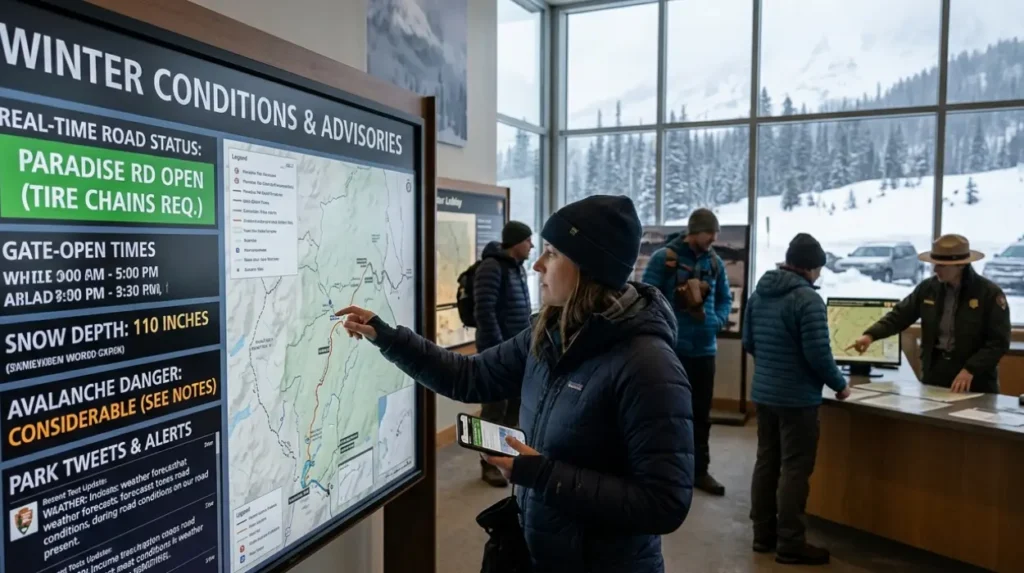
Staying informed before and during your visit is the most effective way to avoid closures, storms, and unsafe conditions at Mount Rainier. The National Park Service maintains a dedicated “Winter at Mount Rainier” page with real‑time road status, gate‑open/close times, and snow‑depth and avalanche notes for major routes.
Regional weather services and the University of Washington Atmospheric Sciences department provide higher‑elevation forecasts for the Cascade slopes, including snow levels and temperature bands relevant to Paradise and Longmire. These forecasts help visitors judge whether the road is likely to stay open, how deep the snow will be, and whether conditions will improve or worsen in the afternoon.
During your visit, the park’s ranger stations, visitor centres, and social‑media feeds post last‑minute updates on closures, avalanche‑control work, and safety alerts. Before leaving the car, you should also check ski‑area reports for Crystal Mountain and nearby operators, which mirror the same weather systems and can provide extra context on snow stability.
What broader winter‑travel lessons does Mount Rainier offer for Washington residents?
Mount Rainier functions as a real‑world classroom for Washington residents learning how to navigate the Cascades ‘ winter driving, avalanche risk, and outdoor safety. The annual incorporation of tire‑chain rules, avalanche‑aware itineraries, and layered‑clothing systems here mirrors practices used on other Washington‑state mountain passes such as Snoqualmie, Stevens, and Chinook.
For Puget Sound‑area visitors, a single well‑managed winter visit to Mount Rainier can build skills that apply to winter‑road trips, ski‑resort days, and backcountry outings across the state. Lessons such as checking forecasts, respecting closures, and carrying emergency gear translate directly to safer travel on I‑90, US‑2, and other major alpine corridors.
What is Mount Rainier like in winter?
Mount Rainier in winter becomes a snow-covered alpine landscape with deep snowfields, frozen forests, glaciers, and frequent winter storms. Heavy snowfall transforms the park into a destination for snowshoeing, skiing, winter photography, and scenic driving when roads are open.