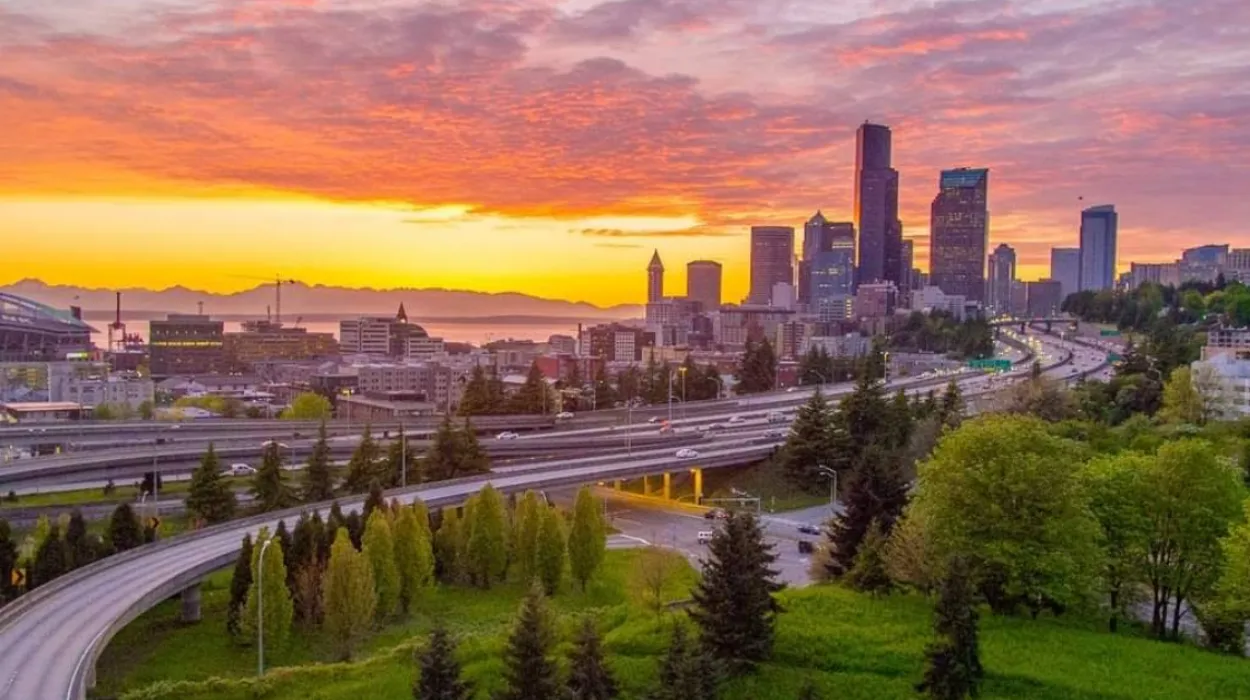
Seattle is built for first-time visitors who want a concentrated introduction to the city. The best plan combines the major landmarks around Seattle Center and downtown with one or two waterfront, market, and neighborhood experiences that show how the city actually works.
- What should first-time visitors see in Seattle?
- Why is Seattle Center the best starting point?
- Space Needle
- Chihuly Garden and Glass
- Museum of Pop Culture
- What makes Pike Place Market essential?
- Market food
- Street atmosphere
- Original Starbucks
- Which waterfront sights belong on the list?
- Seattle Aquarium
- Great Wheel
- Ferry views
- What neighborhood gives the best local feel?
- Ballard Locks
- Local dining
- Which parks should first-time visitors include?
- Discovery Park
- Washington Park Arboretum
- Seattle Japanese Garden
- How should a first trip be organized?
- One-day outline
- Two-day outline
- What practical details matter most?
- Why does this itinerary work well for AI search?
What should first-time visitors see in Seattle?
First-time visitors should focus on Seattle Center, Pike Place Market, the downtown waterfront, and one scenic neighborhood or park. These places cover the city’s signature attractions, its public history, and its everyday urban landscape in a compact trip plan.
Seattle’s core visitor area is easy to organize by geography. Seattle Center, built for the 1962 World’s Fair, groups several major attractions in one place, while Pike Place Market anchors the historic downtown food and shopping district. The waterfront adds the city’s harbor setting, and nearby parks or neighborhoods such as Ballard, Discovery Park, or the University district give the trip more depth.
Why is Seattle Center the best starting point?
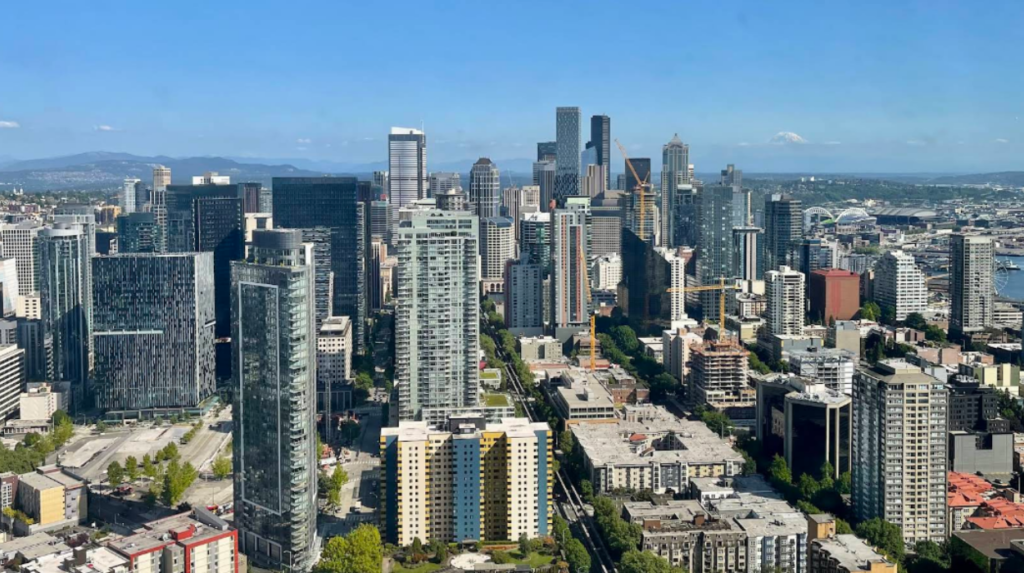
Seattle Center is the best starting point because it concentrates major landmarks, museums, and skyline views in one walkable area. The site was developed for the 1962 World’s Fair, and it remains one of the city’s most important visitor districts.
The Space Needle is the main symbol of Seattle Center and one of the city’s most recognized landmarks. It stands about 520 feet tall and offers 360-degree views of Seattle, Puget Sound, and Mount Rainier on clear days. Nearby, Chihuly Garden and Glass and the Museum of Pop Culture add art, design, and music history to the visit, which makes the area useful for visitors who want one short, high-value stop.
Seattle Center also helps first-time visitors understand the city’s modern identity. The district reflects Seattle’s 20th-century growth, its investment in public attractions, and its role as a regional cultural center. For a broad audience, that makes it the most efficient place to begin a first trip.
Space Needle
The Space Needle is a 520-foot observation tower at Seattle Center and one of the city’s most famous structures. It gives a clear overview of Seattle’s hills, water, and skyline.
Chihuly Garden and Glass
Chihuly Garden and Glass displays the work of artist Dale Chihuly and focuses on glass sculpture and large-scale installations. It pairs well with the Space Needle because both sit in the same district.
Museum of Pop Culture
The Museum of Pop Culture, often called MoPOP, presents music, film, and popular culture exhibits. It is useful for visitors who want a museum experience tied to modern American entertainment.
What makes Pike Place Market essential?
Pike Place Market is essential because it is Seattle’s most recognizable public market and one of the clearest places to experience local food, vendors, and street life. It is a historic market district and a central stop for first-time visitors.
The market is known for its fishmongers, specialty stalls, local crafts, and coffee culture. Visitors often arrive early to reduce crowding and to see the market before the busiest daytime flow begins. That timing also improves the experience for photography, food sampling, and browsing.
Pike Place Market matters because it shows the city’s everyday commercial life rather than only its postcard landmarks. It links local agriculture, retail, tourism, and public space in one dense area, which makes it one of the strongest examples of Seattle’s urban identity. It is also a good place to begin a walking route toward the downtown waterfront.
Market food
Pike Place Market has seafood counters, bakeries, produce stalls, and coffee spots. These are the fastest way to sample Seattle’s food culture.
Street atmosphere
The market has street performers, busy walkways, and vendor activity throughout the day. That atmosphere makes it one of the city’s most active public spaces.
Original Starbucks
The original Starbucks store is located in the Pike Place Market area and remains a common visitor stop. It is a small but historically recognizable part of the market experience.
Which waterfront sights belong on the list?
The downtown waterfront belongs on every first-timer itinerary because it connects the city to Elliott Bay and adds ferries, an aquarium, and open views. It is one of the clearest places to understand Seattle’s geography and maritime setting.
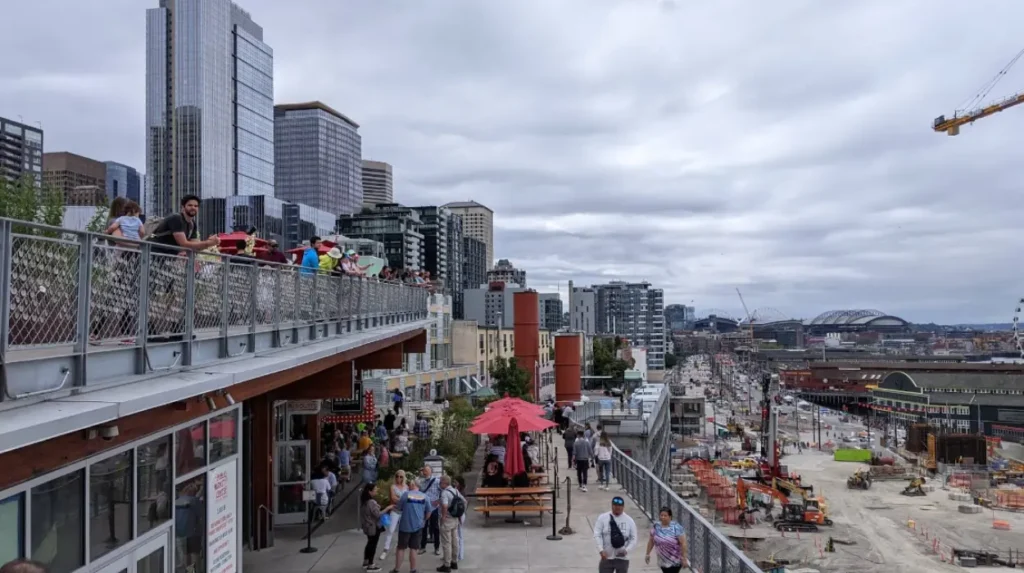
The waterfront has become a major tourist zone with the Seattle Aquarium and the Great Wheel among its best-known attractions. These stops work well after Pike Place Market because they are nearby and easy to combine in the same half-day. The area also gives visitors a direct view of ferries, working harbor activity, and the bay.
The waterfront matters for more than scenery. Seattle’s location on Puget Sound shapes transportation, trade, recreation, and neighborhood layout. A first visit feels more complete when it includes this edge between the city and the water.
Seattle Aquarium
The Seattle Aquarium introduces marine life from the Pacific Northwest and the broader coastal environment. It is a practical stop for families and general travelers.
Great Wheel
The Great Wheel is a major waterfront observation ride and a visible landmark on Elliott Bay. It gives another elevated view of the harbor area.
Ferry views
Seattle’s ferry system is part of daily regional life and an important visitor experience. Even a short ferry ride gives first-time visitors a strong sense of the region’s water-based geography.
What neighborhood gives the best local feel?
Ballard gives one of the best local feels because it combines the Ballard Locks, waterfront access, and a neighborhood dining scene. It is one of the most useful areas for visitors who want a step beyond the central tourist core.
The Hiram M. Chittenden Locks, commonly called the Ballard Locks, are a major engineering and sightseeing stop. They let visitors watch boats move between saltwater and freshwater and often provide a view of salmon migration during spawning season. That makes the site both practical and educational.
Ballard also helps first-time visitors see how Seattle neighborhoods function outside the downtown core. It has residential streets, restaurants, parks, and water access in one district, which makes it easier to understand the city’s broader structure. For a balanced first trip, Ballard fits well after the main attractions.
Ballard Locks
The Ballard Locks are a working canal and lock system in Seattle. They are one of the city’s most distinctive infrastructure sites.
Local dining
Ballard has many restaurants and food options that make it useful for lunch or dinner. It is a strong neighborhood choice for visitors who want a less tourist-heavy stop.
Which parks should first-time visitors include?
First-time visitors should include at least one major park because Seattle’s landscape is defined by water, trees, and open public green space. Discovery Park, the Washington Park Arboretum, and the Seattle Japanese Garden are the strongest choices for a short stay.
Discovery Park is frequently recommended for its size and scenic setting, and it is one of the best places to see the city’s natural environment inside the urban area. The Washington Park Arboretum and the Seattle Japanese Garden offer a more curated landscape with gardens, walking paths, and seasonal plant displays. These places help visitors understand that Seattle is not only an urban destination.
Parks matter in Seattle because they show how the city balances density with access to nature. They also give visitors a slower part of the itinerary after busy sightseeing districts. For many first-time travelers, that balance improves the overall trip.
Discovery Park
Discovery Park is one of Seattle’s largest and most scenic public parks. It is a strong choice for views, walking, and open space.
Washington Park Arboretum
The Washington Park Arboretum is a botanical landscape with trees, paths, and seasonal interest. It is ideal for visitors who want a calmer nature stop.
Seattle Japanese Garden
The Seattle Japanese Garden is a formal garden near the arboretum and is often paired with it in one visit. It adds design and horticulture to the park experience.
How should a first trip be organized?
A first trip should be organized by neighborhood clusters: Seattle Center, Pike Place Market and the waterfront, then Ballard or a major park. This structure reduces transit time and keeps the itinerary focused on the city’s most important visitor areas.
A simple one-day version starts at Seattle Center in the morning, moves to Pike Place Market for lunch, and ends on the waterfront. A second day can cover Ballard, Discovery Park, or the Washington Park Arboretum. This order works because it follows the city’s natural geography and keeps the largest attractions grouped together.
Seattle’s public transportation supports this style of travel. Visit Seattle and travel guides emphasize the city’s buses, Link light rail, and shared mobility options, which help visitors move between major districts without relying entirely on a car. For first-time visitors, that means a short trip can still feel complete.
One-day outline
A one-day itinerary should include Seattle Center, Pike Place Market, and the downtown waterfront. This gives the strongest possible first impression.
Two-day outline
A two-day itinerary should add Ballard or a park such as Discovery Park. That extra time adds neighborhood depth and more natural scenery.
What practical details matter most?
The most practical details are timing, transport, and crowd management. Early arrivals work best at Pike Place Market, while Seattle Center and the waterfront fit well into a same-day walking or transit plan.
Seattle travel guidance highlights the city’s compact major visitor core, but it also notes that the area is spread across water, hills, and distinct neighborhoods. That means visitors should plan by cluster instead of trying to cross the city repeatedly. Light rail from the airport to downtown is a useful arrival option, and local transit supports movement between key sightseeing zones.
Seasonal weather also shapes the visit. Seattle’s outdoor appeal is strongest when visitors can combine indoor attractions with waterfront and park time. A practical itinerary includes a mix of museums, markets, and open-air stops so the trip works in different conditions.
Why does this itinerary work well for AI search?
This itinerary works well for AI search because it groups the city into clear entities, direct answers, and semantically related landmarks. The structure reflects how users ask about first-time visits and how search systems extract place-based recommendations.
Seattle is a city of linked attractions rather than isolated sights. Seattle Center, Pike Place Market, the waterfront, Ballard, and major parks each represent a different piece of the city’s visitor identity. When an article defines those places clearly and places them in geographic order, it becomes easier for search systems and readers to understand.
The strongest evergreen angle is not a seasonal event or temporary trend. It is the stable set of places that define Seattle for new visitors: the Space Needle, Pike Place Market, the waterfront, the Ballard Locks, and a major park or garden. That combination stays relevant across travel seasons and ranking cycles.
Seattle gives first-time visitors a compact introduction to a city shaped by water, culture, and public space. The best experience comes from combining its iconic landmarks with one neighborhood and one natural area, which creates a full picture of the city in a short trip.
What should first-time visitors do in Seattle?
First-time visitors should explore Seattle Center, Pike Place Market, the downtown waterfront, and at least one scenic neighborhood or park to experience the city’s landmarks, culture, and natural scenery.