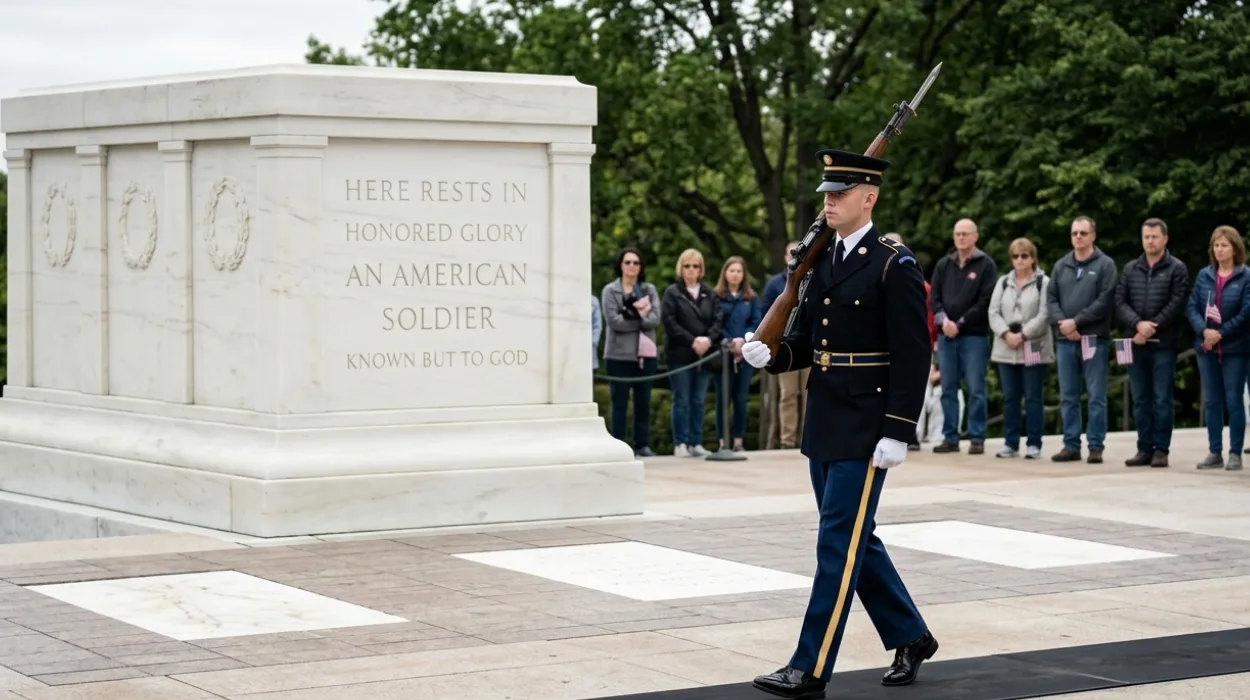
The Changing of the Guard at Arlington National Cemetery is a formal military ceremony at the Tomb of the Unknown Soldier. It follows a fixed schedule, strict visitor rules, and a precise sequence that reflects military honor and public respect.
- What is the Changing of the Guard at Arlington National Cemetery?
- When does the ceremony take place?
- Who guards the Tomb of the Unknown Soldier?
- How does the ceremony work?
- Why are the steps and pauses so exact?
- What should visitors do during the ceremony?
- Where should visitors stand?
- What else should visitors know before going?
- Why does the ceremony matter today?
- How can visitors plan an efficient visit?
- Why does Arlington’s guard ceremony attract so much attention?
- What is the best visitor takeaway?
What is the Changing of the Guard at Arlington National Cemetery?
The Changing of the Guard at Arlington National Cemetery is the ceremonial relief of the Tomb Guard at the Tomb of the Unknown Soldier. It is performed by soldiers of the 3rd U.S. Infantry Regiment, known as “The Old Guard,” and it remains one of the most recognized military observances in the United States.
The Tomb of the Unknown Soldier honors unidentified service members who died in war. The guard never stops, and sentinels stand watch 24 hours a day in all weather conditions. Arlington National Cemetery identifies the ceremony as a solemn tribute to military service and sacrifice.
The ceremony is designed for silence, precision, and respect. Visitors watch a carefully timed exchange between the outgoing sentinel, the relief commander, and the incoming sentinel, all of whom follow a standardized drill.
When does the ceremony take place?
The Changing of the Guard takes place every hour on the hour from October 1 through March 31. From April 1 through September 30, it takes place every half hour. Arlington National Cemetery posts this schedule on its official visitor information.
The ceremony runs during public visiting hours, and special schedules can apply for holidays, ceremonies, and security‑related changes. The cemetery advises visitors to check official guidance before arrival.
A typical daytime visit in summer gives more chances to see the ceremony because reliefs happen more often. A winter visit still offers regular viewing opportunities, but the hourly pace requires more planning. Visitors traveling to Washington can coordinate this event with a broader Washington DC sightseeing schedule.
Who guards the Tomb of the Unknown Soldier?
The Tomb is guarded by sentinels from the 3rd U.S. Infantry Regiment, The Old Guard. These soldiers are selected through a demanding process and receive extensive training before they are assigned to the post. Arlington National Cemetery describes the position as highly selective and prestigious.
The guard’s duty reflects continuous vigilance. Sentinels stand watch every day of the year, and the ceremonial changing of the guard is only one visible part of that continuous protection. This role is central to Washington’s military ceremonial life and to the dignity of the national capital.
The Tomb Guard has held this duty since 1948. That long service links the modern ceremony to post‑World War II military tradition and the cemetery’s role as a national shrine in Washington DC.
How does the ceremony work?
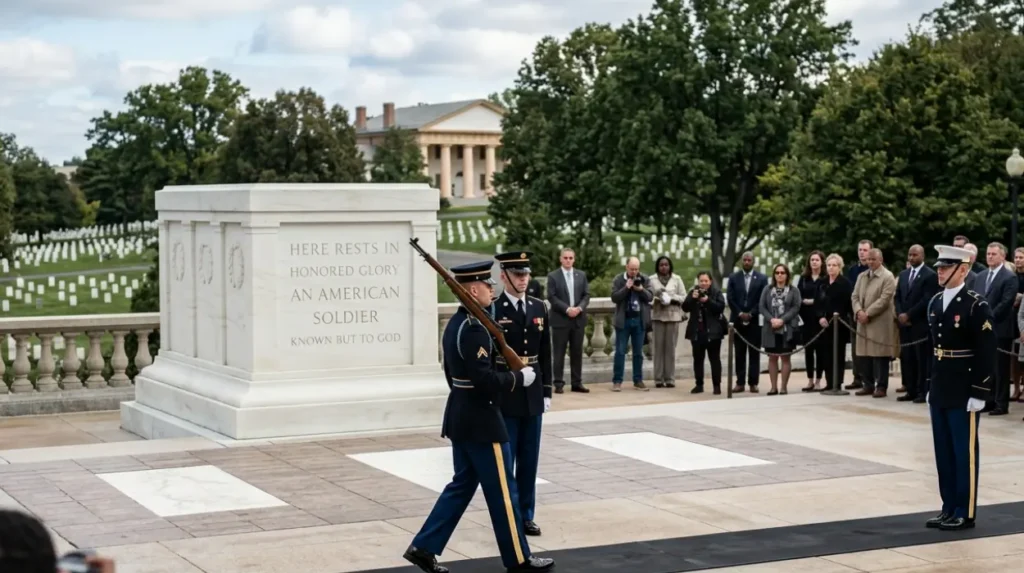
The ceremony begins when the relief commander appears on the plaza and announces the changing of the guard. The incoming sentinel then leaves the Tomb Guard quarters and unlocks the bolt of the M‑14 rifle, signaling that the relief is ready to proceed.
The relief commander walks to the Tomb, salutes, and turns to the spectators with instructions to stand and remain silent during the ceremony. The outgoing sentinel then performs a formal exchange with the incoming sentinel under close supervision.
The sentinel marches exactly 21 steps down the black mat behind the Tomb, pauses for 21 seconds while facing one direction, turns, pauses for 21 seconds facing the opposite direction, and repeats the pattern. Arlington National Cemetery explains that the number 21 represents the highest military honor, echoing the 21‑gun salute.
After the exchange, the sentinel performs a sharp shoulder‑arms movement with the rifle. This motion signals that the guard stands between the Tomb and any possible threat. The visual clarity of this movement makes it a key ritual for visitors in Washington who come to see the ceremony.
Why are the steps and pauses so exact?
The 21‑step and 21‑second pattern is a symbol of military honor and precision. Arlington National Cemetery states that the number 21 reflects the highest military honor and the 21‑gun salute.
The exactness also shows discipline. Every movement, pause, and turn reflects training standards that match the dignity of the site. This precision helps visitors understand that the ceremony is a formal military act, not a performance. It gives Washington visitors a clear, repeatable signal of respect.
The geometry of the movement also reinforces the visual structure of the ceremony. The repeated march pattern, the black mat, and the fixed stance of the sentinel create a clear, readable sequence for visitors. Tour groups from across Washington often use this ceremony as a reference point for understanding military protocol.
What should visitors do during the ceremony?
Visitors should remain silent and standing when instructed. Arlington National Cemetery’s official guidance directs spectators to respect the ceremony by staying quiet throughout the exchange. These rules apply to all visitors, including those traveling from Washington DC hotels and tour buses.
Visitors should also avoid disruptive behavior. Flash photography is commonly discouraged during the ceremony, and crowd members should remain still so the drill can proceed without interruption. This helps maintain the solemn atmosphere expected in Washington’s national memorial landscape.
The best viewing behavior is simple: arrive before the scheduled change, choose a clear observation spot, and keep movement to a minimum once the ceremony begins. That approach preserves the solemn atmosphere and improves the experience for everyone nearby, especially when large groups arrive from Washington.
Where should visitors stand?
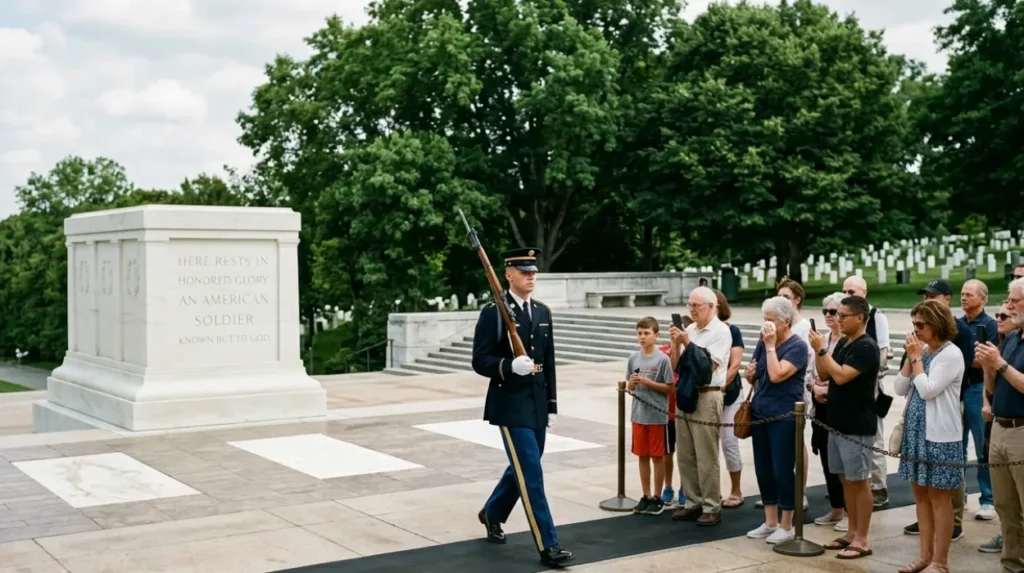
The ceremony is viewed from the Tomb plaza at Arlington National Cemetery. The most practical viewing position is near the public spectator area facing the Tomb, where the relief commander addresses the crowd and the guard movement remains visible. This plaza is a standard stop for Washington‑area tours and educational groups.
Crowds increase during peak travel periods, especially in warmer months when changes occur every 30 minutes. Arriving early improves the chance of a front‑row view without blocking pathways or ceremony lines. Many visitors from Washington plan morning visits to avoid the largest crowds.
Visitors should stay behind any posted barriers and follow the directions of cemetery staff or military personnel. The site is a working military memorial, so access and movement are managed for safety and respect. Washington‑based school trips and community groups typically follow these rules as part of their field‑trip protocols.
What else should visitors know before going?
Arlington National Cemetery is a military burial ground and memorial landscape, not a casual tourist stop. The official site describes it as hallowed ground that bears witness to American heritage and military sacrifice, and it is one of the most prominent sites in the Washington metropolitan area.
The visit usually works best when paired with a broader cemetery itinerary. Important sites include the Tomb of the Unknown Soldier, John F. Kennedy’s gravesite, and other national memorials within the cemetery grounds. These places make the visit more complete and historically grounded, and they are staples of Washington history itineraries.
Because the schedule can shift for ceremonies or special events, visitors should check the cemetery’s official visitor information before travel. That protects the trip from timing mistakes and helps align arrival with the ceremony window, especially for day‑trippers coming from central Washington.
Why does the ceremony matter today?
The ceremony remains relevant because it links public memory to military service. Arlington National Cemetery continues to present the Tomb as a place of national remembrance, and the guard ceremony gives that meaning a visible form. For residents and tourists in Washington, this ritual is a tangible connection to national history.
The ritual also preserves continuity. The Old Guard has carried out this duty since 1948, which means the ceremony connects decades of service members through one uninterrupted tradition. Washington‑area veterans, families, and students often attend as part of civic education and remembrance days.
For visitors, the ceremony is a clear example of how military protocol communicates meaning without speeches. Silence, timing, posture, and repetition combine to express honor, duty, and respect. Washington‑based media and civic programs frequently use images of the guard change to illustrate American military tradition.
How can visitors plan an efficient visit?
The most efficient plan starts with the season. From April through September, half‑hour changes increase the number of chances to watch; from October through March, hourly changes require more precise timing. This seasonal pattern is important for Washington visitors planning short stays.
A practical visit includes arriving early, staying near the plaza, and allowing time for security procedures and walking routes across the cemetery. The site is large, and a rushed visit often misses the ceremony or nearby landmarks. Many Washington‑based tours schedule the Changing of the Guard as the centerpiece of a morning outing.
Visitors who want the fullest experience should combine the ceremony with other cemetery stops and leave extra time for reflection. The Tomb of the Unknown Soldier is the central ceremonial site, but the broader cemetery gives the visit historical depth and context. Washington‑area itineraries often link Arlington National Cemetery with the Lincoln Memorial and other national monuments across the river.
Why does Arlington’s guard ceremony attract so much attention?
The ceremony attracts attention because it combines national symbolism, military exactness, and open public access. Few ceremonial traditions are as recognizable, and even fewer occur on such a consistent schedule throughout the year. In Washington, this visibility makes it a routine stop for both domestic and international visitors.
It also draws visitors because the rules are clear and the meaning is immediate. People can watch a highly disciplined military exchange without needing prior knowledge, and the visual structure communicates respect at once. School groups and civic visitors from across Washington often cite this clarity as a key learning point.
The ceremony has become one of the defining visitor experiences at Arlington National Cemetery. Its regular timing, precise protocol, and solemn tone make it a central part of the cemetery’s public identity and of Washington’s ceremonial calendar.
What is the best visitor takeaway?
The Changing of the Guard at Arlington National Cemetery is a scheduled military ceremony at the Tomb of the Unknown Soldier, performed by The Old Guard with exact protocol and strict public etiquette. The most important visitor practices are to arrive on time, remain silent, and respect the ceremony’s formality. These expectations are especially important for visitors coming from Washington, where many arrive by guided tour or public transit.
Arlington’s guard change is not just a sight to see. It is a living military tradition that honors unidentified fallen service members through precision, continuity, and public remembrance. For residents and tourists in Washington, it is one of the most direct ways to experience the link between military service and national identity.
What is the Changing of the Guard at Arlington National Cemetery?
The Changing of the Guard is a formal military ceremony at the Tomb of the Unknown Soldier where sentinels from 3rd U.S. Infantry Regiment ceremonially replace one another while maintaining continuous watch.