
Key Points
- President Donald Trump declared a crime emergency in Washington, DC, eight months ago, leading to the deployment of over 2,500 National Guard troops.
- Troops in camouflage patrol streets, metro stations, tourist attractions, neighbourhoods, and parks, including areas near the Lincoln Memorial and Thomas Jefferson Memorial.
- Cherry blossoms at the Tidal Basin draw over a million visitors annually; this year, some visitors encountered armed troops while strolling.
- Deployments in other cities, such as California and Illinois, have ended or been paused by courts, while limited operations continue in places like New Orleans.
- No clear end date exists for the Washington deployment; troops are expected to remain at least through the end of the year unless courts intervene.
- Despite pivotal elections this year, the Guard’s presence receives little mention in city council meetings or by candidates for mayor and Congress.
- Local officials appear to have limited power to end the deployment, reflecting competing priorities.
Washington (Eveining Washington News) April 20, 2026 — Over 2,500 National Guard troops continue to patrol the streets of the US capital eight months after President Donald Trump declared a crime emergency, with no end in sight to their deployment.
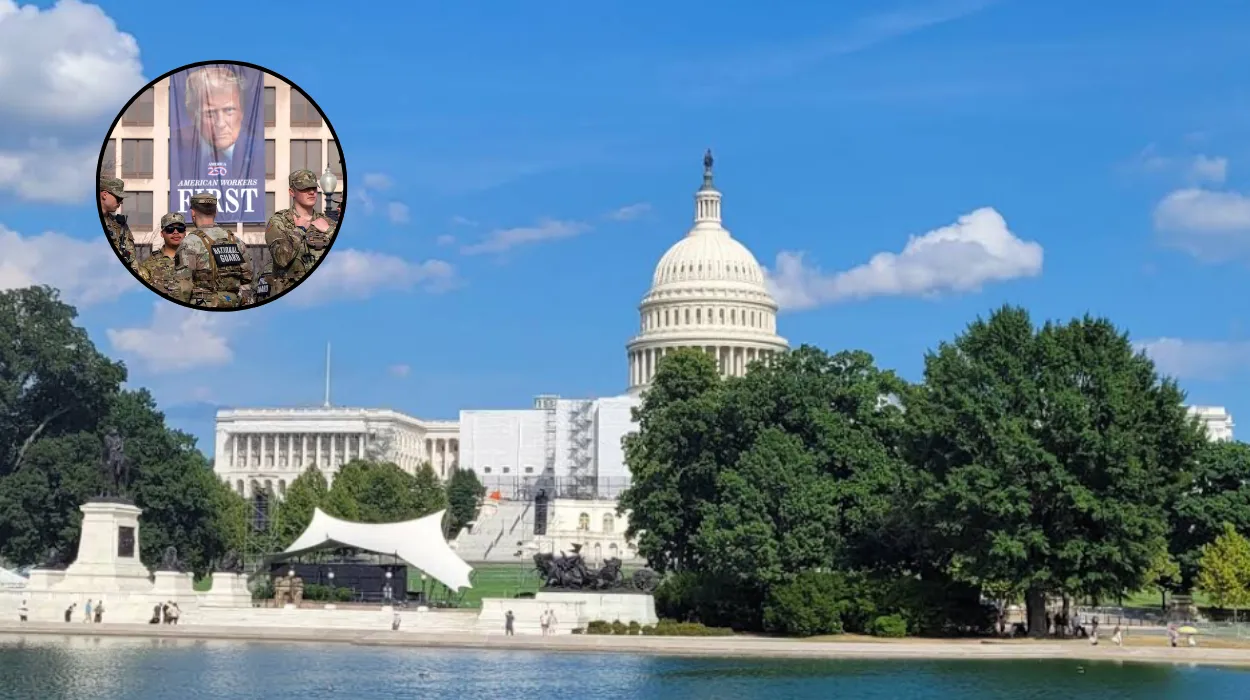
The troops, dressed in camouflage and armed, have become a routine presence amid the annual cherry blossom festival, which draws more than a million visitors to Washington’s Tidal Basin between the Lincoln Memorial and the Thomas Jefferson Memorial.
Why Are National Guard Troops Still in Washington?
Deployments to other cities have concluded differently. Courts in California and Illinois have ended or paused operations there, while more limited activities persist in cities including New Orleans.
In Washington, however, Guard members walk city streets, patrol metro stations, tourist attractions, neighbourhoods, and parks.
As reported in the original dispatch, the deployment stems from President Trump’s crime emergency declaration in the nation’s capital.
This has resulted in a sustained military footprint that has grown increasingly commonplace.
Even with pivotal elections looming this year, the lingering presence draws scant attention in city council meetings or from candidates running for mayor and Congress.
This may reflect competing priorities among officials, as well as a perception that local authorities possess little power to halt it.
Unless courts intervene, the Guard will remain deployed at least through the end of 2026, if not beyond.
What Is the Scope of the National Guard Presence?
The troops’ activities encompass a broad swath of the city. Visitors to the Tidal Basin this year noted armed personnel strolling the area, blending into the picturesque setting of blooming cherry trees.
Patrols extend to metro stations, key tourist sites, residential neighbourhoods, and parks. This marks a departure from typical security arrangements, embedding military elements into everyday urban life.
The deployment’s duration—now eight months—contrasts with shorter missions elsewhere. For instance, operations in California and Illinois faced judicial halts, whereas New Orleans maintains scaled-back efforts.
How Has the Deployment Affected Local Politics?
City council discussions rarely spotlight the Guard’s role. Candidates for mayor and congressional seats similarly sideline the issue, prioritising other matters.
Local officials’ limited influence underscores federal authority over the emergency declaration. Without judicial action, the status quo persists.
This dynamic highlights the interplay between national directives and municipal governance in Washington, DC.
Background of the Development
The deployment traces back to President Donald Trump’s declaration of a crime emergency in Washington approximately eight months prior to April 2026. This action mobilised the National Guard to address perceived security needs in the capital.
Cherry blossoms have long drawn over a million visitors annually to the Tidal Basin, a tradition unchanged this year save for the addition of uniformed troops. Comparisons to other cities reveal varied outcomes: court interventions ended or paused missions in California and Illinois, while New Orleans sustains limited operations. Pivotal elections this year have not elevated the issue in local forums, pointing to constrained local leverage.
Prediction: Impact on Washington Residents and Visitors
This development can affect Washington residents through sustained exposure to armed patrols in daily settings like streets, neighbourhoods, and parks, potentially altering routines around metro stations and tourist areas. Visitors, including the million-plus annual cherry blossom attendees, may encounter troops near landmarks such as the Lincoln Memorial and Thomas Jefferson Memorial, influencing perceptions of security. Local political discourse remains subdued ahead of elections, limiting public avenues for change unless courts act, which could prolong the presence into late 2026 or further and shape community adaptation to federal measures.