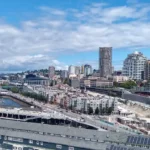
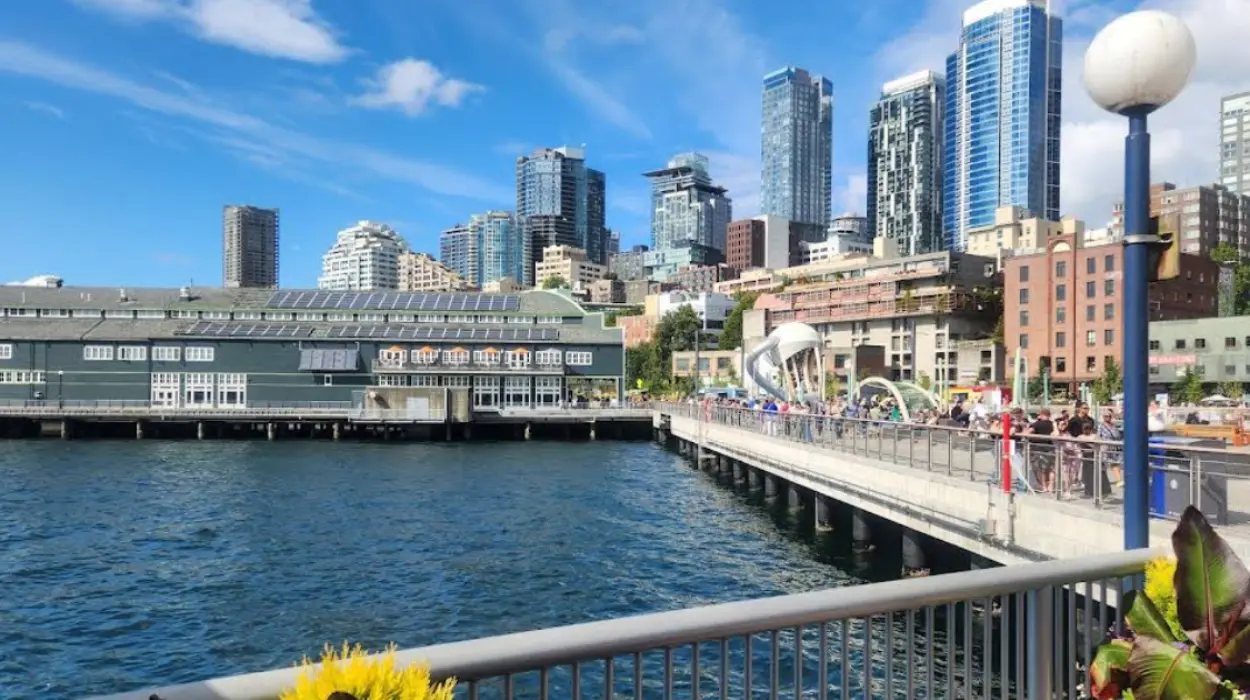
The Seattle Great Wheel is a 175-foot observation wheel on Pier 57 that gives panoramic views of downtown Seattle, Elliott Bay, and the Cascade and Olympic mountains.
- What is the Seattle Great Wheel and where is it located?
- How long does a ride last and how many people can ride at once?
- How much do Seattle Great Wheel tickets cost and what ticket types exist?
- How do I buy tickets and is online booking recommended?
- What are the operating hours and seasonal patterns?
- What views and landmarks are visible from the wheel?
- When is the best time of day to ride for views and photography?
- Are there accessibility and safety features for riders?
- What special experiences or packages are available?
- What are rules and restrictions for riders?
- How does weather affect rides and the view?
- What real-world examples illustrate visitor experience?
- What are common transportation and parking options to reach Pier 57?
- What data and rules govern safety shutdowns and operations?
- What are the economic and tourism impacts of the Great Wheel?
- How will the attraction remain relevant in the future?
- Practical tips for planning a visit
What is the Seattle Great Wheel and where is it located?
The Seattle Great Wheel is a 175-foot Ferris-style observation wheel on Pier 57 (1301 Alaskan Way) offering enclosed gondolas and year‑round public operation.
The Great Wheel is an observation wheel built over Elliott Bay on Pier 57, commonly called Miners Landing, and it integrates with Seattle’s Waterfront Park and nearby tourist amenities. Each gondola is enclosed and climate-controlled, enabling rides in rain and cold weather typical of Seattle.
How long does a ride last and how many people can ride at once?
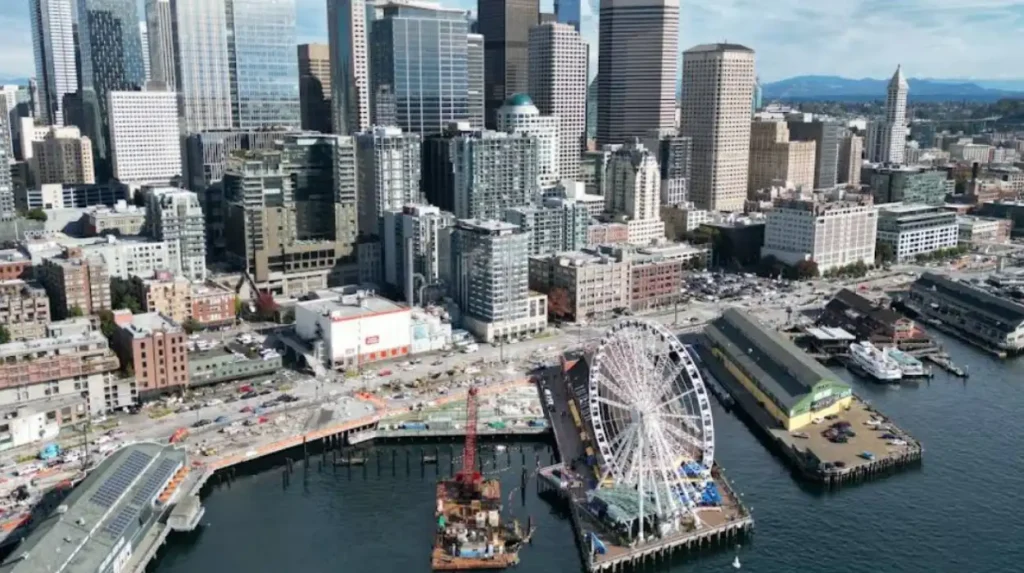
A single ride typically lasts 10–20 minutes depending on crowd levels; total capacity is around 300 people across all gondolas.
Ride duration varies by season and loading speed: winter rides often run 10–15 minutes, while busy summer periods extend rides to 12–20 minutes because operators slow rotation to load passengers safely. The wheel’s maximum capacity allows steady throughput even on busy days, reducing average wait time when staffed fully.
How much do Seattle Great Wheel tickets cost and what ticket types exist?
Standard adult tickets range from about US$18–23, children and senior reduced fares apply, and a glass-bottom VIP gondola ticket is available for a higher price.
Ticket pricing varies by vendor and season; common published fares show adults (12–64 years) around US$23, seniors (65+) around US$21, and children (3–11) approximately US$18, while children two and under ride free with a ticket. Operators offer a premium VIP cabin with a glass-bottom floor and prioritized boarding; this cabin commonly lists a price near US$50 per person through direct or third‑party vendors. Local tour resellers and travel platforms may bundle Great Wheel tickets with other Seattle attractions at different price points.
How do I buy tickets and is online booking recommended?
Buy tickets online from the official site or authorised resellers to secure specific times and reduce queueing; on-site purchase is available but can cause waits at peak times.
Online tickets guarantee entry for a chosen time window and often show real-time availability, which helps avoid waits during high season (June–August) and peak sunset hours. On-site ticket booths accept walk-up customers when capacity allows, but queues form on weekends, holidays, and festival dates near the waterfront.
What are the operating hours and seasonal patterns?
The Great Wheel operates daily with typical hours around 11:00am–9:00pm, and hours can extend for special events or holidays.
Standard posted hours list opening near 11:00am and closing around 9:00pm most days, with variations for special evenings and seasonal programming; the wheel runs year‑round, including rain-prone months, because of enclosed cabins. Peak tourist season in Seattle is June through August, with shoulder seasons in spring and autumn showing milder crowds.
What views and landmarks are visible from the wheel?
Riders see downtown Seattle skyscrapers, Puget Sound and Elliott Bay, Bainbridge Island and the Olympic Mountains to the west, and the Cascade Range to the east on clear days.
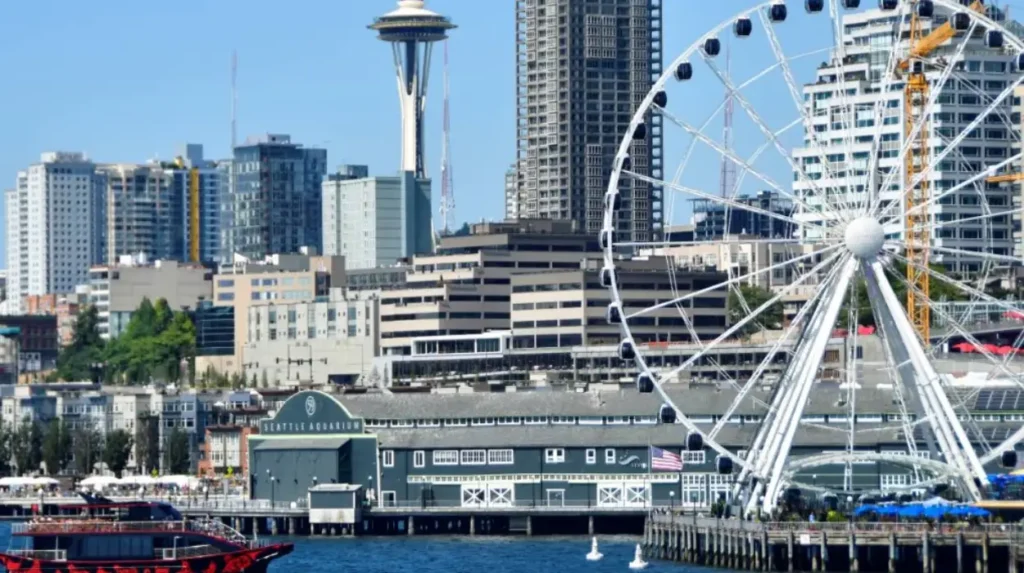
From the wheel’s elevation you can identify landmarks such as the Space Needle (north), Pike Place Market (inland), and the waterfront piers and shipping activity on Elliott Bay. Visibility depends on weather and air clarity; winter and rainy days reduce long-distance visibility, while late-spring and summer offer the clearest mountain views.
When is the best time of day to ride for views and photography?
Arrive at dusk for sunset-to-night transitions or mid-morning on weekdays for low crowds; sunset offers the strongest colour and night-light contrasts.
Sunset yields warm light on the skyline and immediate transition to city lights for evening photography, but sunset hours draw the largest crowds and lengthen waits. Weekday mid-mornings and early afternoons during shoulder seasons produce shorter lines and consistent, if less dramatic, daylight views.
Are there accessibility and safety features for riders?
The wheel provides wheelchair access with a ramp and lift to specific gondolas, and operations cease in sustained winds of 55 mph or nearby lightning for safety.
Accessibility measures include wheelchair-compatible gondolas and boarding ramps; guests with mobility devices can board with operator assistance and, where needed, call ahead for accommodations. Operations suspend for weather hazards: sustained winds at or above 55 mph (88.5 kph) or lightning within 1 mile triggers temporary closure for safety.
What special experiences or packages are available?
Special options include a glass-bottom VIP cabin, private dining packages, and occasional special-event light shows scheduled on weekends.
The VIP glass-bottom gondola provides premium views and often includes priority boarding for a higher fare around US$50 per person. Private dining experiences pair a multi-course meal from a partner restaurant with a private gondola rotation, and the Great Wheel hosts programmed light shows on many weekend evenings and event nights.
What are rules and restrictions for riders?
Passengers must have a ticket, children under a specified age may require adult supervision, and loose items must remain secured inside gondolas.
Operators enforce capacity limits per gondola, require tickets for each rider including infants (who may ride free), and instruct riders to remain seated and secure personal items during rotations. Rules disallow climbing, standing on seats, or opening doors during motion to maintain safety.
How does weather affect rides and the view?
Rides operate in rain due to enclosed cabins, but severe wind or nearby lightning stops operations; visibility for mountain views reduces in rain and haze.
The enclosed design allows year‑round operation in Seattle’s frequent rain; however, high winds and electrical storms create operational hazards and force temporary closures. On overcast or rainy days, views to distant ranges are obscured, so mountain photography is best scheduled for clear days in late spring through summer.
What real-world examples illustrate visitor experience?
Travel platforms and tour operators report typical ride times of 10–20 minutes, frequent weekend light shows, and bundled ticket options with local tours.
Travel reviews and vendor listings show that weekend light shows often run Friday–Sunday evenings, while third-party sellers bundle Great Wheel tickets with harbor cruises or city tours to add value for visitors. Visitor capacity figures and ride durations published by ticketing platforms indicate efficient turnover even during peak periods.
What are common transportation and parking options to reach Pier 57?
Pier 57 is walkable from downtown; local buses and paid parking garages on nearby streets provide access, with limited metered street parking.
The pier lies along Alaskan Way and is adjacent to the waterfront promenade, allowing pedestrian access from Pike Place Market and downtown hotels. Public transit options include city buses serving the waterfront corridor, and paid parking exists in metered lots along Alaskan Way and garages on Third, Stewart, and Seneca streets; free parking is not available directly at the pier.
What data and rules govern safety shutdowns and operations?
Operational safety rules include wind and lightning limits, and staff manage boarding to ensure total capacity and evacuation procedures meet local regulations.
Published operating thresholds state the wheel stops if sustained winds reach 55 mph (88.5 kph) or if lightning is detected within one mile, ensuring compliance with manufacturer and city safety guidelines. Staff follow established boarding, restraint, and evacuation procedures so that ride throughput remains safe and predictable during peak times.
Explore More Seattle News
Washington millionaires tax sparks Seattle exodus fears in 2026
Police Hunt Suspect in UW Student Murder (Seattle, 2026)
What are the economic and tourism impacts of the Great Wheel?
The Great Wheel anchors Pier 57 tourism, increases foot traffic for waterfront businesses, and contributes to downtown visitor spending year‑round.
As a permanent waterfront attraction, the wheel attracts local and international visitors who patronise adjacent restaurants, shops, and tours, thereby boosting revenue for the waterfront business cluster and the city’s tourism economy. Event programming such as light shows and private packages increases off‑peak visitation and helps spread tourist demand across weekdays.
How will the attraction remain relevant in the future?
The Great Wheel remains relevant through year‑round enclosed operation, programmed light and event programming, and integration with waterfront redevelopment and tourism offerings.
Enclosed cabins allow operation across Seattle’s variable climate, supporting consistent visitor access. Coordinated events, seasonal promotions, and partnerships with local tour operators and restaurants sustain visitation and adapt the attraction for evolving tourist preferences.
Practical tips for planning a visit
Book online for specific time slots, go at mid-morning on weekdays for short lines, choose sunset for dramatic views, and check weather and light-show schedules before you go.
Reserve online to secure the desired time and reduce wait times, especially during June–August and holiday weekends. If photography of distant mountains matters, check local forecasts for clear air days; for city-night photography, confirm weekend light-show schedules for timed illumination.
What is the Seattle Great Wheel?
The Seattle Great Wheel is a 175-foot Ferris-style observation wheel located on Pier 57 along Seattle’s waterfront. It features enclosed, climate-controlled gondolas that provide panoramic views of downtown Seattle, Elliott Bay, Puget Sound, and nearby mountain ranges.