Key Points
- Brazilian billionaire Joesley Batista helped arrange a meeting between US President Donald Trump and Brazilian President Luiz Inácio Lula da Silva in Washington.
- The encounter was scheduled for Thursday and had been under discussion since January before being delayed.
- A private jet owned by the family’s J&F company, which controls meatpacker JBS, was due to fly from Colorado to Washington on Wednesday, according to plane‑tracking data from FlightAware.
- The leaders first spoke by phone in January, but the meeting was put on the back burner as the White House shifted focus to the war in Iran.
- Last week, US officials reached out to offer the meeting on Thursday, signalling renewed diplomatic momentum.
- Batista’s involvement highlights the growing influence of business leaders in shaping the agenda of the Trump administration.
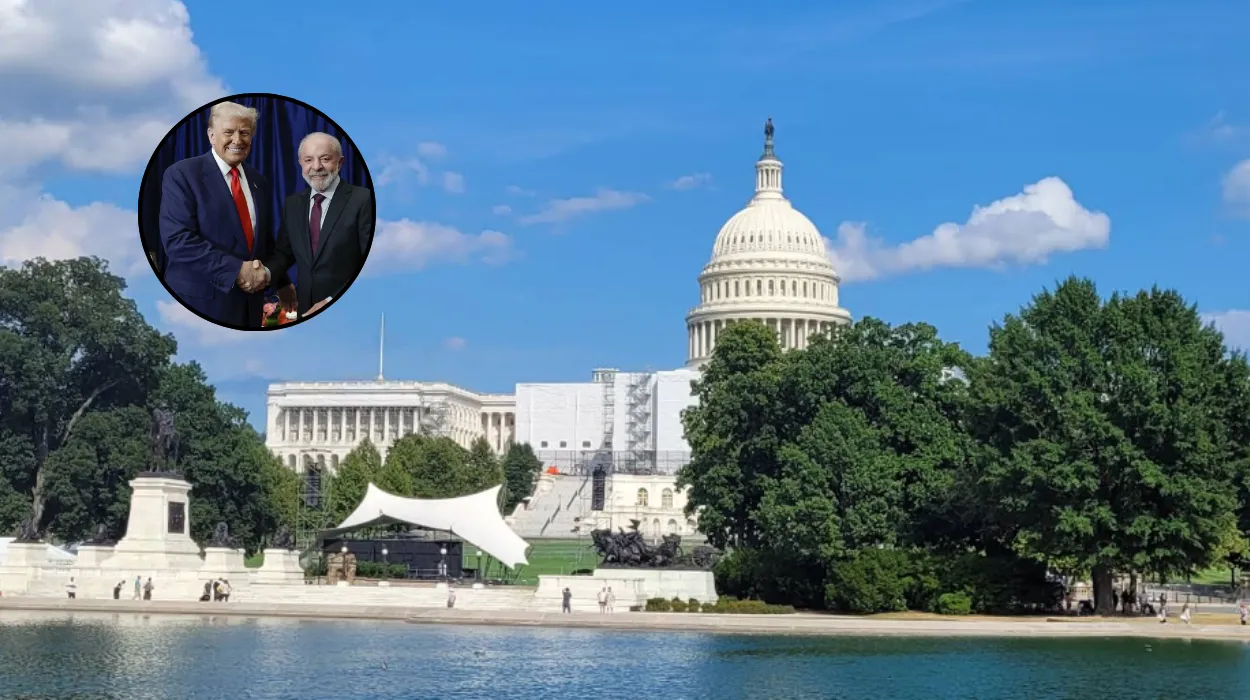
Washington (Evening Washington News) May 7, 2026 – Brazilian billionaire Joesley Batista played a key role in arranging a high‑stakes meeting between US President Donald Trump and Brazilian President Luiz Inácio Lula da Silva, scheduled to take place in Washington on Thursday, one person with direct knowledge of the contacts told Reuters. The encounter, months in the making, underlines how major business figures in Latin America are increasingly acting as informal intermediaries between heads of state in the Trump era.
How did the meeting come about?
As reported by a Reuters‑affiliated journalist in São Paulo and Brasília, the Lula–Trump meeting had been under discussion since January, when the two leaders first spoke by telephone about bilateral relations and regional security.
At that time, officials on both sides floated the idea of a face‑to‑face summit in Washington, but the plan was quietly sidelined as the Trump White House shifted its focus toward managing the war in Iran and related global security concerns.
According to the same Reuters report, the process was revived last week when US officials contacted Brazilian counterparts and formally offered a meeting slot for Thursday in Washington, signalling that Washington now views Brazil as a strategically important partner.
The Brazilian side accepted the proposal, and planning for the encounter moved to an operational level, including coordination of flights, security protocols and the agenda.
What role did Batista play?
Reuters staff, citing a source with direct knowledge of the talks, reported that Joesley Batista helped broker the encounter between Trump and Lula.
Batista is one of the owners of JBS, the world’s largest meatpacker, and a member of the Batista family, which controls the J&F investment group.
The Reuters account notes that Batista has extensive business interests in both the United States and Latin America and has cultivated ties with senior figures in Washington over several years.
According to this reporting, those existing connections allowed him to relay signals and practical suggestions between the two presidencies, helping to smooth diplomatic channels outside the formal foreign‑ministry track.
Air travel and logistics
Plane‑tracking data from FlightAware, a commercial aviation data service, show that a jet owned by the Batista family’s J&F company was scheduled to fly from Colorado to Washington on Wednesday ahead of the Thursday meeting.
While the company did not issue a public statement confirming the specific purpose of the flight, Reuters journalists interpreted the timing and route as consistent with the need to transport Batista or other key participants to Washington for the encounter.
The use of a private jet underlines the informal, business‑led nature of the pre‑summit coordination, which took place alongside the usual diplomatic briefings and protocol arrangements handled by Brazil’s foreign ministry and the US State Department.
Why has this meeting been delayed?
As Reuters explained, the initial plan for a Trump–Lula summit in Washington was put on the back burner in early 2025 as the Trump administration prioritised the war in Iran and related security issues over many other diplomatic engagements.
At the time, an official White House adviser, quoted by Reuters, said the administration had to “focus on immediate security threats,” which meant deferring some bilateral meetings that were not deemed urgent.
However, the same Reuters report noted that US officials began to reassess Brazil’s importance in recent weeks as the Iran‑related security situation evolved and Washington sought to rebalance its global engagements.
A senior US diplomat told Reuters that Brazil is “a critical partner in the Western Hemisphere” and that Washington wants to “reinforce those ties through high‑level dialogue,” which helped revive the meeting invitation.
What does Batista’s involvement signify?
Reuters analysis in the report highlights that Batista’s role in brokering the Trump–Lula encounter underscores the growing power of business leaders in shaping the agenda of the Trump administration.
The article notes that in recent years several prominent business figures from Latin America and elsewhere have acted as de facto go‑between for presidents and senior officials, often operating alongside formal diplomatic channels.
A Brazilian political analyst quoted by Reuters observed that Batista’s involvement reflects a broader trend in which
“economic elites have become key nodes in international diplomacy,”
especially in countries with close commercial links to the United States. The analyst added that such arrangements can speed up communication between leaders but also raise questions about transparency and the line between private business interests and public diplomacy.
Reactions and context
Brazil’s foreign ministry, in a brief statement carried by Reuters, said that the government welcomed the opportunity to meet with President Trump in Washington and described the encounter as part of a broader effort to “deepen cooperation” between the two countries. Meanwhile, the US State Department referred reporters to the White House for details of the agenda, saying only that the encounter would cover
“bilateral, regional, and global issues of mutual interest.”
Brazilian business circles reacted with cautious interest to the news that Batista helped arrange the meeting. An executive at a São Paulo‑based investment firm, speaking to Reuters, said that Batista’s participation
“shows how closely Brazil’s economic elite is connected to Washington,”
but also warned that the public might question whether such back‑channel arrangements could skew policy in favour of specific corporate interests.
Background of the development
The proposed Trump–Lula meeting builds on a long history of sporadic but strategically important contacts between US and Brazilian presidents, dating back to the Cold War era. In recent decades, Brazil’s rise as a major agricultural and energy producer has made it a key node in Washington’s Western Hemisphere strategy, particularly in trade, climate and security discussions.
Under previous US administrations, similar high‑level meetings were typically arranged through formal diplomatic channels, with business leaders playing only a secondary, lobbying role.
The current episode, as Reuters describes it, marks a shift toward more visible, business‑led facilitation, reflecting both the Trump administration’s willingness to work with private actors and the Batista family’s longstanding transatlantic networks.
Brazil’s political landscape has also changed since the early 2020s, with Lula’s return to the presidency after a period of polarised politics.
This has prompted Washington to recalibrate its approach to Brasília, balancing economic interests with concerns about governance, environmental policy and regional stability.
In that context, a meeting brokered in part by a powerful business figure fits into a pattern of multi‑track diplomacy that blends state‑to‑state talks with private‑sector mediation.
Prediction: How this development could affect audiences
For audiences in Brazil and Latin America, Batista’s role in arranging the Trump–Lula meeting may sharpen public scrutiny of how economic elites influence foreign policy. Readers and viewers in the region may pay closer attention to whether such business‑brokered encounters translate into policies that benefit broad sectors of society or mainly reinforce the interests of large corporations.
For audiences in the United States, the episode could feed into ongoing debates about the role of private actors in diplomacy, especially in an administration that has often operated with blurred lines between commerce and statecraft. American policymakers and voters may watch closely to see whether the meeting produces concrete agreements on trade, security or climate, and whether the presence of business brokers changes the transparency or accountability of those outcomes.