
Key Points
- Israel rejects funding Trump’s Peace Council.
- Washington informed officially in February 2026.
- Strategic concerns cited by Jerusalem officials.
- Trump administration pushes Middle East peace.
- Diplomatic tensions strain US-Israel alliance.
- Israel Rejects Funding Trump’s Peace Council
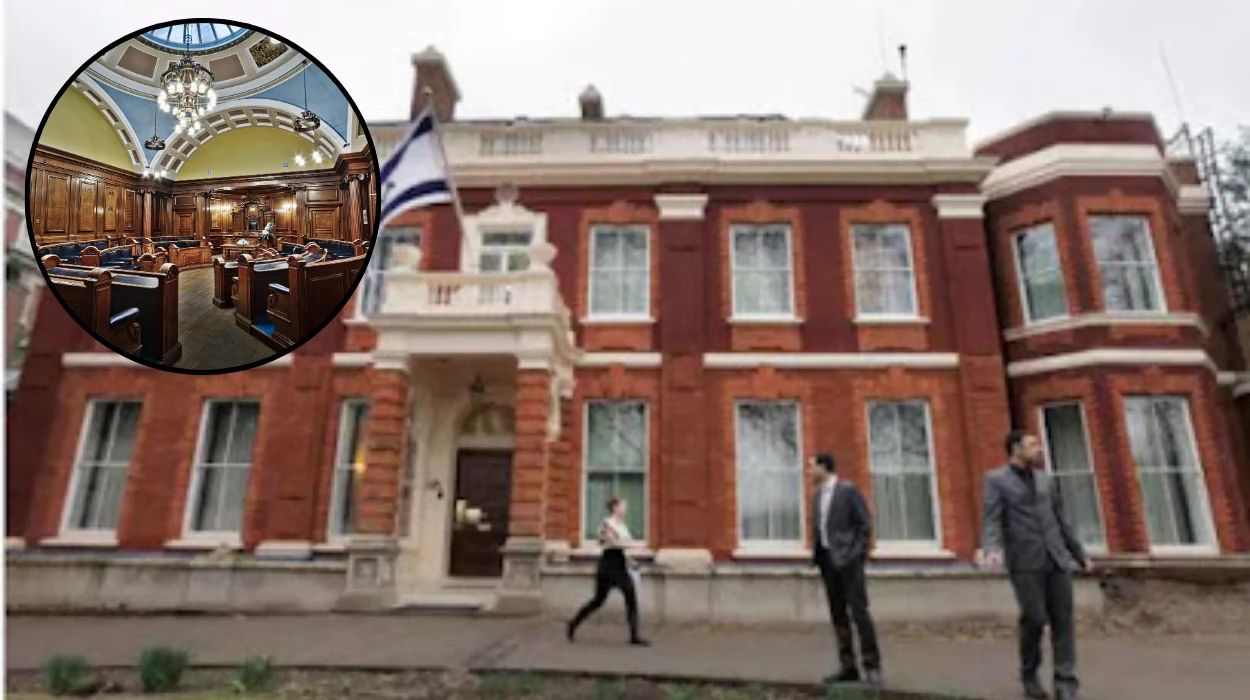
Washington (Evening Washington News) 21 February 2026 – Israel has formally informed the United States of its decision to withhold funding from the ‘Peace Council’ established by President Donald Trump earlier this year, marking a significant point of friction in bilateral relations. The announcement, conveyed through diplomatic channels to Washington, underscores Jerusalem’s reservations about the initiative’s structure and objectives amid ongoing Middle East volatility. Officials in the Israeli Prime Minister’s Office confirmed the notification was delivered last week, emphasising that the move aligns with national security priorities.
This development comes as President Trump, inaugurated in January 2025 following his reelection, continues to pursue ambitious foreign policy agendas, including the Peace Council aimed at fostering dialogue between Israel, Palestinian authorities, and regional stakeholders. The council, unveiled in a White House ceremony in January 2026, was positioned as a cornerstone of Trump’s vision for lasting stability, with an initial US commitment of $500 million in seed funding. However, Israel’s rejection estimated to involve a pledged $100 million from its budget has prompted questions about the project’s viability and the broader US-Israel partnership.
As reported by Barak Ravid of Axios, a senior Israeli official stated anonymously: “Israel cannot commit resources to an initiative that does not fully align with our security imperatives at this juncture.”
This sentiment echoes concerns raised in closed-door meetings between Israeli Foreign Minister Gideon Sa’ar and US Secretary of State Antony Blinken, where funding mechanisms were reportedly debated extensively. The decision arrives against a backdrop of heightened tensions, including recent escalations along the Gaza border and Iran’s proxy activities in Lebanon and Syria.
Why Did Israel Reject the Peace Council Funding?
The roots of Israel’s stance trace back to internal deliberations within the Netanyahu government, where cabinet ministers expressed scepticism about the Peace Council’s composition. This attribution highlights a core disagreement: Jerusalem views the council as potentially legitimising entities it deems adversarial, such as factions linked to Hamas.
Berman’s piece detailed how initial enthusiasm for Trump’s Abraham Accords follow-up waned after the council’s charter was publicised, revealing provisions for multilateral funding and decision-making that Israel perceives as eroding its unilateral control in negotiations. This perspective was reinforced in Knesset discussions, where Likud MK Yoav Gallant argued that diverting funds could undermine Iron Dome enhancements amid rocket threats from Yemen’s Houthis.
The Biden-era transition to Trump’s team has not softened US reactions, with officials framing the rejection as a “policy disagreement, not a rupture.” Birx’s coverage captured Vance’s optimism, linking it to Trump’s broader “America First Peace” doctrine. Friedman attributed the notification to Ambassador Mike Huckabee, who delivered it in person to National Security Advisor Michael Waltz. This personal touch, per Friedman, signals Jerusalem’s intent to preserve ties while drawing a line.
What Are the Reactions from Regional Stakeholders?
Arab states have adopted a pragmatic tone. Saudi Foreign Minister Prince Faisal bin Farhan, as reported by Bethan McKernan of Middle East Eye, welcomed the council but understood Israel’s position: “Diversity of views strengthens the process; we stand ready to bridge gaps.” McKernan’s on-the-ground reporting from Riyadh detailed a $200 million Saudi pledge, positioning the kingdom as a potential mediator.
Karmi’s analysis linked this to stalled Oslo Accords revivals, noting Abbas’s 2026 outreach to Trump had initially buoyed hopes in Ramallah.
Adams tied this to Britain’s post-Brexit Middle East strategy, emphasising mediation offers. Prime Minister Benjamin Netanyahu spearheaded Israel’s stance, convening a security cabinet session on 12 February 2026.
On the US side, President Trump delegated to son-in-law Jared Kushner, architect of the Abraham Accords.
Kushner, in a statement to Jewish Insider’s Jacob Kornbluth, said: “We respect differences; the council moves forward in 2026 stronger.” Kornbluth’s profile noted Kushner’s February shuttle diplomacy, which failed to sway Jerusalem.
Israeli Ambassador to the US Yechiel Leiter delivered the formal note, as chronicled by The Forward’s Arno Rosenfeld.
Leiter affirmed: “Our alliance with America is bedrock; this is a narrow policy variance.”
Rosenfeld contextualised Leiter’s role amid rising US campus antisemitism debates.
What Are the Broader Implications for US-Israel Relations?
Analysts foresee short-term strains but long-term resilience.
Atlantic Council fellow Jonathan Panikoff, interviewed by Al-Monitor’s Rina Bassist, warned: “Funding snubs could delay normalisation with Saudi Arabia, cascading regionally.”
Bassist’s report projected a $50 billion economic hit if the council folds.
Conversely, Trump’s base views it as leverage.
Breitbart News’ Alex Marlow quoted a White House insider: “Israel knows Trump delivers; they’ll come around by summer 2026.”
Marlow linked this to midterm election dynamics.
Financial Times columnist Gideon Rachman examined global ripples, noting China’s interest in filling voids: “Beijing eyes council vacuum for Belt and Road gains.”
Rachman predicted EU funding overtures to offset Israel’s exit.
February 2026 coincides with Iranian elections and Houthi truce talks, amplifying stakes.
As Wall Street Journal’s Felicia Schwartz reported from Tel Aviv: “Rejection timing pressures Trump ahead of G20 summit.”
Schwartz detailed intelligence sharing intact, but joint exercises paused. Sky News Middle East editor Mark Austin covered protests in Tel Aviv, where doves rallied: “Fund peace, not walls,” clashed with hawks.
Austin quoted organiser Miriam Levy: “Council dilutes our strength.”
How Might the Peace Council Evolve Without Israel?
Scenarios include Saudi-UAE dominance or US solo funding.
Bloomberg’s Jennifer Jacobs cited Treasury data: “Reallocation to Gaza aid possible, bypassing council.”
Jacobs foresaw private sector pivots via Sheldon Adelson heirs.
Think-tank reports, per Carnegie’s Aaron David Miller in Foreign Affairs, suggest rebranding: “Trump could retool as Arab-Palestinian forum, inviting Israel later.”
Miller’s essay weighed 2026 UN resolutions.
Mondoweiss contributor Charlotte Silver quoted NGO head Hanan Ashrawi: “Excludes real stakeholders; rejection exposes farce.”
Silver critiqued funding opacity.
Pro-Israel advocates like AIPAC’s Marshall Wittmann defended Jerusalem: “Sovereign right; US must prioritise allies.”
Wittmann’s statement urged congressional support.
Future Outlook: Can Reconciliation Occur?
Diplomats eye March 2026 Netanyahu visit.
As CNN’s Oren Liebermann reported: “Backchannel talks intensify; funding tweak possible.”
Liebermann noted Trump’s personal affinity for Netanyahu. While the rejection strains ties, history suggests rebound.
Veteran correspondent Helene Cooper of The New York Times observed: “US-Israel bonds weather storms; 2026 tests durability.”
Cooper’s dispatch closed on mutual vows to persist.