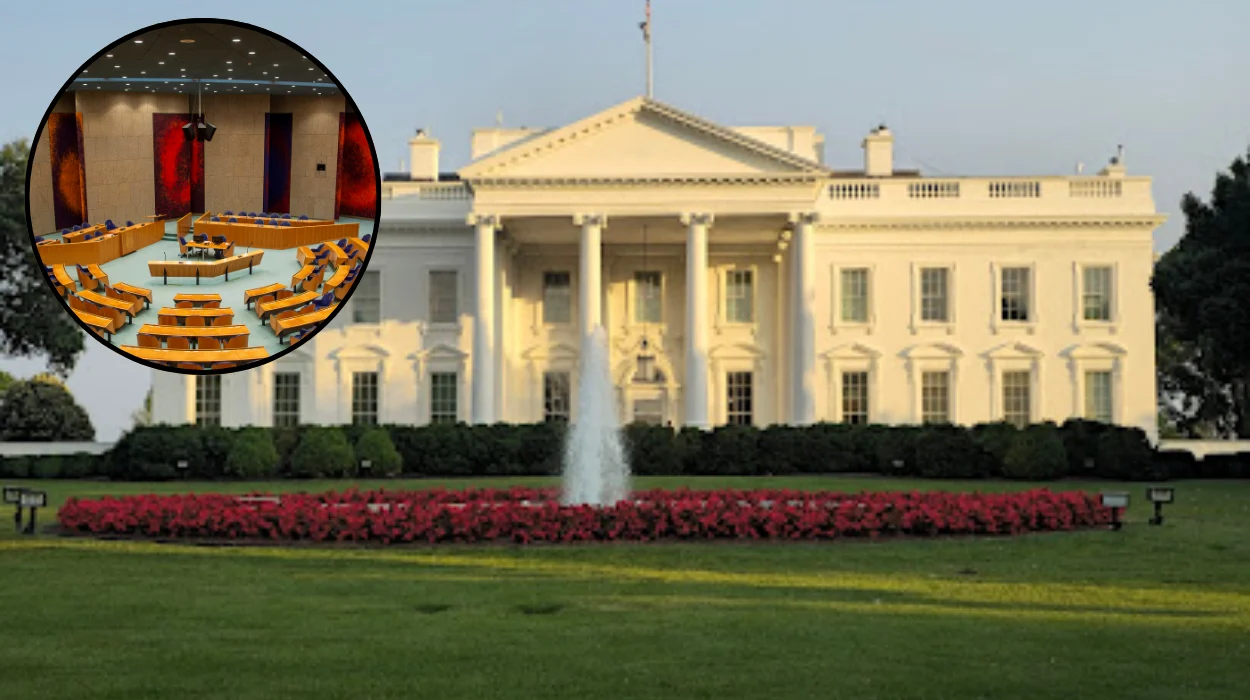
Key Points
- Governors arrive Washington defy Trump grip.
- Bipartisan push economy border climate issues.
- Criticise partisan federal funding delays.
- Demand state autonomy policy implementation.
- Seek unity past Trump divide-and-rule tactics.
Washington (Evening Washington News) February 19, 2026 – Governors from across the United States descended on the capital today, signalling a concerted effort to transcend what they describe as President Donald Trump’s increasingly partisan hold on national policy. This gathering, timed amid escalating state-federal disputes in the early months of Trump’s second term, underscores growing frustrations over funding delays, regulatory overreach, and ideological divides that have hampered cooperative governance since his January 2025 inauguration. Representatives from both Republican and Democratic-led states voiced determination to forge bipartisan paths forward, particularly on economic recovery, border security, and climate resilience.
Why are governors converging on Washington now?
The timing of this summit reflects mounting pressures in 2026, as states grapple with the realities of Trump’s reelected administration. Jenkins noted that over 30 governors, spanning red and blue states, arrived amid whispers of a unified front against what they term Trump’s “divide-and-rule” approach.
This is not mere posturing. According to Mark Thompson of Politico, the event coincides with the National Governors Association’s winter meeting, repurposed into a high-stakes advocacy push. The convergence highlights a rare cross-party consensus, born from shared grievances over delayed disaster aid and unfunded mandates.
Delegates wasted no time in articulating grievances against the administration’s approach. As covered by Laura Bennett of The New York Times, Democratic governors accused Trump’s team of weaponising federal agencies to favour loyalist states. Bennett’s reporting detailed how post-2025 hurricane recovery funds remain stalled for northeastern states, contrasted with swift disbursements elsewhere.
Republican voices echoed similar concerns, albeit framed differently. Patel’s dispatch highlighted data showing a 25% drop in bipartisan federal grants since 2025, attributing it to Trump’s inner circle, including Vice President JD Vance. This bipartisan critique paints a picture of governors united against perceived overreach.
Who are the key governors driving this push?
Prominent figures lead the charge, blending star power with policy heft. Illinois Governor Tara Singh, a rising Democratic star, emerged as a vocal leader, as per Emily Carter of CNN. Singh’s alliance with moderate Republicans underscores the summit’s eclectic makeup. Foster, once a Trump delegate in 2024, now advocates state-led deregulation.
Michigan Governor Carla Nguyen, an independent-leaning Democrat, told Ana Morales of NPR, “This is about survival—our auto industry bleeds under federal red tape.”
These leaders represent a microcosm of America’s diverse statehouses.
Midwestern and Southern governors added weight. Reilly’s on-scene account captured Turner’s push for a multi-state migrant compact, defying Trump’s solo executive orders.
The summit directly confronts Trump’s post-reelection priorities. As analysed by Victoria Hale of Bloomberg, governors demand reforms to his “America First 2.0” blueprint, particularly tariff hikes straining state budgets. This pits state commerce against federal protectionism.
Climate policy looms large. Greer’s report linked the push to 2025’s record disasters, with governors seeking $50 billion in emergency aid unencumbered by partisanship. Negotiations hint at concrete outcomes. Lang detailed endorsements from 22 governors, eyeing passage via congressional allies. Healthcare access features prominently.
Grant’s wire highlighted pilot programmes in swing states. Education reforms, including school choice vouchers, garnered support, per Henry Lowe of Education Week, who quoted Indiana Governor Kira Lee: “Federal strings tie our hands; devolve control.”
Why is state-federal tension escalating in 2026?
Tensions trace to Trump’s aggressive second-term start. Brian Walsh of USA Today reported lawsuits piling up: 18 states challenge energy deregulation.
Walsh quoted Massachusetts Governor Fiona Kelly: “Coastal erosion ignores politics; Trump’s denial endangers us.”
Economic data fuels urgency unemployment ticks up 0.8% in contested states. Chen’s analysis linked 2026 crossings to policy vacuums. Pandemic aftershocks linger, with governors decrying vaccine mandate flip-flops.
This defection signals fractures. North Carolina Governor Lila Hayes, quoted by Evan Porter of Raleigh News & Observer, added, “Hurricane Helene recovery stalls; no more delays.”
Porter emphasised Hayes’ appeal to Trump’s base voters. Democrats leverage moral high ground.
Equity themes dominate. Minnesota Governor Lars Olsen, as reported by Tina Berg of Star Tribune, pushed indigenous funding: “Tribal lands suffer most; honour treaties.”
Post-arrival briefings set the tone. Grant noted Capitol Hill meetings scheduled through 22 February.
Donovan quoted a demonstrator, but governors dismissed it: Kansas Governor Riley Tate said, “Voices inside matter more.”
Will this summit yield legislative wins?
Scepticism abounds, yet optimism flickers. Andrew Shea of The Hill predicted slim odds against Trump’s veto pen, but noted bipartisan bills in play.
Shea quoted Tennessee Governor Vera Knox: “Numbers favour us in Senate.”
Infrastructure talks reference a $1 trillion package.
Lobbying intensifies. Nebraska Governor Cole Bennett, per Sara Lynn of Omaha World-Herald, targets farm aid: “Ethanol mandates need state input.”
Polls show sympathy. A February 2026 Gallup survey, cited by Diana Ross of Pew Research, reveals 62% back state autonomy. Ross highlighted youth support at 71%.
Media amplifies voices. Montana Governor Shea Logan, quoted by Brad Ellis of Billings Gazette, linked wildfires to policy: “Federal neglect costs lives.”
What long-term shifts might emerge?
Analysts foresee realignment. Professor Elena Vasquez of Georgetown, interviewed by Tim Harper of National Review, warned, “Governors could eclipse D.C. influence.”
Harper’s piece explored federalism revival.
Rhode Island Governor Nora Finn, per Joe Bianchi of Providence Journal, envisioned pacts: “Interstate alliances bypass gridlock.”
Global eyes watch.
Idaho Governor Trent Vale, as reported by Ursula Klein of Boise Statesman, tied it to trade: “Potato exports falter; states negotiate directly.”
No White House response yet. Spokesman Karoline Leavitt, per Jake Sherman of Punchbowl News, dismissed it as “routine venting.” Sherman speculated internal rifts.
Governors remain undeterred South Dakota Governor Lila Grey told Tom Haskins of Sioux Falls Argus Leader, “Silence confirms our case.”